 Lynden Siding
 Windows in Deming Take a Different Kind of Beating
Deming sits in the foothill country east of Lynden, where the Nooksack valley narrows and the tree cover thickens. Homes here don't get baked by sun the way houses on the open flats do — they get soaked, shaded, and left damp for days at a time. Add in the marine-influenced weather that moves through all of Whatcom County, driving rain that comes in sideways during winter storms, and a moss season that can stretch from October well into spring, and you've got a climate that's genuinely hard on window assemblies. Wood trim stays wet longer under tree canopy. Aluminum-frame windows from the 1980s and 90s corrode and stop sealing. Older vinyl units fog up between the panes because the seal finally gave out. None of that is a knock on the original builders — it's just what 20, 30, or 40 years of Deming weather does to a window.
This page is specifically about window replacement for Deming properties — not a general overview. If you're trying to figure out whether it's time, what a correct installation actually involves, and why local experience matters here more than in drier parts of the state, this is written for you.
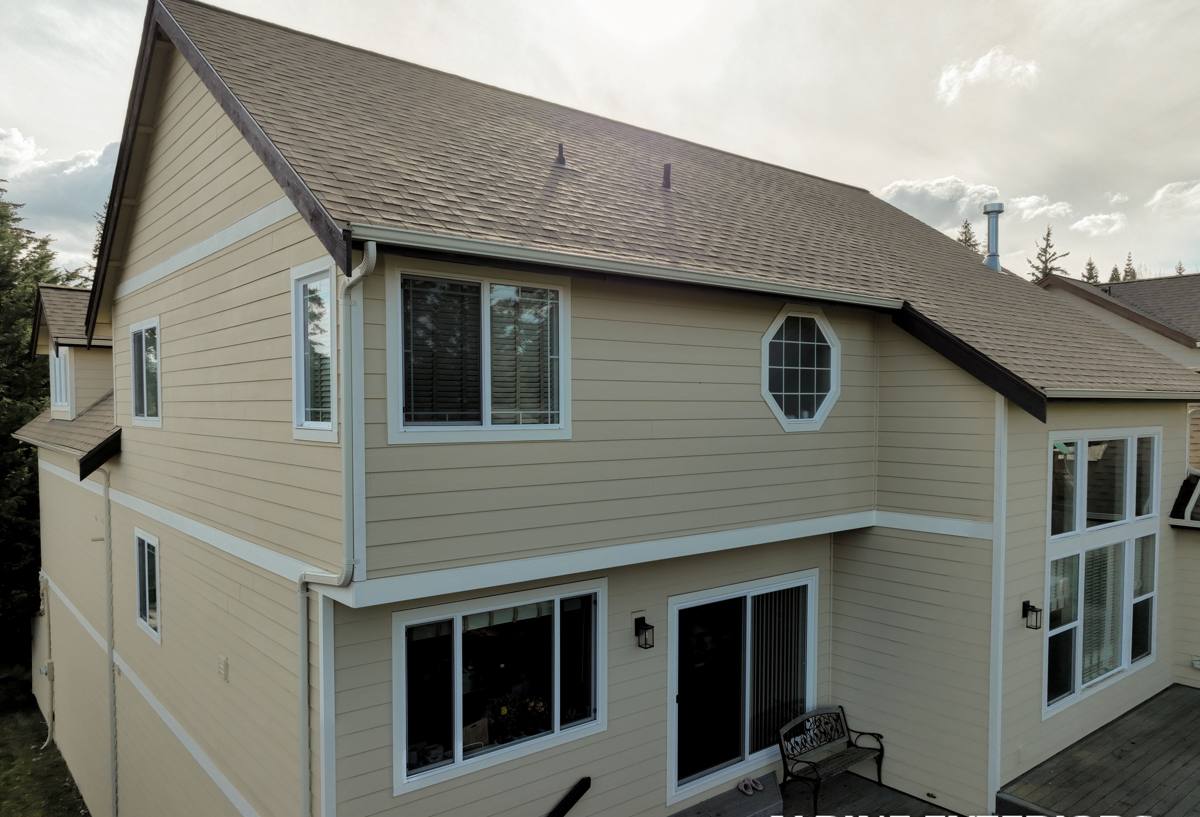
Signs Your Windows Are Telling You Something
Most homeowners don't replace windows because they woke up wanting new windows — they replace them because something started bothering them. In Deming's climate, these are the complaints we hear most:
- Fogging or a milky haze between the panes (the seal has failed and moisture is trapped inside the glass unit)
- Windows that won't stay open, won't latch, or have gotten hard to operate as wood or vinyl frames swell and shrink with moisture cycles
- Visible rot, soft spots, or dark staining at the sill or bottom corners of wood-frame windows
- A cold draft near the frame even when the window is fully closed and locked
- Moss or algae growth on the exterior sill or trim that keeps coming back no matter how often it's cleaned
- Condensation forming on the inside of the glass regularly through fall and winter
- Noticeably higher heating bills without any other obvious cause
Any one of these on its own might just mean a repair. Several of them together, especially on windows original to the house, usually means the frame or seal system has reached the end of its useful life and repair is just delaying the inevitable.
What a Correct Window Replacement Job Actually Involves
It's Not Just Swapping Glass
A window replacement done right is as much about water management as it is about the window itself. Most window failures we see in this area aren't because the window unit was bad — they're because the flashing, sill pan, or sealant around the window let water get behind the frame and into the wall. In a climate with as much driving rain as Whatcom County gets, that detail work matters more than the brand of window you choose.
The Parts That Actually Determine Whether It Lasts
- Removing the old window fully, including the old sill and any deteriorated framing behind it — not just cutting out the sash
- Inspecting the rough opening for rot, water staining, or soft wood before anything new goes in
- Installing a proper sill pan and flashing sequence so any water that does get past the exterior finish drains back out, not into the wall cavity
- Sealing and insulating the gap between the window frame and the rough opening correctly — too little sealant leaves gaps, too much can trap moisture
- Setting the window level, plumb, and square so it operates smoothly and seals evenly for the life of the unit
- Finishing the exterior trim and caulking in a way that sheds water instead of collecting it
Skip any one of these steps and you can end up with a brand-new window that still leaks, still fogs, or still lets in drafts within a few years — which is exactly the situation a lot of Deming homeowners are replacing right now, from a previous job that cut corners on installation even if the window product itself was fine.
Choosing the Right Frame Material for This Climate
There's no single "best" window material — there's a best fit for your house, your budget, and how much upkeep you want to sign up for. In a moss-prone, moisture-heavy area like Deming, the trade-offs matter more than they would somewhere drier.
| Frame Material | How It Handles Deming's Climate | Maintenance | General Cost Position |
|---|---|---|---|
| Vinyl | Won't rot, corrode, or need repainting; performs well in wet, shaded conditions | Low — occasional cleaning | Lower to mid-range |
| Fiberglass | Very stable in temperature and moisture swings, holds paint well if color changes are wanted later | Low | Mid to higher |
| Wood (unclad) | Classic look but needs consistent upkeep to resist rot under tree cover and driving rain | High — regular painting/sealing | Mid to higher |
| Wood-clad (exterior vinyl or aluminum over wood) | Interior wood look with an exterior shell that resists Deming's moisture exposure | Moderate — interior finish maintenance only | Higher |
| Aluminum | Prone to condensation and corrosion over time in a persistently damp climate | Moderate to high | Lower to mid-range |
Our standard recommendation for most Deming homes is vinyl or fiberglass, specifically because they don't depend on paint or sealant staying intact to resist the moisture this area sees for most of the year. If you have a home with a specific architectural style where wood-clad windows make sense, we'll walk through what that maintenance commitment actually looks like so you're deciding with full information, not guessing.
Glass Packages Worth Knowing About
Beyond the frame, the glass unit itself affects comfort and condensation resistance — both relevant given how much shade and dampness this area holds onto.
- Double-pane, low-E glass is the standard baseline for this climate and handles most homes well.
- Argon-filled units add a modest insulation boost, useful on north- and east-facing walls that stay shaded longer under tree cover.
- Triple-pane is worth discussing on rooms with persistent condensation problems or where noise from Mount Baker Highway traffic is a concern, but it adds weight and cost that isn't necessary on every window in the house.
We'll tell you plainly if a room doesn't need the upgraded package — matching the glass to the actual problem is part of doing this honestly.
How Our Process Works
1. On-Site Assessment
We look at the windows you're concerned about, and the ones you're not, since failure isn't always where it's most visible. We check framing condition, not just the window itself.
2. Straightforward Recommendation
You get options with real trade-offs explained — not a single package pushed as the only choice. If only a few windows need replacing this year, we'll say so.
3. Written Estimate
Clear scope, clear pricing, and what's included in installation — flashing, sill work, trim, and cleanup.
4. Installation
Old windows and sills come out fully, rough openings get inspected and repaired if needed, and new units go in with proper flashing and sealing — the details that determine whether the job lasts through Deming winters.
5. Final Walkthrough
We check operation, seals, and finish work with you before calling the job done.
Why a Crew That Already Works Deming Matters
Window replacement done by someone unfamiliar with this specific microclimate tends to make the same mistakes: underestimating how much moisture builds up under tree cover, using flashing details suited to drier regions, or not accounting for how long a shaded wall stays wet after a storm. A crew that regularly works in and around Deming and the wider Whatcom County area has already seen how these houses age, which orientations take the worst weather, and which shortcuts from past installations tend to fail first. That local pattern recognition is worth more than any single product spec sheet.
What This Typically Costs
Every house and window count is different, so we won't quote a number without seeing the job. In general terms, pricing depends on a handful of factors:
| Factor | Why It Affects Cost |
|---|---|
| Number of windows | Per-window pricing typically drops on larger projects |
| Frame material chosen | Vinyl, fiberglass, and wood-clad price differently |
| Condition of existing framing | Rot or water damage found during removal adds repair work |
| Window size and type | Custom shapes, large picture windows, or egress-code bedroom windows cost more than standard sizes |
| Access and site conditions | Second-story or hard-to-reach windows take more labor time |
We'll walk through your specific factors during the estimate so there are no surprises once work starts.
Get a Straight Answer on Your Windows
If your Deming home has windows that fog, stick, draft, or just feel like they're past their prime, it's worth having someone look before another wet season goes by. We offer free, no-pressure estimates — you'll get an honest read on what actually needs replacing, what can wait, and what it will cost, with no obligation to move forward. Use the form below to get started.