 Lynden Siding
 Composite Decking Built for Everson's Ground and Weather
Everson sits low along the Nooksack River valley, just east of Lynden, and that location shapes what a deck has to survive out here. The ground stays damp longer into spring than it does up on higher ground, the air carries moisture off the river and the nearby Sound most of the year, and shade from mature trees on a lot of Everson properties means a deck can stay wet for days after a storm passes through. Add in Whatcom County's long, gray moss season and you've got a set of conditions that will find every weak point in a deck within a couple of winters.
Composite decking exists specifically to hold up to that. But "composite" isn't one product — it's a category with real differences in how boards handle standing moisture, how much they need scrubbed off them every spring, and how the substructure underneath needs to be built to keep water moving instead of pooling. This page covers what we've learned installing and repairing decks in and around Everson, and what a correctly built composite deck looks like for this specific ground and climate.
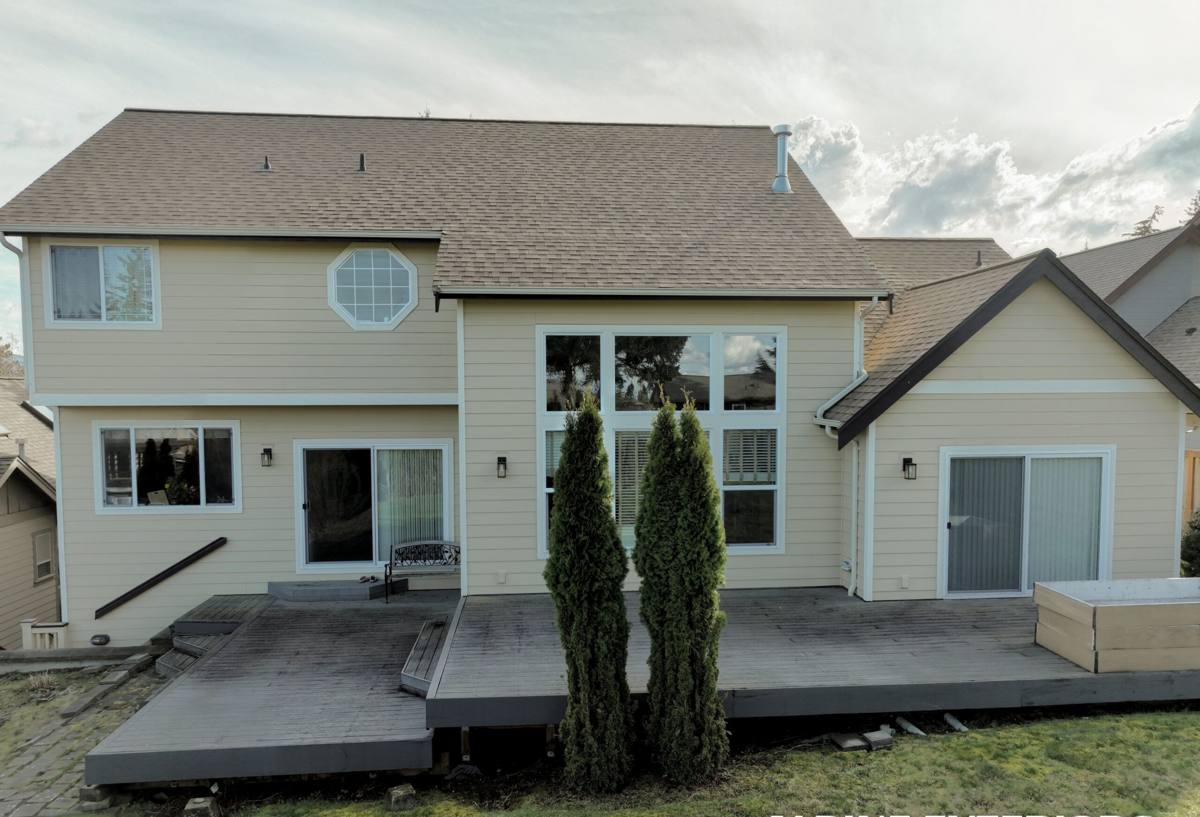
What This Climate Does to a Deck Over Time
A few things happen here that don't happen the same way in drier parts of the state:
- Moss and algae get a running start. Shaded, low-airflow decks in Everson can show green growth on the board surface and in the gaps between boards within a single wet season if the deck wasn't built with drainage and airflow in mind.
- Driving rain finds gaps in flashing and fastener holes. Wind-driven rain off the valley pushes water sideways, not just straight down, which means ledger flashing and any point where the deck ties into the house takes more abuse than a rain-only assumption would suggest.
- Damp ground stays damp. Low, river-valley lots often have soil that doesn't drain as fast as sandier ground elsewhere in the county. That matters for post footings, joist clearance off the ground, and how long the underside of the deck stays wet after a storm.
- Freeze-thaw cycles, even mild ones, work on fasteners and connections. Whatcom County doesn't get brutal winters, but it gets enough freeze-thaw swings to loosen anything that wasn't fastened correctly the first time.
None of this is unique to Everson exactly — it's the reality across most of Whatcom County — but properties along the river valley tend to see it more consistently, with less drying-out time between wet spells than homes up on a slope or in town.
Why Composite Is the Right Call Here
Wood decking isn't a bad product, but it asks a lot of the homeowner: annual staining or sealing, close attention to any spot where water sits, and honest acceptance that boards will eventually cup, split, or rot faster in shaded, damp spots. In a climate like ours, that maintenance schedule gets harder to keep up with, and the parts of the deck that get missed are exactly the parts that fail first.
Composite decking — real composite, not the cheapest big-box option — solves the two biggest problems for this area:
- It doesn't absorb water the way wood does, so it doesn't swell, cup, or rot from the surface down.
- Capped composite boards resist mold and moss growth on the surface far better than wood or uncapped composite, because there's no exposed wood fiber for organic growth to take hold in.
That doesn't mean a composite deck is maintenance-free — nothing outdoors in this climate is — but it changes the maintenance from "sand and reseal every year or two" to "hose it off and scrub the shaded spots a couple times a season."
What a Correct Installation Actually Involves
Most of what determines whether a composite deck lasts 10 years or 25 in this climate happens before a single board goes down. We treat these as non-negotiable on every Everson job:
Substructure and Drainage
Joists get sized and spaced to the manufacturer's spec for composite (composite typically needs tighter joist spacing than wood decking, especially at angles or picture-frame borders). Framing gets sloped slightly away from the house so water doesn't pool against the ledger. Post footings go below frost depth and get set with drainage in mind, not just poured into damp ground and left.
Ledger Flashing
Where the deck ties into the house is the single most common failure point we find on older decks in this area — not the decking itself. Proper flashing, correctly lapped with the house's existing water-resistive barrier, is what keeps driving rain from working its way behind the siding over time. This is the step that gets rushed or skipped on the fastest, cheapest installs, and it's the one that causes the most expensive damage later.
Airflow Underneath
Low decks with little clearance to the ground trap moisture underneath, which speeds up moss growth on the underside of the boards and shortens the life of the substructure. We build in the clearance and ventilation the site allows, and where a lot sits especially low or damp, we'll talk through options like additional footings or a raised framing approach.
Fasteners and Fixings
Hidden fastener systems, correctly torqued, with all metal hardware rated for ground contact and coastal-influenced moisture. Cheaping out on fasteners is invisible on install day and expensive five years later.
Comparing Decking Board Options
Homeowners in Everson usually end up choosing between a few categories of board. Here's how they stack up on the factors that actually matter for this climate:
| Board Type | Moisture & Moss Resistance | Maintenance Needed | Upfront Cost | Typical Lifespan Expectation |
|---|---|---|---|---|
| Pressure-treated wood | Absorbs water; needs sealing to resist moss and rot | Annual cleaning, periodic staining/sealing | Lowest | Shortest of the options here, especially in shaded/damp spots |
| Uncapped composite | Better than wood, but surface can still take on moisture and support algae growth over time | Regular cleaning; more prone to staining than capped boards | Mid-range | Solid, but generally shorter than capped composite |
| Capped composite | Best resistance to moisture absorption and surface mold/moss growth | Occasional wash-down; no staining or sealing | Higher | Longest-lasting of the composite options, backed by manufacturer warranties |
| PVC decking | Fully moisture-resistant, doesn't support organic growth the way wood fiber can | Low; wash-down only | Highest | Long-lasting, though board feel and appearance differ from composite |
For most Everson homes, capped composite hits the right balance — real moisture and moss resistance without the premium cost of full PVC, and none of the ongoing upkeep that wood demands. Uncapped composite still has a place on tighter budgets or covered decks with less direct rain exposure, but we'll tell you honestly if we think your site's shade and moisture levels warrant spending the extra for capped boards.
Our Process, Start to Finish
- Site walk. We look at drainage, sun/shade exposure, existing framing (if it's a rebuild), and how the deck ties into the house. This is where problems get caught before they become part of the new deck.
- Honest scope and estimate. You get a clear breakdown of substructure work, board selection, and any framing or flashing repairs the site needs — no surprise change orders for problems we should have caught upfront.
- Substructure build or repair. This is where the deck's actual lifespan gets decided — framing, footings, flashing, and fastener hardware, all sized and spaced for composite and for this ground.
- Board installation. Hidden fasteners, correct spacing for expansion/contraction, and clean board layout.
- Final walk-through. We show you what maintenance the deck actually needs (usually less than you'd expect) and answer questions before we consider the job done.
Problems We Commonly Find on Existing Decks
A good share of our Everson calls start as a repair or replacement, not new construction. The recurring issues we see:
- Ledger boards attached to the house with no flashing, or flashing that was never lapped correctly, letting water into the rim joist and siding over years.
- Joist spacing built for wood decking, then composite boards installed over it without adjusting — leading to noticeable bounce or long-term sag.
- Post footings set too shallow or without proper drainage, letting frost and damp ground shift the structure over time.
- Little to no airflow underneath low decks, with visible moss and algae buildup on the underside of boards and framing.
- Fasteners that weren't rated for ground contact or outdoor exposure, rusting and staining the boards around them.
None of these are visible from the top of a finished deck, which is exactly why they get missed by installers who aren't looking past the surface boards.
Keeping It Looking Right Through Moss Season
Composite cuts the maintenance workload dramatically compared to wood, but "low maintenance" isn't "no maintenance" in a climate that stays damp as much of the year as ours does. A simple seasonal routine keeps a composite deck looking like new:
- Sweep debris (leaves, needles, seed pods) off the deck regularly — trapped organic material is what feeds moss growth, not the board material itself.
- Hose down or lightly scrub shaded areas and the gaps between boards a couple times during the wettest months.
- Keep gutters and downspouts near the deck clear so runoff isn't dumping directly onto the decking or the framing underneath.
- Check and clear any debris buildup underneath the deck once or twice a year to keep airflow moving.
- Use a cleaner rated for composite decking if you're dealing with a stubborn mildew spot — avoid pressure washers on high settings, which can damage the cap layer on composite boards.
Why It Matters That We Already Work in Everson
Everson isn't a huge market, and a lot of decking companies treat it as a drive-by add-on to jobs in Bellingham or Lynden proper. We already know what the ground does out here, what the flashing failures look like on older homes, and which parts of a build need extra attention because of the river valley's moisture and shade patterns. That means fewer surprises during the site walk, a scope that accounts for the real conditions on your lot instead of a generic checklist, and a crew that isn't learning the local quirks on your project.
If you're planning a new composite deck or replacing one that's showing its age, we'd rather come look at it in person than guess over the phone. A free, no-pressure estimate gets you a straight answer on what your deck needs and what it'll cost — fill out the form below and we'll set up a time to take a look.