 Lynden Siding
 Building a Deck That Actually Holds Up in Everson
Everson sits in the same wet, marine-influenced weather system that covers all of Whatcom County, and it shows up in how decks age here. Homes near the Nooksack and out along the county's rural roads deal with long stretches of steady rain, short bursts of real cold, and moss that finds its way onto anything horizontal that doesn't drain well. A deck built to a generic national spec — the kind you'd see in a big-box how-to guide — usually looks fine for the first year or two and then starts showing problems: soft spots near the house, green film on the boards by spring, fasteners bleeding rust streaks down the face. None of that is inevitable. It's almost always a sign the deck wasn't built with this climate in mind.
We build decks for homeowners in Everson and the surrounding Lynden area regularly, and the difference between a deck that lasts fifteen-plus years here and one that needs major repair by year seven usually comes down to a handful of decisions made before the first board goes down: drainage, fastener choice, ventilation under the deck, and how the ledger connects to the house. This page walks through what actually matters for a deck built in this part of Whatcom County.
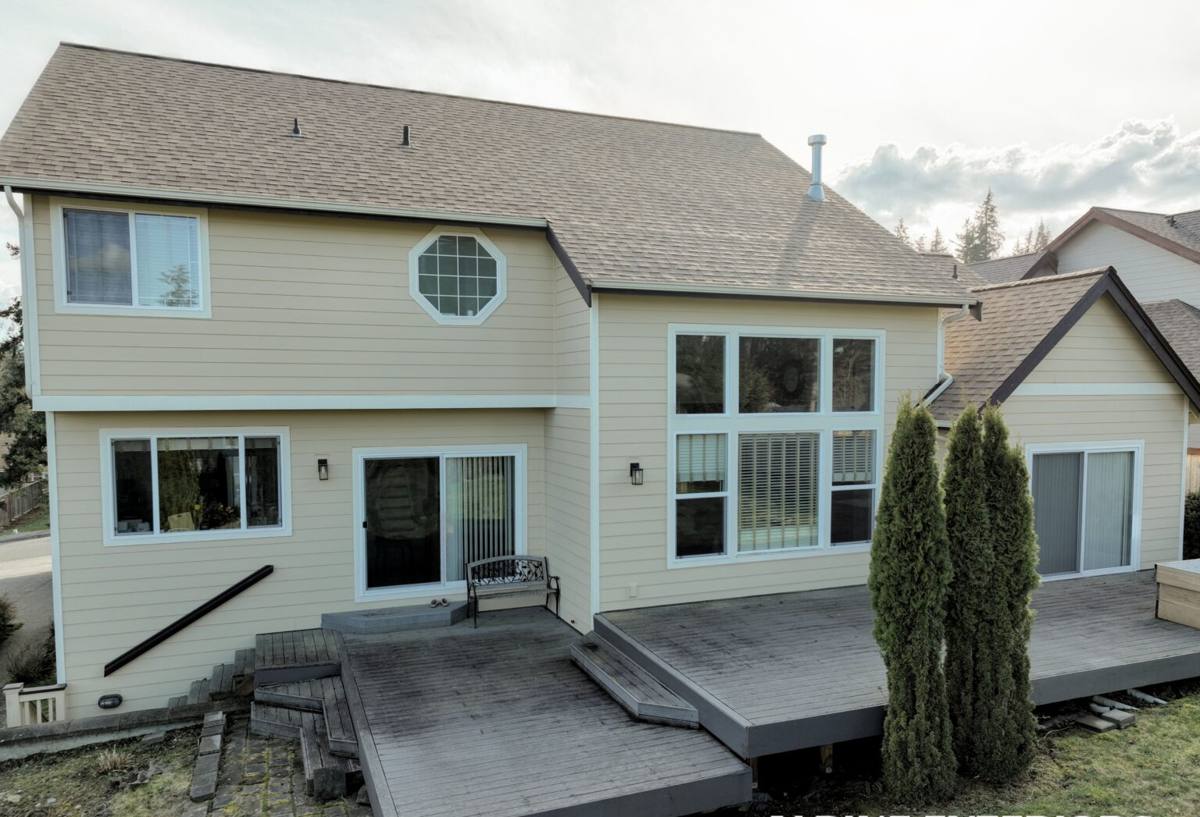
What Rain, Moss, and Freeze-Thaw Do to a Deck Over Time
Whatcom County doesn't get extreme weather so much as persistent weather. Rain that falls steadily for days, humidity that stays elevated even between storms, and the moisture-laden marine air that moves through the whole region — even inland areas like Everson — all add up to conditions where wood and metal stay damp far longer than they would in a drier climate.
The three things that shorten deck life here
- Standing moisture: Decking that doesn't shed water fast enough stays wet between rain events, which is exactly what moss and mildew need to establish.
- Corrosion: Standard fasteners and hardware that aren't rated for ground contact or high-moisture exposure will corrode faster here than in a dry inland climate, weakening joints from the inside where you can't see it.
- Freeze-thaw cycling: Whatcom County gets enough cold snaps each winter that water trapped in wood grain or in cracked concrete footings can freeze, expand, and accelerate damage that started as simple moisture intrusion.
None of these are dramatic on their own. They're slow, cumulative problems — which is exactly why they get missed during construction and only show up years later as a homeowner's problem instead of a builder's mistake.
Choosing the Right Decking Material for This Climate
There's no single "best" decking material — there's a best material for a given budget and maintenance tolerance. We'll lay out the honest trade-offs rather than push one option.
| Material | Upfront Cost | Moss/Moisture Resistance | Maintenance | Typical Lifespan |
|---|---|---|---|---|
| Pressure-treated wood | Lowest | Fair — needs sealing to perform well | Annual cleaning, re-seal every 1-2 years | 10-15 years with upkeep |
| Cedar | Moderate | Good natural resistance, but surface still needs care | Regular cleaning, periodic sealing | 15-20 years with upkeep |
| Composite decking | Higher | Very good — doesn't absorb moisture like wood | Occasional washing, no sealing/staining | 25+ years |
| PVC/capped decking | Highest | Excellent — fully moisture-sealed surface | Minimal — occasional washing | 25-30+ years |
In a climate this wet, we tend to steer budget-conscious homeowners away from bare pressure-treated boards left unsealed, not because the material is bad, but because it's the option most likely to disappoint someone who doesn't want a yearly maintenance chore. If the budget allows it, composite or capped decking earns its higher cost here specifically because moss and moisture are a year-round concern rather than a seasonal one.
Framing and Substructure: Where Decks Actually Fail
The decking surface is what you see, but framing failures are what actually bring a deck down or make it unsafe. In our experience, the substructure is where corners get cut on lower-quality builds — because nobody sees it once the boards are on.
Ledger board attachment
The ledger board — where the deck ties into the house — is the single most important structural connection on most decks, and it's also the point most exposed to water running off the house. Proper flashing, correct fastener spacing, and a clean seal against the siding matter more here than almost anywhere else on the build.
Joist and beam sizing
Undersized joists or beams stretched too far between supports will sag over time, especially once wood absorbs the moisture typical of a Whatcom County winter. We size framing to the actual span and load, not the minimum the material could technically get away with.
Fasteners and hardware
We use fasteners and structural hardware rated for exterior and ground-contact exposure. In a damp climate, saving a few dollars on standard hardware is one of the fastest ways to end up with rust-weakened connections five or six years down the road.
Footings, Drainage, and Site Prep
Everson's mix of rural lots and river-adjacent terrain means soil drainage varies more than people expect. A footing plan that works fine on a well-drained lot can hold water against the concrete on a lot with heavier clay or a higher water table. Before we set footings, we look at how water actually moves across the site — not just where it's supposed to go on paper.
Under the deck itself, we pay attention to airflow. A low deck built tight to the ground with poor ventilation underneath traps moisture against the joists and becomes a moss and mildew incubator, even if the decking above looks fine. Grading the ground under the deck to drain away from the house, and leaving enough clearance for air to move, is a simple step that prevents a lot of hidden problems.
Our Deck Building Process
- On-site assessment: We look at your yard's drainage, sun and shade exposure, existing structure (if replacing a deck), and how the new deck will tie into the house.
- Design and material selection: We walk through decking and railing options honestly, including cost and maintenance trade-offs for your budget.
- Permitting: We handle the permit process for the jurisdiction your Everson property falls under, so the structure is inspected and compliant.
- Footings and framing: Proper footing depth, structural framing, and correct ledger attachment come first — this is the work that determines how long the deck lasts.
- Decking, railing, and finish work: Surface materials, railings, stairs, and any lighting or fascia details go on last.
- Final walkthrough: We go over care and maintenance specific to the material you chose, so you know what upkeep to expect in this climate.
Permits and Local Code Considerations
Deck permitting requirements depend on whether your Everson property falls under city jurisdiction or unincorporated Whatcom County, and on the size and height of the deck. Most decks attached to a house and elevated more than a modest height above grade require a permit and inspection. We handle this as part of the job rather than leaving it for the homeowner to sort out, because an unpermitted deck can become a real headache at resale.
Maintenance That Actually Matters Here
Every decking material needs some upkeep in this climate — the difference is how much. Here's a practical seasonal checklist we give homeowners regardless of what material they chose:
- Sweep leaves and debris off the deck regularly in fall — trapped organic matter holds moisture and feeds moss growth.
- Check for moss or algae film each spring and clean it before it gets a foothold, rather than waiting until it's visibly thick.
- Inspect fasteners and hardware yearly for rust streaks or loosening, especially near the ledger board.
- Confirm gaps between boards haven't clogged with debris, which blocks proper drainage.
- Reseal or restain wood decking on the schedule appropriate to the product — don't wait until it's visibly gray and worn.
- Check under-deck ventilation isn't blocked by stored items or overgrown landscaping.
Why Hire a Crew That Already Works in Everson
A deck builder who mostly works in drier climates will make reasonable decisions that simply aren't tuned to Whatcom County conditions — decisions about fastener grade, ventilation, footing drainage, and material selection that look fine on paper but don't hold up against a full winter of steady rain and a spring of moss pressure. Working regularly in Lynden, Everson, and the surrounding county means we've already seen which shortcuts show up as callbacks a few years later, and we build to avoid them from the start rather than fixing them after the fact.
If you're planning a new deck or replacing one that's failing in Everson, we're happy to take a look and give you a straightforward, no-pressure estimate — just fill out the form below.