 Lynden Siding
 Windows Built for Everson's Wet, Salt-Tinged Climate
Homes around Everson deal with a specific combination of weather stress: damp air carrying salt off the Sound, long stretches of driving rain pushed in by wind, and a moss season that can run most of the year in shaded spots. None of that is dramatic on its own, but together it wears on window seals, frames, and glazing faster than homeowners expect. A window that's rated fine on paper can still underperform here if it wasn't installed with this specific climate in mind.
We work throughout Whatcom County, and Everson is part of our regular service area alongside Lynden proper. That matters more than it sounds like — a crew that's used to inland dry-climate installs will flash and seal a window differently than one that installs week after week in a region where wind-driven rain and persistent moisture are the norm, not the exception.
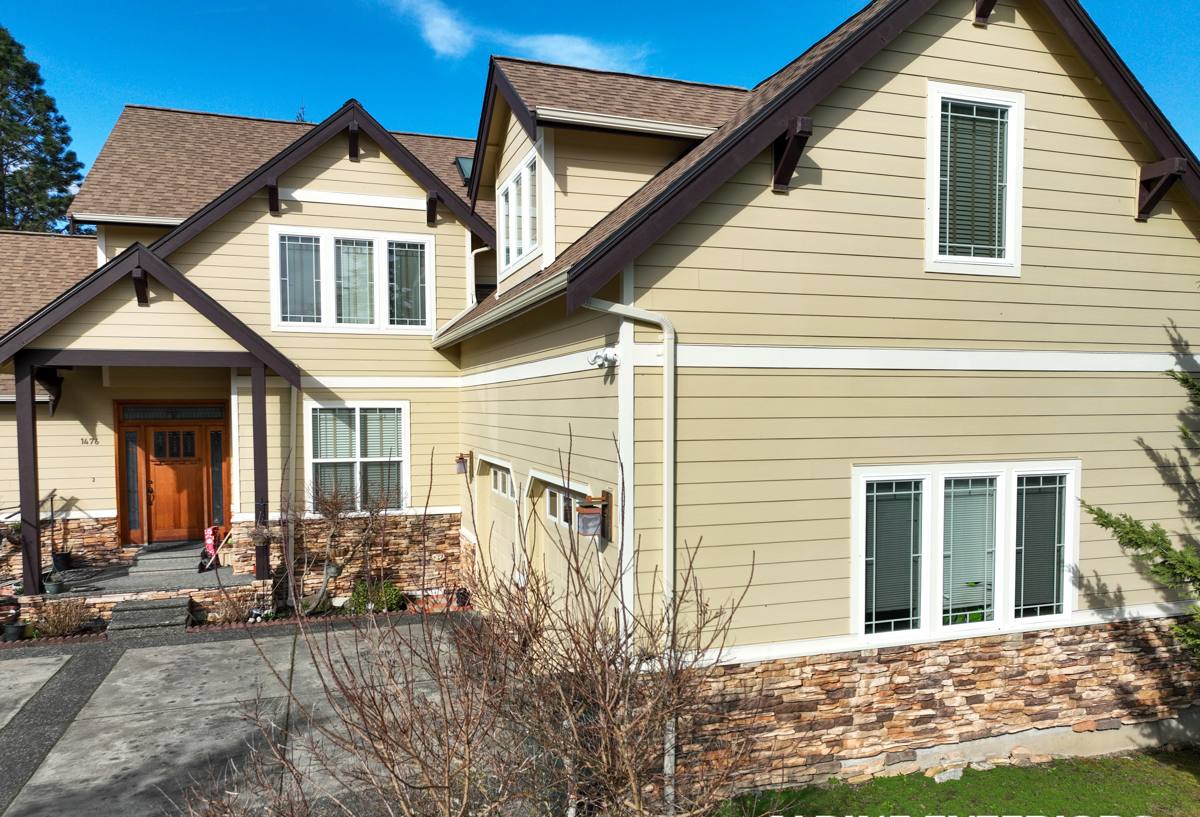
What "Energy-Efficient" Should Mean Here — Not Just on a Label
Energy-efficient windows are marketed everywhere, but the spec sheet doesn't tell the whole story for a home in this region. Three numbers matter most:
- U-factor — how well the window resists heat loss. Lower is better for our mild-but-damp winters where heating runs steadily rather than in short blasts.
- Solar Heat Gain Coefficient (SHGC) — how much solar heat passes through. In our cloudy climate, this matters less than in sunnier regions, but it still affects comfort on west-facing walls.
- Air leakage rating — arguably the most important number for Everson homes, since wind-driven rain will find any gap that also lets air through.
A window can carry a strong energy rating and still fail locally if the frame material or installation doesn't hold up to constant moisture cycling. Efficiency and durability have to be evaluated together here, not separately.
Condensation Is a Clue, Not Just an Annoyance
Interior condensation on window glass in fall and winter is common in this climate, but heavy or persistent fogging between the panes (not on the surface) usually means a failed seal on an older double-pane unit. That failure lets moist air into the gas-filled cavity, and once it happens, the insulating value of that pane is essentially gone — no amount of cleaning fixes it.
Signs Your Current Windows Are Working Against You
Most homeowners don't replace windows because of one big failure — it's a slow accumulation of small ones. Worth checking for:
- Fogging or moisture trapped between panes
- Visible gaps or daylight around the frame when the window is closed
- Soft or discolored wood trim near the window, a sign moisture has been getting behind the casing
- Moss or dark streaking building up on the sill or exterior trim faster than on the rest of the siding
- A noticeable draft or cold spot near the window even with it fully latched
- Difficulty locking or latching — frames can warp slightly as wood or lower-grade vinyl ages in constant damp conditions
Any one of these is worth a look. Several together usually means the window's job — keeping conditioned air in and weather out — has quietly stopped happening.
What a Correct Installation Actually Involves
The window unit itself is only part of the equation. In a climate like ours, the installation details determine whether that window performs for 20+ years or starts leaking within a few winters.
Removal and Assessment
Old windows and any water-damaged framing or sheathing get removed and checked before anything new goes in. Installing a new window over a compromised opening just hides a problem — it doesn't fix it.
Flashing and Water Management
Proper flashing — installed in the correct order (bottom, sides, then top, integrated with the house wrap or building paper) — is what actually keeps driving rain out. This is the step that gets rushed on lower-quality jobs and is the single biggest cause of window-related water intrusion we see on older homes in this area.
Sealing and Insulation
Gaps around the window frame get insulated (typically with low-expansion foam, not just caulk) and sealed on both the interior and exterior. Exterior sealant has to be rated for the temperature swings and constant moisture exposure typical of a Whatcom County winter.
Final Weatherproofing
Exterior trim, caulking, and any siding disturbed during the swap gets finished and sealed so there's no exposed gap for wind-driven rain to exploit.
Frame Material Comparison for This Climate
There's no single "best" frame material for every home — it depends on budget, maintenance appetite, and how exposed the window is to weather. Here's how the common options compare for a home in the Everson/Lynden area:
| Material | Moisture Resistance | Maintenance | Typical Lifespan |
|---|---|---|---|
| Vinyl | Very good — won't rot, low permeability | Low — occasional cleaning | 20–30 years |
| Fiberglass | Excellent — dimensionally stable in wet/dry cycles | Low | 30–40+ years |
| Wood (unclad) | Poor without diligent upkeep in this climate | High — regular painting/sealing | Varies widely with maintenance |
| Wood-clad (vinyl or aluminum exterior) | Good — exterior shell protects the wood core | Moderate | 25–35 years |
| Aluminum | Fair — prone to condensation without a thermal break | Low | 20–25 years |
As a standard, we steer most Everson-area homeowners toward vinyl or fiberglass for full sun/rain exposure, and reserve unclad wood for interior-facing or heavily protected openings where the maintenance commitment is realistic. That's a judgment based on years of watching how each material actually holds up here — not a knock on wood windows as a product.
Our Process, Start to Finish
- Walkthrough and assessment — we look at each window opening, not just the glass, including trim, sill condition, and any signs of past water intrusion.
- Written estimate — clear pricing by window, with options at different price points explained honestly, no pressure to upsell.
- Scheduling — we plan around weather windows where possible, since a dry stretch makes for a cleaner, better-sealed install.
- Removal and installation — old units out, openings checked and repaired as needed, new units set, flashed, and sealed.
- Interior and exterior finish work — trim, caulking, and cleanup so the job looks finished inside and out, not just functional.
- Final walkthrough — we check operation, seals, and finish work with you before calling the job done.
What Affects the Cost
Every home is different, but the main variables that move price up or down are consistent:
| Factor | Why It Matters |
|---|---|
| Window count and size | Larger openings and more units mean more material and labor |
| Frame material | Fiberglass typically costs more upfront than vinyl; wood-clad more still |
| Condition of existing framing | Rot or water damage found during removal adds repair work before the new window goes in |
| Window style | Casement and specialty shapes generally cost more than standard double-hung or sliders |
| Access and site conditions | Second-story or hard-to-reach windows take more time and equipment |
We give real, itemized numbers during the estimate rather than a vague range — but as a general rule, expect standard vinyl replacement windows to be the most budget-friendly option and fiberglass or wood-clad to sit higher, primarily due to material cost.
A Checklist Before You Hire Anyone
- Do they carry current Washington contractor licensing and insurance, and will they show it without hesitation?
- Do they inspect the framing and sill, not just measure for the glass unit?
- Do they explain flashing and sealing steps, or just talk about the window brand?
- Do they give a written estimate with itemized pricing, not a single lump number?
- Do they have experience installing in coastal Whatcom County conditions specifically?
- Are warranty terms — on both the product and the labor — spelled out in writing?
Why a Crew That Already Works Everson Makes a Difference
Window installation isn't just carpentry — it's weatherproofing a hole in the building envelope in a climate that doesn't give you much margin for error. A crew that regularly works Everson and the greater Lynden area already knows how driving rain behaves against typical wall orientations here, how quickly moss and moisture build up on north- and shade-facing exteriors, and which flashing details actually hold up through a full Whatcom County winter. That local repetition is what turns a technically correct install into one that still performs a decade later.
If you're weighing whether it's time to replace aging windows, or just want a straight answer on what a proper installation should look like for your home, we're happy to walk through it with you. Reach out for a free, no-pressure estimate — we'll look at your actual windows and give you honest options, not a sales script.