 Lynden Siding
 Fiber Cement Siding Built for Everson's Weather
Everson sits in the same wet, marine-influenced stretch of Whatcom County as Lynden, and the siding on a house here has to earn its keep. Homes in this area deal with a long wet season, wind-driven rain that finds every gap in a poorly flashed wall, moist air that hangs around for months at a time, and the kind of shaded, damp conditions that let moss and mildew take hold on anything that stays wet too long. Siding that looks fine on a spec sheet but wasn't designed for this climate tends to show its age fast — cupping, swelling at the seams, streaking, or a slow buildup of green and black growth that never fully goes away.
Fiber cement siding, specifically James Hardie fiber cement, is what we install on every siding job we take on, including here in Everson. It's not the only siding product on the market, but it's the one we've standardized on because it holds up to this specific combination of moisture, temperature swings, and organic growth better than the alternatives we used to install. This page walks through what that means for a home in Everson: what the climate actually does to siding, what correct installation looks like, and why the installer matters as much as the product.
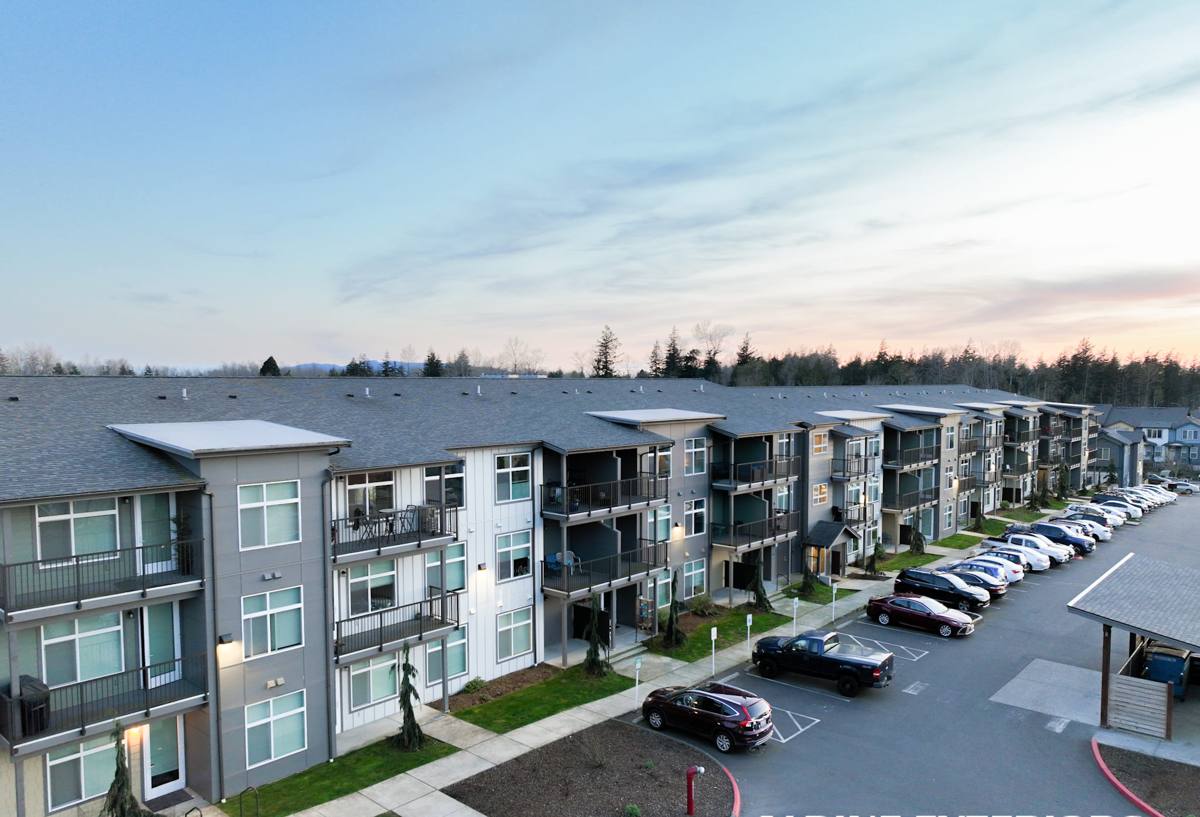
What Whatcom County's Climate Does to Siding Over Time
The problems aren't dramatic — they're slow and cumulative, which is exactly why they get overlooked until a wall needs real repair.
Moisture that doesn't leave
Driving rain doesn't just fall straight down here; wind pushes it sideways into siding, especially on gable ends and upper stories with less roof overhang protection. If the water-resistive barrier, flashing, and siding gaps aren't installed correctly, that moisture works its way behind the cladding instead of running off it. Once water gets trapped behind siding, it doesn't dry out quickly in a climate this humid — and that's when sheathing rot and mold start, usually invisible from the outside until the damage is advanced.
Moss and mildew season
Shaded walls, north-facing elevations, and anything near overhanging trees stay damp for extended stretches of the year in this region. That's the environment moss and mildew need. Wood-based sidings and some engineered wood products are more vulnerable here because organic growth can actually feed on the material itself, not just sit on the surface.
Salt-influenced air
Being close to the Salish Sea and Puget Sound region means the air carrying in from the west often has a marine, salt-tinged quality to it, even well inland. Over years, that kind of air accelerates corrosion on unprotected fasteners and trim, and it can dull or fade paint finishes on materials that weren't engineered to resist it.
Why We Install James Hardie and Nothing Else
We used to install a wider range of siding products. We don't anymore, and the reason is straightforward: after years of installs and callbacks across this climate, fiber cement — specifically James Hardie's product line — is the one material that consistently holds its shape, its finish, and its water resistance without the maintenance headaches we kept seeing with other options.
Fiber cement is made from cement, sand, and cellulose fibers, cured into a dense, stable board. It doesn't absorb water the way wood-based products can, it doesn't expand and contract with humidity the way some engineered wood siding does, and it's non-combustible, which matters more every year given regional wildfire smoke and ember exposure concerns even outside fire-prone zones. We stopped installing vinyl siding, LP SmartSide, and other composite or primed-wood products for this specific climate because we were seeing consistent long-term issues — moisture intrusion at seams, growth on shaded elevations, and finish failure — that fiber cement simply doesn't have to the same degree when installed correctly.
James Hardie specifically because they engineer their board formulations by climate zone and back the product with a strong, transferable limited warranty. That's not a small thing on a house you may sell in ten or fifteen years.
HZ5 Engineering for This Region
James Hardie makes different formulations of fiber cement for different parts of the country, grouped into HZ (HardieZone) categories. The Pacific Northwest, including Whatcom County, falls into the HZ5 zone — engineered specifically for regions with sustained moisture, freeze-thaw cycling, and the kind of damp, mossy conditions common here. That's a meaningful difference from a generic fiber cement board not formulated for this climate, and it's one of the reasons we don't treat "fiber cement" as a one-size-fits-all product.
What Correct Installation Actually Involves
Fiber cement siding fails almost exclusively because of installation mistakes, not because the material itself is weak. In a climate like Everson's, small installation errors compound quickly because the wall assembly rarely gets a chance to fully dry out between rain events.
- Proper clearance and gaps — siding needs a gap at the bottom (typically off the foundation and away from roof lines) so water can drain and the board isn't sitting in standing moisture.
- Correct flashing at every penetration — windows, doors, hose bibs, light fixtures, and any wall penetration needs flashing detailed to shed water outward, not funnel it behind the siding.
- Fastener placement and type — corrosion-resistant fasteners, driven correctly (not overdriven, which cracks the board or breaks the seal), placed per the manufacturer's fastening pattern.
- Field-cut edge sealing — any cut edge of a Hardie board needs to be primed or sealed before installation; a raw, unsealed cut edge is a moisture entry point waiting to happen.
- Correct joint and caulk detailing — butt joints and trim transitions need the right sealant, applied correctly, so they move with the building without opening a gap.
- A functioning drainage plane behind the siding — house wrap or building paper installed and lapped correctly, so any moisture that does get past the siding has somewhere to go besides the sheathing.
None of this is visible once the job is finished, which is exactly why it matters who does the work. A siding job that looks identical from the curb can perform completely differently ten years out depending on whether these details were done right the first time.
ColorPlus Finish vs. Field Painting in This Climate
James Hardie's ColorPlus Technology is a factory-applied, baked-on finish, and in a climate with this much sustained moisture and shaded, mossy exposure, it's a real advantage over field-applied paint. The finish is cured under controlled conditions rather than applied on-site where weather, humidity, and application inconsistencies can affect how well paint bonds and holds up.
| Factor | ColorPlus Factory Finish | Field-Applied Paint |
|---|---|---|
| Fade resistance | Backed by finish warranty, engineered for UV and weather exposure | Varies by product and application quality; touch-ups are visible over time |
| Moisture/mildew resistance on shaded walls | Consistent, factory-cured bond across the whole board | Dependent on surface prep and weather conditions during application |
| Maintenance | Occasional washing; repainting not typically needed for years | Repainting cycle generally shorter, especially on north-facing walls |
| Touch-up matching | Manufacturer touch-up products matched to factory color | Color matching depends on retained paint records |
We still offer primed Hardie board for homeowners who want a specific custom paint color the ColorPlus palette doesn't cover, but for most Everson homes, the factory finish is the lower-maintenance, better-performing choice given how much shade and moisture the siding will see over the years.
How We Approach a Fiber Cement Job in Everson
- On-site assessment — we look at the existing siding and sheathing condition, wall exposures, drainage, and any trouble spots (shaded elevations, areas prone to moss, existing moisture damage).
- Tear-off and sheathing check — old siding comes off and we inspect the sheathing underneath before anything new goes up. Hidden rot gets addressed before it's covered again, not painted over.
- Water-resistive barrier and flashing — house wrap and flashing details get installed and lapped correctly at every window, door, and penetration.
- Hardie board installation — installed to manufacturer fastening specs, with correct gaps, sealed cut edges, and proper joint treatment throughout.
- Trim, caulking, and finish details — corner boards, trim, and touch-up work completed to match the ColorPlus finish.
- Final walkthrough — we go over the finished work with the homeowner before calling the job done.
Maintaining Fiber Cement Through Whatcom County's Moss Season
Fiber cement is low-maintenance compared to wood or composite siding, but "low-maintenance" isn't "no-maintenance" in a climate this wet. A little seasonal attention goes a long way toward keeping siding looking good and performing well for decades.
- Rinse shaded and north-facing walls periodically to keep moss and algae from establishing — a garden hose is usually enough; avoid high-pressure washing directly at seams and joints.
- Keep gutters clear and downspouts directed away from the wall so runoff isn't constantly sheeting down the siding face.
- Trim back vegetation and tree limbs that shade siding and keep it damp longer than it needs to be.
- Walk the exterior once a year and look for cracked caulk joints, gaps at trim, or any spot where paint or finish looks compromised — these are cheap fixes when caught early and expensive ones when ignored.
- Watch for any staining or discoloration near ground level, which can signal splash-back or drainage issues rather than a siding defect.
Why Hiring a Crew That Already Works Local Matters
Installation quality is the single biggest factor in how fiber cement siding performs, and installation quality is heavily shaped by whether a crew actually understands the climate they're building in. A crew that regularly works in Lynden, Everson, and the rest of Whatcom County already knows where wind-driven rain hits hardest, which wall orientations need extra attention for moss and moisture, and how to detail flashing for a region that doesn't get a long dry season to forgive small mistakes. That local pattern recognition doesn't show up on a spec sheet, but it shows up in how the siding performs five, ten, and twenty years down the road.
If you're weighing a siding replacement or new siding for a home in Everson, we're happy to walk the exterior with you, look at what's there now, and talk through what James Hardie fiber cement would involve for your specific home — no pressure, no obligation. Use the form below to request a free estimate.