 Lynden Siding
 New-Construction Windows for Everson Homes: Getting It Right the First Time
Everson sits in the farmland and river-bottom country east of Lynden, in a part of Whatcom County where new homes, additions, and rebuilds are going up on lots that used to be pasture or orchard. When windows go into a house during framing, there's no drywall to protect, no old siding to patch around, and no second chance once the walls are closed in. The rough openings, the flashing, and the water management details built into that wall right now are what keep the house dry for the next fifty years. Get it wrong at this stage, and it's a problem nobody notices until there's a stain on an interior wall or soft trim years later.
We install new-construction windows for builders, owner-builders, and homeowners adding onto existing houses throughout the Lynden and Everson area. This page covers what that job actually involves, why it's different from swapping out an old window, and what to expect when you work with a crew that installs windows here regularly instead of flying in for one job.
Why the Local Climate Changes How This Job Should Be Done
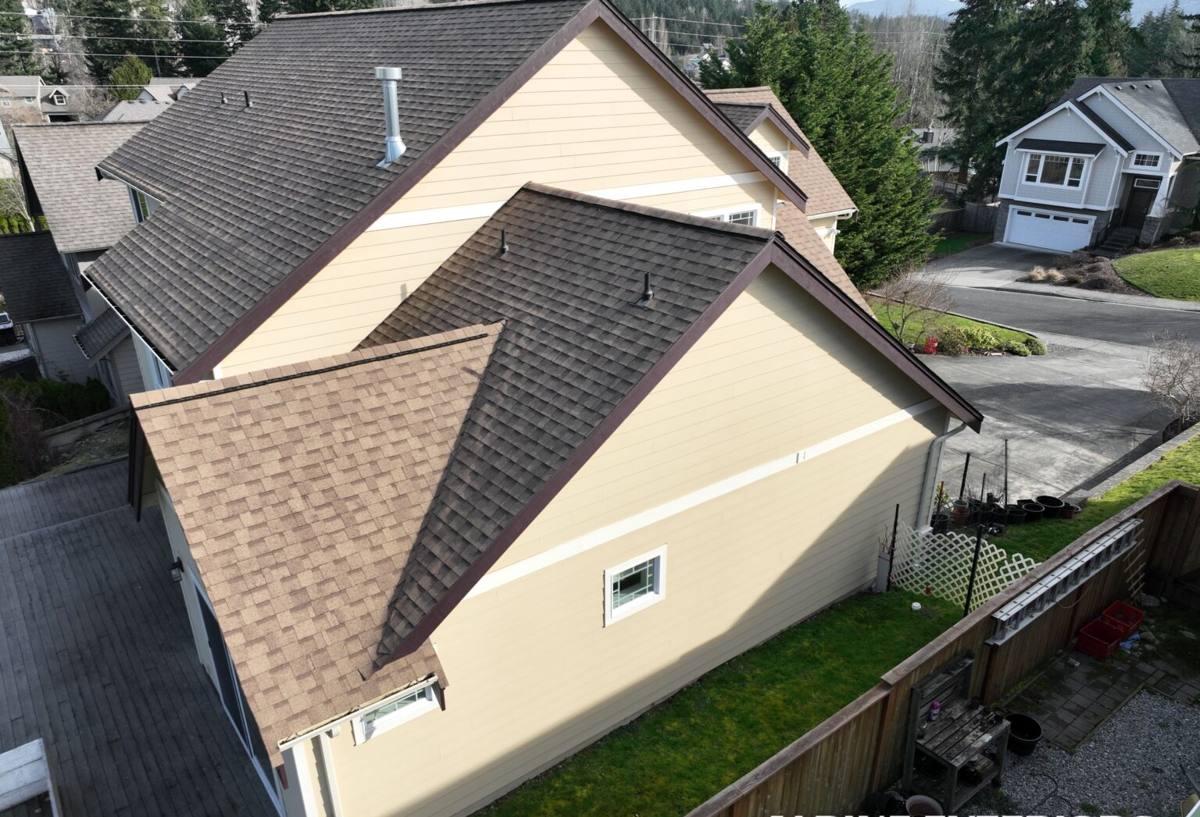
Whatcom County's marine-influenced weather isn't dramatic, but it's relentless. Rain here tends to arrive sideways, pushed by wind off the Sound, which means water gets driven against window flanges and up under trim in a way a calm rainstorm never would. Add in salt-tinged air moving inland on stronger weather systems, and metal fasteners, flashing tape, and window hardware all take more abuse over time than they would in a drier inland climate. Then there's the moss and algae season, which around here can stretch eight months or more on north- and east-facing walls that don't get much sun. Moss holds moisture against a wall long after the rain has stopped, and if the flashing behind a window isn't detailed correctly, that trapped moisture eventually finds a way in.
None of this is exotic information to anyone who's worked exteriors in this county for a while, but it matters directly for new-construction window installs: the sill pan, the flashing sequence, and the sealant choices all need to account for water sitting against the wall for weeks at a time, not just a passing shower.
What This Means for a New Build in Everson
Everson's lots often sit lower and closer to the Nooksack River drainage than in-town Lynden properties, which can mean more ground moisture and humidity around the foundation and lower wall sections. That doesn't change the window itself, but it's one more reason the water management details around every rough opening need to be done correctly rather than rushed — there's less margin for a sloppy flashing job to dry out between weather events.
Rough Opening and Flashing: The Part Nobody Sees Again
Once siding and trim go on, the flashing behind a window is invisible for the life of the house. That's exactly why it's the part worth slowing down for. A correct new-construction install follows a specific order, and skipping or reversing any step is how leaks start:
- Rough opening is checked for square, level, and correct dimensions before the window ever arrives on site
- A sloped sill pan is installed so any water that gets past the window drains back outward, not into the wall cavity
- Weather-resistive barrier (house wrap) is cut and integrated with the opening before flashing tape goes on, not after
- Jamb flashing goes on first, then the window, then head flashing — always shingle-lapped so water sheds down and over, never trapped behind a seam
- The window is fastened per the manufacturer's specifications, not "close enough," since fastening pattern affects both structural performance and warranty coverage
- Sealant is used at the right joints only — over-sealing can trap water inside a wall assembly just as easily as under-sealing lets it in
A rushed crew can hang a window in under an hour. A correct install, with proper flashing integration, takes longer — and that time is what separates a window that performs for decades from one that causes a repair call in three years.
Choosing the Right Window for a Whatcom County New Build
Frame material matters more here than in a drier climate, because whatever you choose is going to sit through years of driving rain, damp winters, and long stretches without direct sun to dry things out. There's no single right answer for every project — it depends on budget, the look of the house, and how much long-term maintenance the owner wants to take on.
| Frame Material | Moisture Performance | Maintenance | Typical Fit |
|---|---|---|---|
| Vinyl | Good — won't rot, handles constant damp well | Low; occasional cleaning | Most cost-sensitive new builds and additions |
| Fiberglass | Very good — stable in wet/dry cycling, minimal expansion movement | Low | Homes wanting a narrower profile and longer service life |
| Wood-clad | Depends heavily on cladding integrity and install quality | Higher; exposed wood details need upkeep | Higher-end builds prioritizing interior wood appearance |
| Aluminum | Durable but prone to condensation without thermal breaks | Low | Specific architectural styles; less common in residential new builds here |
We don't push one brand or material on every job. What we do insist on is a window with documented performance ratings appropriate for this climate zone, installed the way the manufacturer actually specifies — because an excellent window installed poorly will underperform a mid-grade window installed correctly.
Energy Code and Performance Requirements
Whatcom County falls under Washington's colder climate zone for energy code purposes, which affects the minimum performance a new-construction window needs to meet. New builds and many additions are required to hit specific U-factor targets (a measure of how well the window resists heat loss) as part of the Washington State Energy Code compliance path for the whole house, not just the window itself.
A few things worth knowing before you're picking windows off a spec sheet:
- U-factor is the number that matters most for our climate — lower means better insulating performance
- Bedrooms typically require at least one window that meets egress size and sill-height rules, which affects what unit sizes and styles work in those rooms
- Condensation resistance matters more here than in drier regions, since interior humidity plus cold glass in winter is a recipe for fogging and, over time, sill damage if the window's rated poorly
- Whatever code path the builder is using (prescriptive or performance-based), window specs need to be locked in early — swapping to a lower-performing window mid-project can throw off the whole compliance calculation
Our New-Construction Window Installation Process
We work directly with builders and framers so window installation happens at the right point in the build schedule — not too early, and not so late that the house sits open to weather longer than it needs to.
| Stage | What Happens | Why It Matters |
|---|---|---|
| Pre-install walkthrough | Rough openings checked against window schedule and manufacturer tolerances | Catches framing errors before they become install-day problems |
| Sill pan and flashing prep | Sloped sill pans and WRB integration installed at each opening | This is the water management layer — it has to be right before the window goes in |
| Window setting | Units set plumb, level, and square; fastened per manufacturer spec | Poor alignment causes operational issues and stresses seals over time |
| Flashing completion | Jamb and head flashing shingle-lapped over the window flange | Directs water down and out, never behind the barrier |
| Final check | Every window operated, sealed, and inspected before siding crew moves in | Confirms the opening is fully weathertight before it's covered |
Because we also do siding and exterior finish work, the same crew that flashes the window opening is often the one integrating it with the house wrap and cladding system — no gap between trades, no argument later about whose detail failed.
Working Around a Build Schedule
New-construction scheduling is unforgiving — framers, electricians, and siding crews are all waiting on their turn. We coordinate directly with the general contractor or owner-builder so window installation slots in without holding up the rest of the job, and openings aren't left exposed to Whatcom County weather any longer than necessary.
New-Construction Window Installation Checklist
Whether you're a homeowner managing your own build or just want to know what a subcontractor should be doing, this is what a correct job includes:
- Rough openings verified for size, square, and level before windows are ordered
- Sloped sill pan flashing at every opening, no exceptions
- House wrap integrated with flashing in the correct shingle-lap sequence
- Manufacturer-specified fastening pattern used, not a generalized nailing schedule
- U-factor and performance ratings confirmed against Washington State Energy Code requirements
- Egress-required bedroom windows checked against size and sill-height rules
- Every window operated and inspected before siding covers the opening
- Written warranty covering both the window and the installation work
Why It Matters to Hire a Crew That Already Works in Everson
A window installer who's never worked this side of the county is starting from zero on things that matter: how hard wind-driven rain hits certain wall orientations here, how long moss and algae linger on shaded elevations, and how local building departments expect flashing details to be documented. A crew already working Lynden and Everson jobs has already worked through those specifics — on real houses, in this actual weather, not a manual written for a different climate.
There's also the practical side. Being local means we can respond quickly if a builder's schedule shifts, show up for a walkthrough without a long drive, and stand behind the work with an actual local presence years down the road — not a phone number that stops being answered once the crew moves to the next region.
Ready to Talk About Your Everson Build?
If you're framing a new home or addition in Everson or anywhere around Lynden, we're happy to walk the site, review your window schedule, and talk through what a correct installation looks like for your specific build. Reach out for a free, no-pressure estimate using the form below — there's no obligation, just a straight answer about what the job needs.