 Lynden Siding
 Metal Roofing Built for Wiser Lake's Climate
Wiser Lake sits just outside Lynden, in a part of Whatcom County where wooded, tree-ringed lots meet open farmland. Homes around the lake pick up the same marine-influenced weather that shapes exterior work across this whole corner of the county, but the setting adds its own wrinkle: mature tree cover close to the water keeps roof planes shaded and damp longer than a home out in open fields, and the lake itself holds humidity in the air on still mornings even after the rain has stopped. Add in wind-driven rain and salt-tinged air moving in from the Sound, and a roof around Wiser Lake is dealing with sustained moisture almost year-round, not just during storms.
That combination is exactly why metal roofing keeps coming up as an option for homeowners in this area. It isn't the right material for every roof or every budget, but for a lake-adjacent, tree-shaded property, it solves problems that asphalt shingles structurally can't. This page covers what actually makes metal roofing a good fit for a home near Wiser Lake, what a correct install involves, and how the job runs from first look to final walkthrough.
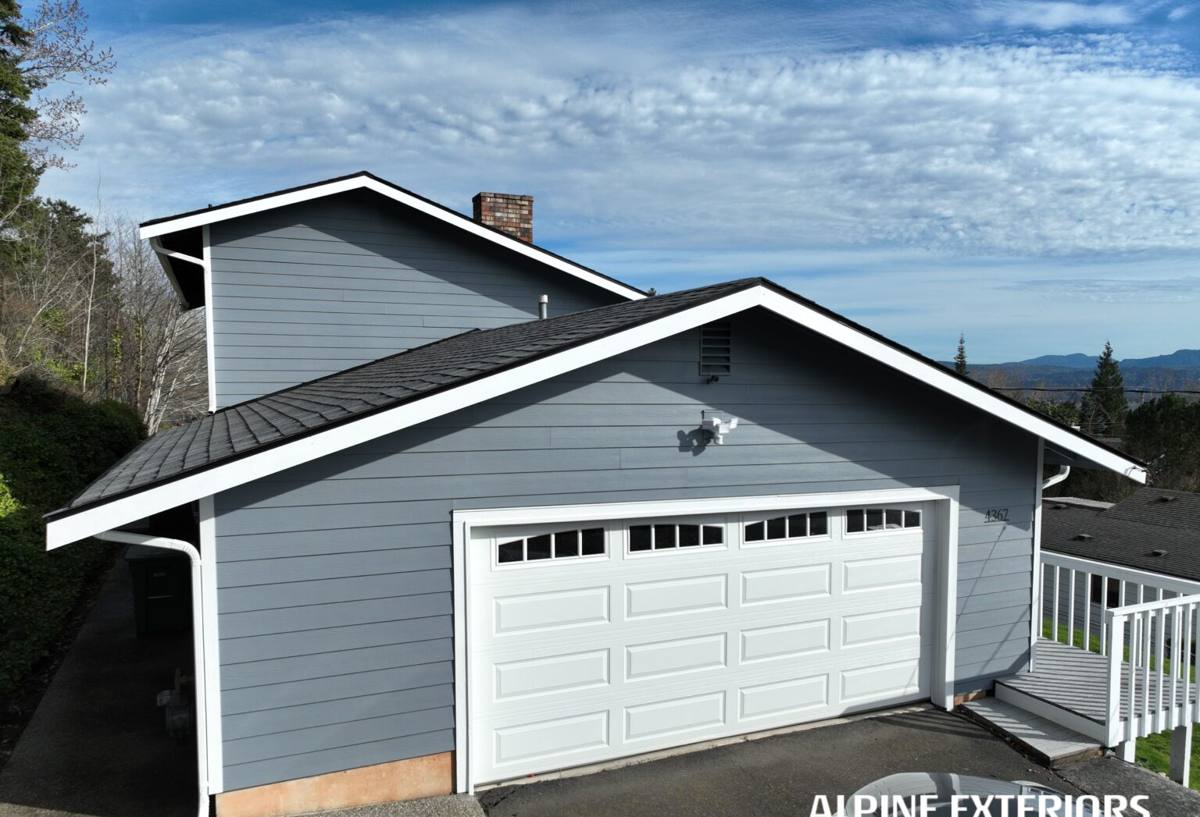
What This Lake Setting Puts a Roof Through
A Longer Moss Season Under Tree Cover
Roof planes shaded by mature trees near the water hold moisture long after the rest of a property has dried out. On a porous roofing surface, that translates into moss and algae taking hold within a few wet seasons and coming back every year after a cleaning. Needles, leaves, and other debris from overhanging trees add to the problem, collecting in valleys and against roof-to-wall transitions where they trap moisture against the roofing material.
Wind-Driven Rain and Open-Water Exposure
Rain moving across open water and through gaps in the tree line rarely lands straight down. It gets pushed sideways into valleys, around chimneys, and under any flashing or shingle edge that isn't sealed and lapped correctly. A roof near Wiser Lake sees a heavier, more directional moisture load than a simple annual rainfall number suggests, and that's where under-built roofing systems tend to leak first.
Salt-Influenced Air, Even Set Back From the Coast
Wiser Lake isn't a waterfront property in the coastal sense, but it still sits inside the marine air pattern that moves across northern Whatcom County. Over years, that salt-tinged air accelerates corrosion on lower-grade fasteners, flashing, and exposed metal trim. Material and hardware choices that ignore that reality tend to show rust staining and premature wear well before the rest of the roof is due for attention.
Why Metal Roofing Is a Strong Fit for This Kind of Property
A smooth, non-porous metal surface doesn't give moss and algae the foothold a shingle's granulated texture does, which matters directly on a shaded, lake-adjacent roof plane that never fully dries out between rains. Water and debris shed off a metal panel faster and more completely than off asphalt, so needles and leaves are less likely to sit and rot against the roofing material in the first place. Metal roofing is also non-combustible, a real consideration on a property surrounded by trees, and a correctly installed system commonly runs 40 to 60 years, which matters on a lot where roof access is more involved than it would be on a flat, open suburban lot.
None of that means metal is automatically the right call for every home here. It costs more upfront than asphalt shingles, the installation is less forgiving of shortcuts, and not every roof style or budget calls for it. We'll walk through the real trade-offs for your specific roof rather than defaulting to whichever material is easiest to sell.
Comparing Metal Roofing Systems
| System | How It Handles Water & Moss | Fastener Exposure | Typical Lifespan |
|---|---|---|---|
| Standing seam (concealed fastener) | Raised, interlocking seams shed water and debris cleanly; smooth panel resists moss | Fasteners hidden under the seam, out of weather exposure | 40-60 years |
| Exposed-fastener panel | Sheds water well, but exposed screws create more points where seals can fail over time | Fasteners visible through the panel face | 25-40 years, largely dependent on fastener maintenance |
| Stone-coated steel shingle | Combines a shingle profile with a metal core; sheds moss better than asphalt but has more seams than standing seam | Mostly concealed, similar to shingle installation | 30-50 years |
For a shaded, moisture-prone lot like most properties around Wiser Lake, standing seam is generally the strongest long-term performer because it minimizes the exposed fastener points that salt-tinged air and sustained moisture work on hardest. Exposed-fastener panels cost less upfront and can be a reasonable option on secondary structures like a garage or shed, but on the main roof of a lake-adjacent home, the maintenance burden of failing fastener seals over decades is worth weighing honestly before choosing it to save money on day one.
What a Correct Metal Roof Install Involves
Underlayment and Condensation Control
Metal panels transfer temperature quickly, and on a humid, lake-adjacent property, that can lead to condensation forming on the underside of the panel if the roof isn't built to manage it. A high-temperature synthetic underlayment, and self-adhered membrane at eaves and valleys, gives the deck a real moisture barrier from both directions — driving rain from above and condensation from below.
Panel Material and Finish
Steel and aluminum are both common choices. Aluminum resists corrosion in salt-influenced air somewhat better on its own, while steel typically needs a quality factory coating, such as a PVDF/Kynar-type finish, to hold color and resist chalking over decades of sun and moisture exposure. Either material can perform well here; what matters is choosing a real factory finish over a lower-grade paint system that fades and chalks early.
Fastening and Clip System
On standing seam roofs, concealed clips let panels expand and contract with temperature swings without buckling or oil-canning, and they keep fasteners out of direct weather exposure. Clip spacing and type need to match the panel profile and roof pitch, not just whatever's fastest to install.
Flashing at Valleys, Penetrations, and Wall Transitions
Metal roof leaks, when they happen, almost always trace back to flashing rather than the panels themselves. Valleys, chimney and vent penetrations, and roof-to-wall transitions all need flashing detailed specifically for a metal system, lapped and sealed correctly rather than caulked as an afterthought once panels are already up.
Ventilation
Balanced attic and roof ventilation keeps the underside of the deck dry, which works alongside proper underlayment to control condensation and extends the life of the roof deck itself underneath the metal.
Cost Factors Worth Understanding
| Factor | What It Affects |
|---|---|
| Panel system (standing seam vs. exposed-fastener) | Upfront cost, long-term maintenance, and how many exposed fastener points age over time |
| Panel material (steel vs. aluminum) | Corrosion resistance in salt-influenced air and overall project cost |
| Roof complexity | Number of valleys, penetrations, and transitions, which drive flashing labor |
| Underlayment grade | Condensation control and resistance to wind-driven rain |
| Roof pitch and tree-cover access | Staging, safety equipment, and labor time on a wooded lot |
Two metal roofing bids for the same house can look very different once you account for panel system, material, and how much flashing detail is actually included. A written estimate that breaks these out separately is worth far more than a single lump-sum number when you're comparing quotes.
How Our Process Works
- In-person inspection: We walk the roof and attic ourselves, accounting for tree cover, shade patterns, and access on your specific lot.
- Written estimate: A clear, itemized bid covering panel system, underlayment, flashing, ventilation, and cleanup — not a single vague line item.
- Material selection: We walk through panel material, profile, and finish options against your budget and how long you plan to stay in the home.
- Tear-off and deck inspection: Old roofing comes off completely, and any deck damage found gets addressed before anything new goes down.
- Underlayment, flashing, and panel installation: Each layer goes on to manufacturer specification, with extra attention at valleys, penetrations, and wall transitions.
- Final walkthrough and cleanup: We review the finished roof with you in person and do a full site sweep before calling the job done.
Why Hiring a Crew That Already Works Wiser Lake and Lynden Matters
A crew that already works roofs around Wiser Lake and Lynden has seen how shade from lake-side trees keeps certain roof planes damp longer than others on the same house, how far salt-tinged air actually reaches inland, and which flashing details are worth the extra time on install day so a homeowner isn't dealing with a callback two winters later. That's practical, earned knowledge specific to this setting, not a generic approach applied to every roof regardless of where it sits. It also means a name you can still reach years later if a question comes up, not a crew that bid the job and moved on to the next county.
A Practical Checklist Before You Choose a Metal Roofing Contractor
- Do they specify panel system, material, and finish in writing, not just "metal roof"?
- Is flashing work at valleys, penetrations, and wall transitions explicitly written into the bid?
- Does the estimate call out underlayment type, including condensation protection?
- Do they carry current Washington contractor licensing and active liability insurance?
- Can they speak specifically to working on shaded, tree-covered, or lake-adjacent lots?
- Does the bid separate the manufacturer's material warranty from their own workmanship warranty?
Signs a Wiser Lake Roof May Need Attention
- Moss or debris buildup in valleys that returns quickly after cleaning
- Rust staining at cut panel edges, fasteners, or flashing
- Visible chalking or fading on a metal panel's factory finish
- Panels that look wavy or "oil-canned" beyond normal light reflection
- Loose or backed-out fasteners on an exposed-fastener system
- Water staining on interior ceilings near valleys, chimneys, or wall transitions
- Ticking, popping, or movement sounds during temperature swings, which can point to a failing clip system
Any one of these is worth a professional look. Caught early, most are a straightforward repair. Left through another wet season, several of them turn into deck-level moisture damage that costs far more to fix.
If you're weighing metal roofing for a home near Wiser Lake, or you'd like an honest look at a roof that's already showing wear, we're glad to come take a look and give you a straightforward, no-pressure estimate. Reach out using the form below to get started.