 Lynden Siding
 Deck Building in Ferndale: Framed for the Climate, Not Just the Layout
Ferndale sits close enough to the water and to the open farmland of the Nooksack lowlands that homes here take on a specific combination of exterior stress: salt-tinged marine air, rain that arrives sideways more often than straight down, and a moss season that can run most of the year on shaded ground and north-facing structures. A deck feels that combination more directly than almost any other part of a house, because it's outdoor structure with no roof, siding, or wall cavity to buffer it. It sits exposed to sun, rain, and standing moisture in a way the rest of the home simply doesn't.
Building a deck that actually holds up in Ferndale isn't primarily a design problem. Plenty of decks look good on the day they're finished. What separates a deck that's still solid in ten years from one that's showing soft joists and loose railings in three usually comes down to framing choices, fastener grade, and drainage details that most homeowners never see and most contractors don't explain. This page covers what a Ferndale deck actually needs, what a correct build involves, and how our process works for deck construction in this part of Whatcom County.
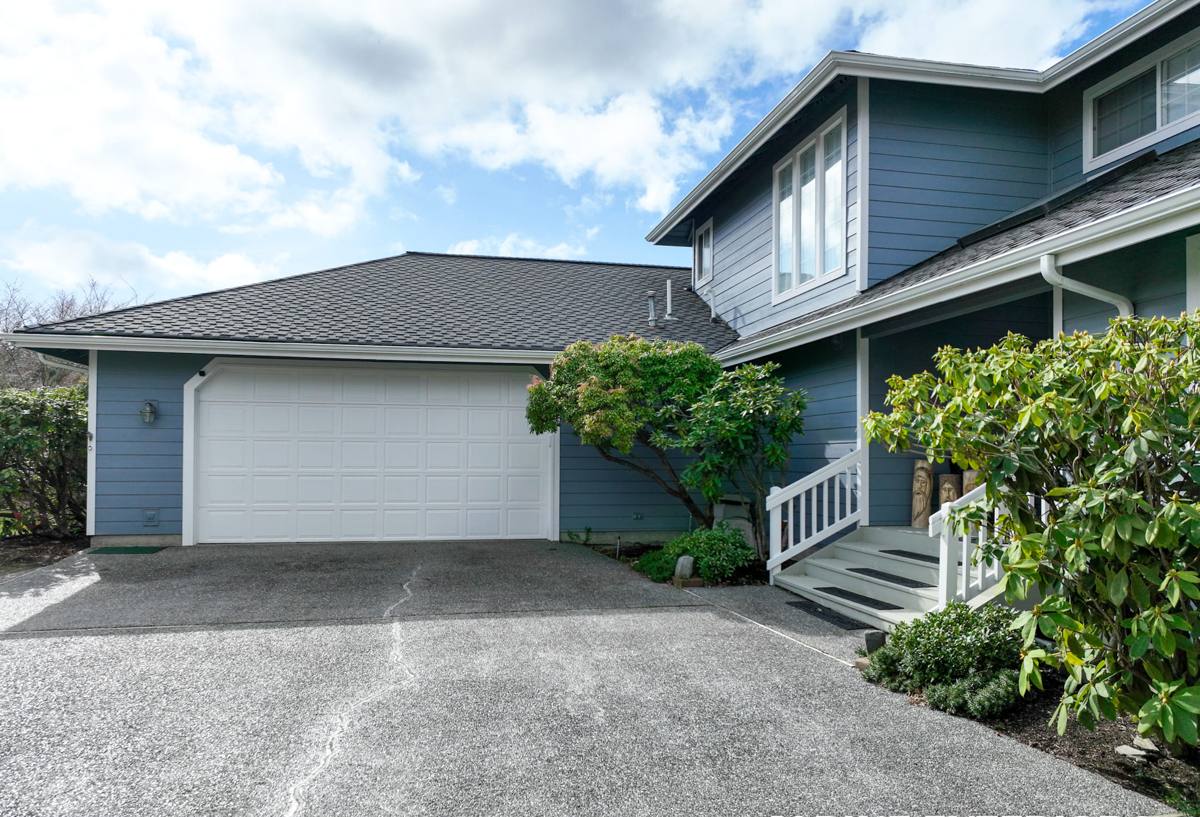
What Ferndale's Climate Does to a Deck
Salt-Tinged Marine Air
Ferndale's proximity to the water means a steady, low-grade dose of salt-laden air moves through the area even on properties without a water view. Salt accelerates corrosion in exposed metal, and a deck has more exposed metal than most people realize: joist hangers, structural screws, post bases, railing brackets, and every fastener holding the decking boards down. Corrosion that starts below the surface doesn't announce itself with a rust stain right away — it shows up first as lost holding strength, which matters a great deal on a structure people stand, walk, and lean against.
Wind-Driven Rain
Rain in this part of Whatcom County rarely falls straight down. Wind pushes it sideways, and on an open, horizontal surface like a deck, that means water gets driven up under railings, into the gap where the deck meets the house, and between boards that aren't spaced correctly for drainage. A deck design that would shed water fine in still conditions can still trap moisture the moment wind gets involved, and around Ferndale's more open, lower-lying terrain, wind-driven rain shows up more often than it would on a tighter, more sheltered inland lot.
A Moss Season That Doesn't Really End
Mild temperatures and consistent moisture give moss and mildew a long growing season across Whatcom County, and a horizontal deck surface is one of the first places it takes hold. Deck boards hold water longer than a vertical wall does and stay damp between rain events, especially on shaded decks or ones tucked under trees. Any decking material with even mild surface porosity gives moss something to grip, and once it establishes itself in the grain or texture of a board, it's far harder to fully clear than it was to prevent.
Choosing the Right Decking Material for Ferndale
The decking material sits on top of the structure, but it's also the part of the deck taking the most direct, sustained exposure to sun, rain, and moss. In a climate like this one, the performance gap between a well-suited product and a poorly-suited one shows up faster than it would in a drier region. Most Ferndale homeowners are choosing between pressure-treated or cedar wood, capped composite, and cellular PVC.
Pressure-Treated Wood and Cedar
Wood decking costs less upfront and has a familiar, natural look that plenty of homeowners want. The trade-off is maintenance: both pressure-treated lumber and cedar need regular sealing or staining to resist moisture, and both are more vulnerable to fastener corrosion issues over time in a salt-air environment. Left unsealed even a season or two, wood is usually the first decking material in this climate to show graying, moss, and soft spots underfoot.
Capped Composite
Capped composite boards wrap a wood-fiber composite core in a protective plastic shell, which resists moisture absorption, staining, and fading far better than uncapped composite or raw wood. In Ferndale's combination of salt air and sustained moisture, that cap layer is doing real structural work for the board's lifespan, not just adding a marketing line — it's the difference between periodic washing and an ongoing sealing schedule.
Cellular PVC
PVC decking contains no wood fiber at all, so there's nothing in the board itself to absorb moisture, even at cut edges or fastener holes. It typically costs more than composite and can flex slightly more under heavy point loads, but for a deck that sits in heavy shade, close to grade, or otherwise holds moisture longer than most, the added cost sometimes buys back real maintenance time.
| Material | Moisture & Salt Air Resistance | Moss Resistance | Ongoing Upkeep |
|---|---|---|---|
| Cellular PVC | Excellent — no wood fiber to absorb moisture | Strong, smooth non-porous surface | Occasional washing |
| Capped composite | Strong — cap layer resists moisture and staining | Good on most product lines | Occasional washing |
| Uncapped composite | Moderate — some absorption at exposed fiber | Fair; more prone to buildup over time | Periodic cleaning |
| Cedar | Moderate — natural resistance, needs sealing | Fair when sealed and maintained | Regular oiling or sealing |
| Pressure-treated wood | Weakens under sustained salt exposure over time | Poor without regular treatment | Regular sealing or staining |
What a Correctly Built Deck Involves Here
The decking surface gets most of a homeowner's attention, but in Ferndale's climate, what's underneath it is what actually determines how long the deck lasts. A build done right for this area includes:
- Footings poured below the local frost line and sized for the actual soil conditions on the lot, not a generic minimum
- Framing lumber rated for the application and sized correctly for the span and expected load, not undersized to save on material
- Stainless steel or coastal-grade corrosion-resistant fasteners and hardware throughout, since standard hardware can start corroding within a few seasons in this air
- Correct board gapping for drainage and material movement, so wind-driven rain and surface moisture can actually drain and dry rather than sit
- Proper ledger board flashing at the point where the deck ties into the house — one of the most common places moisture gets into the structure on a poorly built deck
- Joist spacing matched to the specific decking product's span rating rather than a one-size framing layout
- Railing and post attachment sized for the wind exposure the site actually sees, which matters more on open or elevated lots
- Grading and airflow underneath the deck so moisture doesn't sit trapped against the framing between storms
Skip any one of those and the deck will usually still look fine on the day it's finished. The consequences show up later, as a soft joist, a loosening railing post, or rust staining bleeding down through the decking boards around a corroding fastener.
Permitting and Whatcom County Requirements
Most new deck construction and many significant deck rebuilds in Whatcom County require a building permit, with review covering structural sizing, footing depth, railing height and spacing, and setback from property lines. Attached decks also get reviewed for how they tie into the house structurally, since that ledger connection carries real load and needs to be treated as part of the home's structure, not an afterthought. We handle permitting and inspection scheduling as part of the job rather than leaving a homeowner to navigate that process alone, and we build to pass inspection the first time rather than treating code minimums as something to negotiate around after the fact.
Deck Building Cost Factors in Ferndale
| Factor | What It Affects | Why It Matters Here |
|---|---|---|
| Deck size and footprint | Total material and labor | Larger surfaces mean more joints and seams where wind-driven rain can work in |
| Decking material | Material cost and long-term upkeep | Moisture and moss resistance vary widely between wood, composite, and PVC |
| Height and railing requirements | Structural and code-driven cost | Elevated decks need more robust post, footing, and railing engineering |
| Site grade and access | Labor time and equipment needs | Sloped or lower-lying lots common in Ferndale can add drainage and footing work |
| Attached vs. freestanding | Ledger flashing and structural tie-in scope | Ledger connections need careful flashing to keep moisture out of the house wall |
Exact numbers depend on the specific site and material choice, which is why we walk the property in person before giving a real number instead of quoting off a generic price sheet.
Signs an Existing Deck Needs Repair or Replacement
- Boards that feel soft, spongy, or slightly springy underfoot, especially near the house or in shaded areas
- Gaps or separation where the deck ledger meets the house siding or trim
- Rust streaking or corrosion visible around fasteners, brackets, or post hardware
- Railings or posts that feel loose or move when pushed
- Standing water or persistently damp ground underneath the deck after rain has stopped elsewhere
- Moss or dark staining that returns quickly after cleaning
- Nail heads that have popped up or fasteners that have backed out of the decking boards
How Our Process Works
We start with a site visit to look at the actual conditions — existing structure if it's a repair or rebuild, grade and drainage around the deck area, sun and wind exposure through the day, and how the space will realistically get used. From there we talk through decking material options that fit the budget and the maintenance level the homeowner actually wants to keep up with, since the right material for a low-maintenance household isn't always the right material for someone who doesn't mind an annual sealing routine.
Once the design and material are set, we handle permitting and inspection scheduling, then build in sequence: footings and framing first, sized and fastened for what the site actually sees, followed by the decking surface, railings, and any stairs or trim. We finish with a walkthrough covering what the specific material you chose needs going forward, which for most modern decking is minimal, but never zero.
Why It Matters That We Already Work Ferndale
A crew that mostly builds decks in drier, more sheltered inland areas can still put together a competent structure, but Ferndale jobs carry variables that don't come up as often elsewhere in the county — corrosion-grade fastener requirements from sustained salt exposure, wind loads tied to the area's more open, lower-lying terrain, and a moss season that runs longer here than in more sheltered towns. Working this area regularly means we aren't guessing at those requirements on your project. We've seen which decking materials hold up against Ferndale's specific mix of salt air, wind-driven rain, and moss, and which fastener grades and framing details are worth the extra time rather than an unnecessary upsell.
That familiarity also shows up in smaller judgment calls — how to orient a deck for the wind a particular lot actually sees, where extra flashing attention pays off at the ledger connection, and being straightforward with a homeowner about what a deck here realistically needs to last versus what's just an added line item.
If you're planning a new deck, replacing one that's showing its age, or want a straight answer on what a build would take on your Ferndale property, we're glad to walk the site with you. Reach out using the form below to schedule a free, no-pressure estimate.