 Lynden Siding
 Why Ferndale Decks Wear Differently
Ferndale sits close enough to the water that salt-laden air is part of daily life, and that changes how a deck ages compared to one further inland. Salt air accelerates corrosion on fasteners, hinges, and any exposed metal hardware, and it works faster on decks that don't get much direct sun to dry them out between weather systems. Combine that with Whatcom County's long stretch of driving rain each fall and winter, plus a moss season that can run from October well into spring, and you get decks that look fine from the porch door but are quietly failing underneath.
We're a Lynden-based crew, and Ferndale is part of our regular service area — not a once-in-a-while drive. That matters for deck repair specifically because the failure patterns here are consistent enough that we can usually tell what we're dealing with before we even pull the first board.
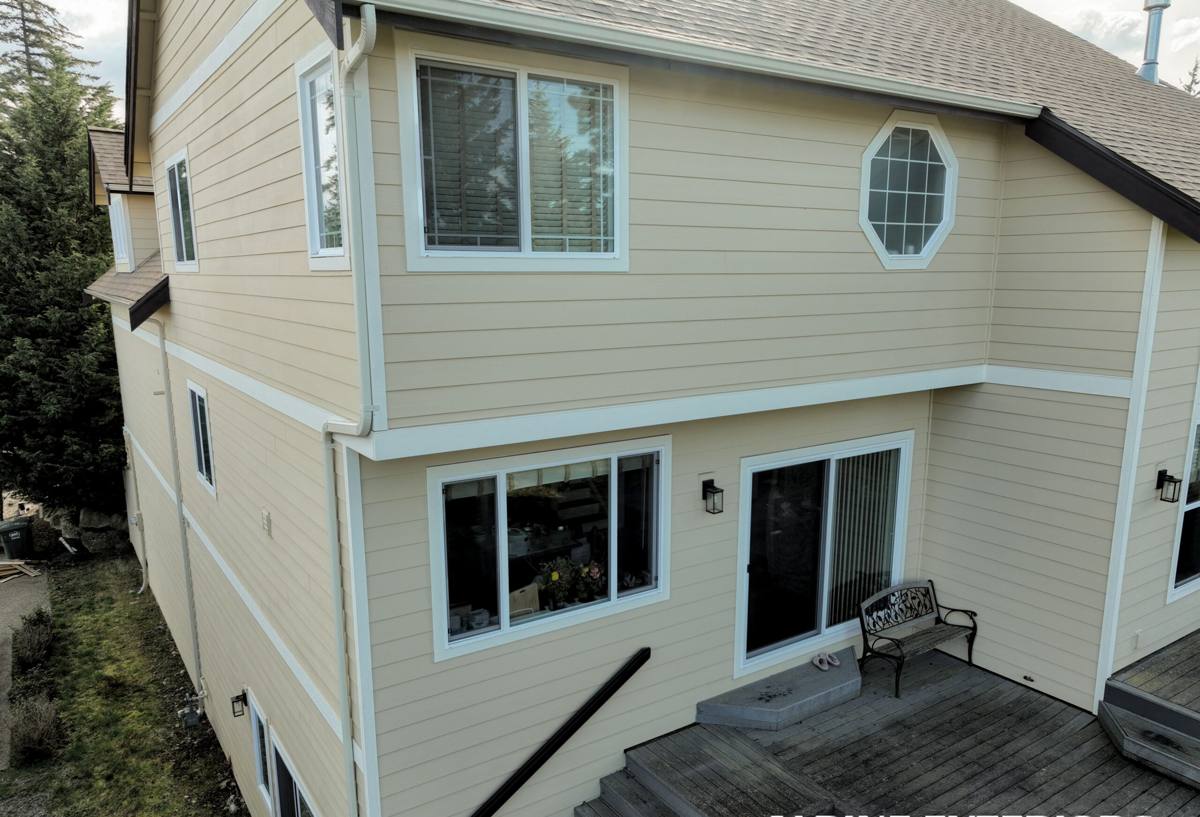
What Actually Damages a Deck Around Here
Moisture That Never Fully Leaves
A deck doesn't need a downpour to suffer — it needs the wood to stay wet longer than it should. Northwest Washington's pattern of light, steady rain followed by overcast, low-sun days means deck boards, joists, and ledger connections often don't dry out completely between storms for weeks at a time. That sustained dampness is what drives rot, not any single storm event.
Moss and Organic Buildup
Moss holds moisture directly against wood fibers and fasteners, and it grows fastest in the shaded, low-airflow corners of a deck — under railings, along the house wall, and anywhere debris collects. Left alone through a full moss season, it doesn't just look bad; it keeps the wood underneath wet enough to start breaking down.
Salt Air and Metal Fatigue
Fasteners, joist hangers, and structural screws are usually the first things to show wear in coastal-influenced air. Corroded hardware can fail well before the wood around it looks like a problem, which is why a proper inspection checks connections, not just the visible decking surface.
Signs Your Deck Needs Repair — Not Full Replacement
Most decks we look at in Ferndale don't need to be torn out. They need targeted repair to specific areas where moisture and age have done real damage. Signs worth calling about include:
- Soft or spongy spots when you walk across the deck, especially near the house or stair landing
- Visible gaps or separation where the deck ledger meets the house siding
- Rust streaks below fasteners or joist hangers
- Railings or stair posts that flex or wiggle more than they used to
- Boards that stay dark or damp long after the rest of the deck has dried
- Persistent moss or algae that keeps returning within weeks of cleaning
- Cracking or splintering concentrated in one section rather than spread evenly
Any one of these can usually be repaired. Several of them together, especially involving the ledger board or main support posts, is when we start talking about whether repair still makes sense structurally.
What a Correct Deck Repair Involves
Deck repair done right isn't just swapping a rotten board for a new one and calling it finished. A repair that actually holds up through another Whatcom County winter starts with figuring out why that section failed in the first place — otherwise you're just delaying the same problem.
Our Repair Checklist
- Inspect the ledger board connection to the house — this is the single most common source of hidden rot on older decks
- Check every joist hanger and structural fastener for corrosion, not just the ones near the visible damage
- Confirm proper flashing exists where the deck meets the house; missing or failed flashing is a repeat cause of ledger rot
- Test posts and support beams for soft wood, not just surface weathering
- Replace damaged boards with material matched for grain, thickness, and fastening pattern to the existing deck
- Re-grade or clear drainage paths so water doesn't pool under or against the repaired section
- Address any moss-prone areas with better airflow or drainage, not just a one-time cleaning
Skipping the "why" step is how homeowners end up paying for the same repair twice within a few years.
Common Repairs We Handle in Ferndale
Some repairs come up more often than others in this area, largely because of the climate factors above:
| Repair Type | Typical Cause Locally | What's Involved |
|---|---|---|
| Board replacement | Sustained moisture, sun exposure on one side only | Removing and replacing individual boards, matched to existing spacing and fastener pattern |
| Ledger board repair | Missing or failed flashing, water tracking behind the house wall | Removing affected material, correcting flashing, reattaching to code |
| Railing and post repair | Loose fasteners, base rot from standing water at post footings | Reinforcing or replacing posts, resecuring hardware |
| Hardware and fastener replacement | Corrosion from salt-influenced air | Swapping to corrosion-resistant fasteners rated for coastal exposure |
| Structural joist repair | Long-term moisture trapped under decking | Sistering or replacing damaged joists, improving underdeck airflow |
Repair vs. Replace: How We Make the Call
We'd rather repair a deck properly than sell a full replacement it doesn't need — but we'll also tell you plainly when repair is a short-term patch on a deck that's past the point of it. A few factors drive that decision:
- Extent of damage: Isolated boards or one section point to repair. Rot at multiple ledger points or several support posts points toward replacement.
- Age of the structure: An older deck built before current flashing and fastener standards may have systemic issues a section repair won't fix.
- Structural vs. cosmetic: Surface graying and minor board wear are cosmetic. Soft framing, failing ledger connections, or compromised posts are structural and safety-relevant.
- Cost over time: If repairs are recurring in the same areas year after year, that's usually a sign the underlying cause hasn't been fixed and replacement may cost less over the next several years than ongoing patching.
Our Process
For a repair job, we start with an on-site inspection where we walk the whole deck, not just the section you called about — because Whatcom County's rain and moss patterns tend to affect a deck unevenly, and a problem in one corner is often an early warning for another. We check the ledger connection, flashing, fasteners, and framing before quoting anything, so the estimate reflects what the deck actually needs rather than a guess based on the visible surface. Once we've scoped the work, we walk you through what we found, what's driving it, and what a proper fix involves, in plain terms. Repairs are scheduled around what the weather allows, since working wet material into a repair defeats the purpose of doing it right.
Materials and Fasteners for This Climate
What we use for a repair matters as much as the work itself. In an area with salt-influenced air and a long wet season, we favor fasteners and hardware rated for corrosion resistance rather than standard-grade options — the cost difference is small compared to what it costs to redo hardware failures a few years down the line. For decking material, we match what's already there when a full match is reasonable, and we'll walk you through trade-offs honestly if you're considering a different material for the repaired section: some options handle sustained moisture better than others, some show wear differently over time, and some require more upkeep to look right through a full moss season. There's no single "best" answer for every deck — it depends on your existing structure, your budget, and how much maintenance you want to take on.
Why a Crew That Already Works Ferndale Matters
Deck repair is one of those jobs where local familiarity actually changes the outcome. A crew that regularly works Ferndale and the surrounding Lynden and Whatcom County area has already seen how ledger boards fail near the coast, which fastener types hold up and which don't, and how fast moss comes back if drainage isn't addressed. That's not something you get from a general contractor who repairs a deck here once a year. It means fewer surprises during the work, a more accurate estimate up front, and a repair that's built for the conditions your deck actually faces — not generic conditions from a manual.
If you've got soft spots, loose railings, or a section of deck that just doesn't feel right anymore, we're happy to take a look. Reach out for a free, no-pressure estimate using the form below — we'll tell you honestly whether it's a repair job or something bigger, no upsell either direction.