 Lynden Siding
 Birch Bay's Siding Has a Harder Job Than Most of Whatcom County
Birch Bay sits right on the water, and that changes what a house needs from its exterior. Homes a few miles inland in Lynden deal with plenty of rain and moss, but they don't deal with salt air moving off the bay day after day, or the way wind-driven rain hits a west- or north-facing wall during a winter storm. Add a moss season that runs long in this part of Washington, and you have a combination that's tough on paint, tough on seams, and tough on any siding material that isn't built to shed water and resist decay.
We install James Hardie fiber cement siding, and we treat Birch Bay jobs differently than a typical inland install. That's not marketing — it's just what the site conditions call for. This page walks through what we watch for, what correct installation looks like on a coastal property, and why the crew doing the work matters as much as the product itself.
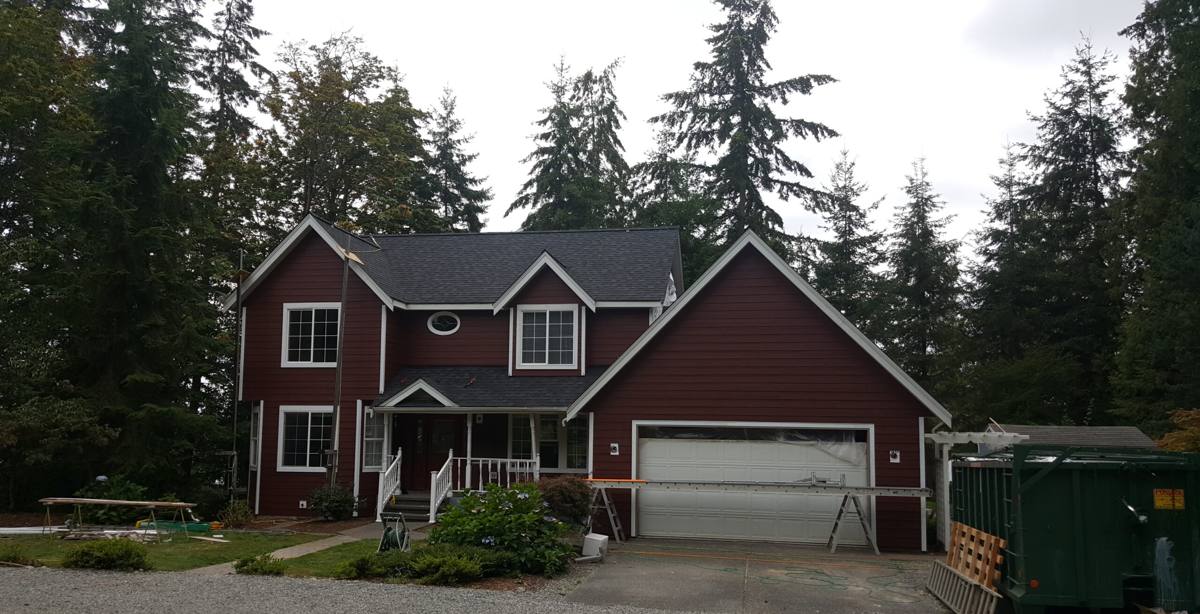
What Salt Air and Coastal Weather Actually Do to Siding
It helps to be specific about the mechanisms, because "salt air is corrosive" is true but vague. Here's what actually happens to a home's exterior near the water:
- Fasteners and flashing corrode faster. Salt-laden air accelerates rust on exposed or poor-quality metal, which is why fastener and flashing material choice matters more here than a few miles inland.
- Wind-driven rain finds gaps that still rain doesn't. A joint or lap that would stay dry in a calm downpour can take on water when rain is being pushed sideways, which is common on exposed Birch Bay lots.
- Moss and algae growth is more persistent. Longer damp periods and shaded, moisture-holding surfaces give moss more time to establish, especially on north-facing walls and anywhere siding stays wet longer than it should.
- Paint and coatings degrade faster. UV, salt, and moisture cycling all work against field-applied paint, which is one of the reasons a factory-cured finish holds up differently than paint applied on site.
None of this means siding fails quickly on the coast — it means the margin for a sloppy install is smaller. Details that barely matter on a sheltered inland wall become the difference between a wall that stays dry for decades and one that traps moisture behind the cladding.
Why This Changes How We Approach a Birch Bay Job
On a coastal property, we pay extra attention to a few things that are easy to skimp on: the quality and spacing of fasteners, the sequencing of flashing and water-resistive barrier at every penetration, and the drainage gap behind the siding. These aren't Birch Bay-specific products — they're standard best practice done without shortcuts, which matters more here because the weather punishes shortcuts faster.
Why We Install James Hardie and Nothing Else
We standardized on James Hardie fiber cement siding for every home we side, in Birch Bay and everywhere else we work. We don't install vinyl, LP SmartSide, primed wood, cedar, or other fiber cement brands. That's a deliberate choice, not a limitation of what we're capable of installing.
Fiber cement as a category resists the two things that matter most on a coastal Whatcom County property: moisture and fire. It's non-combustible, it doesn't rot, and it doesn't provide a food source for the moss and mildew that thrive in this climate the way untreated wood can. James Hardie specifically engineers regional product lines (HZ5 for the Pacific Northwest's wetter, milder climate) and backs its ColorPlus factory finish with a coating warranty that field-applied paint can't match. When a product is going to spend thirty-plus years a few hundred yards from saltwater, we want the version with the strongest track record and the clearest warranty terms — not the cheapest one that gets a house dried in.
What This Means Compared to Other Products Homeowners Consider
| Factor | James Hardie Fiber Cement | Vinyl or Untreated Wood |
|---|---|---|
| Moisture resistance | Engineered to resist water absorption; won't rot | Wood absorbs and holds moisture; vinyl can trap moisture behind panels |
| Fire performance | Non-combustible | Vinyl can melt/deform; wood is combustible |
| Coastal durability | HZ5 formulation for PNW climate; factory finish resists salt/UV wear | Field paint and untreated wood weather faster near salt air |
| Moss/algae resistance | Dense cement composition doesn't feed growth | Wood grain and vinyl seams give moss more to hold onto |
| Warranty | Strong transferable manufacturer warranty | Varies widely; often weaker on coatings |
What a Correct Fiber Cement Install Looks Like Here
The material is only half the equation. A James Hardie install done to spec on a Birch Bay home should include:
- Proper water-resistive barrier installed and lapped correctly before any siding goes up
- Rigid or engineered drainage plane behind the siding so incidental moisture can escape instead of sitting against the wall sheathing
- Flashing at every window, door, and penetration, installed in the correct shingle-lap sequence so water is directed out, not in
- Corrosion-resistant fasteners, sized and spaced to Hardie's published installation specifications
- Correct joint treatment and caulking at butt joints, following manufacturer guidance rather than generic caulk-everything practices
- Proper clearance between siding and grade, decks, roof lines, and other surfaces where moisture tends to collect
Skipping any one of these doesn't usually cause an obvious, immediate problem. It shows up years later as a soft spot, a moisture stain, or premature paint failure — exactly the kind of issue that's expensive to trace back to an installation shortcut instead of a product defect.
Moss Season and Ongoing Maintenance
Even correctly installed fiber cement siding benefits from a bit of homeowner attention in a place with a long moss season. We don't oversell maintenance — one of the reasons we recommend Hardie is that it needs far less upkeep than wood — but a few habits go a long way on the coast:
- Keep gutters clear so overflow doesn't run down the siding face repeatedly
- Trim back vegetation and tree cover that keeps a wall shaded and damp longer than the rest of the house
- Rinse visible moss or algae buildup with a garden hose rather than a pressure washer, which can force water behind laps or damage the factory finish
- Have caulking and flashing points checked periodically, since sealant is the one component that does wear out over time regardless of siding material
Our Process for Birch Bay Projects
Every project starts with an on-site look at the specific exposure of the home — which walls take the worst of the weather off the bay, where the existing siding or sheathing shows signs of moisture, and what the trim, flashing, and window details currently look like. From there:
- Assessment and estimate. We walk the exterior, check for existing moisture damage, and put together a written estimate scoped to what your home actually needs — not a generic package.
- Prep and tear-off. Old siding comes off, and we inspect the sheathing underneath before anything new goes on. Any damaged sheathing gets addressed before it's covered up again.
- Water management first. Water-resistive barrier, drainage plane, and flashing go in before a single piece of siding is hung. This is the step that determines how the house performs in year fifteen, not year one.
- Hardie installation to manufacturer spec. Fastening, spacing, and joint treatment follow James Hardie's published guidelines for the HZ5 climate zone.
- Final walkthrough. We go over the finished exterior with you, including trim, caulking lines, and any transitions to roofing, decks, or masonry.
Why Hiring a Crew That Already Works Birch Bay Matters
Fiber cement installation isn't exotic, but coastal installation rewards experience with the specific conditions. A crew that mostly works sheltered inland lots in Lynden and treats every job the same way can still produce a fine result most of the time — but "most of the time" isn't the standard you want on a house that's exposed to salt air and driving rain year-round. Knowing which walls need extra attention to flashing, how much clearance to leave near grade on a low-lying coastal lot, and how the local moss cycle affects long-term appearance comes from doing this work in this specific area, not from a general contracting background.
We're a Whatcom County crew, and Birch Bay is part of our regular service area — not a special trip. That means the estimate you get reflects real familiarity with how homes in this specific stretch of coastline hold up, not a one-size-fits-all quote.
What to Ask Before You Hire Anyone for Coastal Siding Work
- Do you install James Hardie specifically, and are your installers factory-trained on it?
- What water-resistive barrier and drainage plane do you use behind the siding?
- How do you handle flashing at windows, doors, and other penetrations?
- Can you point to the manufacturer's installation guidelines you follow, rather than "how we always do it"?
- What does your warranty cover, and how does it relate to the manufacturer's warranty?
If you're weighing a fiber cement siding project on a Birch Bay home, we're happy to take a look and walk you through what your specific exposure and layout call for. There's no pressure and no obligation — just a straight assessment and a written estimate you can take your time with. The form below gets you started.