 Lynden Siding
 James Hardie Siding Built for Blaine's Coastal Exposure
Blaine sits at the far northwest corner of Whatcom County, close enough to Semiahmoo Bay and Drayton Harbor that salt-laden air reaches most homes in town, not just the ones with a water view. Add in wind-driven rain coming straight off the water and a moss season that runs longer here than it does further inland, and Blaine ends up being one of the harder places in the county to keep exterior siding looking and performing the way it should. Siding here isn't decorative — it's the first line of defense against three things working on it at once, year-round.
This page is about James Hardie fiber cement siding specifically for homes in Blaine: what this climate actually does to a wall system, why we install only James Hardie rather than vinyl, LP SmartSide, or other alternatives, what a correct installation looks like, and how our process works for a Blaine project.
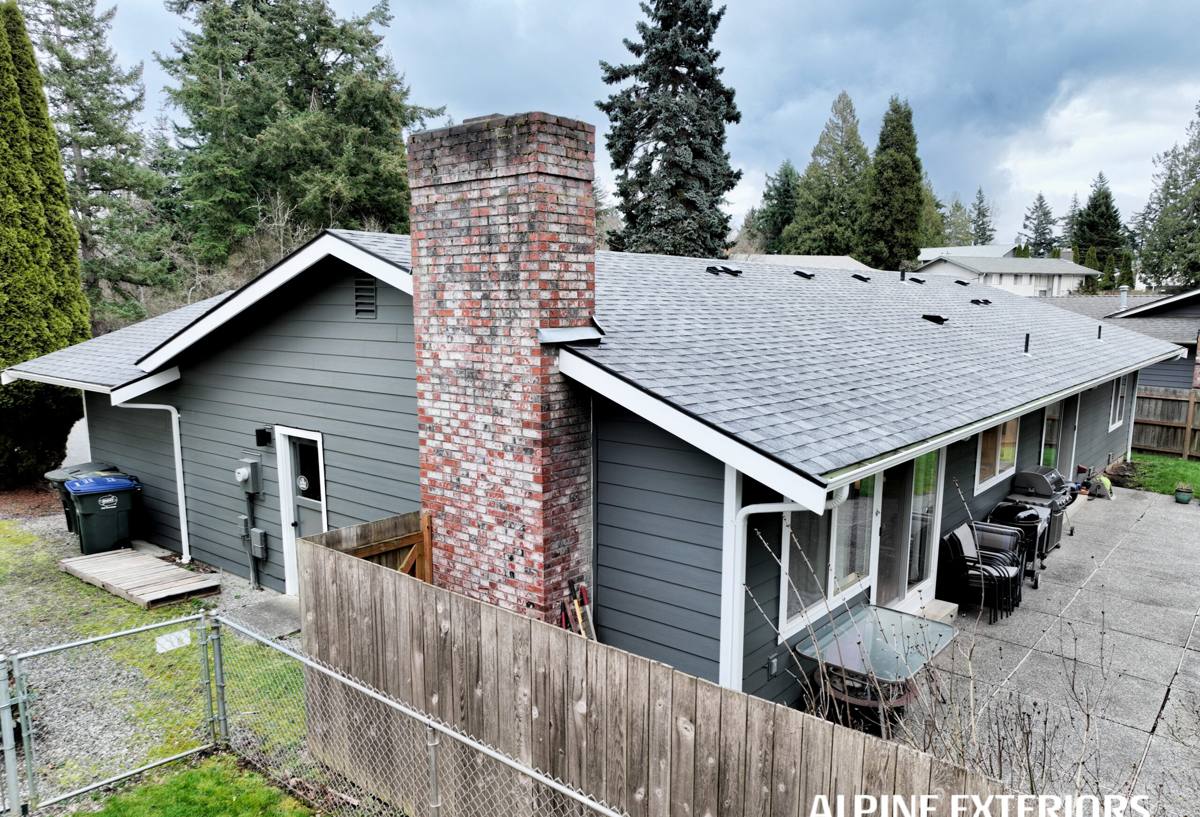
What Blaine's Climate Does to a House's Siding
Salt Air Off Semiahmoo Bay and Drayton Harbor
Salt in the air isn't just a coastal talking point — it's a corrosive agent that settles on exterior surfaces continuously, not just during storms. On siding, sustained salt exposure accelerates fading, breaks down lesser paint films faster than inland weathering would, and corrodes exposed fasteners and trim hardware well before the siding itself shows obvious wear. Homes closer to the water take the steadiest dose, but Blaine's compact size means very few properties in town are fully shielded from it.
Wind-Driven Rain
Rain in Blaine doesn't always fall straight down. Wind off the water frequently drives it sideways, pushing moisture up under laps, into butt joints, and around window and door trim in ways that calm, vertical rainfall never would. A siding system that sheds water fine in a gentle shower can still let water track backward into the wall assembly the moment wind gets involved — and in Blaine, wind-driven rain is closer to the norm than the exception during the wet months.
A Moss Season That Runs Most of the Year
Mild temperatures and near-constant moisture give moss, mildew, and algae a long growing season here, and siding with any surface porosity or wood content gives it something to take hold of. North-facing walls and shaded siding near landscaping tend to show it first, and once organic growth establishes itself, it holds moisture against the surface underneath it, compounding whatever moisture problem already existed.
Why We Install Only James Hardie on Blaine Homes
Given that combination of salt exposure, wind-driven rain, and a long moss season, the siding material matters more in Blaine than it does in a drier, more sheltered part of the county. We made the decision to install exclusively James Hardie fiber cement siding, and it's worth being direct about why, rather than just asserting it.
Fiber Cement vs. the Alternatives in This Exposure
Vinyl siding is affordable and low-maintenance in mild conditions, but it's a thin plastic product that can warp, crack, or fade under sustained UV and salt exposure, and its seams and J-channels give wind-driven rain more entry points than a properly lapped fiber cement system. Engineered wood products like LP SmartSide use a wood-strand substrate that performs well in many climates, but wood-based cores are more sensitive to sustained moisture exposure at cut edges and fastener penetrations — exactly the kind of exposure Blaine's wind-driven rain creates. Cedar and other traditional wood sidings look excellent when new but need regular refinishing to hold up against this level of moisture and salt, and untreated or under-maintained wood is usually the first material in town to show moss and soft spots. James Hardie's fiber cement composition — cement, sand, and cellulose fiber — doesn't have a wood-based core to absorb moisture, doesn't warp under UV and temperature swings the way vinyl can, and holds a factory-applied finish more consistently than field-painted wood siding.
| Material | Salt Air Resistance | Wind-Driven Rain Behavior | Moss Resistance | Typical Upkeep |
|---|---|---|---|---|
| James Hardie fiber cement | Strong — non-combustible cement composition, doesn't corrode or degrade like metal or plastic trim | Engineered lap and joint details manage water when installed to spec | Good — dense surface resists moss uptake better than wood | Periodic washing; ColorPlus finish reduces repainting |
| Vinyl | Moderate — can fade and become brittle under sustained salt and UV exposure | Seams and channels give water more entry points | Fair — smooth surface, but panel gaps can trap debris | Washing; replacement of warped or cracked panels over time |
| LP SmartSide (engineered wood) | Moderate — factory treatment helps, but wood-strand core is moisture-sensitive at cut edges | Requires careful sealing at every cut and penetration | Fair to poor if edge sealing isn't maintained | Regular inspection of seams, caulking, and edge sealant |
| Cedar / untreated wood | Weak without diligent refinishing | Absorbs moisture at joints and end grain | Poor without regular treatment | Frequent staining or sealing |
The James Hardie Engineering Behind That Performance
Climate-Engineered HZ Product Lines
James Hardie manufactures its siding in climate-specific formulations, commonly referred to as HZ product lines, engineered for the moisture and temperature patterns of a given region rather than a single one-size-fits-all formula. For a marine climate like Blaine's — cool, wet, and salt-influenced — that engineering matters more than it would in a dry inland market, because the product is designed around exactly the kind of sustained moisture cycling this area produces.
ColorPlus Factory Finish
Rather than relying on field-applied paint, James Hardie siding is available with a factory-baked ColorPlus finish applied and cured under controlled conditions before it ever reaches the job site. That process produces a more even, more durable finish than most field painting can match, and it's backed by its own finish warranty separate from the core product warranty — a meaningful distinction in a town where UV, salt, and moisture all work against a painted surface simultaneously.
Non-Combustible Composition
Fiber cement is non-combustible, which isn't a climate-specific benefit but is a real one — it doesn't contribute fuel to an exterior fire the way wood-based or vinyl siding can. It's part of why James Hardie carries a strong, transferable limited warranty: the manufacturer is backing a product built to hold up over the long run, not just to look good at installation.
Which James Hardie Products Fit a Typical Blaine Home
HardiePlank Lap Siding
The most common choice for Blaine homes, HardiePlank comes in a range of widths and textures (smooth, cedar-like woodgrain, and others) and installs in overlapping horizontal courses. It's the workhorse product for most single-family exteriors in this climate.
HardiePanel and HardieTrim
HardiePanel gives a vertical board-and-batten look when paired with HardieTrim battens, which some Blaine homeowners choose for a portion of the exterior — gables, accent walls, or a full board-and-batten facade — for a different architectural style than lap siding.
HardieShingle
For homes wanting a shingle-style look without the maintenance burden of real cedar shingles in this moisture-heavy climate, HardieShingle gives a similar staggered or straight-edge shingle appearance in the same fiber cement material.
What a Correct Installation Involves in This Climate
James Hardie siding performs the way it's engineered to only when it's installed to the manufacturer's specifications — and in a climate like Blaine's, the water-management details matter as much as the siding itself. A correct install here includes:
- Proper flashing at every window, door, and roofline intersection, directing water out and away from the wall assembly rather than trusting caulk alone to do that job
- A weather-resistive barrier installed and lapped correctly behind the siding, sequenced so water sheds outward at every layer
- Correct fastener type, spacing, and placement per James Hardie's published installation requirements — not generic siding nailing patterns
- Minimum clearances maintained between the siding's bottom edge and grade, decks, and roof surfaces so standing water and splash-back don't sit against the material
- Proper lap and joint spacing, with joints treated per Hardie's specifications rather than caulked and left as the only defense against wind-driven rain
- Painting or caulking of factory-cut edges where required, since a cut edge left untreated is more vulnerable to moisture uptake than the factory-finished face
Skipping or rushing any one of these doesn't necessarily show up on day one — it shows up two or three wet seasons later, once wind-driven rain has had enough cycles to find the gap.
Our Process for a Blaine James Hardie Project
We walk every Blaine property in person before quoting anything, because wind exposure, moisture patterns, and existing wall condition vary house to house even within the same town. From there, our process is straightforward:
- An on-site assessment of the current siding, sheathing condition where accessible, and the specific wind and moisture exposure of your lot
- A walkthrough of James Hardie product options, textures, and ColorPlus color choices suited to your home's style and this climate
- A written scope covering flashing, water-resistive barrier work, and any sheathing repair needed before new siding goes on — not just the visible siding swap
- Installation per James Hardie's specifications, with attention to the flashing and fastening details that matter most in a salt-air, wind-driven-rain environment
- A final walkthrough so you understand what was done and what basic upkeep, if any, the finished siding needs going forward
Living With Hardie Siding in Blaine's Salt Air and Moss Season
One of the practical advantages of fiber cement in this climate is how little ongoing maintenance it asks for compared with wood or under-maintained vinyl, but "low-maintenance" isn't "no-maintenance." A few habits keep it performing the way it's designed to:
- Rinse the siding periodically to clear salt residue, pollen, and organic buildup before it works into the surface
- Keep landscaping trimmed back from exterior walls so shaded, damp areas that encourage moss don't sit directly against the siding
- Check caulking at trim, window, and door joints yearly, especially heading into the wet season, and have any cracked or missing caulk addressed promptly
- Watch for early moss or mildew growth on north-facing or shaded walls and clean it off before it spreads or holds moisture longer than it should
- Have any impact damage or exposed cut edges addressed rather than left, since an untreated cut edge is the one spot on Hardie siding most vulnerable to moisture uptake
Why It Matters That We Already Work Blaine
A crew that mostly installs siding further inland can still do competent work, but a Blaine project has requirements that don't come up as often elsewhere in the county — flashing and water-management details sized to sustained wind-driven rain, fastener and trim choices that hold up to steady salt exposure, and moss pressure that runs longer here than in more sheltered towns. Working this area regularly means we're not guessing at those requirements on your project; we've seen what actually holds up against Blaine's specific combination of salt air, driving rain, and moss, and where the extra attention to detail is worth it rather than an unnecessary upsell.
Get a Straight Answer About Your Siding
Whether you're dealing with aging or failing siding, planning ahead for a replacement, or just want an honest read on what James Hardie siding would take and cost on your Blaine home, we're glad to walk the property with you and lay out the options plainly. Reach out below for a free, no-pressure estimate.