 Lynden Siding
 James Hardie Siding for Deming Properties
Deming sits up the Nooksack River valley from Lynden, in the wooded foothill country that leads toward Mount Baker. It's a different kind of lot than a lot of what we see closer to town: bigger acreages, more tree cover, more shade, and a general feel of rural Whatcom County rather than a platted residential street. Those are good reasons to live out there, and they're also exactly the conditions that make siding choice and installation quality matter more, not less. We install James Hardie fiber cement siding for Deming homeowners, and this page walks through why, what a correct job actually involves on a property like this, and how we handle the work from first call to final walk-through.
We don't treat Deming as an afterthought stop on the way to somewhere else. It's part of our regular service area, and the way we spec and install siding out there reflects what actually happens to exterior walls on shaded, tree-lined, foothill-adjacent lots over ten and twenty years, not a generic Whatcom County default.
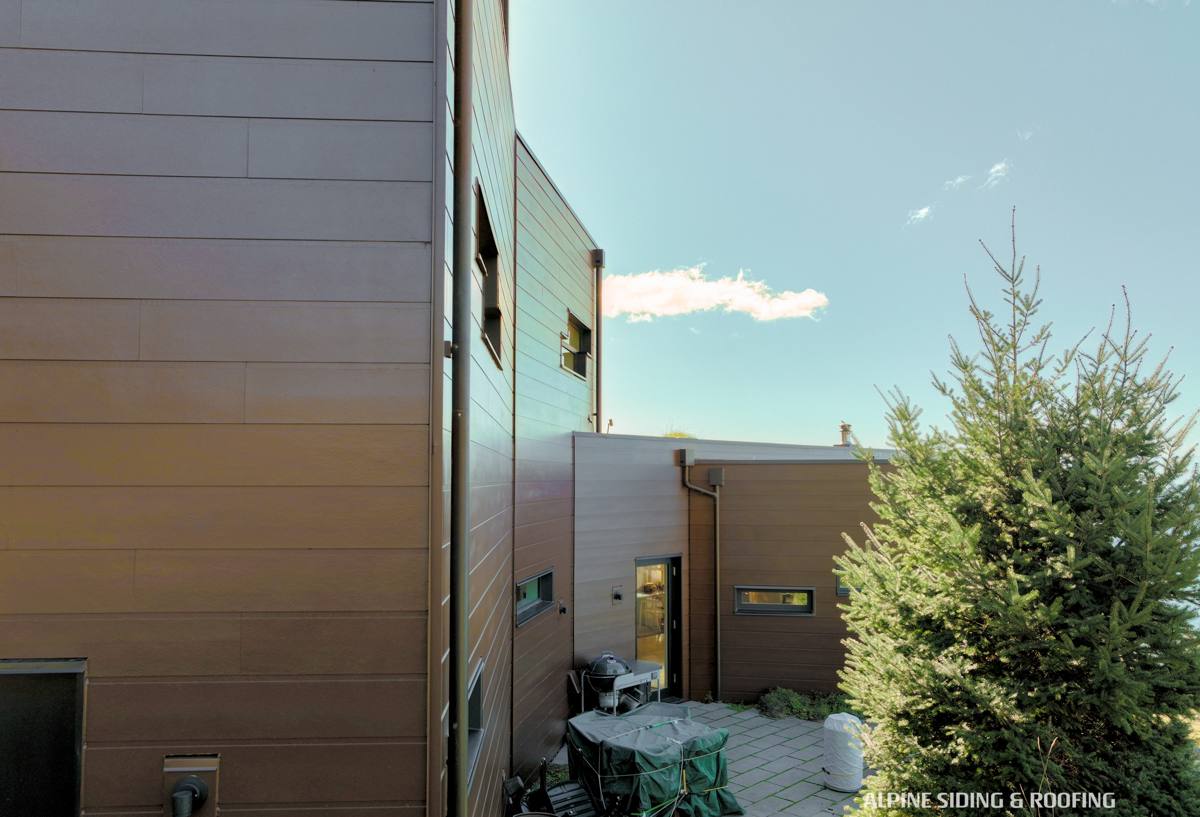
What Deming's Climate Actually Puts Siding Through
Whatcom County as a whole deals with a marine-influenced weather pattern: moisture-laden air moving in off the Sound, rain that arrives sideways as often as it falls straight down, and a moss and mildew season that runs long because temperatures rarely swing hard enough to shut it down. Deming feels its own version of that pattern, shaped by its setting up the valley — closer to the mountains, further from open water, and covered in a lot more tree canopy than a typical in-town lot.
Shade and Tree Cover
Heavy tree cover is the single biggest factor we account for on Deming properties. A wooded lot keeps walls shaded for a much larger share of the day, which means siding surfaces stay wet longer after a storm and dry out more slowly between them. That's the exact condition moss, mildew, and algae need to get established and keep spreading, and it's a bigger factor on north- and east-facing walls that barely see direct sun for months at a time.
Driving Rain and Foothill Damp
Rain in the foothill country tends to run heavier than in the lowlands closer to Lynden, since the terrain pushes moist air upward and wrings more precipitation out of it. Combine that with wind that channels along the valley, and a lot of that rain doesn't fall straight down — it gets pushed sideways into lap joints, trim, and any seam where the water management detailing isn't right. A siding system that only has to shed rain falling vertically isn't built for what a Deming property actually sees over a wet season.
A Long Moss Season
Put shade and steady moisture together and you get a moss and mildew season that runs across most of the calendar on a lot of Deming properties, not just the wettest months. Organic growth on a siding surface isn't just a cosmetic problem — it holds moisture directly against the wall behind it, and that trapped dampness is where a lot of long-term rot and siding failure actually starts, quietly, behind a surface that still looks intact from the yard.
Why We Install Only James Hardie Here
We used to offer a wider range of siding products. We narrowed to one system after watching, job after job across Whatcom County, which materials actually held up under years of shade, moisture, and driving rain, and which ones turned into maintenance problems for homeowners a few years down the road. For a shaded, foothill-adjacent property like a typical Deming home, that experience points clearly in one direction.
- Non-combustible core: James Hardie fiber cement is made from Portland cement, sand, and cellulose fiber rather than a wood-based or wood-derived core, so it doesn't feed a fire and doesn't absorb and swell with moisture the way organic siding materials can.
- Factory-applied ColorPlus finish: The color is baked on in multiple coats under controlled factory conditions rather than brushed on in the field, which holds up far better against fading, chalking, and moisture intrusion than a site-painted finish exposed to shade and standing humidity.
- Climate-engineered HZ product lines: Hardie builds different formulations for different climate zones, including versions engineered for regions with sustained moisture exposure — a genuine match for a damp, shaded Whatcom County lot rather than a product designed primarily for hot, dry markets.
- Dimensional stability: Fiber cement doesn't swell, cup, or warp through repeated wet-season moisture cycles the way engineered wood siding can, which matters more here given how long the moss season and the surrounding dampness actually run.
- Strong transferable warranty: Backed correctly and installed to spec, Hardie's warranty structure gives a homeowner real protection rather than a marketing claim, and it moves to the next owner if the home sells.
We don't install LP SmartSide, vinyl siding, Cemplank, Allura, primed spruce, or cedar. Each of those has honest appeal and plenty of satisfied homeowners elsewhere. But on a shaded, moisture-heavy lot, a wood-based core or a coating system that depends on regular field maintenance is asking a lot of a homeowner who may not be checking on a north wall behind a stand of trees every season. We'd rather install one product we trust fully than offer a cheaper option that quietly shifts maintenance risk back onto the homeowner.
Choosing the Right Hardie Product Line for a Deming Home
| Product Line | Best Use | Why It Fits This Property |
|---|---|---|
| HardiePlank lap siding | Most standard single-family homes | Traditional lap profile sheds wind-driven rain effectively when the overlap and flashing are installed to spec |
| HardiePanel vertical siding | Accent walls, gables, shop and outbuilding exteriors | Clean vertical lines that suit the barns, shops, and rural-style buildings common on larger Deming lots |
| HardieShingle siding | Craftsman-style homes and accent sections | Gives a textured, cottage look without the moisture absorption and repainting cycle real wood shingle needs in a shaded setting |
| HardieTrim boards | Corners, window and door casing, fascia | Factory-finished trim resists the same shaded moisture exposure as the field siding instead of becoming the first thing that fails |
Profile and color come down to the individual home, but on a wooded lot we generally steer people away from the very darkest colors on walls that get heavy shade and little direct sun, since dark, damp, shaded surfaces are exactly where moss and algae growth shows up first and is hardest to keep ahead of.
What Correct Installation Involves
Fiber cement's real-world performance depends heavily on installation quality, and that's especially true on a shaded, moisture-prone lot where any shortcut in the water management details gets tested constantly instead of occasionally.
Flashing and Water Management
Every window, door, and penetration needs flashing that actually directs water out and away rather than relying on caulk to plug a gap. On a property that stays damp longer between drying periods, a flashing detail that's slightly wrong doesn't fail dramatically — it lets a small amount of moisture track behind the wall every wet season until it adds up to real rot. We also install a drainage plane or rain screen behind the siding so any moisture that does get past the surface has somewhere to go instead of sitting against the sheathing.
Fastening, Clearances, and Cut Edges
Correct fastener type, placement, and depth keeps boards secure without cracking them, and proper clearance from grade, roofline, and any deck ledger keeps splash-back and standing moisture away from the board edge. We use factory-cut edges wherever the layout allows and seal every field cut per Hardie's spec, since an unsealed cut edge is the fastest way for a factory finish's protection to fail at exactly the spot it's needed most.
Our Process, Start to Finish
The work follows the same sequence on every Deming property, adjusted for the specific home once we've actually walked it.
- Walk-through and assessment: We look at the existing siding, trim, flashing, and any visible moss, staining, or soft spots, paying particular attention to shaded and north-facing walls.
- Written estimate and product spec: We tell you which Hardie product line and profile we'd recommend and why, along with a clear, written scope of work.
- Tear-off and substrate check: Once the old siding comes off, we inspect the sheathing and framing underneath for hidden moisture damage before anything new goes up.
- House wrap, flashing, and rain screen: The water management layer goes in before a single piece of finish siding, since this is the part of the job that actually keeps a wall dry over the long run.
- Siding and trim installation: Boards and trim go up to Hardie's fastening and clearance spec, with factory-cut edges used wherever the layout allows.
- Final walk-through and cleanup: We review the finished work with you on site and clear the property of debris and old material.
Cost Factors for a Deming Re-Side
| Factor | What It Affects | Why It Matters Here |
|---|---|---|
| Substrate condition under old siding | Repair cost before new siding goes on | Shaded, damp walls are more likely to have hidden sheathing or framing damage than a sun-exposed lot |
| Site access and lot size | Labor time, staging, and equipment needs | Larger rural acreages and longer driveways common in Deming can add setup time versus a compact in-town lot |
| Existing tree cover near the house | Drying time and moss/algae risk after install | Trimming back branches that hold moisture against a wall is often worth discussing as part of the same project |
| Number of stories and rooflines | Scaffolding and complexity of flashing details | More roof valleys and wall transitions mean more places water can find a way in if flashing isn't done right |
| Trim and accessory scope | Material and labor cost beyond the field siding | Corner boards, window casing, and fascia all need the same attention as the main wall surface |
Exact numbers depend on the specific property, which is why we walk the home in person rather than quoting a price over the phone off a square-footage guess.
Why a Crew That Already Works Deming Matters
A crew that's worked shaded, wooded, foothill lots around Deming knows which wall orientations stay wet the longest, where extra flashing attention actually pays off, and how much clearance a lot with heavy tree cover really needs compared to a standard spec sheet number. That's practical knowledge that shows up in small decisions on install day, not something a crew unfamiliar with this specific setting picks up by reading a product manual. Deming's mix of shade, valley rain, and a long moss season is different enough from a sunnier, more open lot near Lynden's center that a one-size-fits-all approach leaves gaps a locally experienced crew wouldn't.
Maintenance, Warranty, and What to Expect After Install
James Hardie siding installed to spec is genuinely low-maintenance, but "low-maintenance" isn't the same as "no attention needed," especially on a shaded lot. A yearly rinse to clear early moss or pollen buildup, keeping gutters clear so overflow doesn't run down a wall, and trimming back branches that are holding moisture against the siding all go a long way toward getting the full service life out of the material. Hardie backs the siding itself with a transferable, non-prorated limited warranty, plus a separate finish warranty on ColorPlus color retention, and that coverage generally moves with the home if you sell.
Post-Install Checklist
- Walk the property seasonally and check shaded, north-facing walls for early moss or staining
- Keep gutters and downspouts clear so overflow doesn't run down the siding face
- Trim back branches and brush holding moisture directly against any wall section
- Rinse siding gently once a year rather than pressure-washing directly at seams and edges
- Have flashing around windows, doors, and any deck connection checked periodically for cracking or separation
- Keep your warranty paperwork and installation records in case the home sells later
If you're planning a re-side on a Deming property, or you just want an honest look at what's happening on an aging wall behind the trees, we're glad to come take a look. Reach out using the form below to schedule a free, no-pressure estimate.