 Lynden Siding
 Deck Repair for Kendall Homes
Kendall sits in a part of Whatcom County where decks work hard all year. Long wet seasons, driving rain off the surrounding valley, and stretches of damp, shaded weather that never quite dry out mean a deck here ages differently than one in a drier climate. Add in the salt-influenced air that moves through this part of Washington and a long moss season that can blanket a north-facing deck by mid-winter, and it's easy to see why decks around Kendall show wear in places builders elsewhere don't always plan for.
Most of the deck repair calls we get in this area aren't about a single catastrophic failure. They're about small, ignored problems — a soft board, a loose post base, a railing that's started to wiggle — that have had a wet season or two to get worse. Deck repair done right isn't just patching what's visible. It's finding out why that spot failed in the first place, because in this climate, the same cause will keep coming back until it's fixed.
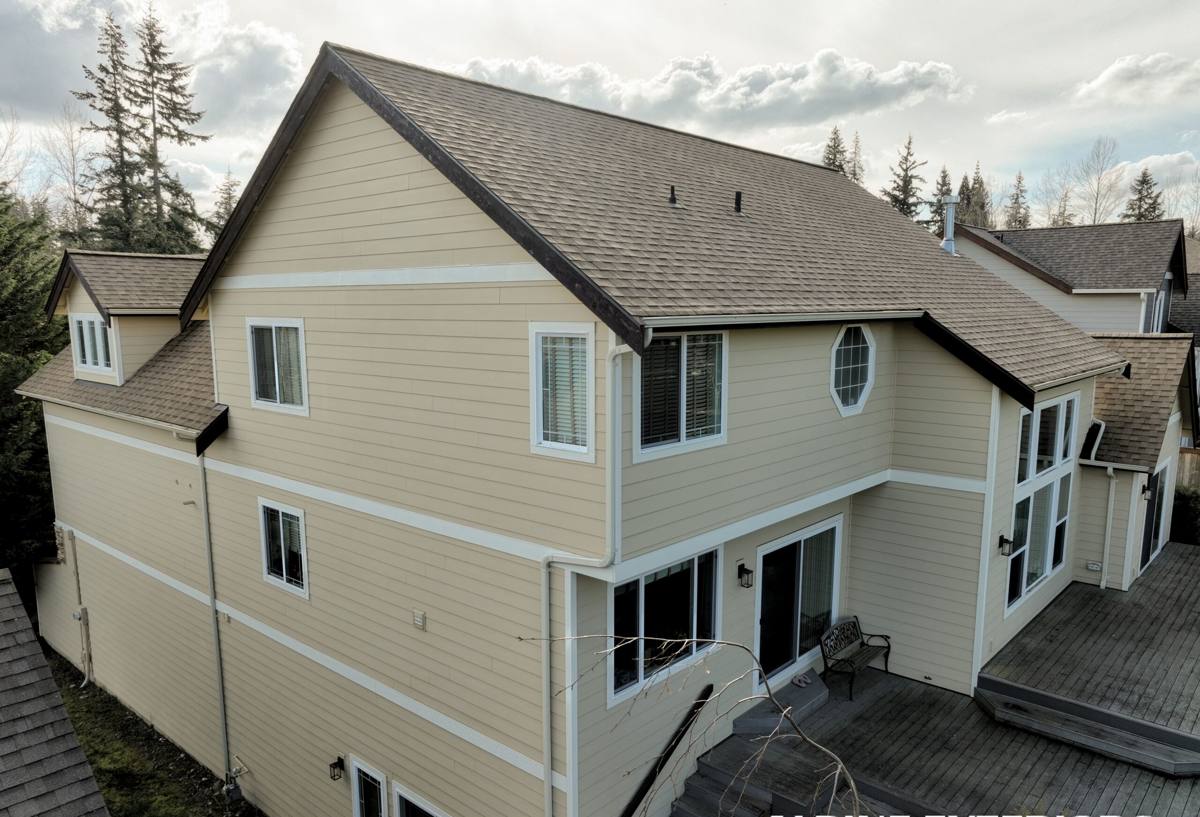
Why Decks in Kendall Wear the Way They Do
A few conditions specific to this area show up again and again when we inspect decks:
- Extended moisture exposure — long stretches of rain and high humidity keep wood and fasteners wet longer than in drier regions, accelerating rot at joints and connection points.
- Moss and organic buildup — shaded or north-facing decks can hold moss and algae for months, trapping moisture directly against decking boards and structural framing.
- Salt-influenced air — moisture-laden coastal air accelerates corrosion on fasteners, brackets, and hardware, which is often the real reason a "solid-looking" deck develops a wobble.
- Freeze-thaw cycling — even mild winters bring enough freeze-thaw swings to work water deeper into cracks and joints over time.
None of these are dramatic on their own. Together, over several years, they're what turns a small maintenance item into a repair — or a repair into a rebuild if it's left too long.
Signs Your Kendall Deck Needs Repair
Homeowners often wait until a board fails underfoot, but most decks give warning signs well before that. Worth checking for:
- Boards that feel spongy, springy, or noticeably different underfoot than the rest of the deck
- Railings or guard posts that move or flex when pushed
- Visible gaps opening up between boards, or boards cupping and warping
- Rust streaks running down from fasteners or metal brackets
- Persistent moss, algae, or dark staining that keeps coming back after cleaning
- Stairs that feel uneven, bouncy, or have developed a slight lean
- Soft or discolored wood where a ledger board meets the house
- Standing water that doesn't drain within a few hours of rain stopping
Any one of these is worth a look. Several at once usually means the deck's structural components — not just the surface — need attention.
What a Correct Deck Repair Involves
Structural Framing
The framing underneath is what actually holds the deck up, and it's the part most homeowners never see. Repair work here means checking joists, beams, and post bases for rot, checking that connections are still tight, and confirming the ledger board — where the deck attaches to the house — is properly flashed and sealed. A deck can look fine on the surface with real problems developing underneath, which is exactly why surface-only repairs sometimes fail to hold.
Decking Boards
Individual board replacement is straightforward when the framing underneath is sound. The harder judgment call is deciding how many boards need to come up versus how many can be cleaned, treated, or left alone — replacing more than necessary wastes money, replacing too few means another callback next season.
Railings and Guards
Railings take abuse from weather and use, and loose railings are a safety issue, not just a cosmetic one. A proper repair reseats or replaces the post connections, not just the rail itself, since a wobbly railing is almost always a post-base problem.
Fasteners and Flashing
This is the part that's easy to skip and the part that causes repeat failures. Corroded fasteners get replaced with hardware rated for exterior, moisture-heavy use, and any flashing at the ledger or stair stringers gets checked and corrected if it's letting water in behind the wood.
Deck Materials and Repair Considerations
What your deck is built from changes how it should be repaired and what to expect going forward.
| Material | Common Repair Issues in This Climate | Repair Considerations |
|---|---|---|
| Pressure-treated wood | Rot at ground contact points, fastener corrosion, splitting | Repairable board-by-board; framing rot needs full inspection before patching |
| Cedar | Graying, splintering, moss retention on shaded sections | Holds up well structurally but needs consistent cleaning and sealing to slow moisture uptake |
| Composite decking | Fading, surface flaking on older boards, moisture trapped underneath | Boards typically replace as full units; check substructure moisture before reinstalling |
| Older or mixed materials | Inconsistent wear, past patch jobs that don't match original build | Often needs a broader assessment rather than a single-board fix |
We don't push a specific decking product as the "right" answer for every repair. Each material has real trade-offs in maintenance, moisture behavior, and cost, and the honest answer depends on the deck's age, structure, and how much upkeep the homeowner wants going forward.
Our Deck Repair Process
- On-site inspection. We walk the full deck — surface, railings, stairs, and underneath where accessible — not just the spot you called about.
- Identify root cause. A soft board is a symptom; we look for whether moisture, a fastener issue, or a flashing gap is the actual source.
- Written scope and estimate. You get a clear breakdown of what needs repair now, what's borderline, and what's cosmetic — no pressure to do more than what's actually needed.
- Repair work. Framing and structural issues get addressed before surface repairs, so the fix holds instead of masking a deeper problem.
- Final check. We test railings, stairs, and repaired sections for stability before calling the job done.
Repair vs. Replacement: How We Decide
Not every deck problem calls for a full rebuild, and not every deck is worth patching indefinitely. A few factors that tip the decision:
| Factor | Favors Repair | Favors Replacement |
|---|---|---|
| Framing condition | Solid, isolated soft spots only | Widespread rot in joists, beams, or ledger |
| Age of deck | Newer or mid-life, well-maintained | Original structure decades old, past typical service life |
| Extent of damage | Limited to a few boards or one section | Multiple areas failing at the same time |
| Past repair history | First real repair needed | Repeated patch jobs that keep failing in the same spots |
| Code and safety | Meets current railing and structural standards | Undersized framing or non-compliant railing height/spacing |
We'll tell you honestly which side of that table your deck falls on. A repair that's likely to fail again within a year or two isn't a good use of your money, and we'd rather say so upfront than come back to redo it.
Moss, Moisture, and Long-Term Deck Care in Kendall
Given how long the wet season runs in this part of Whatcom County, deck repair holds up best when it's paired with a realistic maintenance rhythm. That generally means clearing moss and debris before it compacts into damp mats, keeping gutters and downspouts near the deck clear so runoff isn't draining straight onto it, and checking fastener heads and railing connections at least once a year for early corrosion. None of this is complicated, but it's the difference between a repair that lasts and one that needs redoing in two winters.
If your deck has recurring moss on the same boards every year, that's usually a drainage or airflow issue underneath, not just a surface cleaning problem — worth mentioning if you're getting a repair quote, since it can be addressed at the same time.
Why Hire a Crew That Already Works in Kendall
Deck repair looks similar on paper everywhere, but the failure patterns we see on a Kendall deck are shaped by this specific stretch of Washington weather — the moisture load, the moss season, the way salt-influenced air works on fasteners over time. A crew that repairs decks in this area regularly recognizes those patterns quickly instead of guessing, which means a more accurate inspection, a scope that addresses the actual cause, and fewer surprises once work is underway. It also means we're building relationships in this community, not passing through — if something needs a follow-up look after a hard winter, we're still local to come back.
Get a Free Estimate
If your deck in Kendall has a soft spot, a loose railing, or just feels like it's due for an honest look, we're happy to come take a look at no cost and no pressure. Use the form below to request a free deck repair estimate, and we'll give you a clear, straightforward assessment of what your deck actually needs.