 Lynden Siding
 Fiber Cement Siding for Homes in the Kendall Area
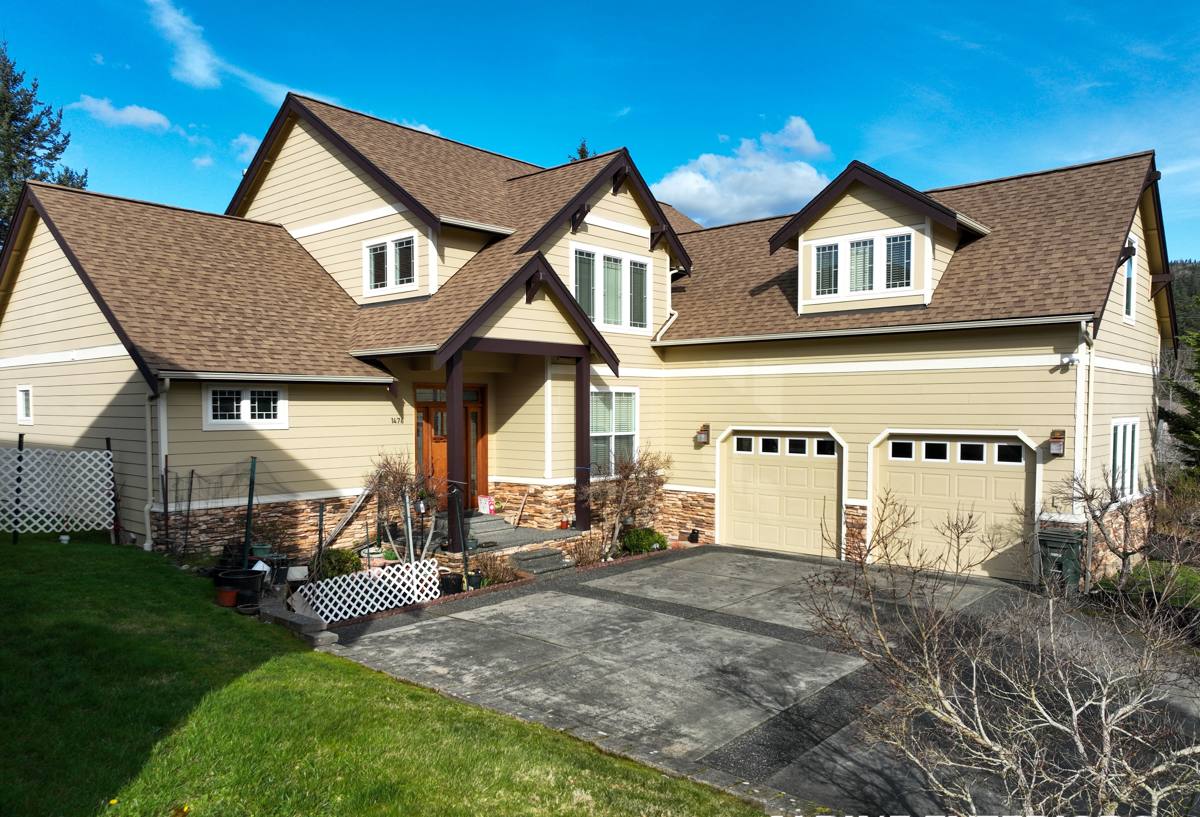
Kendall sits in the kind of Whatcom County setting that puts real, ongoing demands on an exterior: rural lots, heavy tree cover in a lot of places, and weather that swings between long wet stretches and sharp cold snaps. Siding out here isn't decorative. It's the thing standing between a wood-framed wall and a climate that includes driving rain, salt-influenced marine air moving through the region, and a moss season that can run most of the year on shaded, north-facing walls. We work fiber cement siding jobs in and around Kendall regularly, which means we're not guessing at how this area's conditions behave on a wall assembly. This page is specifically about fiber cement siding for Kendall homes: what the climate actually asks of it, what a correct installation looks like, and how our process runs from first walk-through to finished wall.
We install James Hardie fiber cement exclusively, not vinyl, not engineered wood, not other fiber cement brands. That's a deliberate standard, not a default, and it shapes everything below.
What Kendall's Setting Actually Does to a Sided Wall
Rural Tree Cover and a Long Moss Season
A lot of properties around Kendall sit on wooded or partially wooded lots, which means shade, slower drying times after rain, and surfaces that stay damp longer than they would on an open, sun-exposed lot. That combination is exactly what moss and algae need to establish on a siding surface, especially on north- and west-facing elevations that see the least direct sun. Moss itself isn't usually what damages siding directly, but a surface that stays perpetually damp underneath a moss mat is a surface that's harder to inspect, harder to keep sealed, and more likely to hide a small problem until it's not small anymore.
Driving Rain and Wind-Driven Moisture
Whatcom County gets its share of wind-driven rain events, and on a rural, less sheltered lot, wind can push water sideways into joints, laps, and penetrations that would stay dry on a calmer site. This is less about the volume of rain and more about direction and duration. Water that's driven horizontally into a wall assembly finds gaps that vertical rain never would, which is why lap overlaps, joint sealing, and flashing details matter more here than they would in a drier inland climate.
Temperature Swings and the Freeze-Thaw Factor
Kendall's proximity to the foothills means winter cold snaps can run a bit sharper and linger a bit longer than in lower, more coastal parts of the county. Materials that absorb moisture and then freeze are prone to cracking, cupping, or delaminating over repeated cycles. A siding material's core composition, not just its surface coating, determines how it holds up through that freeze-thaw stress year after year.
Why We Install James Hardie Fiber Cement Here
The Material Itself
James Hardie siding is a cement-based composite, portland cement, sand, and cellulose fiber, formed and cured into planks or panels. The core is inorganic, meaning it doesn't have wood fiber that swells when it absorbs water and doesn't have an organic component for fungus to feed on. That matters directly for a climate defined by long wet stretches and slow-drying, shaded surfaces.
The HZ5 Product Line
Hardie manufactures regionally formulated product lines, and the HZ5 line is engineered specifically for climates with heavier moisture exposure and more freeze-thaw cycling than the national average. That's a direct fit for a place like Kendall, where wet-season saturation and winter cold snaps both come into play on the same wall.
ColorPlus Factory Finish
Most of what we install carries Hardie's ColorPlus finish, a factory-baked coating applied under controlled conditions rather than brushed on in the field. It resists fading, chalking, and moisture intrusion at the coating level significantly longer than a field-applied paint job, which matters when the surface in question is going to spend months at a time damp under tree cover.
What a Correct Fiber Cement Installation Actually Involves
Fiber cement is a forgiving material in the sense that it doesn't rot or swell, but it is not a forgiving material to install carelessly. Hardie's own warranty coverage depends on installation following its published details, and most of the siding failures we get called out to inspect trace back to shortcuts taken during installation, not defects in the product itself.
- Correct starter strip placement and consistent reveal lines across every elevation, not just the front-facing walls.
- Proper clearance between the bottom edge of the siding and grade, roofing, decking, and other hard surfaces, so water has nowhere to wick into the plank.
- Flashing integrated at every window, door, and penetration before the siding goes on, not caulked over afterward as a substitute.
- Correct fastener type, spacing, and placement, since face-nailing or blind-nailing errors are a common source of early plank movement.
- Field-cut edges sealed per Hardie's specification, since a cut edge left unsealed is a point where moisture can start working into the plank.
- Joint and butt-seam caulking done with a compatible sealant, applied to the actual manufacturer detail rather than a generic bead.
Fiber Cement Profiles and Cost Factors
Not every Hardie product looks or costs the same, and the right choice for a given home in the Kendall area often comes down to the home's style, the amount of trim detail, and how much of the exterior needs full replacement versus repair. The table below outlines the general trade-offs between the profiles we install most often.
| Profile | Typical Use | Relative Cost Factor | Installation Complexity |
|---|---|---|---|
| Lap siding (standard plank) | Traditional and craftsman-style homes, most common choice | Baseline | Moderate, straightforward reveal lines |
| Board and batten / vertical panel | Accent walls, gables, farmhouse-style exteriors common in rural settings | Moderate increase | Higher, batten spacing and fastening require more precision |
| Shingle-style panels | Accent sections, dormers, gable ends | Higher | Higher, more cutting and detail work around trim |
| Trim and soffit systems | Corners, window and door surrounds, fascia | Add-on to base siding cost | Moderate, adds up with more architectural detail |
Exact pricing depends on the home's square footage, the condition of the substrate underneath the existing siding, and how much trim and detail work is involved, which is why we walk the property before quoting rather than working off a flat price sheet.
Our Process, Start to Finish
We start every project with an in-person walk of the property, not a phone estimate, because moss coverage, wall exposure, and existing damage vary enough from home to home that a real number requires actually looking at the house. From there:
- We assess the existing siding and, where it's coming off, check the substrate underneath for rot or moisture damage before anything new goes up.
- We confirm or install a proper water-resistive barrier and address any flashing gaps around windows, doors, and penetrations.
- We install James Hardie fiber cement to manufacturer specification, including reveal lines, fastening, clearances, and joint sealing.
- We handle site cleanup and haul-away, which on rural, tree-covered Kendall lots often means more debris management than a tight in-town lot.
- We register the manufacturer's warranty on the completed installation so the coverage is properly on file.
Maintenance: What Kendall Homeowners Should Actually Expect
Fiber cement is a low-maintenance material, but low-maintenance isn't the same as no-maintenance, especially under the tree cover common around Kendall. A soft wash to clear moss and algae buildup on shaded elevations every year or two keeps the surface from staying perpetually damp underneath a moss mat. Because ColorPlus is a factory finish, you're generally not looking at repainting on the timeline a wood-based product would require, but caulking at joints and penetrations is still worth a periodic visual check, since sealant is the one component that does wear over time regardless of what's underneath it. Keeping gutters clear and grading water away from the foundation also matters more on wooded lots, where fallen debris can back up drainage faster than on an open lot.
Why Hiring a Crew That Already Works Kendall Matters
Permitting and Rural Lot Logistics
A good number of homes in the Kendall area sit outside city limits, in unincorporated Whatcom County, which can mean permitting runs through the county rather than a city building office. A crew that already does work in this area knows which process applies to a given address before the job starts, instead of figuring it out mid-project.
Knowing the Terrain
Rural lots often mean longer driveways, more tree cover to work around, and site conditions, well systems, septic layouts, uneven grading, that a crew unfamiliar with the area might not plan for ahead of time. Having already worked properties with these conditions means fewer surprises on setup, staging, and cleanup, and a smoother job for the homeowner.
Get a Free, No-Pressure Estimate
If you're weighing a siding project for a home in the Kendall area, we're glad to walk the property, look at how the current siding is actually holding up against this area's rain and moss exposure, and give you a straight answer about what we'd recommend. Reach out using the form below to schedule a free estimate, no pressure and no upsell script.