 Lynden Siding
 Kendall's Climate Is Harder on Siding Than It Looks
Kendall sits in the rural foothill country north of Lynden, where farmland gives way to forest and the terrain starts climbing toward the Cascades. It feels like a different world from town, but the siding on a Kendall home fights the same three-part battle every Whatcom County exterior deals with: driving rain that comes in sideways during winter storms, marine-tinged air drifting in off the Salish Sea that carries a faint but persistent salt load, and a moss season that can run eight or nine months out of the year under the tree canopy common to this area.
None of these on their own is dramatic. Together, over years, they're what separates a siding job that still looks tight at year fifteen from one that's cupping, staining, and rotting at the seams by year eight. A lot of that difference comes down to what material was used and how carefully it was installed — not luck.
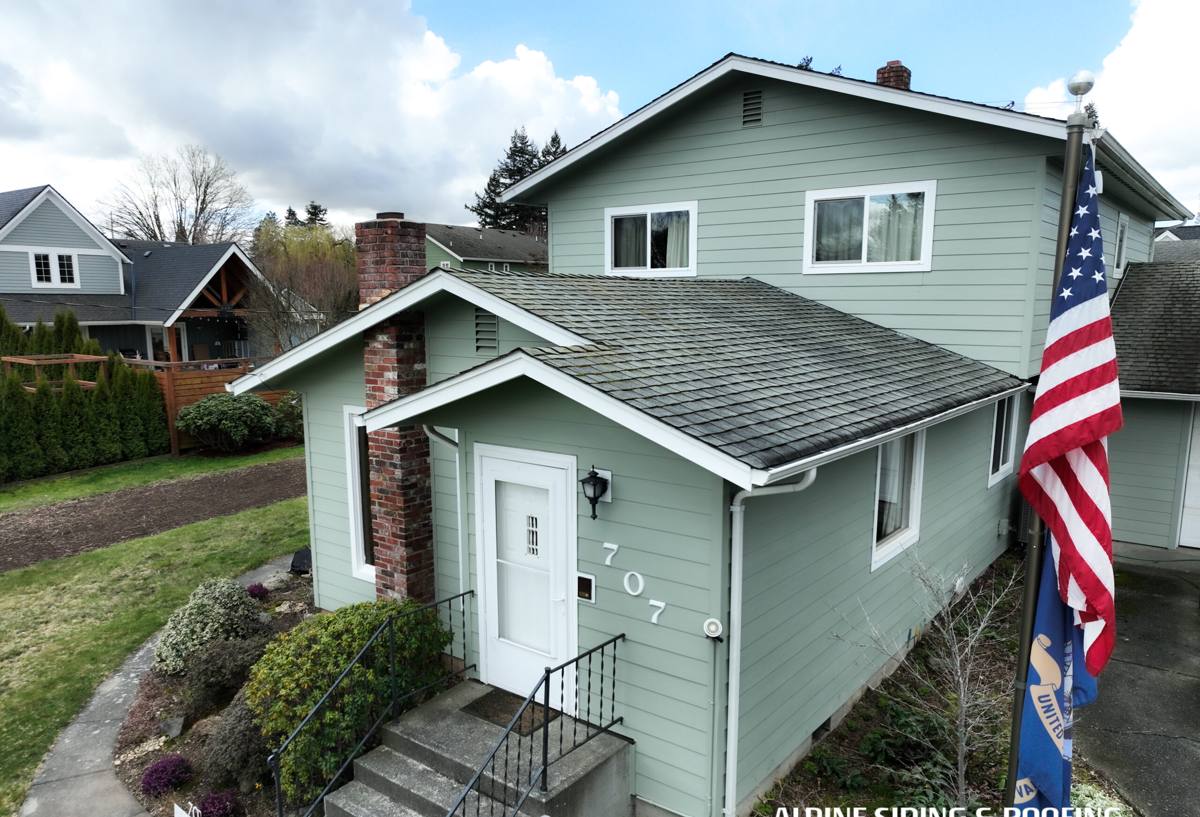
What Driving Rain and Moss Actually Do to a Wall
Wind-Driven Rain
Kendall's more open, wind-exposed lots and tree-lined properties both get hit with rain that doesn't fall straight down — it drives sideways under eaves, around window trim, and into any lap joint that isn't sealed or lapped correctly. Over time, water that gets behind the siding rather than running off its face is what causes sheathing rot, not the rain itself.
Moss and Shade
Homes tucked against tree lines or under a heavy canopy — common on the larger, more wooded lots around Kendall — stay damp longer after every rain. That extended damp period is exactly what moss, algae, and mildew need to take hold on a siding surface, and once they're established they hold even more moisture against the wall.
Salt-Tinged Marine Air
Whatcom County's prevailing weather moves inland off the Salish Sea, and that air carries a mild salt content even well away from the immediate shoreline. It's a slower, quieter factor than rain or moss, but on fasteners, trim, and any siding product prone to surface breakdown, it adds up.
What a Correct Siding Installation Involves Here
Getting siding right in Kendall isn't about a fancier material alone — it's about the assembly behind it. A correct installation addresses moisture management first, then finish material second.
- A continuous weather-resistant barrier installed shingle-style so every layer drains down and out, never trapping water behind it
- Properly flashed and back-caulked window and door openings, since these are the most common leak points on any home
- Rain-screen gap or drainage plane where the wall assembly calls for it, so siding can dry from both sides instead of staying damp against the sheathing
- Correct fastener type, spacing, and depth for the specific siding product — over-driven or under-driven nails are one of the most common causes of early siding failure
- Proper clearance at grade, decks, and roof lines so soil, mulch, or roof runoff never keeps the bottom edge of the siding wet
- Factory-mitered or properly caulked trim joints, since a loose butt joint is a direct path for wind-driven rain
Skip any one of these steps and the siding material almost doesn't matter — water will find its way in eventually. That's why installation quality is where we spend most of our attention, not just the brand name going on the wall.
Why We Only Install James Hardie Fiber Cement
We made a standing decision not to install vinyl, LP SmartSide, Cemplank, Allura, primed spruce, or cedar. Each of those has legitimate uses and reasonable people choose them, but none of them holds up to Kendall's combination of driving rain, long moss seasons, and marine air as consistently as James Hardie fiber cement, and we'd rather stand behind one product we know cold than install several we have reservations about.
What Hardie Gets Right for This Climate
James Hardie's fiber cement is non-combustible, which matters given how many Kendall properties back up to trees and brush. It's engineered in specific HZ (HardieZone) formulations for different moisture and freeze patterns, and the HZ5 product used throughout Western Washington is built for exactly the wet, moderate-temperature conditions this region sees. The factory-applied ColorPlus finish is baked on under controlled conditions rather than field-painted, which gives it far better resistance to the fading, cracking, and peeling that plain siding paint eventually suffers under repeated wet-dry cycling.
What We Tell Homeowners Honestly
Hardie fiber cement is heavier and less forgiving to install than vinyl — it has to be cut, fastened, and flashed to the manufacturer's spec or it won't perform the way it's rated to. It also costs more up front than vinyl or LP. We think that trade-off is worth it because the alternative is replacing or heavily maintaining softer siding within a decade or two in a climate like this one.
How Hardie Compares to the Alternatives
| Factor | James Hardie Fiber Cement | Vinyl | LP SmartSide / Wood-Based |
|---|---|---|---|
| Moisture behavior | Dimensionally stable, won't swell or rot | Won't rot but can trap moisture behind panels | Engineered wood core, vulnerable if moisture reaches cut edges |
| Moss/algae resistance | Factory finish resists staining, cleans easily | Prone to green staining in shaded areas | Surface coating can degrade, exposing wood fibers |
| Fire resistance | Non-combustible | Melts/deforms under heat exposure | Combustible wood-based product |
| Finish longevity | Factory ColorPlus finish, long repaint interval | Color molded in, can fade/chalk over time | Field or factory paint, needs repainting sooner |
| Upfront cost | Higher material and labor cost | Lowest cost option | Mid-range cost |
We're not saying every home in every climate should use fiber cement — but for Kendall's specific combination of rain exposure, tree cover, and marine air, it's the product we're comfortable putting our name behind.
Our Installation Process
Every Kendall project follows the same sequence, regardless of the home's size or age:
- On-site assessment — we walk the exterior, check existing siding and trim for hidden rot or moisture damage, and note drainage, grade, and shade conditions specific to the lot
- Tear-off and sheathing inspection — old siding comes off in sections so we can inspect the sheathing underneath before anything new goes up; any soft or damaged sheathing gets replaced, not covered over
- Weather barrier installation — a continuous drainage-oriented barrier goes on with all seams and penetrations sealed
- Window, door, and penetration flashing — every opening gets flashed to shed water outward before the siding ever goes on
- Hardie installation to manufacturer spec — correct fastener pattern, joint treatment, and clearances at every edge
- Trim, caulking, and finish detailing — corners, butt joints, and penetrations get sealed and finished
- Final walkthrough — we go over the completed work with the homeowner before calling the job done
Why a Crew That Already Works Kendall Matters
Kendall's mix of larger rural lots, longer driveways, wells and septic systems, and properties bordering forest or farmland means every job has logistics a straight in-town job doesn't — material staging, equipment access, and sometimes coordinating around a working farm or a long gravel approach. A crew that's already done siding work in this specific area knows to plan for that instead of discovering it on the day of the job.
Local familiarity also means understanding how a specific lot's shade pattern, wind exposure, or proximity to trees will affect long-term siding performance — information that shapes small but real decisions, like where extra flashing attention pays off or which side of a house needs the most careful drainage detailing.
Maintaining Your Siding After Installation
Correctly installed Hardie siding is low-maintenance, not no-maintenance. A short annual routine keeps it performing the way it's designed to:
- Rinse the exterior once a year, focusing on shaded or tree-covered sides where moss and algae build up fastest
- Walk the perimeter after major storms and check caulking at trim joints, window edges, and corners for cracking or gaps
- Keep gutters clear so overflow doesn't run down the wall face instead of into the downspout
- Trim back branches and brush that hold moisture against the siding or create constant shade
- Check grade and mulch levels so soil or landscaping never climbs above the bottom edge of the siding
- Have any visible impact damage or loose trim repaired promptly rather than left to let water in
Get an Honest Look at Your Kendall Home
If your siding is showing moss staining, gapped joints, soft spots, or just age, it's worth having someone look at it before those small problems turn into sheathing repairs. We'll give you a straightforward, no-pressure assessment of what your home actually needs — use the form below to request a free estimate.