 Lynden Siding
 Deck Repair for Laurel Homes Near Lynden
The Laurel area sits in the same damp, moss-friendly climate as the rest of Whatcom County, and that climate is not gentle on outdoor wood structures. Between the salt-tinged air moving in off the Sound, months of driving rain, and a moss season that can stretch from fall through spring, decks here take on moisture almost year-round. A deck that would last decades in a drier climate can start showing soft spots, loose railings, and slick, moss-covered boards within a few seasons if it isn't built and maintained with this specific environment in mind.
We work on decks throughout the Laurel and Lynden area regularly, which means we're not guessing at how local weather affects a structure — we're looking at the same rot patterns, the same fastener corrosion, and the same moss buildup on a routine basis. This page walks through what actually goes wrong with decks out here, what a proper repair involves, and how we approach the work.
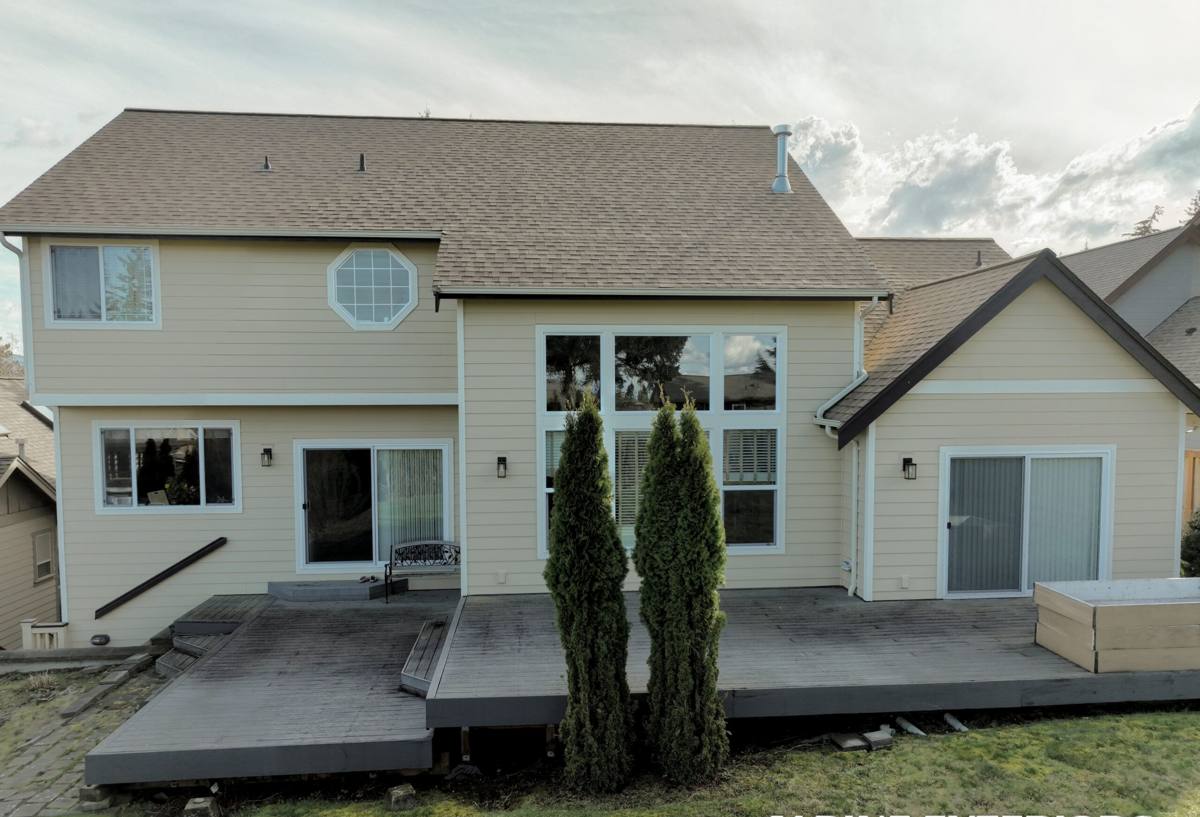
What Whatcom County Weather Does to a Deck
Moss and Trapped Moisture
Moss doesn't just make a deck look neglected — it actively holds water against the wood surface for extended periods. Once moss establishes itself in the gaps between boards or along a ledger board, it creates a constant damp layer that keeps the wood well above the moisture level that causes rot. In a climate with a long moss season, this isn't a once-a-year problem; it's an ongoing cycle unless it's managed.
Driving Rain and Wind-Driven Moisture
Rain that comes in at an angle — common in this region during fall and winter storms — pushes water into places a vertical downpour never would: behind fascia boards, under railing caps, and into the end grain of joists where they meet a house's ledger board. End grain soaks up water far faster than a flat board face, which is why joist ends and post bottoms are so often where we find the worst damage.
Salt Air and Metal Fasteners
Salt-tinged air accelerates corrosion on any fastener that isn't rated for it. Older decks built with standard galvanized nails or lower-grade screws often show rust streaks bleeding out of the wood, and once a fastener corrodes, it loses grip strength — which is a structural issue, not just a cosmetic one.
Common Problems We Find on Laurel-Area Decks
Most of the repair calls we get in this area fall into a fairly consistent set of issues:
- Soft, spongy, or discolored boards — usually a sign of rot starting beneath the surface finish
- Loose or wobbly railings and posts, often from corroded or pulled fasteners
- Ledger board separation where the deck meets the house — a serious structural concern
- Rusted or failing joist hangers and connector hardware
- Persistent moss and algae growth making the surface slippery, especially on shaded sections
- Stair stringers showing rot at the base where water collects and doesn't drain
- Gaps or cupping in boards from repeated wet-dry cycling
- Flashing at the house connection that's missing, undersized, or improperly lapped
Repair or Replace? How We Decide
Not every deck problem calls for a full rebuild, and not every "just fix this one board" request is actually the right move once we're underneath the surface. We look at the structural frame first — ledger, joists, posts, and footings — because that's what everything else depends on. Surface boards and railings are usually a straightforward repair or replacement; framing problems are where the real decision gets made.
| Factor | Points Toward Repair | Points Toward Replacement |
|---|---|---|
| Framing condition | Solid joists, minor surface wear only | Soft or rotted joists, ledger separation |
| Age of structure | Under 12-15 years, built to code | Older, unpermitted, or undersized framing |
| Extent of damage | Isolated boards or one problem area | Rot or moss damage spread across the deck |
| Fastener condition | Hardware still gripping, light surface rust | Widespread corrosion, pulling loose |
| Footings and posts | Stable, no settling or heaving | Shifting, undersized, or improperly set |
When the frame is sound, targeted repair is the honest, cost-effective answer. When rot has reached the structural members, patching around it just delays a bigger problem — and we'll tell you plainly if that's what we're seeing.
What a Correct Deck Repair Actually Involves
Diagnosis Before Any Board Comes Off
We start by probing suspect areas — screwdriver or moisture meter, not guesswork — to find out how far rot or water damage actually extends. Surface staining is often smaller than the real problem underneath, so we check the ledger connection, joist ends, and post bases even if the visible complaint is just one loose railing.
Addressing the Water Source, Not Just the Symptom
Replacing a rotted board without fixing whatever let water sit there in the first place just buys a few more years before the same repair is needed again. That might mean correcting flashing at the house connection, improving drainage under the deck, adjusting board spacing for better airflow, or clearing debris paths that trap moisture.
Matching Materials and Fasteners to the Climate
Any framing or fastener replacement gets hardware rated for wet, coastal-influenced conditions — not the bargain-bin galvanized fasteners that corrode within a few seasons out here. Structural connectors, screws, and flashing all need to hold up to the same moisture exposure that caused the original damage.
Moss and Surface Treatment
Once repairs are structurally sound, we address the surface — cleaning moss and algae buildup and, where it makes sense, recommending finish or sealant options that slow regrowth. This isn't a permanent fix on its own (nothing is, in this climate), but it buys meaningful time between maintenance cycles.
Decking Materials: What Holds Up Locally
Homeowners often ask whether to repair with the same material or switch materials during a repair. Both have honest trade-offs in this climate:
| Material | Moisture Behavior | Maintenance |
|---|---|---|
| Pressure-treated wood | Resists rot when properly sealed; end grain still vulnerable | Needs re-sealing every 1-2 years in this climate |
| Cedar | Naturally moisture-resistant, but surface needs upkeep | Periodic cleaning and finish reapplication |
| Composite/PVC boards | Doesn't rot, but can trap moisture underneath if airflow is poor | Low maintenance on the surface; framing below still needs wood-standard care |
We don't push one material over another as a blanket rule — the right call depends on the existing structure, your budget, and how much upkeep you want to take on. What we do insist on is that whatever decking sits on top, the framing underneath is treated and detailed for this climate, because that's the part nobody sees until it fails.
Why a Crew That Already Works the Laurel Area Matters
Deck repair mistakes in this climate usually aren't visible for a year or two — they show up as the same soft spot returning, or a "repaired" railing loosening again after one wet winter. A crew that regularly works decks in the Laurel and Lynden area has already seen which shortcuts fail here and which details actually hold up through a real Whatcom County winter. That's different from general repair experience picked up in a drier region.
It also means we're not learning the local permit and code requirements for the first time on your project, and we're realistic about scheduling — we know which months bring the heaviest rain and plan structural work around it rather than around convenience.
Maintenance That Extends a Repair's Life
- Sweep debris and standing leaves off the deck surface regularly, especially in fall
- Keep gutters and downspouts clear so runoff isn't draining directly onto or under the deck
- Address moss as soon as it appears rather than waiting for it to spread
- Check railings and stair connections for looseness once or twice a year
- Reseal or refinish wood decking on the schedule the product actually requires — not "when it looks bad"
- Keep planters, grills, and furniture legs from sitting directly on the same spot long-term, which traps moisture underneath
None of this eliminates the climate's effect on a deck, but it slows the clock considerably and helps you catch small problems before they become structural ones.
Get a Straight Answer on Your Deck
If you're dealing with soft boards, a wobbly railing, or a deck that's just starting to show its age in the Laurel area, we're glad to take a look and give you an honest read on what's actually needed — repair, partial rebuild, or otherwise. We offer free, no-pressure estimates, and the form below is the easiest way to get one scheduled.