 Lynden Siding
 Laurel's Climate Is Harder on Siding Than Most Homeowners Realize
Laurel sits in that stretch of Whatcom County where marine air off the Salish Sea, heavy seasonal rainfall, and long stretches of overcast, damp weather combine to create one of the more demanding climates for exterior building materials in the Pacific Northwest. Homes here deal with salt-laden air moving inland, driving rain that hits siding at an angle instead of falling straight down, and a moss and algae season that can stretch across most of the year in shaded or north-facing exposures.
None of that is dramatic on its own. The problem is cumulative. Wood-based and composite siding products that perform fine in drier climates start showing their weaknesses here within a handful of years — swelling at seams, soft spots at the bottom courses, moss creeping into joints, and paint that fails faster than the manufacturer's literature suggests. We install James Hardie fiber cement siding exclusively because it's engineered for exactly this kind of exposure, not because it's the only option on the market.
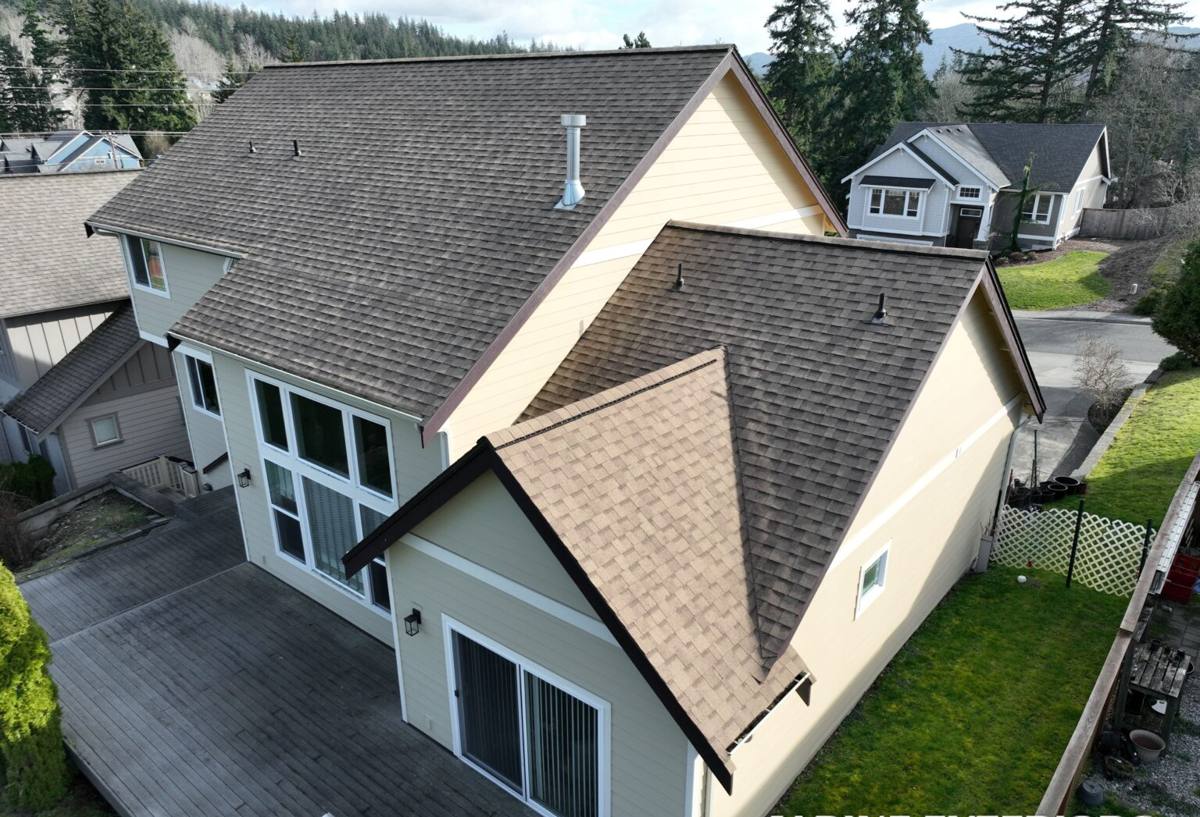
What Laurel Homes Actually Need From Their Siding
Before talking about products, it helps to be specific about what "climate-appropriate siding" means for a home in this part of Whatcom County. It isn't one property — it's a combination of several working together.
- Moisture resistance that doesn't rely on paint film alone. A coating can fail; the substrate underneath has to hold up on its own.
- Dimensional stability so siding doesn't swell, cup, or telegraph seams as humidity swings through the seasons.
- A finish that resists moss and algae growth in the shaded, slow-drying areas that are common on wooded or north-facing lots.
- Fastener and flashing details that keep wind-driven rain from getting behind the siding in the first place, since no cladding is truly waterproof at the seams.
- A warranty structure that actually holds up if something does go wrong, rather than one riddled with maintenance exclusions.
James Hardie's fiber cement formulation checks these boxes in a way that vinyl, engineered wood, and untreated wood products generally don't, which is why it's the only siding system we put on homes.
Why We Standardized on James Hardie — and What We Turned Down
We don't install LP SmartSide, vinyl siding, Cemplank, Allura, primed spruce, or cedar. That's a deliberate professional standard, not a knock on every homeowner who has one of those products on their house today.
LP SmartSide and other engineered wood products are wood-based at the core. In a climate with this much sustained moisture exposure, wood-based substrates are more vulnerable to swelling and edge deterioration if any water gets behind the panel — and in a wind-driven rain climate, some moisture intrusion at seams and penetrations is a matter of when, not if. Vinyl siding is inexpensive and low-maintenance in the sense that it doesn't need paint, but it's a thin plastic product that can warp in direct sun, crack in cold snaps, and simply doesn't offer the same fire resistance or resale perception as fiber cement. Cedar and primed spruce are beautiful materials, but they require an ongoing maintenance commitment — staining, sealing, moss treatment — that most homeowners underestimate when they choose them, especially in a climate this wet. Allura and Cemplank are also fiber cement, and reasonable products in their own right, but we've standardized our crews, training, and warranty relationships on one manufacturer's system so we can guarantee consistent, correct installation every time.
James Hardie's fiber cement is non-combustible, holds paint and factory finish far longer than wood-based alternatives, and its ColorPlus finish is baked on and warrantied separately from the substrate. For a Laurel property fighting salt air and moss season year after year, that combination matters more than upfront price.
The James Hardie Product Lines We Install
James Hardie makes several distinct product lines, and part of doing this job right is matching the right line and profile to the home rather than defaulting to one product everywhere.
| Product | Best Use | What It Offers |
|---|---|---|
| HardiePlank lap siding | Most home exteriors | Traditional horizontal lap look; widest range of textures and exposures |
| HardiePanel vertical siding | Accent walls, gables, board-and-batten look | Clean vertical lines, often paired with trim battens |
| HardieShingle siding | Accent areas, Craftsman and cottage styles | Staggered or straight-edge shingle profile without cedar's maintenance |
| HardieTrim boards | Corners, window and door surrounds, fascia | Matches siding durability so trim doesn't fail before the field siding does |
All of these are available in James Hardie's HZ5 formulation, which is engineered specifically for climates with freeze-thaw cycling and sustained moisture exposure — the profile that fits Whatcom County well. ColorPlus factory-applied finishes come in a range of colors with a stronger, more consistent bond than field-applied paint, which matters when a home is going to spend years absorbing salt air and rain.
Signs a Laurel Home's Current Siding Is Losing the Fight
Homeowners often call us after noticing one or two of these signs, not realizing the underlying problem has usually been developing for a while.
- Moss or dark streaking that keeps returning to the same areas no matter how often it's cleaned
- Soft or spongy spots near the bottom courses or around window and door trim
- Paint that's peeling, bubbling, or chalking well ahead of its expected repaint interval
- Visible gaps, warping, or bowing at seams and panel joints
- A musty smell near exterior walls, which can indicate moisture has already reached the sheathing
Any of these is worth a professional look before it turns into a sheathing or framing repair, which costs considerably more than a siding replacement on its own.
What Correct James Hardie Installation Actually Involves
James Hardie siding performs the way it's engineered to only when it's installed to the manufacturer's specifications — and this is where a lot of siding jobs, regardless of brand, quietly go wrong. Correct installation on a Laurel home includes:
Water Management Behind the Siding
A weather-resistant barrier and properly lapped flashing at every window, door, and horizontal transition, so any water that does get past the siding has a clear path down and out rather than pooling behind it.
Proper Clearances and Fastening
Minimum clearance between the bottom of the siding and grade, decks, roof lines, and other hard surfaces; correct fastener type, spacing, and placement per the Hardie install guide rather than whatever a crew has on the truck.
Caulking and Sealing Done Right — and Not Overdone
Sealant at the joints that need it, with the right joints left to breathe as designed. Over-caulking is a common shortcut that traps moisture instead of releasing it.
Field-Cut Edge Sealing
Any cut edge that isn't factory-finished gets sealed before installation, since raw cut edges are the most common point of premature failure on fiber cement jobs done by inexperienced crews.
Our Process, Start to Finish
- Free on-site estimate — we walk the property, check current siding and sheathing condition, and talk through product and color options.
- Written proposal — clear scope, product lines, and pricing, no vague allowances.
- Prep and moisture check — old siding removal, sheathing inspection, and repair of any hidden water damage before new siding goes up.
- Weather barrier and flashing installation — the unglamorous part that determines whether the job lasts.
- Hardie siding installation — to manufacturer spec, with correct fastening, clearances, and trim work.
- Final walkthrough — we go over the finished work with the homeowner before calling the job done.
Why Hiring a Crew That Already Works Laurel Matters
Siding installation isn't one-size-fits-all, even within a small area. A crew that regularly works in and around Laurel and greater Lynden already understands how the local mix of rainfall patterns, tree cover, and marine air affects installation decisions — where extra flashing attention pays off, which exposures need closer moss-prevention detailing, and how HZ5 product specs apply to homes built to older Whatcom County construction standards. That familiarity shows up in fewer surprises during tear-off and a finished product that's detailed for the conditions it will actually face, not generic conditions from a national install guide.
It also matters for warranty support. If a question comes up five or ten years down the road, it helps to work with a company that's still local, still installing James Hardie, and still standing behind its own work.
What Drives Cost on a Laurel Siding Project
| Factor | Why It Matters |
|---|---|
| Home size and wall complexity | More corners, gables, and dormers mean more cutting, trim, and labor time |
| Current siding removal | Tear-off and disposal of old material adds time versus a bare-wall install |
| Sheathing condition | Hidden rot or water damage found during removal requires repair before new siding goes on |
| Product line and profile | HardieShingle accents and custom trim details cost more than straight lap siding |
| Color and finish | Factory ColorPlus finishes vs. field-painted Hardie affect both cost and long-term maintenance |
We give a firm, itemized number after seeing the property in person — not a phone-quote range that changes once the crew shows up.
Keeping a New Hardie Exterior Performing for the Long Run
Once installed, James Hardie siding is genuinely low-maintenance compared to wood or engineered wood products, but "low-maintenance" doesn't mean "no maintenance" in this climate.
- Rinse siding annually to clear off salt residue, pollen, and early moss growth before it takes hold
- Keep gutters clean and downspouts directed away from the foundation to reduce splash-back moisture
- Trim back vegetation and tree limbs that keep siding shaded and slow to dry
- Inspect caulking at trim joints every couple of years and touch up as needed
- Address any impact damage or chipped ColorPlus finish promptly rather than letting it sit
If you're weighing a siding replacement for a home in Laurel and want a straight answer about what your house actually needs, we're happy to take a look. The estimate is free, there's no pressure, and you'll get a clear explanation of the work — just fill out the form below to get started.