 Lynden Siding
 Storm Damage Roof Repair for Laurel Homes
Laurel sits far enough inland to miss the worst of the salt spray that hammers roofs closer to Bellingham Bay, but it still takes the full brunt of Whatcom County's weather pattern: fast-moving frontal systems off the Pacific, sideways rain driven by wind funneling through the Nooksack valley, and long stretches of overcast, damp weather that never really lets a roof dry out between storms. When a windstorm rips shingles loose, a heavy limb comes down on a slope, or a hail cell passes through, you need someone who understands how that damage behaves on this kind of roof in this kind of climate — not just someone who can patch a hole.
This page covers what storm damage roof repair actually involves for homes in and around Laurel, what we look for beyond the obvious, and how we run the job from first call to final inspection.
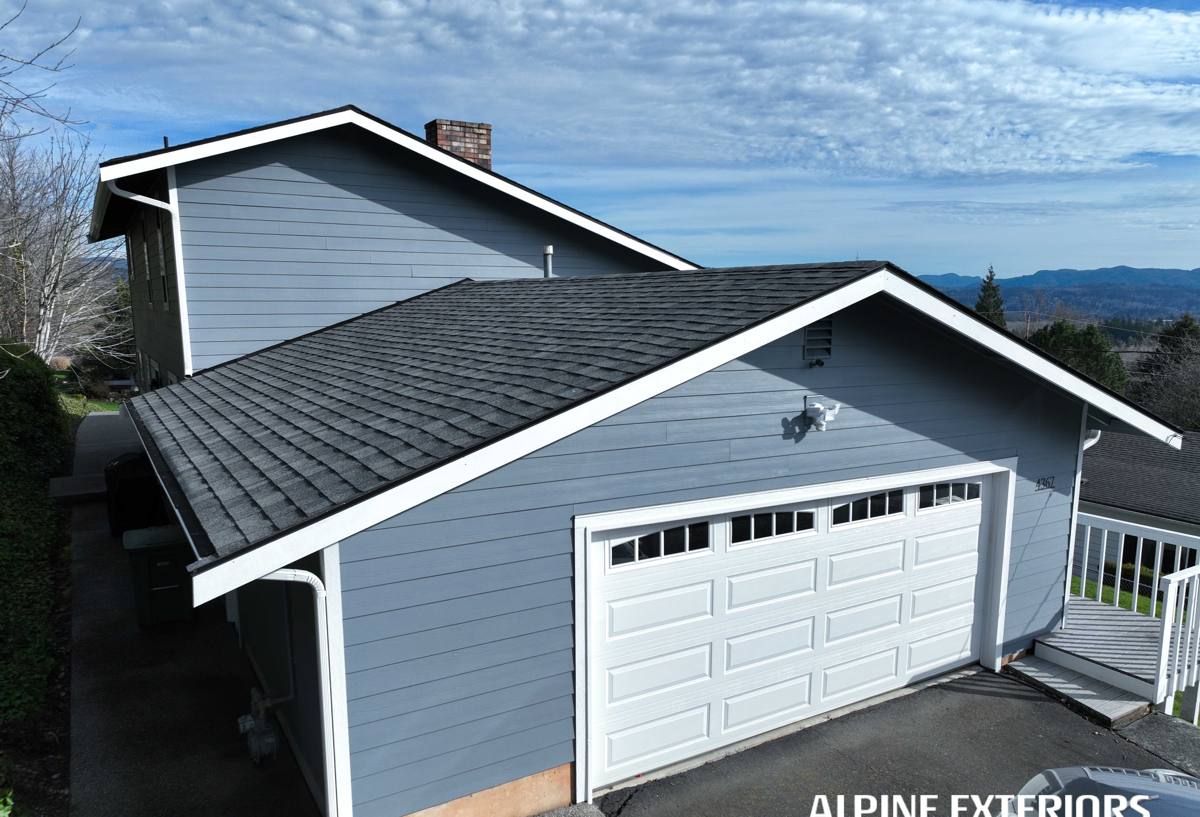
Why Storm Damage Here Is Different Than It Looks
A storm-damaged roof rarely has just one problem. Wind doesn't just tear off shingles — it lifts the ones next to them just enough to break the seal without visibly displacing them. Rain doesn't just get in through the obvious hole — it tracks sideways under flashing and along the roof deck before it ever shows up as a stain on your ceiling. In a climate like ours, where the roof rarely gets a long dry spell to fully evaporate any moisture that's worked its way in, small unseen entry points turn into rot, mold, and sagging decking over a season or two if they're missed.
What Local Storms Typically Damage
- Shingle tabs lifted or torn loose along ridges, hips, and roof edges where wind pressure is highest
- Flashing around chimneys, skylights, and roof-to-wall transitions bent, pulled, or separated
- Gutters and downspouts torn loose or clogged with storm debris, causing water to back up under the roof edge
- Moss and organic buildup on north-facing and shaded slopes, which holds moisture against shingles and accelerates wind and impact damage
- Roof decking soaked or soft where a breach has gone unnoticed for weeks or months
That last point matters most. In Lynden's climate, a small leak in October can be a soft, sagging section of decking by February. Moss season alone runs most of the fall, winter, and spring here — moss holds water against the roof surface long after the rain stops, which is part of why we always check for organic growth and trapped moisture even when a homeowner calls about a single obvious storm hit.
Our Storm Damage Repair Process
1. Immediate Assessment and Temporary Protection
If you've got an active leak or exposed decking, the first priority is stopping water intrusion — not scheduling a full repair three weeks out. We'll get a tarp or temporary cover in place correctly (a poorly secured tarp can do more damage in a windstorm than the original problem) and give you an honest read on whether you're looking at a spot repair or something more involved.
2. Full Roof Inspection, Not Just the Damage Site
We don't stop at the spot you called about. Storm winds stress the whole roof, not just the area where damage is visible, so we check every slope, all flashing points, valleys, and the gutter system before writing up a scope of work. This is also when we flag moss buildup, granule loss, or aging shingles nearby that a future storm is likely to finish off.
3. Repair or Replace — An Honest Recommendation
Most storm damage is repairable without a full roof replacement. We'll tell you plainly when a patch is the right call and when the roof is old or degraded enough that a repair is just delaying a bigger cost. We don't pad a repair into a replacement sale, and we don't talk you into a patch on a roof that's already past its useful life.
4. Insurance Documentation
If the damage is likely to be covered, we document conditions with clear photos and a written scope before any work starts, so you have what you need for a claim. We're not a public adjuster and won't promise a claim outcome, but we make sure the paperwork reflects what we actually found on your roof.
What a Correct Storm Repair Actually Involves
A rushed storm repair is one of the most common ways homeowners end up with a second leak six months later. Doing it right means matching materials and fastening methods to what's already on the roof, not just covering the hole.
| Repair Step | Why It Matters in This Climate |
|---|---|
| Remove and inspect decking under the damaged area | Trapped moisture under our long wet seasons rots decking fast; covering soft decking just hides the problem |
| Re-flash any disturbed transitions | Flashing is the #1 failure point in wind-driven rain — reused or bent flashing rarely reseals properly |
| Match shingle type, weight, and exposure to existing roof | Mismatched shingles age differently and can create new water paths at the seams |
| Clear and check gutters near the repair | Backed-up water at the roof edge undermines a repair even if the repair itself is done well |
| Address any moss or debris on adjacent slopes | Left in place, it holds moisture against the new repair and shortens its life |
Storm Damage vs. Age-Related Wear
Not every problem a homeowner spots after a storm was actually caused by the storm. Sometimes a storm just knocks loose something that was already failing — worn shingle seals, old flashing, or a roof nearing the end of its service life. We'll always tell you which is which. It affects both the right repair approach and, often, whether insurance is likely to cover it.
Signs It's More Wear Than Storm
- Granules collecting heavily in gutters across the whole roof, not just near the damaged area
- Shingles that are brittle or curling on multiple slopes, not just the storm-hit one
- Flashing that's rusted or deteriorated rather than bent or torn
- A roof that's already past 20-25 years old, depending on material
Cost Factors for Storm Damage Repair
Every storm repair is different, so we won't quote a number without seeing the roof, but a few factors consistently drive cost up or down:
| Factor | Effect on Cost |
|---|---|
| Extent of decking damage found underneath | Rotted decking requiring replacement adds material and labor beyond the visible repair |
| Roof pitch and access | Steeper slopes and multi-story homes require more safety setup and time |
| Age and condition of surrounding roofing | Older roofs may need a larger repair area to properly tie in new material |
| Number of penetrations near the damage | Chimneys, vents, and skylights each add flashing work |
| How long the damage went unaddressed | Longer exposure to Whatcom County's wet season means more secondary damage to fix |
Why a Local Crew Matters for Storm Work
Storm damage repair isn't a job you want handled by a crew passing through the area after a big weather event, quoting fast and moving on to the next county. We work in Lynden and the surrounding communities year-round, which means we know how roofs in this area actually age — how much moss pressure a north-facing slope in Laurel typically sees, how wind tends to funnel through this part of the valley, and which flashing details fail first on the housing stock common to this area. That local knowledge shows up in the repair: we're not guessing at what's normal wear versus storm damage, and we're still here next season if something needs a follow-up look.
We also carry the licensing and insurance a roof repair crew should have, and we'll walk you through exactly what we found and why we're recommending a given fix — no pressure, no upsell into a full replacement you don't need.
Preventing the Next Storm From Doing the Same Damage
- Have moss and organic debris removed from shaded slopes before it holds moisture through the wet season
- Check flashing annually, especially around chimneys and skylights, since these are the first points to fail in wind-driven rain
- Keep gutters and downspouts clear so storm runoff doesn't back up under the roof edge
- Trim back tree limbs that overhang the roof, a common source of impact damage in wind events
- Address small leaks immediately rather than waiting — in this climate, a small leak becomes a decking problem faster than most homeowners expect
If a recent storm has left your Laurel-area roof damaged, or you just want a second opinion before hail or wind season hits, we're happy to take a look. Reach out for a free, no-pressure estimate using the form below.