 Lynden Siding
 Deck Repair Built for Maple Falls Weather
A deck in Maple Falls works harder than a deck almost anywhere else in Whatcom County. It sits under tree cover for months at a time, gets soaked by driving rain off and on all winter, and rarely gets a real chance to dry out before the next system rolls through. We repair decks in this area regularly, and the pattern is always the same: the wood or hardware fails first where moisture sits longest, not where it looks the worst from a distance.
This page is about one job, done right, in one area: repairing decks for homeowners in and around Maple Falls. Not a full remodel pitch, not a generic "we do decks" page — just what we actually find out here, how we fix it, and what a repair should include if it's going to hold up through another wet season.
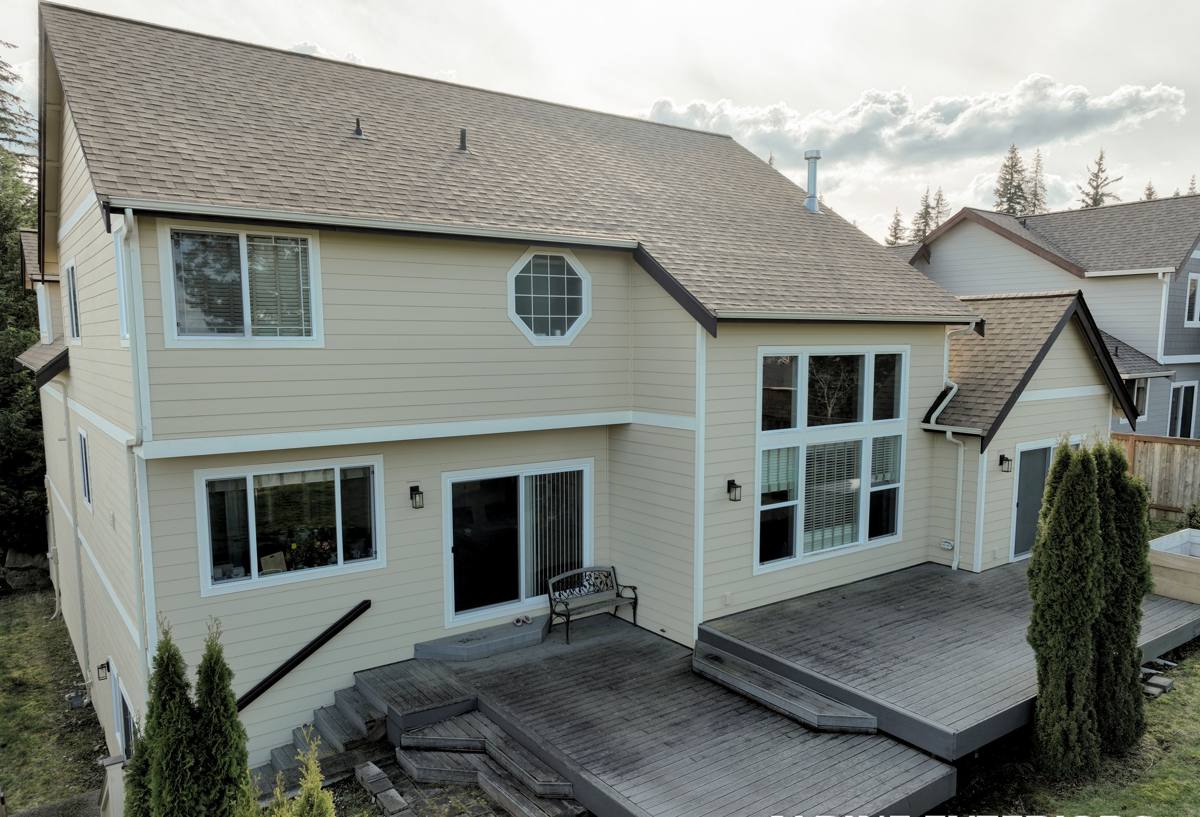
Why Decks Around Maple Falls Wear Out the Way They Do
Whatcom County's climate is hard on exterior wood in general — driving rain, a long moss season, and salt-tinged air moving in off the water all play a part. Out toward Maple Falls, the local conditions add their own twist. More tree canopy means more shade, and more shade means decking and framing stay damp longer after every rain instead of drying out between storms. That extra dwell time is exactly what wood rot and moss need to get established.
We also see more organic debris — needles, leaves, moss spores — collecting between deck boards and around posts than we do on more open, in-town lots. Left alone, that debris holds water against the wood like a sponge. It's not dramatic damage at first. It's slow, and that's what makes it dangerous: by the time a board feels spongy underfoot, the rot underneath it has usually been working for a season or two already.
Common Deck Problems We Find on Local Repair Calls
Ledger Board and House Attachment
The ledger board — where the deck bolts to the house — is the single most important connection on the whole structure, and it's also the one most likely to be hidden from view. Old or missing flashing lets water track behind the ledger and into the rim joist and framing behind it. This is a structural issue, not a cosmetic one, and it's the first thing we check on any repair call.
Joists and Framing
Under the decking boards, joists and beams take on moisture from above (through gaps in the decking) and from below (from ground moisture and poor airflow under low decks). Soft spots, dark staining, and a spongy feel when you press a screwdriver into the wood are all signs the framing has started to break down.
Posts and Footings
Posts that sit close to grade or make direct contact with soil are prone to rot right at the base, even if the post looks fine three feet up. We also check footings for movement — a deck that's developed a slight lean or bounce is often telling you something about what's happening below ground, not just about the boards on top.
Decking Boards and Moss
Moss on deck boards isn't just a slip hazard, though it is that. It holds moisture directly against the wood fibers around the clock, which accelerates decay in exactly the boards you walk on most. Composite decking isn't immune either — moss and algae can build up on the surface texture of composite boards just as readily as on wood, even though the material itself won't rot.
Railings and Fasteners
Loose railings are a safety issue we take seriously, and they're often a symptom of a bigger problem — the post it's attached to has softened, or the fasteners have corroded and lost their grip. Standard steel screws and nails corrode faster in a consistently damp, shaded environment than they would on a sunnier, more exposed deck.
Repair or Replace? How We Make the Call
Not every deck problem calls for a full rebuild, and not every deck is worth patching. We look at the extent of the damage, how it's distributed across the structure, and the age and condition of what's underneath before we recommend either path. Here's roughly how that breaks down:
| Situation | Repair Usually Makes Sense | Replacement Usually Makes Sense |
|---|---|---|
| Damage location | Isolated to a few boards, one section of railing, or a single post | Spread across multiple structural members (several joists, the ledger, and posts) |
| Framing condition | Joists and beams are sound; only the visible decking or railings are worn | Framing is soft, cracked, or shows widespread rot when probed |
| Ledger board | Properly flashed and structurally sound | Rotted, unflashed, or improperly attached to the house |
| Age of deck | Under 15-20 years, built to a reasonable original standard | Original construction is old, undersized, or doesn't meet current code for spans and connections |
| Homeowner goals | Deck size and layout still work well for the home | Wanting a different footprint, material, or layout anyway |
When damage is confined and the bones are good, targeted repair is the honest answer — it costs less and gets you back to a safe, solid deck faster. When the framing itself is compromised, patching the surface just delays a bigger problem and can mask it from future inspection.
What a Correct Deck Repair Actually Involves
A repair that actually solves the problem, rather than just covering it up, generally includes:
- Removing enough decking or trim to expose the framing underneath — not just replacing what's visibly damaged on the surface
- Probing joists, beams, posts, and the ledger board with an awl or screwdriver to map out how far the rot actually extends
- Correcting the moisture source, not just the symptom — that usually means fixing or adding flashing, improving drainage gaps, or addressing standing water under the deck
- Replacing damaged framing members with lumber rated for structural use, sistered or fully replaced depending on severity
- Using corrosion-resistant fasteners and hardware appropriate for the framing material, especially with pressure-treated lumber, which is more corrosive to standard fasteners than untreated wood
- Reinstalling or replacing decking and railings with proper spacing for drainage and airflow
- Checking that railings, stairs, and guard connections meet current safety standards, not just the original build
Skipping the framing inspection is the most common shortcut in deck repair, and it's the one that costs homeowners the most in the long run. New boards over rotten joists look fine for a season or two and then fail all at once.
Our Process, Start to Finish
On-Site Inspection
We walk the entire deck, check the ledger board attachment, probe framing and posts in several spots, and look at drainage and grading underneath. This is where we find out whether we're looking at a repair or something bigger.
Written Scope and Price
You get a clear description of what we found, what we recommend fixing and why, and a price before any work starts. No guessing, no surprise add-ons mid-project unless we find something new once the old material is off — and if that happens, we stop and talk to you first.
The Repair
We remove only what needs to come off, address the actual moisture and structural issues, and rebuild with materials matched to the rest of your deck wherever possible so the repair doesn't stand out as an obvious patch.
Walkthrough and Cleanup
Before we consider the job done, we walk it with you, point out what was fixed, and answer any questions about upkeep going forward. Site cleanup is part of the job, not an afterthought.
Materials and Hardware We Rely On
For framing repairs, we use lumber rated for structural and outdoor use, sized to match or exceed the original spans. For decking surfaces, both quality treated wood and composite materials have a place — wood costs less upfront and can be refinished, while composite costs more initially but doesn't need staining or sealing and resists the moss-holding texture changes that come with weathered wood. Neither choice is automatically "better"; it depends on your budget, how the deck is used, and how much upkeep you want to take on.
Where materials matter most is hardware and flashing. We use fasteners rated for contact with treated lumber, since standard steel screws corrode quickly against the chemicals in modern treated wood. At the ledger board and any place decking meets the house, proper flashing — installed so water sheds away from the structure rather than behind it — is non-negotiable. It's inexpensive compared to the rest of the job and it's the detail that determines whether the repair lasts five years or twenty.
Keeping Your Deck in Shape After the Repair
A good repair buys you time, but a Maple Falls deck still needs regular attention to get the most out of it. After we finish a repair, we recommend:
- Sweeping debris — needles, leaves, dirt — out from between boards and away from posts every few weeks during fall and winter
- Treating moss and algae buildup on boards and railings before it gets thick, rather than after it's already staining the wood
- Checking that gaps between deck boards stay clear so water can drain through instead of pooling on the surface
- Re-staining or sealing wood decking on a schedule appropriate to the product used, typically every 1-3 years depending on sun and shade exposure
- Walking the deck once or twice a year to check for soft spots, loose railings, or new staining that could signal a fresh leak
- Keeping vegetation trimmed back from the deck edges to improve airflow and sun exposure underneath
Why It Matters That We Already Work in Maple Falls
We're not driving in from out of the area to figure out local conditions on your dime. Because we already work decks and siding throughout the Lynden area and out toward Maple Falls, we've seen how the shade and moisture out here affect framing and hardware differently than a deck a few miles away in more open terrain. That means fewer surprises during the inspection and a repair plan that accounts for how your deck will actually hold up here, not just how it would perform on a textbook job site.
It also means we're not a stranger if something needs a follow-up look next season. A repair from a crew that already knows the area and stands behind its work is worth more than a lower bid from someone passing through.
If you've got a soft spot, a loose railing, or a deck that just doesn't feel as solid as it used to, we're glad to come take a look. Fill out the form below for a free, no-pressure estimate — we'll tell you honestly whether you're looking at a repair or something more.