 Lynden Siding
 Maple Falls Sits in a Tough Spot for Siding
Maple Falls is a foothill community east of Lynden, tucked up where the Nooksack valley starts climbing toward Mount Baker. That elevation change matters more than most homeowners realize. The same marine air that rolls in off Puget Sound and pushes through Whatcom County picks up extra moisture as it rises into the foothills, and it tends to linger longer up there than it does on the flat farmland closer to town. The result is a longer wet season, more days of driving rain hitting exterior walls at an angle, and a moss season that can stretch well past what lowland Lynden homes deal with.
None of that is a problem for siding that's in good shape and installed correctly. It becomes a problem the moment there's a crack, a gap, a failed caulk joint, or a section of siding that's already started absorbing water. Once moisture gets behind the surface, the freeze-thaw cycles and constant damp of a Whatcom County winter turn a small issue into a expensive one fast. That's the whole case for repair work done right, done promptly, and done by people who understand what this specific stretch of the county throws at a house.
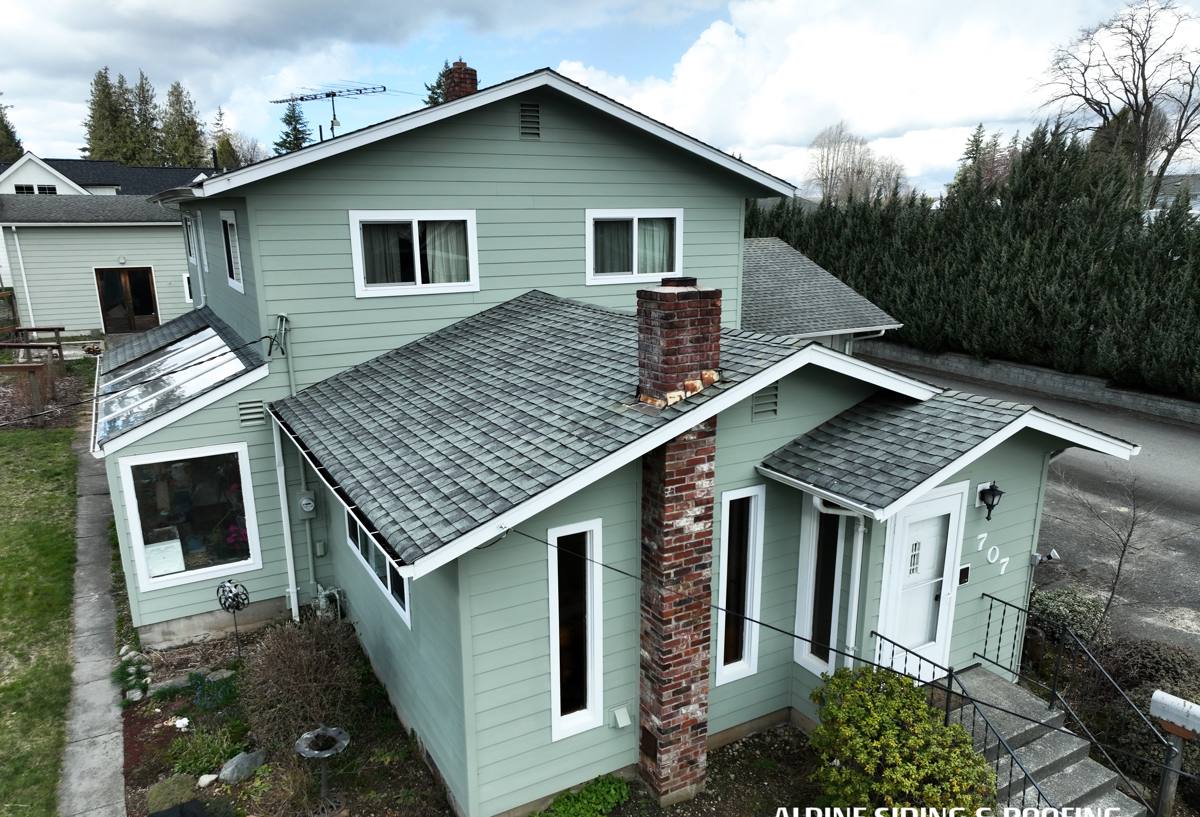
Signs Your Maple Falls Home Needs Siding Repair
Most siding failures don't announce themselves with a dramatic event. They show up as small, easy-to-ignore details that get worse every wet season they're left alone. Homeowners in Maple Falls should walk their exterior at least once a year — ideally right before the rains set in — and look for:
- Cracked, split, or buckled siding panels, especially on walls that catch the most wind-driven rain
- Soft or spongy spots when you press on the siding near the bottom of the wall or around window trim
- Persistent moss or dark streaking that keeps coming back within weeks of being cleaned
- Gaps opening up at seams, corners, or where siding meets window and door trim
- Paint that's peeling, bubbling, or failing in one localized area rather than evenly across the house
- Visible warping or waviness in a panel that used to lie flat
- Water stains or discoloration on interior walls that back up to an exterior wall
- A musty smell in a room with no obvious source
Any one of these can be a simple, contained repair if it's caught early. Left through another Whatcom County wet season, several of them turn into sheathing damage, which is a bigger and more expensive job than siding alone.
Common Damage We See — and What Actually Fixes It
Not every problem needs the same solution, and part of doing this job honestly is not overselling a full section replacement when a targeted repair will hold up fine — or, just as important, not patching over something that's actually already failed underneath.
| What's Happening | Likely Cause | Typical Fix |
|---|---|---|
| Cracked or split panel, wall otherwise sound | Impact damage, panel age, or a fastening issue | Remove and replace the individual panel, color-matched |
| Recurring moss and dark streaking | Poor sun exposure combined with the local wet season | Clean, treat, and check that caulking and flashing aren't trapping moisture |
| Soft spot near the base of a wall | Long-term ground splash-back or a grading issue | Repair siding and sheathing, then address drainage so it doesn't recur |
| Gaps at trim or corners | Failed caulk or original installation shortcuts | Re-seal properly with the right joint treatment for the material |
| Warped or bowed panel | Moisture absorption into the panel material itself | Full panel or section replacement — warping doesn't reverse |
| Interior water stains on an exterior wall | Moisture already behind the siding | Open the wall, inspect sheathing and house wrap, then rebuild correctly |
That last row is the one that matters most. A repair that only addresses what's visible from the outside, without checking what's happening behind the siding, isn't a real repair — it's a temporary cover-up that lets the actual problem keep working.
What a Correct Repair Actually Involves
A siding repair done right is not just "cut out the bad piece and nail in a new one." On a Maple Falls home dealing with this much seasonal moisture, a repair needs to address the whole system, not just the surface layer:
The water-resistive barrier underneath. If the house wrap or building paper behind the damaged siding has torn, degraded, or been improperly lapped, replacing the siding without fixing that barrier just sets up the same failure again.
Flashing at penetrations and transitions. Windows, doors, hose bibs, and any place siding meets a different material are the highest-risk spots for water intrusion. Repair work has to get the flashing detail right, not just cosmetically match the old siding.
Fastening and clearances. Fiber cement and other siding materials have specific fastening patterns and minimum clearances from grade, decks, and roof lines. A repair that ignores those specs — even if it looks fine on day one — is a repair that fails again.
Material match. A patch that's visibly a different shade, texture, or profile than the surrounding siding isn't acceptable on a home you plan to keep looking good. Matching matters, and it's part of why the brand and product line installed originally affects how repairs get handled.
Why the Repair Material Matters
This is where a lot of siding repair conversations go sideways. We install James Hardie fiber cement siding exclusively — we don't install vinyl, LP SmartSide, cedar, or other fiber cement brands like Cemplank or Allura. That's a deliberate standard, not a limitation we're apologetic about, and it shapes how we approach repair calls.
If a Maple Falls home already has James Hardie siding, repairs are straightforward: we can match the existing plank profile and, in many cases, the factory ColorPlus finish, so the repaired section holds its color and doesn't fade or chalk at a different rate than the rest of the wall. Hardie's product consistency makes that kind of clean match realistic.
If the existing siding is a different material — vinyl that's cracked and brittle, cedar that's rotting at the base, or an older fiber cement product that's failing at the seams — we'll be straight with you about what a like-for-like patch can and can't accomplish. Sometimes a contained repair in the original material is the honest, cost-effective answer. Other times, especially when the damage points to a systemic moisture problem, the more sensible long-term move is replacing the affected section — or eventually the whole elevation — with James Hardie, so you're not repeating the same repair call again in a few years. We'll tell you which situation you're in rather than just quoting whatever's easiest for us.
Our Repair Process
- On-site inspection. We look at the visible damage and check surrounding areas, fastening, and flashing — not just the one spot you called about.
- Diagnosis, not guesswork. If there's any sign moisture has gotten behind the siding, we check the sheathing and barrier before quoting a fix.
- A clear, written scope. You'll know exactly what's being repaired, what material is being used, and why — no vague line items.
- Repair or replacement, done to spec. Proper fastening, clearances, and flashing detail every time, whether it's one panel or a full section.
- Color and profile match where possible. We aim for a repair that blends in, not one that stands out as an obvious patch.
- Final walk-through. We show you what was done and what to watch for going forward.
Why a Lynden Crew That Already Works Maple Falls Is Worth Hiring
Siding repair is one of those jobs where local familiarity actually changes the outcome. A crew that regularly works Whatcom County knows how differently a wall performs on the windward side of a Maple Falls home versus a sheltered wall in downtown Lynden, and adjusts the repair — sealant choice, flashing detail, even where moss is likely to return — accordingly. That's not something you get from a contractor who drives in once from outside the area and treats every job the same regardless of exposure or elevation.
There's also a practical side to this. Moisture problems don't wait for a convenient afternoon. A crew based in Lynden can get out to Maple Falls quickly when a homeowner notices a soft spot or a fresh leak after a storm, rather than a repair sitting on a waitlist for weeks while the damage spreads. And because we're a company that installs one product system and stands behind it, we're not juggling five different manufacturers' specs and warranty rules — we know James Hardie's installation requirements cold, which matters when a repair has to meet the same standard as new work in order to keep any applicable warranty coverage intact.
Keeping Repaired Siding From Needing Repair Again
A good repair should be the last time you deal with that particular spot. A few habits make that more likely in a climate like this one:
- Clean moss and algae off siding at least once a year, before it has a chance to hold moisture against the surface
- Keep gutters clear so water isn't overshooting onto walls below the roofline
- Trim back vegetation that's shading a wall and keeping it damp longer than the rest of the house
- Check caulking around windows, doors, and trim annually — it's the first thing to fail and the cheapest thing to fix before it causes bigger problems
- Watch drainage and grading near the foundation so splash-back isn't hitting the bottom courses of siding all winter
These are small, low-cost habits, but they're the difference between a repair that lasts and one you're redoing in three years.
If you're seeing any of the warning signs above on a Maple Falls home, or you just want a second, honest opinion on a siding issue before it gets worse, we're happy to take a look. Fill out the form below for a free, no-pressure estimate — we'll tell you straight what's going on and what it actually takes to fix it.