 Lynden Siding
 New Roof Installation in Bellingham: Building for This Corner of Whatcom County
Bellingham sits close enough to Lynden that homes in both places deal with the same basic weather problem, even though the two towns feel different day to day. Marine air moves in off Bellingham Bay and the Salish Sea, rain arrives sideways as often as it falls straight down, and a moss season that barely pauses through the calendar year settles onto any roof plane that stays shaded or damp for long stretches. A new roof is one of the largest single investments a homeowner makes in a house, and it's also one of the few systems where a mistake made on install day doesn't show up as a problem until years later, often after the warranty conversation has already come and gone.
We work roofing, siding, windows, and decks out of Lynden and cover this stretch of Whatcom County regularly, including Bellingham. When a homeowner here is looking at a full new roof rather than a patch or a repair, the goal is the same every time: build a roof system for sustained moisture and a long moss season, not just for whatever looks finished on a dry afternoon.
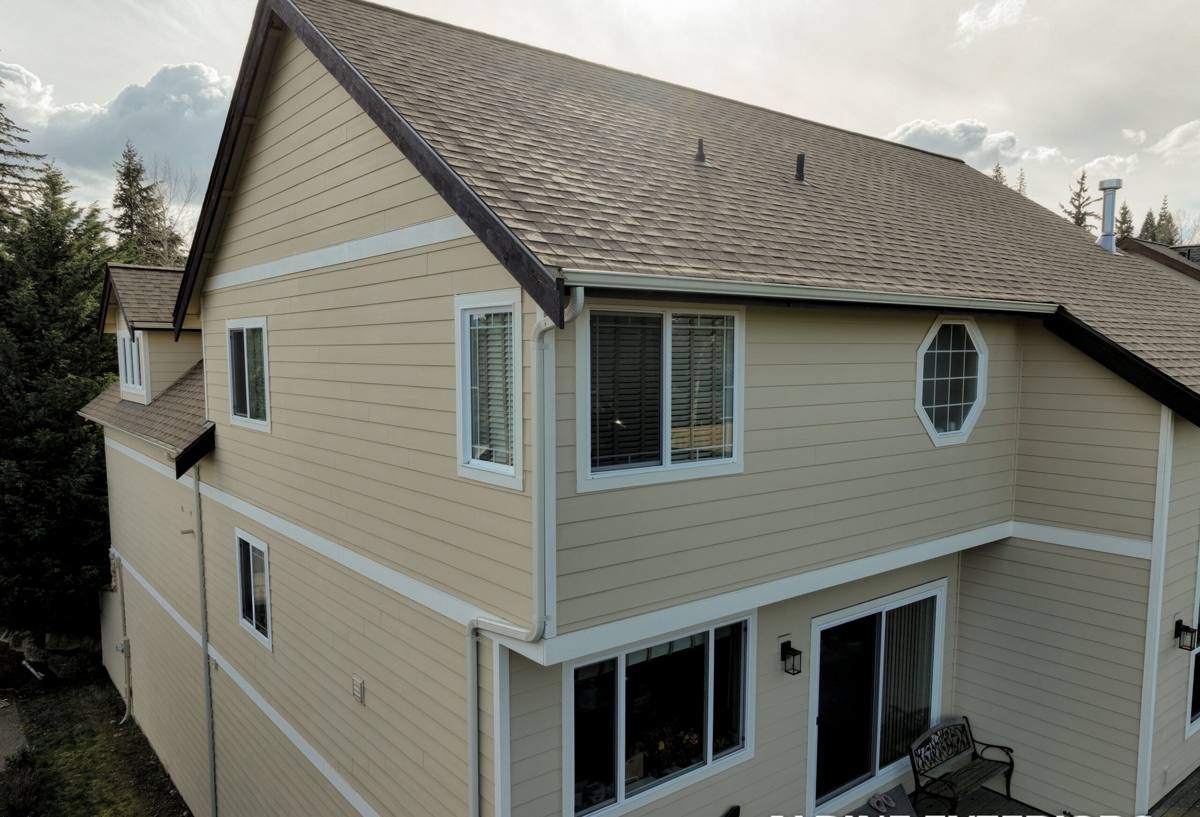
What Bellingham's Climate Asks of a New Roof
Salt Air and Corrosion Along the Bay
Homes closer to Bellingham Bay see a steadier flow of salt-tinged, moisture-laden air than properties further inland, and that exposure is hard on anything metal over time — fasteners, flashing, drip edge, vent caps. It's not the kind of damage that announces itself with a dramatic failure. It's slow corrosion that quietly weakens the metal components holding a roof system together, which is exactly why fastener and flashing spec matter more on a new install here than they would in a drier, inland climate.
Wind-Driven Rain and Roof Penetrations
Rain in this part of Whatcom County rarely falls straight down. Wind off the water pushes it sideways, into roof valleys, around chimneys and vent pipes, and under any flashing that isn't lapped and sealed the way it should be. A new roof built around a straight-down rainfall assumption is already behind before the first storm season tests it — every penetration and transition needs to assume water is coming from an angle, not just from above.
A Moss Season That Doesn't Really End
Mild, damp conditions for most of the year mean moss and algae have a long growing window on any shaded or north-facing roof plane, especially under mature tree cover, which is common on lots throughout the Bellingham and Lynden area. Moss does more than sit there looking bad — it holds moisture against the roofing material and can work its way under shingle tabs or shake courses, which shortens the service life of a roof that would otherwise easily hit its rated years.
Choosing a Roofing Material for This Climate
There's no single correct material for every Bellingham roof — pitch, sun exposure, budget, and how long you plan to stay in the home all factor in. What matters is understanding the honest trade-offs for this specific climate before a decision gets made, rather than picking based on price alone.
| Material | Salt Air & Moss Behavior | Typical Maintenance | Realistic Lifespan Here |
|---|---|---|---|
| Architectural asphalt shingle | Performs well with proper ventilation; moss-resistant granule options help on shaded planes | Periodic moss removal and gutter checks | 20-30 years |
| Standing seam metal | Smooth, non-porous surface sheds moss and salt-driven corrosion better than most alternatives | Low; occasional fastener and sealant checks | 40-60 years |
| Composite/synthetic shingle | Resists moisture absorption well; performance varies by product quality | Low to moderate | 30-50 years depending on product |
| Cedar shake | Absorbs moisture readily; needs consistent airflow underneath to dry between rains | Higher; regular treatment and moss control | 20-30 years with consistent upkeep |
A steep, sun-exposed roof and a low-slope roof shaded by mature trees on the same street don't call for the same answer, and a bay-facing lot with more direct salt exposure changes the calculation again. We'll walk your roof specifically and explain which option fits, rather than defaulting to whichever product is easiest to sell.
What a Correct New Roof Installation Actually Involves
The finished look of a new roof is simple from the ground — clean lines, matching color, no obvious flaws. What determines whether that roof is still performing in year twenty-five happens underneath, at every step of the install:
- Full tear-off to the roof deck, not a layer installed over existing material
- Deck inspection and repair of any rot, soft spots, or delamination found once the old roofing is removed
- Underlayment rated for sustained moisture exposure, installed with correct overlaps
- Ice-and-water shield at eaves, valleys, and other areas where water and debris naturally collect
- Properly lapped and sealed flashing at every chimney, vent pipe, skylight, and roof-to-wall transition
- Balanced attic and roof deck ventilation so moisture can escape instead of getting trapped against the deck
- Corrosion-resistant fasteners and metal components suited to sustained salt and moisture exposure
- Manufacturer-spec installation practices that keep material warranties intact
Skip any one of these steps and the roof can still look correct for a year or two. The consequences — a soft deck, a leak at a valley, premature shingle failure — tend to take a couple of wet seasons to surface, which is exactly why they're easy for a rushed install to get away with until the homeowner is the one living with the damage.
Full Tear-Off vs. Roofing Over an Existing Layer
Some contractors will install new shingles directly over an existing layer to save time and cost. We don't do that on new roof installations, and it's a professional standard rather than a knock on anyone who offers it. A roof-over hides the condition of the deck underneath — you can't inspect or repair rot, soft spots, or trapped moisture you can't see, and any of those problems just keep progressing under the new layer. It also adds weight and can trap heat and moisture between the two layers, which works against a roof's ability to dry out in a climate that's already damp most of the year. A full tear-off costs more upfront in labor, but it's the only way to actually know what condition the deck is in before new roofing goes down, and it's the only way most manufacturers will honor a full warranty.
Our Installation Process for a Bellingham Roof
Assessment and Material Selection
We start by looking at the roof's actual pitch, sun exposure, tree cover, and proximity to the bay, since those factors shape which material makes sense and how aggressively we need to detail flashing and ventilation. This is also when we talk through budget and how long you're planning to stay in the home, because that changes the honest answer on which material is worth the investment.
Tear-Off and Deck Repair
Old roofing comes off down to the deck, and we inspect every section of sheathing before anything new goes on. Any rot, soft spots, or damaged framing gets repaired at this stage — installing new roofing over a compromised deck just guarantees a shorter lifespan for materials that would otherwise perform for decades.
Underlayment, Flashing, and Ventilation
This is where the roof actually earns its lifespan. Underlayment goes down with correct overlaps, ice-and-water shield covers eaves and valleys, and every penetration — chimneys, vents, skylights — gets flashed and sealed to handle wind-driven rain from an angle, not just straight-down moisture. Ventilation gets balanced between intake and exhaust so the attic and deck can actually dry out between wet spells instead of staying damp against the new material.
Final Walkthrough and Warranty Paperwork
We walk the finished roof with you, point out anything worth knowing for future maintenance, and make sure manufacturer warranty registration is filed correctly. A warranty that isn't registered properly, or an install that doesn't follow spec, can leave you without coverage exactly when you'd need it.
Cost Factors for a New Roof Installation in Bellingham
| Factor | Why It Matters Here |
|---|---|
| Roof size and pitch | Steeper and larger roofs take longer to tear off, deck, and detail correctly |
| Number of existing layers | Removing multiple old layers adds labor and disposal cost before new roofing can start |
| Deck condition | Rot or soft spots found during tear-off need repair before new material goes down |
| Material choice | Asphalt, metal, and composite products carry different material and labor costs |
| Ventilation upgrades | Older homes often need added intake or exhaust venting to meet current performance standards |
| Access and site conditions | Steep lots, mature trees, and limited staging area near the bay can add labor time |
Two homes with similar square footage can land at very different numbers once deck condition and access are factored in, which is why we walk the actual roof before quoting rather than pricing off a rough estimate.
Signs Your Bellingham Home Needs a New Roof, Not Another Repair
- Moss or dark staining that returns quickly after cleaning, especially on shaded or north-facing planes
- Granules collecting heavily in gutters or at the base of downspouts
- Curling, cupping, or missing shingles across multiple sections of the roof
- Soft spots or noticeable give when the roof deck is walked
- Water staining on interior ceilings or attic sheathing that keeps reappearing after repairs
- A roof that's already had several patch repairs and is approaching or past its rated lifespan
- Visible sagging along the roofline or ridge
One or two of these on their own might still be a repair. Several of them together, especially on a roof already past the midpoint of its expected life, usually means a repair is just delaying the inevitable at added cost.
Why Hire a Crew That Already Works Bellingham
A crew that installs roofs across this part of Whatcom County through repeated wet seasons has already seen how salt air, wind-driven rain, and moss behave on real houses over years, not just how a product performs on a spec sheet. That shows up in specific decisions on install day: which roof orientations near the bay need extra flashing attention, how much ice-and-water shield a given valley actually needs in this climate, and which ventilation setup keeps a shaded roof dry enough to hit its full rated lifespan. It's also the difference between a contractor who treats Bellingham the same as anywhere else and one who accounts for how close a given lot sits to the water and how much tree cover it carries.
If you're weighing a new roof for a home in the Bellingham area, we're glad to walk the property, explain what your specific roof needs given its pitch, exposure, and current condition, and give you a straightforward, no-pressure estimate. There's a form below — reach out and we'll set up a time to take a look.