 Lynden Siding
 Roof Repair for Nooksack-Area Homes
Homes around Nooksack and the greater Lynden area deal with a roofing climate that doesn't let up. Whatcom County sits under a long stretch of wet, overcast weather every year, and that combination of driving rain, humidity, and mild temperatures is exactly what shortens a roof's working life. It's not one dramatic storm that does the damage — it's months of moisture sitting in places it shouldn't, moss taking hold on shaded slopes, and small gaps that go unnoticed until they turn into a stained ceiling.
A roof repair done right in this area isn't just patching the spot that's leaking. It means understanding why that spot failed in the first place, checking the surrounding material for the same early warning signs, and fixing it so the same call-back doesn't happen again next winter. That's the standard we hold every repair to, whether it's a single flashing detail or a full section of damaged decking.
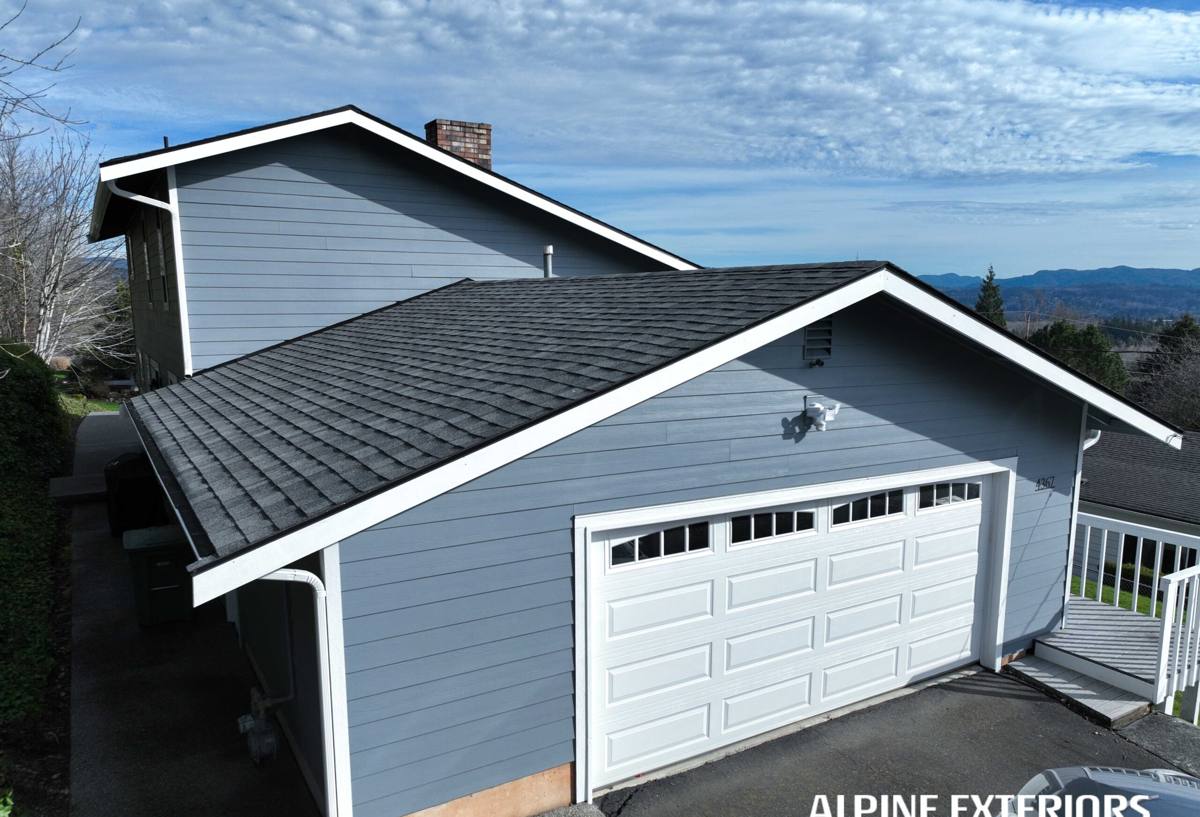
What Nooksack's Climate Does to a Roof
The wet season here isn't short. Roofs in this part of Whatcom County spend a large chunk of the year staying damp between rain events, which creates ideal conditions for moss and algae growth on north-facing slopes and shaded valleys. Add in periods of driving, wind-blown rain, and even a well-installed roof can see water pushed sideways under shingle edges and around flashing that a calmer climate would never test.
Over time, that steady moisture exposure does a few predictable things to a roof:
- Moss and organic growth hold moisture against the shingle surface, accelerating granule loss
- Repeated wet-dry cycles loosen nail fasteners and lift shingle tabs
- Flashing seals around chimneys, vents, and skylights degrade faster than the shingles around them
- Underlayment breaks down where moss or debris has trapped water for extended periods
- Gutters clogged by needles and moss debris send water backward under the roof edge
None of that means every roof needs replacing — most of it is repairable if it's caught before it spreads into the decking or interior framing.
Signs Your Roof Needs a Repair, Not a Replacement
Most roof problems we're called out for in the Nooksack area start small and stay hidden until they show up indoors. Homeowners are usually in the best position to catch these early if they know what to look for.
- Dark streaks or green-black patches on shaded roof slopes
- Granules collecting in gutters or at downspout outlets
- Curling, cracked, or missing shingles, especially after a windstorm
- Water stains on ceilings or upper walls, particularly near chimneys or skylights
- Daylight visible through the attic roof deck
- Soft or spongy spots when walking the roof (best assessed by a professional)
- Rusted, lifted, or gapped metal flashing around penetrations
Catching any of these early is almost always the difference between a repair measured in hours and a project measured in days.
What a Correct Repair Actually Involves
Finding the Real Source, Not Just the Symptom
Water rarely shows up on the ceiling directly below where it entered the roof. It travels along rafters, sheathing seams, and insulation before it stains drywall. A proper repair starts with tracing the leak back to its actual entry point — usually a flashing gap, a cracked pipe boot, or a section of worn underlayment — rather than just sealing the spot where the stain appeared.
Matching Materials, Not Just Covering the Hole
Shingle color and profile shift slightly between manufacturing batches and fade differently with age. A careful repair pulls shingles from the least visible slope or sourced stock to keep the patch from standing out, and ties new underlayment into the existing layer correctly instead of just overlapping it loosely.
Flashing Gets Rebuilt, Not Just Resealed
Caulk over old flashing is a short-term fix, not a repair. Around chimneys, skylights, and wall-to-roof transitions, we address the actual metal and underlayment detail so water is shed correctly again, rather than relying on sealant to hold back what flashing should be doing structurally.
Decking and Ventilation Get Checked
If moisture has been sitting long enough to stain a ceiling, there's a good chance the decking underneath has softened or the attic isn't venting properly. A repair that skips this step often looks fine for a season and then fails again in the same spot.
Moss, Moisture, and the Whatcom County Roof Cycle
Moss is more than a cosmetic issue here — it's one of the most common underlying causes of the small leaks we repair around Lynden and Nooksack. Moss holds water against the shingle surface far longer than open air ever would, and its root structure works into shingle granules and seams over multiple seasons.
When a repair involves moss, we treat both sides of the problem: removing the growth without damaging the shingle surface underneath, and addressing whatever is keeping that section of roof shaded and damp longer than the rest — tree cover, poor airflow, or a low-slope section that drains slowly. Treating the symptom without addressing the cause just means the same repair call in a year or two.
Common Repair Scenarios We See in This Area
| Scenario | Likely Cause | Typical Fix |
|---|---|---|
| Ceiling stain near a chimney | Degraded step or counter-flashing | Rebuild flashing detail, replace surrounding shingles |
| Dark, spongy patch on a north slope | Long-term moss and moisture retention | Moss removal, damaged shingle replacement, airflow assessment |
| Leak after a windstorm | Lifted or torn shingles, exposed nail heads | Shingle replacement, fastener correction, seal check |
| Leak around a bathroom or kitchen vent | Cracked or worn pipe boot | Boot replacement, surrounding shingle inspection |
| Water intrusion at roof-to-wall junction | Missing or corroded kickout flashing | Flashing installation or replacement, siding interface check |
Our Repair Process
1. Inspection
We start with a full look at the roof, not just the reported problem area, since one visible leak often points to a second issue that hasn't shown up indoors yet.
2. Straight Answer on Repair vs. Replacement
If a repair genuinely solves the problem, we say so. If the roof's overall condition means a repair would just be a short-term patch on a system nearing the end of its life, we'll tell you that too, along with why.
3. The Repair Itself
Work is done with matched materials, correct flashing details, and attention to how water actually moves across that section of roof — not just the minimum needed to stop the immediate drip.
4. Cleanup and Follow-Up
Debris and old material are cleared from the site, gutters are checked for blockage from the work, and we're available if anything about the repair needs a second look.
Repair vs. Replacement: What Actually Drives the Decision
| Factor | Favors Repair | Favors Replacement |
|---|---|---|
| Roof age | Under roughly two-thirds of expected lifespan | Near or past manufacturer's expected service life |
| Extent of damage | Isolated to one section or detail | Spread across multiple slopes or repeat leak history |
| Decking condition | Solid, no soft spots found | Soft, delaminating, or repeatedly wet decking |
| Shingle granule loss | Localized to damaged area | Widespread thinning across the roof |
| Cost outlook | Typically a few hundred to a couple thousand dollars depending on scope | Repair costs approaching a meaningful fraction of full replacement |
There's no universal cutoff — a well-maintained older roof can still be worth repairing, and a newer roof with a bad batch of shingles or a botched original installation may not be. This is exactly why the inspection step matters more than the roof's age on paper.
Why a Crew That Already Works Nooksack Matters
Roofing problems here follow patterns tied directly to this region's weather — which slopes hold moss longest, which flashing details tend to fail first under sustained wind-driven rain, and how fast a small gap turns into decking damage during a wet Whatcom County winter. A crew that works this area regularly recognizes those patterns quickly instead of treating every roof as a blank slate, which usually means a faster, more accurate diagnosis and a repair that's built for the conditions it actually has to survive, not just a textbook install.
Being local also means we're not far away if a repair needs a follow-up look after the next storm rolls through — something that matters more here than in drier climates, where a marginal repair might go unnoticed for years instead of weeks.
Get a Free, No-Pressure Estimate
If you've noticed a stain, moss buildup, or missing shingles on your Nooksack-area roof, it's worth having someone look at it before the next round of rain makes the problem bigger. Fill out the form below for a free estimate — no pressure, just a straight assessment of what your roof actually needs.