 Lynden Siding
 Windows Built for Nooksack's Wet Side of Whatcom County
Nooksack sits in a part of Whatcom County that doesn't get a break from moisture for long stretches of the year. Rain moves through steadily rather than in isolated storms, marine air off the Sound carries salt further inland than most homeowners realize, and the shaded, damp conditions that follow give moss and algae months to establish themselves on anything that stays wet. Windows are one of the first places that shows up. A window that's slightly out of level, sealed with caulk instead of proper flashing, or missing a drainage path will let water in long before anyone notices a leak inside the house.
Window installation isn't just picking a product and setting it in the opening. In this climate, how the window is flashed, sealed, and tied into the wall assembly matters as much as the window itself. We've replaced enough failed installs around Nooksack to know that most problems trace back to shortcuts at the rough opening, not the window brand.
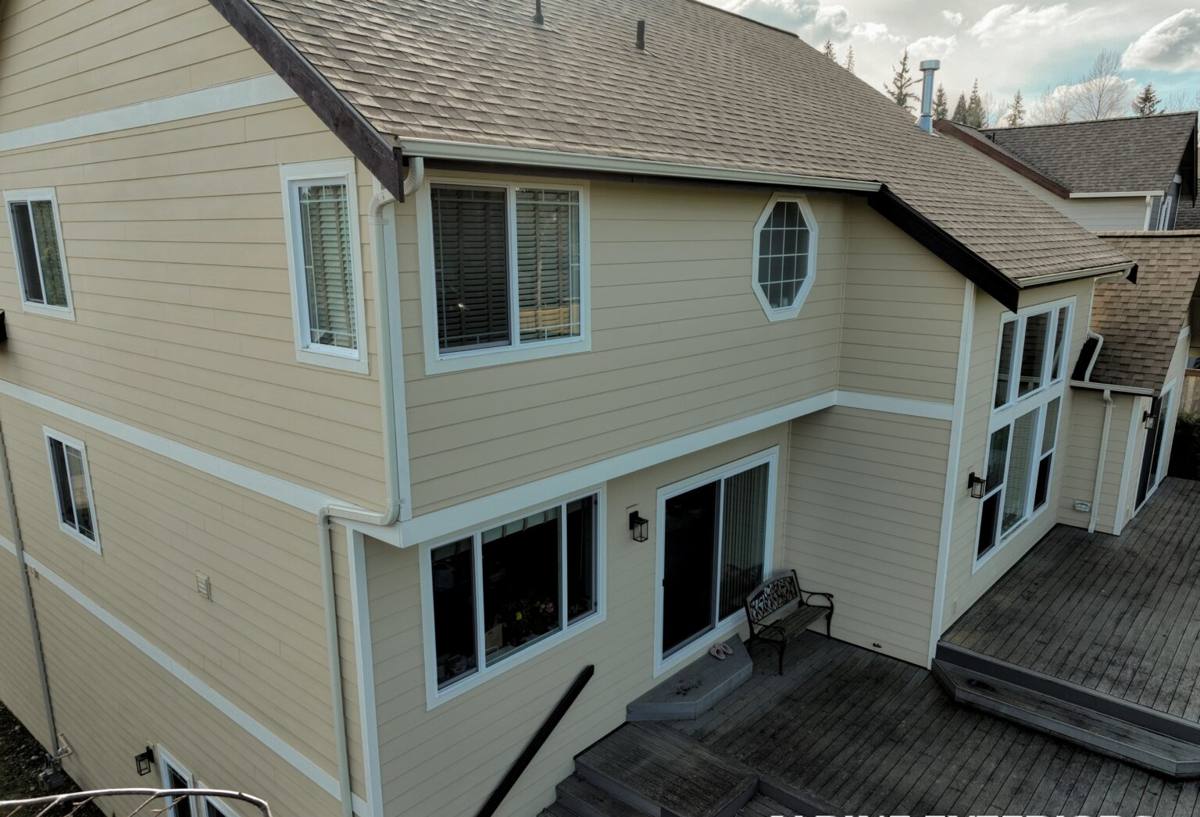
Signs a Nooksack Home Needs New Windows
Some warning signs are obvious, others show up slowly enough that homeowners write them off as normal aging. In a climate this wet, it's worth paying attention early.
- Fogging or a permanent haze between the panes of double-pane glass — the seal has failed and the insulating gas is gone
- Soft, discolored, or spongy trim and sill wood around the window frame
- Visible gaps where you can see daylight or feel a draft along the frame
- Windows that are difficult to open, close, or lock — often a sign the frame has shifted or swollen
- Paint that keeps bubbling or peeling at the same spot no matter how often it's touched up
- Moss or dark streaking building up on the sill or the siding just below the window
Any one of these on its own might just mean a repair. Several together, especially combined with visible rot, usually means the window and the framing around it need to come out.
What a Correct Window Installation Actually Involves
Flashing and the Moisture Barrier
The single biggest factor in whether a window lasts is whether water that gets behind the siding has somewhere to go. Correct installation means flashing tape or flashing membrane integrated with the house wrap in the right order — building paper or house wrap lapped over the top flashing, never under it, so water sheds outward and down rather than working its way behind the barrier.
Sill Pans and Sloped Sills
A sill pan at the bottom of the rough opening gives any water that does get in a path back outside instead of a place to pool. We slope sills slightly outward and use back-dammed pan flashing so standing water isn't sitting against the bottom of the window frame after every rain event.
Insulation and Air Sealing
Gaps around the frame get filled with low-expansion foam or backer rod and sealant, never packed tight with fiberglass insulation alone, which does nothing to stop air movement and can hold moisture against the frame.
Trim and Weatherproofing
Exterior trim gets back-primed and caulked at the right joints only — not sealed all the way around, which traps moisture instead of letting incidental water drain out.
Choosing a Frame Material for This Climate
There's no single "best" window for every home, but frame material makes a real difference in how a window holds up to Whatcom County's combination of rain, humidity, and temperature swings.
| Frame Material | Moisture Resistance | Maintenance | Typical Lifespan |
|---|---|---|---|
| Vinyl | Very good — won't rot, but seams need quality manufacturing | Low; occasional cleaning | 20–30 years |
| Fiberglass | Excellent — dimensionally stable in wet/dry cycles | Low | 30–40 years |
| Wood-clad | Good on the exterior; interior wood needs protection from condensation | Higher — periodic finish upkeep | 20–30 years with maintenance |
| Aluminum | Prone to condensation without a thermal break | Low | Varies widely by quality |
We generally steer homeowners toward vinyl or fiberglass for this area. Wood-clad windows can look great and perform well, but the interior wood needs consistent attention to avoid moisture damage from condensation during cold, humid stretches — that's a maintenance commitment we want customers to go in with eyes open about, not a knock on the product itself.
Our Window Installation Process
- On-site assessment — we check the condition of the existing framing, sheathing, and siding around each window before quoting anything, since hidden rot changes the scope
- Measurement and product selection — exact opening sizes, plus a conversation about frame material, glass package, and grille style if wanted
- Careful removal — old windows and trim come out without tearing up more siding than necessary
- Framing repair — any soft or rotted wood found at this stage gets replaced before the new window goes in, not covered over
- Flashing and sill pan installation — built up in the correct order for proper drainage
- Setting and shimming the window — leveled, squared, and secured per manufacturer specs
- Insulating and sealing — low-expansion foam or backer rod, sealant at the correct joints only
- Interior and exterior trim — reinstalled or replaced, primed and caulked properly
- Final check — every window is opened, closed, and locked to confirm smooth operation before we call the job done
Mistakes We Correct From Other Installations
A fair amount of the window work we do in Nooksack is repair or replacement of installs that failed early — sometimes only a few years after they went in. The patterns are consistent:
- Caulk used as the only line of defense against water, with no flashing behind it
- Old rotted sheathing or framing left in place and simply trimmed over
- Foam sealant packed in without any provision for drainage if water does get past the exterior seal
- Nailing fins fastened over house wrap that was lapped in the wrong direction
- Reused trim that was already failing before the new window went in
None of this is about any particular window brand — most of these problems would have happened with any window, because the failure was in the installation, not the product. It's also why we don't take shortcuts on flashing and sill pans even when a homeowner just wants a quick swap; a fast install that fails in three years costs more than doing it right the first time.
Energy Code, Egress, and Permits
Washington's state energy code sets minimum performance requirements for replacement windows, and most jurisdictions in Whatcom County require a permit for window replacement, especially when the rough opening size changes or the work involves structural framing. Bedroom windows also have to meet egress requirements — minimum opening size and sill height — if they're being replaced or if the room's use changes. We handle permitting as part of the job rather than leaving homeowners to sort it out, and we won't downsize an egress opening to save on install cost, even if a homeowner doesn't ask about it.
Caring for New Windows in a Marine Climate
New windows installed correctly need very little upkeep, but a little seasonal attention goes a long way in this climate.
- Rinse sills and tracks a couple times a year to clear pollen, dirt, and the early stages of moss or algae growth
- Check exterior caulking lines each fall before the heavy rains set in, and touch up any cracked or separated sealant
- Keep gutters and downspouts clear so runoff isn't sheeting down across window heads
- Watch for condensation buildup on interior glass in winter — persistent condensation can point to a ventilation issue inside the home, not a window defect
- Trim back vegetation that shades a window long enough for moss to take hold on the sill or trim
Why a Nooksack-Familiar Crew Matters
Window installation done right depends on understanding how a specific area's weather actually behaves, not just following a generic install manual. A crew that regularly works in and around Nooksack already knows how homes in this part of Whatcom County are built, what kind of moisture problems tend to show up here, and how to flash and seal a window so it holds up through another wet season rather than a mild one somewhere else. That familiarity also means faster response if a warranty question ever comes up — we're not driving in from out of the area to take a look.
If your windows are showing any of the warning signs above, or you're planning ahead for a remodel, we're happy to take a look and give you a straight, no-pressure estimate using the form below.