 Lynden Siding
 Kendall sits in the rural stretch east of Lynden, closer to the foothills and the tree cover that comes with it, which means roofs out here deal with a different mix of stress than roofs in town. More shade, more standing moisture, more organic debris falling onto the roof deck year-round. Add in Whatcom County's long wet season and the salt-laden air that moves through the county from the Sound, and you get roofs that age faster than the manufacturer's warranty label would suggest. This page is about roof repair specifically — not full tear-offs — and what a correct repair looks like for a home in this part of the county.
Why Kendall Roofs Take a Different Kind of Beating
A roof's enemy isn't really the rain itself — it's rain that doesn't dry out. Homes in more open, in-town settings get sun and wind exposure that dries a roof surface out between storms. Kendall's tree-lined lots often don't get that same drying window. Moisture sits longer in shaded valleys and north-facing slopes, moss and lichen get a head start, and gutters fill with needles and leaf litter faster than they do on a bare-lot property.
Layer on the driving rain that comes through this part of Whatcom County in the fall and winter, plus the salt air that corrodes exposed fasteners and metal flashing over time, and you have three separate aging mechanisms working on the same roof at once: organic growth, water intrusion, and metal corrosion. Most of the repair calls we get in Kendall trace back to one of those three.
What This Means for Homeowners
It means a roof that looks fine from the driveway can still have a failing area you can't see — under moss, behind a chimney flashing, or in a valley that stays wet longer than the rest of the roof. It also means repairs done without accounting for the local moisture pattern tend to fail again within a season or two, because the underlying cause (shade, poor drainage, trapped debris) never got addressed.
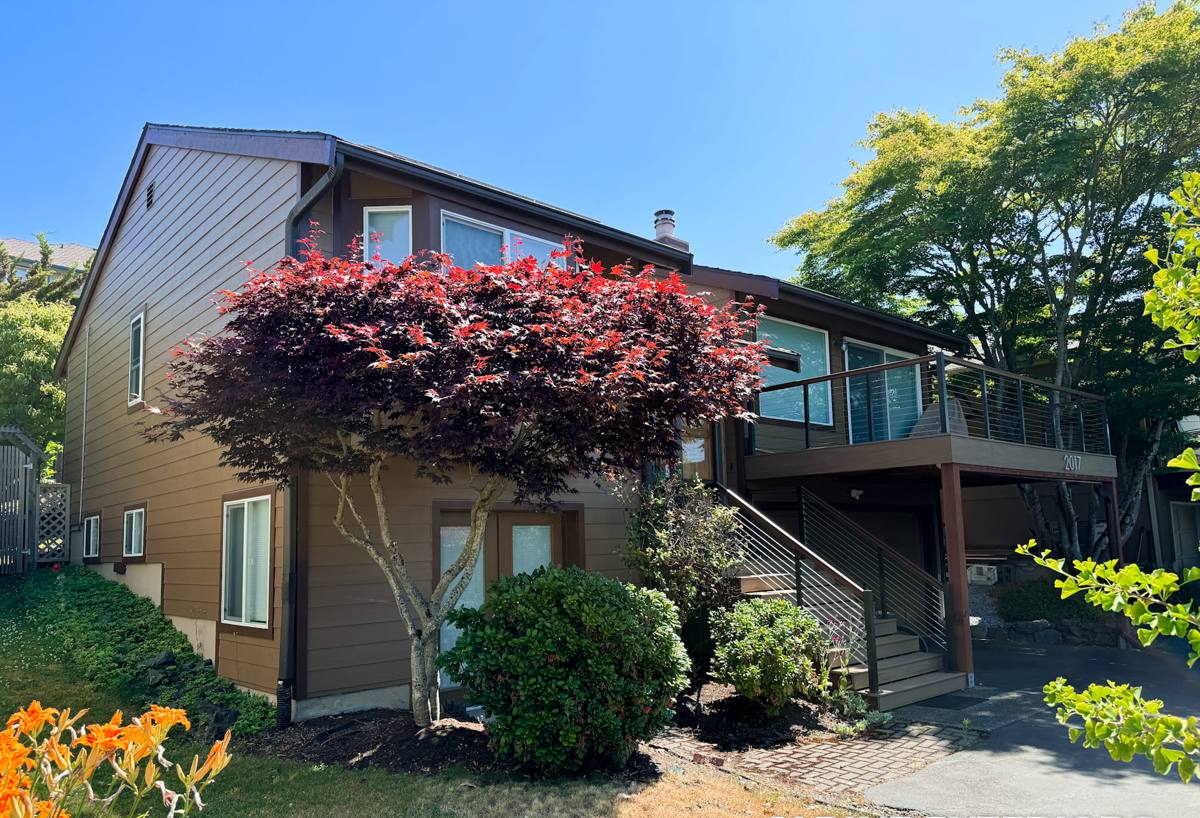
Signs a Kendall Roof Needs Repair — Not Replacement
Most roofs don't need to be replaced when they start showing problems. A repair, done correctly, can add years of life to a roof that's otherwise structurally sound. Here's what we actually look for.
Interior Leak Signs
Brown ceiling stains, peeling paint near an exterior wall, or a musty smell in an attic space are the most common tip-offs. These usually point to a localized failure — a cracked flashing, a worn boot around a pipe vent, or shingles that have lifted at a seam — rather than a roof that's failed across its whole surface.
Moss and Organic Growth
Moss itself doesn't punch holes in a roof, but it holds water against the shingle surface and lifts shingle edges as it grows, which lets wind-driven rain get underneath. Thick moss along a ridge or in a shaded valley is usually a sign that section needs cleaning and inspection, even if there's no visible leak yet.
Storm and Wind Damage
After a hard blow, we look for lifted or missing shingles, bent or creased flashing, and displaced ridge caps. A lot of this damage is repairable in place if it's caught before the next round of rain gets underneath the exposed area.
What a Correct Repair Actually Involves
A roof repair is only as good as the diagnosis behind it. Patching the spot where water is showing up inside the house often isn't the same spot where water is getting in — water travels along the roof deck and rafters before it shows up as a stain, sometimes several feet from the actual entry point.
Diagnosis Before Patching
We trace the leak path from the interior sign back to the roof surface, checking flashing, fastener lines, valleys, and penetrations (vent stacks, chimneys, skylights) along the way. A repair that skips this step is a guess, not a fix.
Matching Materials Correctly
Replacement shingles, flashing, and underlayment need to match the existing roof's material and, where possible, its exposure and nailing pattern. Mismatched materials — the wrong shingle profile, incompatible metal flashing, or underlayment that doesn't tie in properly with what's already there — create new water paths instead of closing old ones.
Flashing and Underlayment, Not Just Shingles
Most leaks that come back after a "repair" come back because the flashing or underlayment wasn't addressed — someone replaced the visible shingles and left the corroded step flashing or cracked pipe boot underneath untouched. We treat flashing and underlayment as part of the repair, not an upsell.
Common Roof Types in Kendall and Repair Considerations
The roof type on a home changes what a repair should look like and what tends to fail first in this climate.
| Roof Type | Common Issue in This Climate | Repair Consideration |
|---|---|---|
| Asphalt composition shingle | Moss lifting shingle edges; granule loss in shaded areas | Spot-replace affected shingles; treat/clear moss before it recurs |
| Architectural (dimensional) shingle | Wind lift at exposed edges and ridges | Re-secure lifted tabs, replace damaged pieces, check ridge cap fastening |
| Metal panel or standing seam | Fastener corrosion, sealant failure at penetrations | Replace corroded fasteners, reseal penetrations, check panel seams for movement |
| Cedar shake | Moisture retention, splitting, moss/lichen growth | Replace split or cupped shakes individually, address drainage and airflow beneath |
Our Repair Process
- Inspection. We walk the roof (when it's safe to do so) and inspect the attic from inside, tracing any interior signs back to their likely source.
- Written estimate. You get a clear scope of what needs repair, what materials will be used, and what it costs — before any work starts.
- Repair. We fix the diagnosed issue: shingles, flashing, underlayment, or a combination, matched to the existing roof.
- Moss and debris clearing. If moss or trapped debris contributed to the problem, we clear it as part of the job so the repair isn't undone by the same conditions in a year.
- Walkthrough. We show you what was found and what was done, in plain language, before we consider the job finished.
Moss, Debris, and the Long Wet Season
A repair is only as durable as the maintenance around it. In a shaded, tree-heavy setting like Kendall, moss and needle buildup will return — the question is how fast, and whether it's caught before it causes damage again.
What Actually Helps
- Keeping gutters and valleys clear of needles and leaves, especially heading into fall
- Trimming back overhanging branches that keep sections of the roof shaded and damp
- Removing moss growth before it thickens, rather than waiting until it's visibly matted
- Checking attic ventilation, since poor airflow keeps the underside of the deck damp longer than it should be
- Scheduling a roof check after major storms, not just when a leak shows up inside
None of this requires a major investment — it's mostly about timing and not letting small buildup turn into a repeat repair call.
Why a Crew That Already Works Kendall Matters
Roofing rules and permitting requirements are set at the county level, and Whatcom County's expectations around reroofing, ventilation, and drainage don't always match what a contractor from outside the area assumes. A crew that already works this part of the county knows which repair approaches actually hold up against the local moss season and driving rain, rather than applying a generic fix that works fine in a drier climate.
There's also a practical side to it: a contractor already working in and around Kendall can get to a leaking roof faster after a storm, and is more likely to be around next season if a repair needs a follow-up look — which matters more here than in places with a shorter wet season.
What to Ask Before Hiring a Roof Repair Contractor
- Are you licensed and insured to work in Washington State, and can you provide proof?
- Will you put the diagnosis and scope of repair in writing before starting work?
- Do you address flashing and underlayment, or only the visible shingle damage?
- Will you match the existing roofing material, or explain clearly if an exact match isn't possible?
- Do you offer a warranty on the repair work itself, separate from the shingle manufacturer's warranty?
- Can you explain, in plain terms, what caused the damage and how the repair addresses that cause?
If you're dealing with a leak, a patch of moss you're not sure about, or storm damage on a Kendall-area roof, we're happy to take a look and give you a straight answer — no pressure, no upsell to a full replacement you don't need. Use the form below to request a free estimate and we'll get back to you to schedule a time to inspect the roof.