 Lynden Siding
 Ferndale's Climate Is Hard on Roofs in Ways That Aren't Always Obvious
Ferndale sits close enough to the water that salt-laden air is a regular part of the weather, not an occasional event. Combine that with Whatcom County's long, wet fall-through-spring stretch of driving rain and the moss season that follows it, and you get a roofing environment that punishes shortcuts. A roof that would last two decades in a dry inland climate can show real trouble in twelve to fifteen years here if it wasn't installed with this specific combination of conditions in mind.
Salt air accelerates corrosion on exposed metal fasteners, flashing, and vent caps. Driving rain — rain that comes in sideways during a windstorm off the strait — finds every weak seam, undersized flashing, and poorly lapped shingle course. And moss doesn't just sit on the surface looking bad; its root structures lift shingle edges and hold moisture against the roof deck for months at a time. None of these problems shows up overnight. They show up as a slow accumulation of small failures that eventually add up to a roof that's due for full replacement rather than another patch.
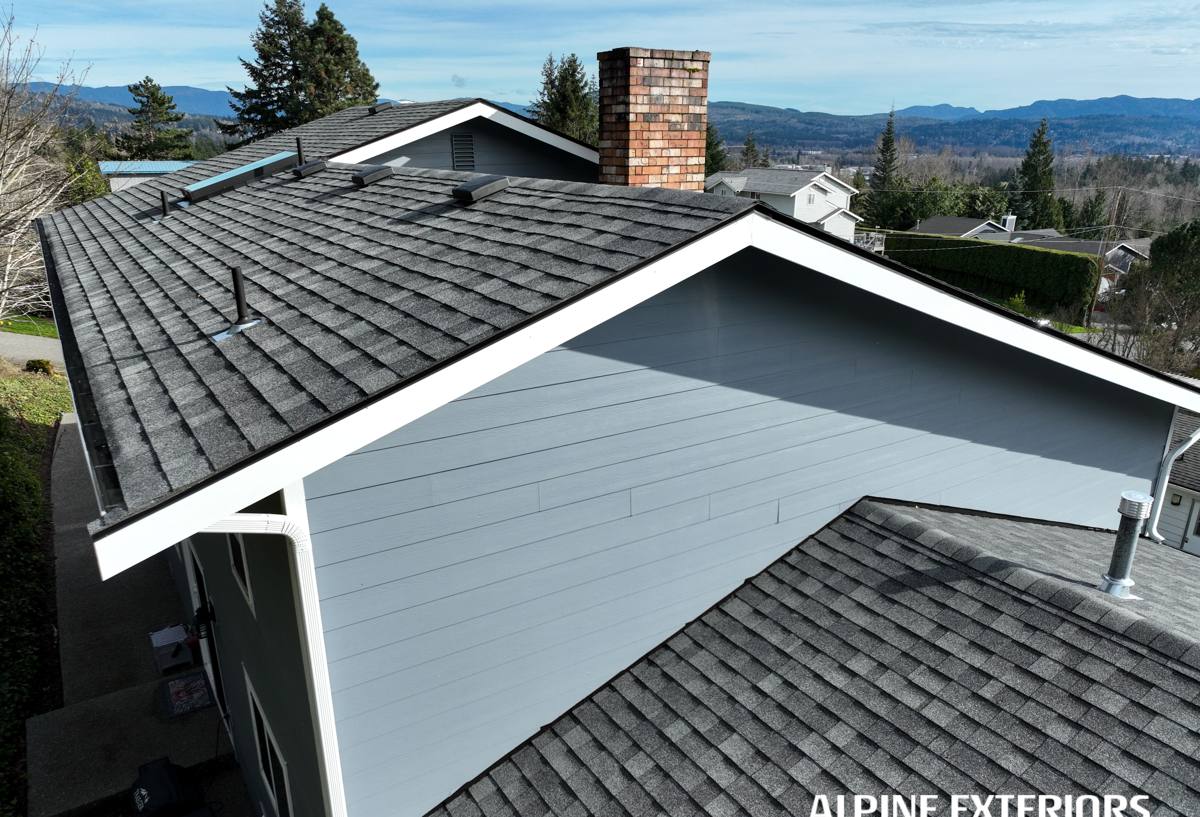
Signs a Ferndale Roof Is Ready for Replacement, Not Another Repair
Homeowners often ask us to look at "one leak" and find that the leak is really a symptom of a roof that's reached the end of its useful life. Here's what we look for during an honest assessment:
- Granule loss heavy enough that you can see bare, shiny patches on shingles from the ground
- Shingle edges that are curling, cupping, or visibly lifting, especially on south- and west-facing slopes
- Moss growth that comes back within a season or two of cleaning, particularly on north-facing slopes that stay shaded and damp
- Soft or spongy spots on the decking felt through the roof during an on-roof inspection
- Rust staining or corrosion around flashing, vent boots, and metal valleys
- Daylight visible through the attic roof boards, or damp insulation after a windy rainstorm
- A roof that's already had two or more rounds of emergency patch repairs in the last few years
If you're seeing two or more of these, it's worth getting a straight answer on whether repair still makes sense or whether you're better off putting that repair money toward a full replacement.
What a Correct Roof Replacement Actually Involves
Full Tear-Off and Deck Inspection
We don't recommend installing a new layer over old shingles, even though it's cheaper up front. A full tear-off is the only way to actually inspect the decking underneath — and in a climate where moisture works its way in slowly over years, that inspection matters. Soft or rotted decking sections get replaced before anything new goes down, because covering a compromised deck just guarantees a shorter life for the new roof.
Underlayment Built for Wind-Driven Rain
Standard felt underlayment is a minimum, not a standard we're comfortable with here. For roofs exposed to Ferndale's driving rain, we favor synthetic underlayment with better tear resistance and, at eaves, valleys, and other vulnerable transitions, a self-adhering ice-and-water membrane. That membrane seals around fastener penetrations rather than just shedding water, which is the difference that matters when rain is coming in at an angle instead of straight down.
Flashing Details That Actually Shed Water
Most roof leaks that we trace back to their source turn out to be flashing problems, not shingle problems — around chimneys, skylights, dormers, and where a roof plane meets a wall. Correct step flashing, counter-flashing, and valley metal, properly lapped and sealed, is where a roof replacement earns its keep long after the shingles themselves are old news.
Ventilation That Matches the New Roof
A roof deck that can't breathe holds moisture, and holding moisture is exactly what accelerates rot and feeds moss. We check intake ventilation at the eaves and exhaust at the ridge as part of every replacement, and we'll tell you plainly if your attic's ventilation needs correcting alongside the new roof — not as an upsell, but because a new roof installed over bad ventilation won't perform the way it should.
Choosing a Roofing Material for a Ferndale Home
There's no single "best" roofing material — the right choice depends on your roof's exposure, your home's style, and how much long-term maintenance you want to take on. Here's how the common options stack up against this specific climate:
| Material | Moss & Moisture Resistance | Salt Air Durability | Typical Lifespan Here |
|---|---|---|---|
| Architectural asphalt shingle | Good with proper ventilation; needs periodic cleaning | Good — fiberglass mat and mineral granules resist corrosion | 20–30 years |
| Standing seam metal | Excellent — sheds moisture, little surface for moss to grip | Depends on coating; look for coastal-rated finishes | 40–60 years |
| Synthetic composite (shake-look) | Good, doesn't absorb moisture like wood | Good | 30–50 years |
| Cedar shake | Requires ongoing treatment to resist moss and rot in this climate | Fair — needs regular maintenance near salt air | 20–30 years with upkeep |
We install and stand behind architectural asphalt and metal roofing most often on Ferndale homes because both hold up well against the combination of moisture and salt air without demanding constant upkeep. We'll walk you through the honest trade-offs — upfront cost, maintenance, appearance, and how each performs specifically on a roof exposed to onshore weather — rather than pushing one product because it's what we happen to have on hand.
Our Roof Replacement Process, Start to Finish
- On-site inspection — we get on the roof, check the attic, and give you a straight assessment of condition, not just a sales pitch.
- Written estimate — materials, scope, and price laid out clearly, with any deck repair contingencies explained up front.
- Permitting — we handle the local permit process so you don't have to chase paperwork.
- Material delivery and site protection — landscaping, siding, and gutters get protected before tear-off begins.
- Full tear-off and deck inspection — old roofing removed, decking checked and repaired as needed.
- Underlayment, flashing, and ventilation work — the parts of the job that determine how the roof performs in a storm, not just how it looks.
- Installation of new roofing material — done to manufacturer specification so your warranty is valid.
- Cleanup and magnetic nail sweep — job site left clear of debris and stray fasteners.
- Final walkthrough — we review the finished roof with you before calling the job done.
Living With Moss Season After a New Roof
A new roof doesn't make moss season disappear — it changes how much that season can hurt you. Zinc or copper control strips near the ridge, proper attic ventilation, and keeping trees trimmed back so shaded slopes get more sun and airflow all reduce how aggressively moss returns. We'll talk through which of these makes sense for your specific roofline and tree cover, since a roof that's mostly shaded needs a different maintenance rhythm than one that gets full sun most of the day.
Routine gutter cleaning matters more here than in drier climates, too — clogged gutters during a driving rain event back water up under the roof edge, which is one of the more common causes of edge rot we find on roofs that are otherwise in decent shape.
Permits, Timelines, and What Affects Cost
Whatcom County and the city of Ferndale require permits for roof replacement, and we pull those as part of the job so you're not left tracking down inspections yourself. Most straightforward tear-off-and-replace jobs on an average-sized home take a few days of active work, weather permitting — and weather is the real variable here, since we won't install roofing materials in the middle of a storm system regardless of schedule pressure.
| Cost Factor | Why It Matters |
|---|---|
| Roof size and pitch | Steeper, larger roofs take more labor and material, and steep pitches require more safety setup |
| Number of layers to remove | Tearing off multiple old layers costs more than a single-layer tear-off |
| Decking condition | Rotted or soft decking sections found during tear-off add material and labor |
| Material choice | Asphalt, metal, and synthetic options carry different material and installation costs |
| Roof complexity | Valleys, dormers, skylights, and chimneys all add flashing work |
For a typical Ferndale-area home, a full tear-off and replacement generally lands somewhere in the broad range of a low five-figure job up through the mid-twenty-thousands, depending heavily on the factors above. Anyone quoting without getting on your roof first is guessing, and we don't like guessing on something that has to survive a Whatcom County winter.
Why a Crew That Already Works Ferndale Roofs Is Worth Choosing
A contractor who works this area regularly already knows which details matter for a roof exposed to onshore salt air and driving winter rain — where moss tends to build up first, which flashing details fail most often in a windstorm, and what ventilation setup actually keeps a roof deck dry through a wet Whatcom County winter. That's knowledge you don't get from a crew that mostly works drier, inland climates and treats every roof the same way. We're not guessing at what this climate does to a roof over ten or fifteen years — we're watching it happen on homes near yours, every season.
If your roof is showing wear, or you just want an honest read on how many years it has left, we're glad to come out, get on the roof, and give you a straightforward assessment along with a free, no-pressure estimate — use the form below to get started.