 Lynden Siding
 Why Roofs Wear Differently in Nooksack
Nooksack sits in the northeast corner of Whatcom County, close enough to the river and the foothills that homes here deal with a specific mix of weather: long stretches of steady rain, damp air that never fully dries out between storms, and moss that gets a running start every fall and doesn't let up until late spring. Add in the marine-influenced air that moves through this part of Washington off Puget Sound, and you get a climate that's harder on roofing than it looks from the outside. It's rarely dramatic weather — no hailstorms, no hurricane-force wind events — but it's relentless, and relentless is what actually shortens a roof's life.
A roof in Nooksack isn't failing because of one big storm. It's failing because moisture had months at a time to work into seams, nail heads, and shaded valleys, and because moss held water against the shingles longer than the material was ever designed to tolerate. Replacing a roof out here means building for that pattern, not just swapping old shingles for new ones.
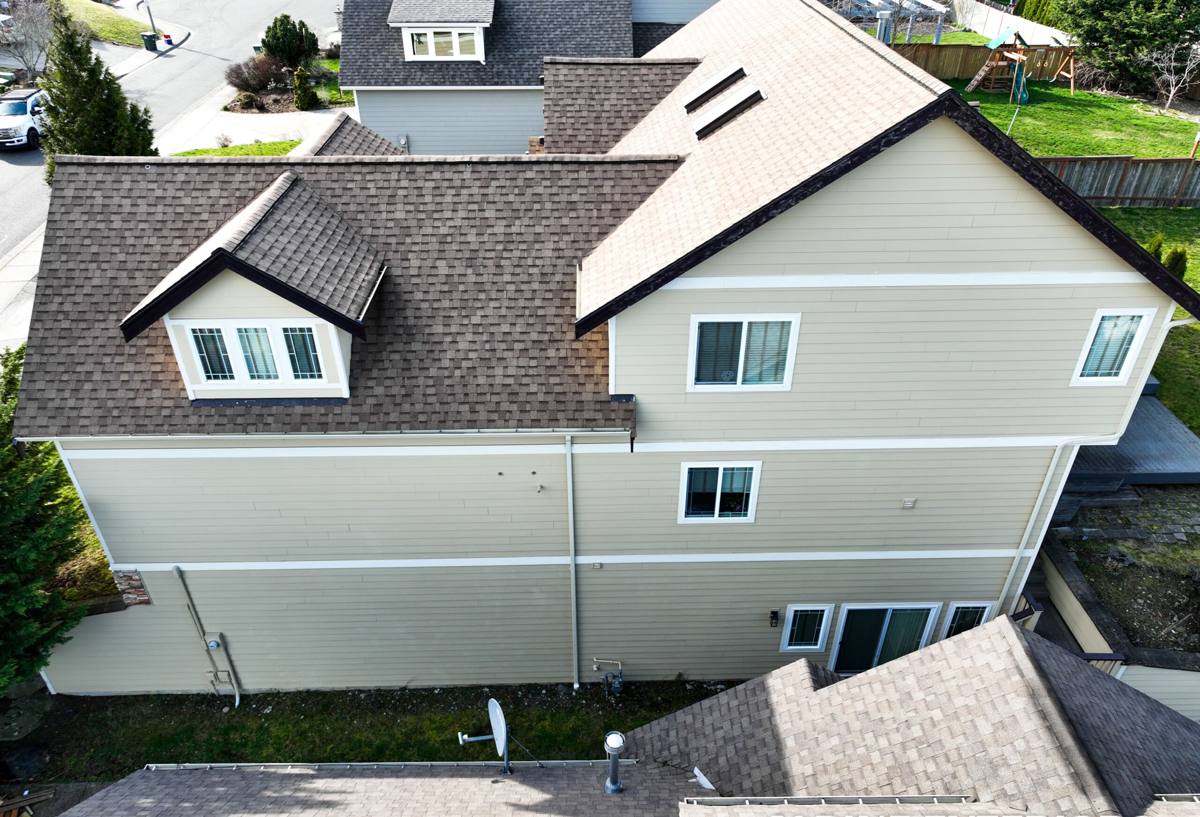
How the Climate Actually Damages a Roof
Driving rain and wind-driven moisture
Storms coming through Whatcom County frequently push rain sideways, not just straight down. That matters because a roof built only to shed water vertically can still let moisture drive up under shingle tabs, around vents, and along rake edges. Correct underlayment, proper shingle nailing patterns, and well-sealed flashing details matter more here than in drier inland climates.
Moss and organic growth
Shaded roof sections — under fir and cedar trees, on north-facing slopes, in valleys that stay damp longer — grow moss aggressively in this area. Moss isn't just cosmetic. It lifts shingle edges as it grows, holds water against the roofing surface, and accelerates granule loss. A roof that's been neglected for a few moss seasons often looks worse structurally than its age would suggest.
Salt-influenced air and metal fatigue
Whatcom County's proximity to Puget Sound means the regional air carries more salt content than a purely inland climate would. Over years, this contributes to faster corrosion on unprotected metal flashing, fasteners, and vent components. It's a slow effect, but it's real, and it's one more reason fastener and flashing choice matters as much as the shingle itself.
Signs a Nooksack Roof Is Due for Replacement
- Granules collecting in gutters or at downspout outlets, especially after a hard rain
- Shingles that look cupped, curled, or cracked when viewed from the ground
- Dark streaking or thick moss growth that comes back within a season of cleaning
- Soft spots in the decking felt when walking the roof, or sagging visible from the street
- Daylight or water stains in the attic, particularly near valleys, chimneys, or vent penetrations
- Roof age at or past 20-25 years for standard asphalt composition shingles
Any one of these on its own might not mean full replacement is necessary. Several together, especially on a roof already in its second or third decade, usually mean repair costs start approaching the cost of doing it right the first time.
What a Correct Roof Replacement Actually Involves
Full tear-off, not overlay
Installing new shingles over old ones is sometimes offered as a cheaper shortcut. We don't recommend it for this climate. Overlaying traps moisture between layers, hides decking damage that needs to be caught and fixed, and shortens the life of the new roofing. A proper replacement means stripping to the deck, inspecting every section of sheathing, and replacing any wood that's soft, delaminated, or water-stained before anything new goes down.
Underlayment built for wind-driven rain
Given how often rain moves sideways here, synthetic underlayment with proper lap and fastening patterns is the baseline, not an upgrade. Ice and water shield belongs at eaves, valleys, and around every penetration — chimneys, vents, skylights — where wind-driven moisture is most likely to find a way in.
Ventilation that matches the attic
A humid climate like this one needs a roof system that can actually breathe. Balanced intake at the eaves and exhaust at the ridge keeps moisture from condensing inside the attic, which protects the new decking and insulation from the inside as much as the shingles protect it from the outside. Skipping ventilation is one of the most common ways a new roof ages faster than it should.
Flashing and fasteners suited to the air quality
Given the marine-influenced air, we favor corrosion-resistant flashing and fastener materials over the cheapest available option. It costs a little more up front and saves homeowners from premature rusting and leaks at the most vulnerable points on the roof — valleys, chimneys, and wall-to-roof transitions.
Comparing Roofing Material Options for This Climate
| Material | How It Handles Rain and Moss | Typical Lifespan Here | Maintenance Needs |
|---|---|---|---|
| Standard asphalt composition | Good with proper underlayment and ventilation; moss-resistant granule options help | 20-25 years | Periodic moss treatment and gutter checks |
| Architectural/dimensional asphalt | Thicker profile sheds water better in valleys; holds up well to wind-driven rain | 25-30 years | Similar to standard, less frequent granule loss |
| Standing seam metal | Excellent water shedding, minimal moss adhesion on smooth panels | 40-50+ years | Low; watch fastener condition and coating over time |
| Cedar shake | Attractive but retains moisture longer, more moss-prone without diligent upkeep | 20-30 years with upkeep | High; regular treatment and inspection required |
We don't push one material on every home. The right choice depends on roof pitch, tree coverage, budget, and how much ongoing maintenance a homeowner wants to take on. What we won't do is install a system without the underlayment and ventilation details this climate demands, regardless of which shingle or panel sits on top.
What Drives the Cost of a Nooksack Roof Replacement
| Factor | Why It Matters |
|---|---|
| Roof size and pitch | Steeper roofs take longer to work safely and use more material per square |
| Number of layers to remove | Multiple existing layers mean more tear-off labor and disposal |
| Decking condition | Rot or soft sheathing found during tear-off needs replacement before new roofing goes on |
| Valleys, penetrations, and chimneys | Each one needs proper flashing work, which adds labor time |
| Material selection | Standard asphalt, architectural shingles, and metal carry different material costs |
| Access and tree coverage | Heavy tree cover can slow staging and cleanup, and often means extra debris removal |
We give homeowners a written estimate that spells out these factors specifically for their roof, rather than a flat per-square number that doesn't account for what tear-off actually reveals.
How Our Process Works
Inspection and honest assessment
We start by walking the roof and the attic, not just looking from the ground. We check decking condition where accessible, look at ventilation setup, and note where moss and water have caused the most wear. If a roof can be reasonably repaired instead of replaced, we say so.
Tear-off and deck repair
Old roofing comes off down to the deck. Any damaged sheathing gets replaced before we move forward — this is the step that gets skipped when a job is rushed, and it's the one that causes problems years later.
Underlayment, flashing, and installation
We install underlayment and ice-and-water protection sized for this climate's rain patterns, then flash every penetration and valley before laying the finish roofing material to manufacturer specifications.
Cleanup and walkthrough
We clear the property of old material and debris, run a magnetic sweep for stray nails, and walk the finished roof with the homeowner so they know what was done and what to watch for going forward.
Why Hiring a Crew That Already Works in Nooksack Matters
A roofing crew that mostly works drier, less moss-prone regions can still install a technically fine roof — but they may not default to the ventilation balance, underlayment coverage, or flashing materials that this specific climate rewards over the long run. We work throughout Lynden and the surrounding Whatcom County communities, including Nooksack, and we see the same rain patterns and moss cycles on roof after roof. That repetition is what shapes our defaults: it's why full tear-off, upgraded underlayment at vulnerable points, and attic ventilation aren't treated as optional upgrades on our estimates. They're just what a roof out here needs to actually last.
Keeping a New Roof Performing After Installation
- Clear moss growth at the first sign of it rather than waiting for a full season of buildup
- Keep gutters clean so water has a clear path off the roof, especially during heavy fall rain
- Trim back tree limbs that shade roof sections and keep them damp longer than necessary
- Have the attic checked periodically for proper airflow and any signs of trapped moisture
- Schedule a walk-through inspection every few years, even without visible problems
If you're weighing repair versus replacement, or just want an honest look at what your roof actually needs, we're happy to come out and take a look. The estimate is free, there's no pressure, and you'll get a straight answer about where your roof stands — use the form below to get started.