 Lynden Siding
 Siding Replacement for Kendall's Wooded, River-Valley Terrain
Kendall sits in one of the wetter, more heavily shaded corners of Whatcom County, tucked into the foothills near the Nooksack River with the North Cascades rising close behind. That combination of tree cover, river-valley moisture, and marine air pushing in off the Sound creates conditions that are genuinely tougher on exterior siding than what a home closer to open, sunny ground deals with. If you own a home in Kendall, you've probably already noticed it: siding that looks tired years before it should, green streaking that keeps coming back no matter how many times you wash it, or trim boards that have gone soft at the corners.
Siding replacement in Kendall isn't a cosmetic upgrade — it's a functional necessity once the original material starts losing its ability to keep water out. Get it right and a home is protected and low-maintenance for decades. Get it wrong, or hire a crew that treats it like a generic paint-and-nail job, and you're looking at rot, mold, and another full replacement well ahead of schedule.
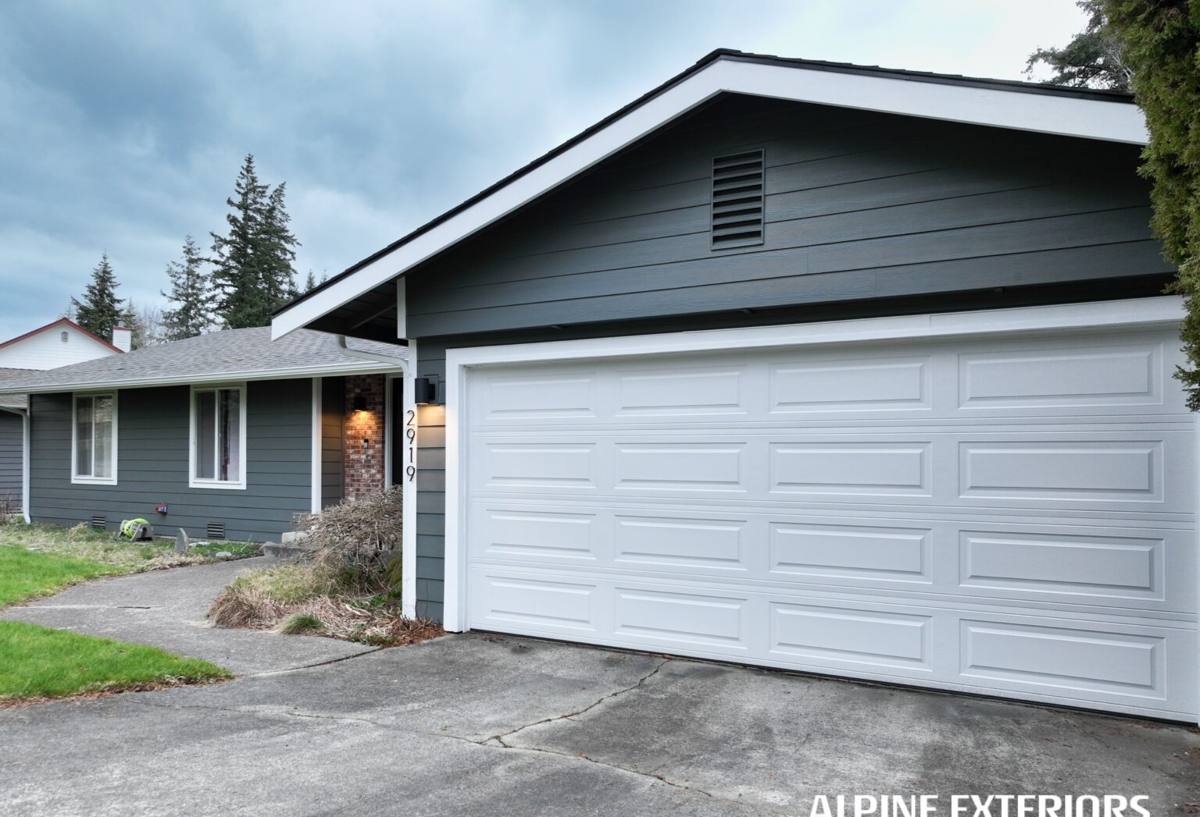
Why Kendall Properties Wear Out Siding Faster Than Average
A few things stack up against exterior siding here that don't apply everywhere in Whatcom County:
- Tree canopy and shade. Many Kendall lots sit under mature conifers and mixed timber, which is part of the area's appeal — but shaded walls dry out slowly after rain, giving moss, algae, and mildew far more time to establish than they'd get on an open, sun-exposed elevation.
- Driving rain off the valley. Wind-driven rain funneling through the river valley hits north- and west-facing walls hardest, forcing water into every seam, lap joint, and fastener hole that isn't sealed correctly.
- Long moss season. Cool, wet stretches that run from fall through spring give moss and lichen months to colonize siding, gutters, and trim — and moss that's allowed to sit holds moisture directly against the wall surface.
- Marine-influenced humidity. Moist air moving inland keeps relative humidity elevated even on days without active rainfall, which matters for any siding material that can absorb or wick moisture over time.
None of that means siding in Kendall is doomed to fail — it means the material and installation details matter more here than they would in a drier climate. Products and techniques that are marginal elsewhere get exposed fast on a shaded Kendall wall.
What a Correct Siding Replacement Involves
A siding job is only as good as what's underneath it. Anyone can nail new boards over old sheathing and have it look fine for a season or two. Done correctly, a replacement addresses the whole wall assembly, not just the visible surface:
Tear-off and sheathing inspection
Old siding comes off completely so the sheathing underneath can actually be inspected — not guessed at. In a climate like Kendall's, it's common to find soft or delaminated sheathing behind areas where old siding failed, especially around window and door corners and near ground level. That damage has to be cut out and replaced before anything new goes up, or the new siding is just covering the same problem.
Weather-resistive barrier and flashing
A properly lapped weather-resistive barrier (WRB) goes over the sheathing, followed by correctly installed flashing at every window, door, and roof-to-wall intersection. Flashing details are where the majority of hidden water intrusion actually happens — a wall can have excellent siding on it and still leak if the flashing behind a window head was skipped or done backwards.
Fastening, clearance, and joints
James Hardie siding has specific fastening patterns, minimum ground clearance requirements, and joint-treatment specifications for a reason — they're engineered around how the product expands, contracts, and sheds water. Skipping them (nailing too high, butting boards tight with no gap, setting siding too close to grade or a deck surface) is one of the most common ways an otherwise good product fails early.
Climate-matched product selection
James Hardie's HZ5 product line is engineered specifically for climates like ours — cooler, wetter, and prone to moisture cycling — as opposed to the HZ10 line built for hot, humid Southeast conditions. Installing the wrong HZ designation is a subtle mistake that doesn't show up on day one, but it matters over the life of the siding.
Why We Install Only James Hardie Fiber Cement
We don't carry vinyl, LP SmartSide, Cemplank, Allura, primed spruce, or cedar. That's a deliberate standard, not a lack of options, and it's worth explaining honestly rather than just asserting it.
Vinyl is inexpensive and low-maintenance in a general sense, but it's a thin material that can warp or buckle with temperature swings, and it doesn't stop water on its own — everything depends on what's behind it. In a wall assembly that's already fighting driving rain and prolonged dampness, we don't want the visible siding to be the weakest link in the system.
LP SmartSide is a wood-strand product with real strengths, including impact resistance, but it's still an engineered wood product at its core. Wood-based sidings are more sensitive to sustained moisture exposure at cut edges and joints than fiber cement is, which matters in a climate where walls stay damp for long stretches rather than drying quickly between rain events.
Cedar is a beautiful, traditional Pacific Northwest material, and we understand its appeal completely. But natural wood siding needs ongoing maintenance — refinishing, moss and mildew treatment, and vigilant caulking — to hold up in a wet, shaded environment, and that upkeep burden is exactly what most homeowners are trying to get away from when they call us.
James Hardie fiber cement is non-combustible, holds a factory-applied ColorPlus finish that resists fading and moss staining far better than field-applied paint, and is engineered specifically for regional moisture and temperature conditions through its HardieZone system. It comes with a strong transferable warranty, and — installed correctly — it performs consistently over decades rather than years. That combination is why it's the only product we put on homes.
Siding Material Comparison for Kendall's Climate
| Material | Moisture Behavior in Shade/Wet Areas | Moss & Algae Resistance | Maintenance Burden | Typical Lifespan Here |
|---|---|---|---|---|
| James Hardie fiber cement | Dimensionally stable; doesn't swell or rot | Factory finish resists staining well | Low — occasional wash | 30+ years |
| Vinyl | Doesn't absorb water, but can trap moisture behind it; can warp with heat/cold cycling | Moderate; moss grows on surface in shade | Low, but repairs are patchwork | 15–25 years |
| LP SmartSide | Sensitive at cut edges and joints if moisture gets in | Moderate with proper coating maintenance | Moderate — coating upkeep matters | 20–30 years with upkeep |
| Cedar | Absorbs and releases moisture; prone to cupping/checking in shade | Low — needs active treatment | High — refinishing and moss control | 15–25 years with heavy upkeep |
Our Siding Replacement Process
Every Kendall project follows the same sequence, because skipping steps is how early failures happen:
- On-site inspection. We walk the whole exterior, checking existing siding, trim, flashing, and any visible sheathing damage — paying particular attention to shaded and north/west-facing walls.
- Written estimate. A clear scope and price before any work starts, including what happens if we find sheathing damage once tear-off begins.
- Site protection. Landscaping, decks, and walkways get protected before tear-off begins, and we plan staging around driveways and tree cover typical of Kendall's larger, wooded lots.
- Tear-off and sheathing repair. Old siding comes off, sheathing is inspected, and any compromised material is replaced before moving forward.
- WRB and flashing installation. A correctly lapped weather barrier and properly detailed flashing go in at every penetration and transition.
- Hardie panel or lap installation. Installed to manufacturer fastening, clearance, and joint specifications — not shortcuts.
- Trim, caulking, and touch-up. Factory-finished ColorPlus surfaces need minimal touch-up; any field-cut edges are properly sealed per Hardie's specifications.
- Final walkthrough and cleanup. We review the finished work with the homeowner and clear the site completely, including nails and debris from the yard.
Signs a Kendall Home Needs Siding Replacement, Not Just Repair
- Persistent moss or green staining that returns within weeks of cleaning
- Soft, spongy, or bubbling spots when you press on the siding surface
- Visible warping, cupping, or gaps opening at board joints
- Paint that's peeling or blistering repeatedly in the same spots
- Musty odors or visible mold on interior walls that back onto exterior siding
- Siding that's original to a home built more than 20–25 years ago, especially on shaded elevations
- Rising energy bills with no other explanation, which can point to a compromised weather barrier
One or two of these on their own might mean a repair is enough. Several together, especially on the wetter, shadier sides of the house, usually mean the underlying wall assembly has been compromised and a full replacement is the more honest answer.
Why It Matters to Hire a Crew That Already Works in Kendall
Kendall's mix of larger wooded lots, longer driveways, and homes ranging from older farmhouses to newer construction on acreage means access and logistics look different than a tight in-town lot. A crew that's worked the area already knows how to stage equipment and materials without damaging landscaping or septic systems, understands the tree-clearance and setback considerations that come with heavily wooded properties, and is familiar with Whatcom County permitting for exterior work.
Just as important, a crew that's replaced siding on multiple Kendall-area homes has seen firsthand how the local conditions — the shade, the moisture, the moss cycle — actually play out on real walls over real years. That's the kind of pattern recognition that catches a marginal flashing detail or an under-ventilated wall assembly before it becomes a callback five years down the road.
What to Ask Before Hiring a Siding Contractor
- Are you a certified James Hardie installer, and can you explain why you use HZ5 versus other HardieZone products?
- Will you inspect and, if needed, replace damaged sheathing before installing new siding — and is that spelled out in the estimate?
- What's your approach to flashing at windows, doors, and roof lines?
- Do you carry current liability insurance and any required licensing for exterior work in Washington?
- What does the warranty cover — materials, workmanship, or both — and for how long?
Maintenance and Warranty After Installation
One of the practical advantages of correctly installed James Hardie siding in a climate like Kendall's is how little ongoing work it demands. The ColorPlus factory finish is engineered to resist fading and hold up to moisture far better than field-applied paint, so most homeowners only need an occasional gentle wash to keep moss and pollen from building up, particularly on shaded walls. James Hardie backs its products with a strong, transferable warranty, and that coverage depends on the product being installed to spec — another reason correct installation isn't optional, it's what makes the warranty meaningful in the first place.
If you're seeing early signs of siding trouble on a Kendall home, or you're simply due for a replacement and want it done right the first time, we're happy to come take a look. A free, no-pressure estimate gets you a clear picture of what your home actually needs — fill out the form below to get started.