 Lynden Siding
 Board & Batten Siding for Homes Around Wiser Lake
Wiser Lake sits in the rural country northeast of Lynden, and the homes around it tend to share a look and a set of conditions that differ from a typical in-town lot. Wooded or partly wooded lakefront and near-lake properties, a mix of newer builds and older cabins, and an aesthetic that leans toward the vertical board and batten profile more than most neighborhoods in the area. We get called out to this stretch of Whatcom County often enough that we know the pattern: homeowners want the clean, farmhouse-to-modern vertical look that board and batten gives a house, and they want it installed by someone who understands what a lake setting does to a wall over time, not just what the finished product looks like on day one.
This page is specifically about board and batten siding for homes in and around Wiser Lake. We install James Hardie fiber cement exclusively — not vinyl, not engineered wood, not cedar — and that standard matters even more on a vertical profile than it does on standard horizontal lap siding, for reasons this page walks through directly.
What Board and Batten Siding Actually Is
The Look Homeowners Are After
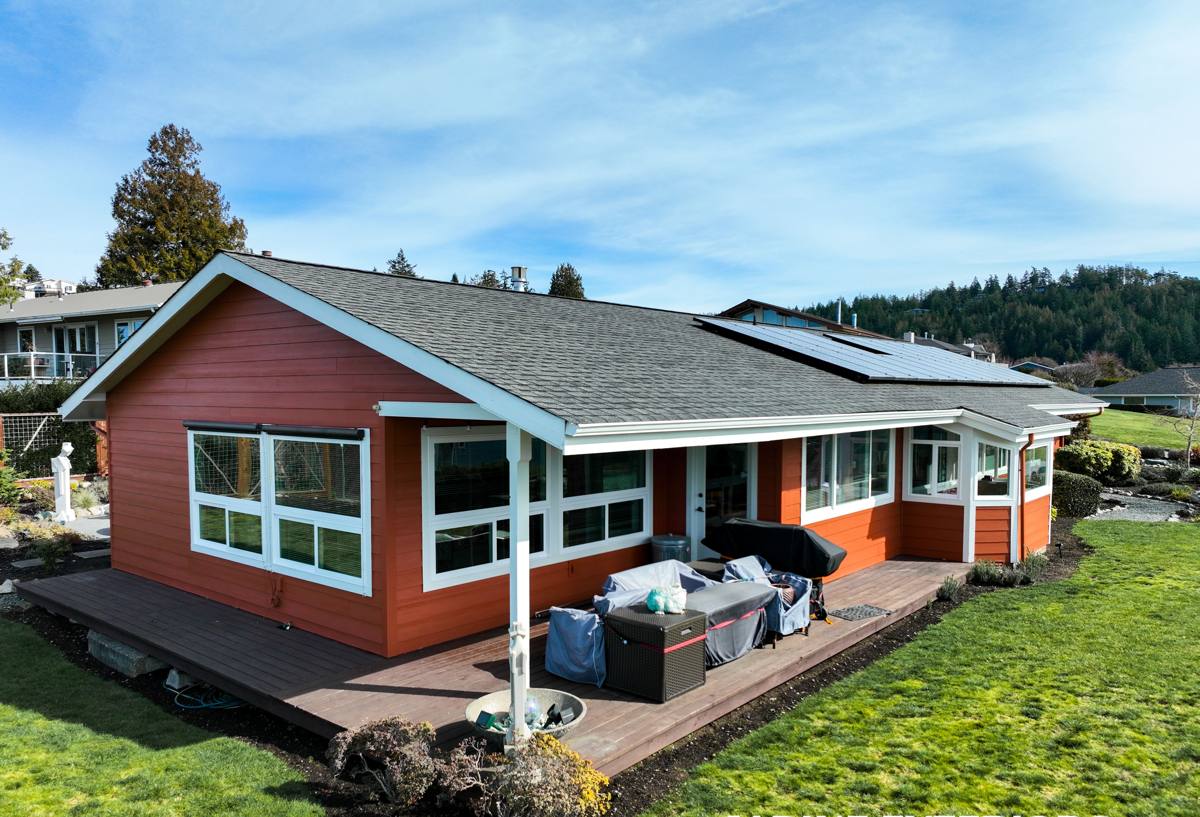
Board and batten is a vertical siding profile: wide flat panels installed vertically, with narrower strips (the battens) covering the seams between them. It reads as clean, linear, and a little more architectural than horizontal lap siding, which is part of why it shows up so often on lake and rural properties — it suits both a modern build and a more traditional farmhouse-style home without looking out of place on either. A lot of Wiser Lake homeowners are drawn to it for a full-house application, and just as many use it as an accent on gables, dormers, or a garage face paired with lap siding on the rest of the house.
Why the Installation Details Matter More Here
Vertical siding hides fewer sins than horizontal lap siding does. On a lap installation, a slightly uneven reveal or a minor moisture issue can go unnoticed for years. On board and batten, the joints, the batten spacing, and the panel-to-trim transitions are all visible in a way that makes sloppy work obvious fast — and more importantly, the same joints and seams that show visually are also the places where water tries to get in. A board and batten wall that isn't detailed correctly behind the panels doesn't just look uneven; it traps moisture against the sheathing in exactly the spots a homeowner can't see until the damage has already spread.
What Wiser Lake's Climate Puts a Board & Batten Wall Through
Salt Air Reaching Inland Lake Country
Wiser Lake is well inland from the coastline, but Whatcom County's marine weather patterns don't stop at the shore. Salt-tinged air moves across this whole part of the county, and over years it works on fasteners, batten hardware, and lower-grade trim faster than a genuinely dry inland climate would. On a vertical siding system with dozens of exposed batten fasteners running the height of every wall, hardware quality and corrosion resistance aren't a minor spec detail — they're a big part of whether the wall still looks straight and tight a decade in.
Driving Rain and Lake-Effect Moisture
Homes around a body of water like Wiser Lake tend to sit in slightly damper, foggier microclimates than a comparable lot a mile away on open farmland — morning moisture off the water lingers longer, especially on tree-shaded sides of a house. Add in the driving, wind-pushed rain that's typical of this region through fall and winter, and a board and batten wall needs to shed water sideways as well as down, at every batten seam and panel joint, not just at the top of the wall.
A Long Moss Season Under Tree Cover
Many Wiser Lake lots carry mature tree cover, which is part of the appeal of living out there and also a real factor in how long a wall stays wet after a storm. Shaded, tree-sheltered walls can stay damp for days after a rain event, and that combination of shade and moisture supports moss and mildew growth for most of the year on a surface that's even slightly porous or that holds water against the substrate instead of shedding it.
Why We Install Only James Hardie's Board & Batten System
James Hardie builds board and batten specifically two ways: a HardiePanel vertical panel paired with HardieTrim battens for the traditional board-and-batten look, or a Reveal Panel System that uses a shadow-gap joint instead of visible battens for a cleaner, more contemporary line. Both use the same fiber cement core and factory-applied ColorPlus finish as the rest of the Hardie product range, which means the color is baked on under controlled conditions rather than field-applied, and the material itself is engineered for exactly the moisture and freeze-thaw exposure this region sees, through Hardie's HZ5 formulation.
- Non-combustible core: Fiber cement doesn't feed a fire the way wood-based siding products can.
- Factory-applied ColorPlus finish: Holds color and adhesion through sustained moisture and UV exposure far longer than a field-painted surface.
- HZ5 formulation: Engineered for regions with significant moisture exposure and freeze-thaw cycling, which describes Wiser Lake and the surrounding county closely.
- Dimensional stability: Panels and battens don't swell, cup, or warp the way engineered wood or solid wood battens can after repeated wetting.
- A strong transferable warranty: Backed by Hardie provided the installation follows their published specifications.
We don't install vinyl board and batten, LP SmartSide, Cemplank, Allura, or solid wood (primed spruce or cedar) battens and panels. Each has a place in the market, and plenty of homeowners are satisfied with them. Our call is a professional one, made specifically with lake and rural Whatcom County properties in mind: on a wall system with this many seams and this much sustained moisture exposure, we'd rather install one system we fully stand behind than offer a cheaper option that quietly shifts maintenance risk onto the homeowner.
Where Other Board & Batten Materials Fall Short Here
| Material | Common trade-off on a vertical, lake-area installation |
|---|---|
| Vinyl board and batten | Batten strips are often hollow or thin-walled; can warp or gap at the seams under sustained UV and moisture, giving wind-driven rain a path in |
| Solid wood battens (cedar or spruce) | Battens are small, exposed pieces of wood that take on moisture from multiple sides; need ongoing paint and caulk maintenance to avoid splitting and rot |
| LP SmartSide / engineered wood | Wood-strand core is more moisture-sensitive at cut edges and batten fastener points than fiber cement |
| Other fiber cement brands | May lack a dedicated board and batten panel-and-trim system or the same factory-finish warranty depth as James Hardie |
What a Correct Board & Batten Installation Involves
The visible panels and battens are the easy part to judge. What actually determines whether a board and batten wall holds up around Wiser Lake happens behind them:
- A continuous weather-resistive barrier behind the panels, with every seam and penetration properly lapped and sealed
- A rainscreen gap (furring strips) between the barrier and the panel, so any moisture that does get past the surface can drain and the wall can dry rather than staying wet against the sheathing
- Batten fasteners landing on framing or furring, not just through the panel into open air, with spacing that follows Hardie's published pattern
- Correct clearance at the base of the wall above grade, paving, and roof lines — a detail that matters even more on properties close to the water table around a lake
- Sealed, flashed transitions at corners, windows, and any point where the vertical panel meets a horizontal element like a roofline or deck ledger
Skipping any one of these doesn't show up on install day. It shows up two or three wet seasons later, as staining at a batten seam or soft sheathing that traces back to a detail nobody checked before the panels went up.
How the Project Runs, Start to Finish
Inspection and Estimate
We start with a real look at the house — current siding or exterior condition, tree cover and shade pattern on each wall, and how close the lot sits to the water — since that shapes both the estimate and the specific details we plan for on that particular home.
Tear-Off and Substrate Check
Once existing siding comes off, we check the sheathing underneath for rot or soft spots before anything new goes up. On a lake property with a history of shaded, damp walls, this step often turns up more than a homeowner expects — better to find it now than cover it with new panels.
Weather Barrier, Furring, and Rainscreen
This is the step that determines whether a board and batten wall actually performs, since it's the last chance to get the drainage plane right before it disappears behind the panels. We treat it as the most important part of the job, not a line item to rush through.
Panel and Batten Installation to Spec
James Hardie's warranty depends on installation following their published specifications — fastener spacing and placement, panel and batten clearances, and correct field-cutting and sealing. We install to that spec as the baseline on every job.
Final Walkthrough
We walk the finished job with the homeowner, cover maintenance expectations specific to a board and batten profile, and confirm everything matches what was estimated.
Signs Board & Batten Siding at Wiser Lake Needs a Look
- Staining or moss that keeps returning at batten seams after cleaning
- Gaps opening up between battens and panels, or battens that look loose or slightly bowed
- Soft or spongy panels low on the wall or near grade
- Peeling paint or visible warping on wood or engineered wood board and batten
- Rust streaking below batten fasteners
- Persistent damp or musty smell on interior walls that back up to a shaded exterior wall
- Board and batten siding older than 20-25 years with no documented replacement history
None of these automatically mean a full replacement, but each is worth a professional look before another wet season adds to the damage.
What Affects Cost on a Wiser Lake Board & Batten Project
| Factor | Why It Matters |
|---|---|
| Total wall area and number of stories | More area and height mean more material, staging, and labor |
| Full-house vs. accent application | An accent gable or garage face costs far less than a full board and batten exterior |
| Sheathing condition once old siding is off | Rot or moisture damage found during tear-off adds repair scope before new siding goes up |
| Trim and corner detail complexity | Homes with more windows, dormers, or roofline transitions need more precise (and time-consuming) batten and flashing work |
| Site access on a wooded or lakefront lot | Tree cover, slope, and limited staging area around some Wiser Lake properties can affect labor time |
We walk each property specifically rather than quoting from a generic price list, since these factors vary more from lot to lot around Wiser Lake than they do on a standard in-town street.
Why a Crew That Already Works Wiser Lake Matters
Board and batten siding punishes guesswork more than most siding profiles do, because every seam is visible and every seam is a potential water path. A crew that's already worked lake and rural properties in this part of Whatcom County has seen which wall orientations around a body of water stay wet the longest, which tree-shaded sides need extra attention at the furring and flashing stage, and which install-day shortcuts turn into a callback two winters later. That's a different kind of familiarity than a crew that mostly works in-town lots and treats every lake property as a one-off. It also means that if a warranty question or maintenance issue comes up years down the line, it's a call to a crew still working the same area, not one that's moved on.
If your Wiser Lake property is due for new siding, or you're considering board and batten for a full exterior or as an accent, we're glad to come take a look and give you a straightforward, no-pressure estimate. Reach out using the form below to get started.