 Lynden Siding
 Deck Replacement Built for Acme's Wet, Wooded Climate
Acme sits back in the foothills of Whatcom County, tucked against timber and river bottomland where the air stays damp long after the rain stops. That combination of shade, moisture, and a long stretch of gray months is hard on decks. Framing that would last decades in a drier part of the state can rot from the inside out here in half that time if it wasn't built or sealed correctly to begin with. When a deck in Acme starts to fail, it's rarely just one board — it's usually the whole system underneath telling you it's done.
Replacing a deck the right way in this climate means building for the conditions you actually have: extended damp seasons, moss and algae growth on any shaded or north-facing surface, and driving rain that finds its way into every gap a builder didn't seal. This page covers what that looks like in practice for Acme homes specifically, not a generic checklist copied from a drier region.
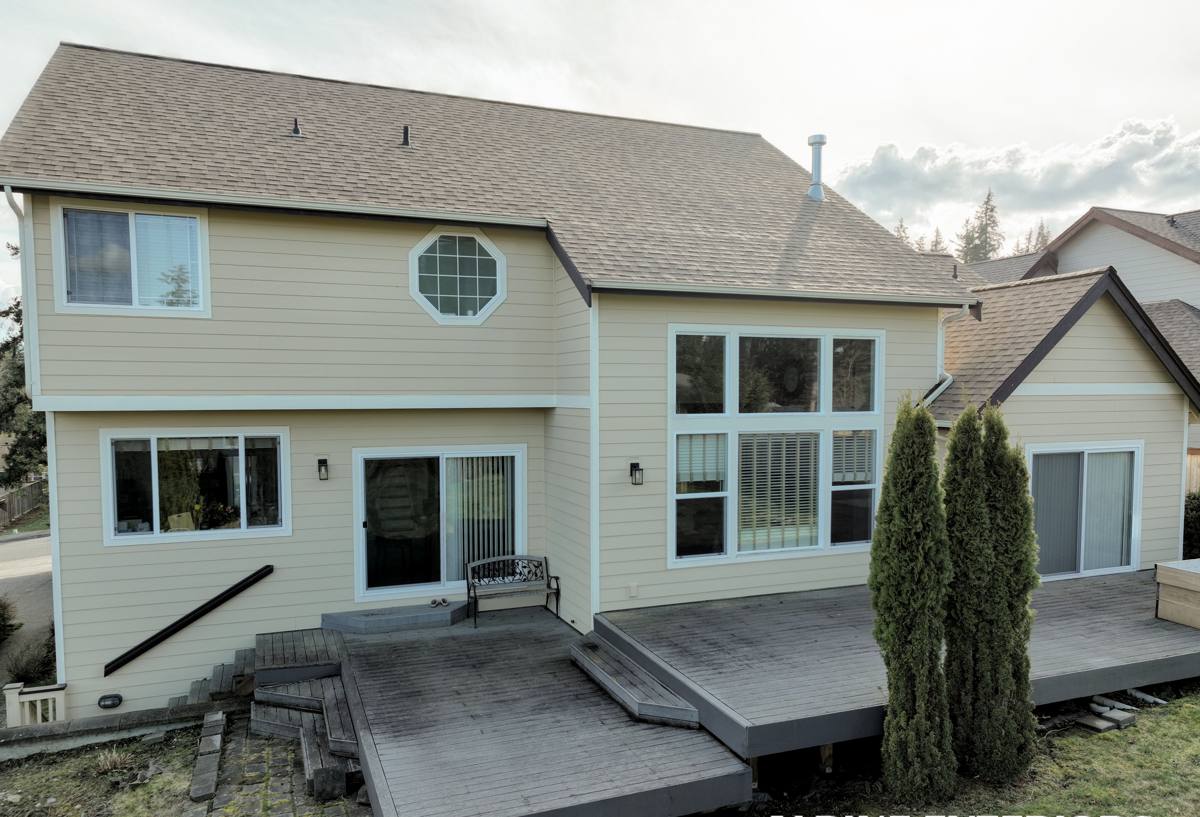
Why Decks in This Area Fail Faster Than Homeowners Expect
Most premature deck failures we see out here come down to a handful of repeat offenders:
- Trapped moisture at the ledger board — where the deck attaches to the house, poor flashing lets water track behind the siding and rot both the ledger and the wall framing behind it.
- Under-ventilated framing — joists and beams tucked under low decks or beneath heavy tree cover don't get enough airflow or sun to dry out between rain events, so they stay damp for months at a stretch.
- Moss and algae buildup — shaded, north-facing, or tree-covered decks (common on Acme lots) grow a slick green film that holds moisture against the wood surface and turns boards into a slip hazard.
- Undersized or poorly placed footings — older decks were sometimes built on concrete blocks sitting on grade rather than footings poured below frost depth, which leads to heaving, settling, and a deck that pulls away from the house over time.
- Fasteners and hardware that were never rated for ground contact or outdoor exposure — standard interior-grade screws and nails corrode and lose their grip well before the wood around them fails.
None of these are unique to any one house — they're what happens to any deck exposed to this region's rain and shade year after year without the right materials and detailing from day one.
Repair or Replace? Signs It's Time
Not every deck problem means a full teardown. But there's a point where patching individual boards is just delaying a bigger, more expensive failure. Signs that point toward replacement rather than repair:
- A screwdriver or awl sinks easily into the ledger board, joists, or posts — a sign of soft, rotted wood underneath a still-solid-looking surface.
- The deck feels spongy or bounces more than it used to when you walk across it.
- Railings wiggle at their posts even after tightening hardware.
- You can see daylight or gaps opening up where the deck meets the house.
- Multiple boards show cupping, splitting, or persistent moss that pressure washing won't remove for long.
- The deck was built more than 20–25 years ago and has never had the structural framing inspected, only the surface boards replaced.
If it's mostly surface boards showing wear but the frame underneath still tests solid, a resurfacing or partial repair can make sense. If the framing itself is compromised, replacement is the safer and ultimately cheaper path — patching rotten structure just moves the failure point somewhere else.
What "Correct" Actually Means Underneath
A deck replacement that's going to hold up here needs attention in places that never show up in photos:
- Proper ledger flashing — a continuous, correctly lapped flashing detail at the house connection, not just caulk over the old fasteners.
- Footings below frost depth and sized for the actual load and soil conditions on the lot, not just matched to what was there before.
- Joist tape or a moisture barrier on top of framing so standing water doesn't sit directly on cut lumber and start rot at every fastener hole.
- Adequate under-deck ventilation, especially on lower decks or ones shaded by trees, so the frame gets a chance to dry between rain events instead of staying damp all winter.
- Corrosion-resistant, exterior-rated fasteners and joist hardware throughout — not just at the points that are easy to see.
- Code-compliant guardrails and stair framing, sized and fastened to hold up structurally, not just pass a quick glance.
Decking Material Options for This Climate
The decking surface gets all the attention, but the choice matters most in exactly the conditions Acme deals with: shade, moss, and long damp stretches. Here's how the common options compare for this specific environment.
| Material | How it handles moss & moisture | Maintenance | Typical lifespan here |
|---|---|---|---|
| Pressure-treated wood | Absorbs moisture readily; needs regular sealing to resist moss and rot | Annual cleaning, re-sealing every 1-2 years | 10-15 years with upkeep |
| Cedar | Naturally rot-resistant but still needs sealing in shaded, damp spots | Cleaning and finish renewal every 1-2 years | 15-20 years with upkeep |
| Composite decking | Doesn't absorb water like wood; still needs periodic cleaning where moss and algae can grow on the surface film | Occasional washing, no sealing/staining | 25-30+ years, manufacturer-dependent |
| PVC/capped polymer | Fully resists moisture absorption; surface algae still needs washing off in shaded areas | Occasional washing only | 25-30+ years, manufacturer-dependent |
There's no universally "right" answer — it depends on budget, how much upkeep a homeowner wants to do, and how shaded the deck site is. What matters more than the brand name on the board is whether the framing underneath was built to shed water and dry out. A premium composite surface on a poorly flashed, poorly ventilated frame will still fail early; solid framing under a well-maintained wood deck can outlast a lot of expectations.
Our Deck Replacement Process
1. On-Site Assessment
We start by actually getting under and around the existing deck — checking the ledger connection, probing framing for soft spots, and looking at drainage, grade, and sun exposure on the specific lot. This tells us whether we're dealing with a surface problem or a structural one, and it shapes the plan before we ever talk materials.
2. Permitting
Most attached decks and any deck above a modest height off grade require a permit through Whatcom County, with inspections tied to footings, framing, and guardrail construction. We handle that process as part of the job so the finished deck is built to code and documented, not just built to look right.
3. Removal and Disposal
The old deck comes out down to the ledger and footings, with old fasteners, flashing, and hardware fully removed rather than built over. Any hidden rot in the house's rim joist or wall framing gets addressed at this stage — it's far cheaper to fix while everything's already open than to find it years later.
4. Rebuild
New footings, framing, flashing, and ventilation go in first, followed by decking, railings, and stairs in the material the homeowner selects. Every connection point gets exterior-rated hardware, and the ledger flashing detail gets the same care whether it's a small platform deck or a large multi-level structure.
5. Final Walkthrough and Inspection
We walk the finished deck with the homeowner, cover basic care for whatever material was installed, and make sure any required county inspection is completed and closed out.
Why It Matters to Hire a Crew That Already Works Acme
Acme isn't downtown Lynden — lots here tend to be larger, more wooded, and often on septic and well systems rather than municipal utilities. That changes where equipment can access the site, how footings get placed relative to septic drain fields, and how much shade a given deck location actually gets through the year. A crew that already works this specific area has already worked through those logistics — narrower rural driveways, tree root systems near foundations, and the realities of getting concrete or materials delivered to a property that isn't on a standard city block.
It also means familiarity with the local permitting process through Whatcom County and an understanding of how this area's rain and shade patterns affect material choices differently than they would on a more open, sun-exposed lot closer to town.
Deck Maintenance Checklist for Acme Homeowners
Whatever material you choose, a few habits go a long way toward getting the lifespan the table above describes:
- Sweep leaves and debris off the deck surface regularly, especially in fall — trapped organic matter is what feeds moss and algae growth.
- Wash the deck at least once a year, more often in heavily shaded spots, to knock back moss before it gets established.
- Check and clear gaps between boards so water drains through rather than pooling on the surface.
- Inspect railing posts and stair stringers annually for movement or soft wood.
- Reseal or restain wood decking on the manufacturer's or a similar recommended schedule — don't wait until it looks obviously weathered.
- Keep gutters and downspouts near the deck clear so runoff isn't dumping directly onto or under the structure.
Get a Straight Answer About Your Deck
If your deck in Acme is showing soft spots, persistent moss, or just feels like it's on borrowed time, it's worth getting an honest look before deciding between repair and replacement. We offer free, no-pressure estimates — use the form below to schedule a visit and we'll tell you plainly what we find, no upsell required.