 Lynden Siding
 Window Installation Built for Acme's Foothill Climate
Acme sits in the Whatcom County foothills southeast of Lynden, tucked closer to the tree line than most of the towns we work in. That changes what a window job actually needs to hold up. Homes here sit under more shade from evergreen cover, see less direct sun to dry things out after a storm, and take on driving rain that comes sideways off the valley rather than straight down. Add a long moss season and the salt-tinged air that reaches inland across Whatcom County, and you've got a climate that's hard on wood trim, hard on old flashing, and unforgiving of a window installed even slightly wrong.
None of that is a reason to over-build or overspend. It is a reason to get the basics right: proper flashing, correct flashing sequence with the water-resistive barrier, the right glass package for a shaded lot, and a frame material that won't fight the moisture load for the next twenty years.
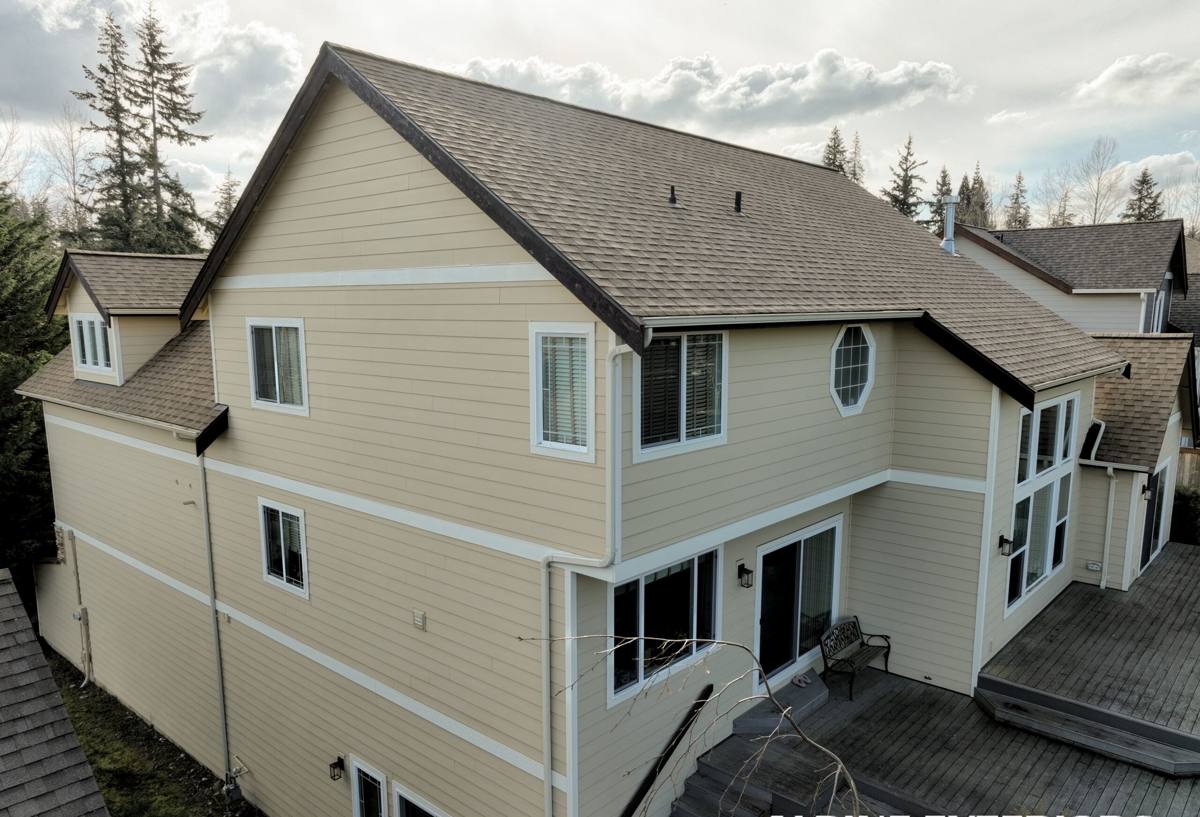
Common Window Problems We See in Acme Homes
Every region has its own failure patterns, and Acme's are pretty consistent once you've worked enough properties out here.
Rot at the sill and lower corners
On older wood-frame windows, the lower sill and corners are almost always the first place to go. Shade keeps that wood damp longer after every rain, and once the paint or clad seal breaks down, water gets under it and stays there instead of drying out the way it would on a sunnier lot.
Moss and algae staining on north- and east-facing walls
Windows facing away from the afternoon sun collect moss and green staining on the trim and sill years before the south side of the same house shows it. That's cosmetic at first, but moss holds moisture against wood and vinyl trim, and over a few seasons it accelerates whatever rot or seal failure is already starting underneath.
Condensation and fogged glass
Older insulated glass units lose their seal over time, and once moisture gets between the panes, no amount of cleaning fixes the fog. In a shaded, damp property, failed seals show up sooner because the glass rarely gets a hot, dry day to help it along.
Drafts and cold spots near the frame
Many Acme properties still have original single-pane or early double-pane windows, especially on older farmhouses and cabins. In a valley that runs colder than in-town Lynden on winter mornings, that shows up as a cold band along the wall under every window.
What a Correct Window Installation Actually Involves
A window installation is not "pull the old one out, set the new one in, caulk the edges." Done right, it's a sequence, and skipping steps is exactly how a house ends up with the same rot problem five years later, just hidden behind new glass.
- Remove the old window and inspect the framing, sill, and sheathing underneath for rot or water damage before anything new goes in
- Repair or replace any damaged framing — never install a new window over compromised wood
- Install sill pan flashing so any water that gets past the window has somewhere to drain, not soak
- Integrate flashing with the existing water-resistive barrier in the correct shingle-lap order, so water sheds down and out, not behind the siding
- Set the window plumb, level, and square, with proper shimming — a slightly out-of-square window stresses the seals and hardware for the life of the unit
- Seal and insulate the gap between the frame and the rough opening with the right materials, not just spray foam packed in tight
- Finish exterior trim and caulking with a bead that will actually shed water in driving rain, not just look clean on install day
The flashing and framing inspection step matters more in Acme than in drier parts of the county. If there's hidden rot behind an old window, this is the point where you find it and fix it — not after the next atmospheric river event.
Choosing a Window Material for This Climate
There's no single "best" window material for every house — it depends on your budget, the home's style, and how much of the year that particular wall stays damp. Here's how the common options actually perform in a shaded, high-moisture setting like Acme.
| Material | Moisture Behavior | Maintenance | Typical Fit |
|---|---|---|---|
| Vinyl | Won't rot; performs consistently in damp, shaded spots | Low — occasional cleaning | Most homes; best value for straightforward replacements |
| Fiberglass | Very stable in moisture and temperature swings; minimal expansion/contraction | Low | Homes wanting a longer-term investment or larger window sizes |
| Wood (unclad) | Needs consistent upkeep to stay ahead of rot in shaded, damp locations | High — repainting and sealing on a schedule | Historic or period-style homes where the look matters more than upkeep |
| Wood-clad | Exterior clad layer protects the wood if installed and sealed correctly | Moderate — clad exterior, interior wood still needs care | Homes wanting a wood interior look without full exterior maintenance |
| Aluminum | Durable but conducts cold; can show interior condensation in cold valley mornings | Low | Less common for residential; occasionally used in specific applications |
For most Acme homes we recommend vinyl or fiberglass, specifically because they don't care whether a wall gets six hours of sun a day or two. If you're set on a wood or wood-clad look for a farmhouse or period home, that's workable — it just means being honest about the maintenance schedule going in, and getting the clad seal and flashing done correctly from day one.
Our Installation Process
We keep the process the same whether it's one window or a full-house replacement, because skipping steps is where problems start.
- On-site assessment. We look at each opening individually — sun exposure, current condition, framing, and how water has historically moved around that wall.
- Measurement and product selection. We measure for an exact fit and go over material, glass package, and grille or style options based on the house and your budget.
- Removal and framing check. Old units come out carefully, and we inspect the rough opening before anything new goes in.
- Flashing and installation. Sill pan flashing, correct integration with the water-resistive barrier, and a plumb, level, square set.
- Insulation, sealing, and trim. Interior and exterior finish work done to actually perform in wind-driven rain, not just pass a visual check.
- Walkthrough. We show you the finished work and explain anything specific to your property's moisture or drainage situation.
Energy Performance and Comfort in a Colder Valley
Acme runs a few degrees cooler on winter mornings than in-town Lynden, and homes with a lot of shaded wall space hold that chill longer through the day. Newer double-pane windows with a low-E coating cut down significantly on that cold-wall effect and reduce how hard your heating system has to work. Triple-pane glass is available and does perform better in raw numbers, but for most single-family homes here the added cost doesn't pay back the way it might in a colder climate zone — double-pane with a good low-E coating and correct installation gets you most of the benefit at a lower price point. We'll walk through the actual glass options for your specific windows rather than upselling a package that doesn't fit the house.
Signs It's Time to Replace
Not every older window needs to go. Some just need better maintenance or a repaired seal. Here's what actually points to replacement rather than repair:
- Fogging or moisture visible between the panes — the seal has failed and can't be repaired
- Soft or spongy wood at the sill or lower corners when you press on it
- Visible daylight or drafts around the frame even with the window latched
- Windows that are difficult to open, close, or lock — often a sign the frame has shifted or swollen
- Persistent moss or dark staining on the sill or trim that keeps coming back after cleaning
- Single-pane glass anywhere still in daily use — the energy loss adds up fast over a Whatcom County winter
Why a Crew That Already Works in Acme Matters
Acme isn't a subdivision with uniform homes and easy access — it's a mix of older farmhouses, cabins, and newer builds spread out along wooded, sloped lots, often with longer driveways and less straightforward staging than an in-town job. A crew that's already worked this specific area knows what shaded, foothill properties tend to be dealing with behind the trim before they even pull the first window, and they know how to plan a job around a rural site without wasted trips or surprises. That familiarity with the area — not just with windows in general — is what keeps a job on schedule and keeps the flashing detail right for the actual weather this property sees, not a generic textbook climate.
If you're weighing a window project in Acme, we're happy to come take a look and give you a straightforward, no-pressure estimate — no inflated urgency, just an honest read on what your windows actually need.