 Lynden Siding
 Metal Roofing Built for Aldergrove's Climate
Aldergrove sits close enough to the coast that salt-laden air rolls through on a regular basis, and close enough to the foothills that rain systems stall out and dump for days at a time. Add in long stretches of overcast, damp weather every fall and winter, and you've got a climate that is genuinely hard on a roof. Asphalt shingles wear out faster here than the manufacturer's rating suggests, and a lot of that comes down to moisture that never fully dries out between storms. Metal roofing, installed correctly, handles this kind of weather better than almost anything else on the market — but "installed correctly" is doing a lot of work in that sentence. We've spent years working roofs in and around this corner of Whatcom County, and this page is about what a metal roof actually needs to hold up here, not just what it looks like in a brochure.
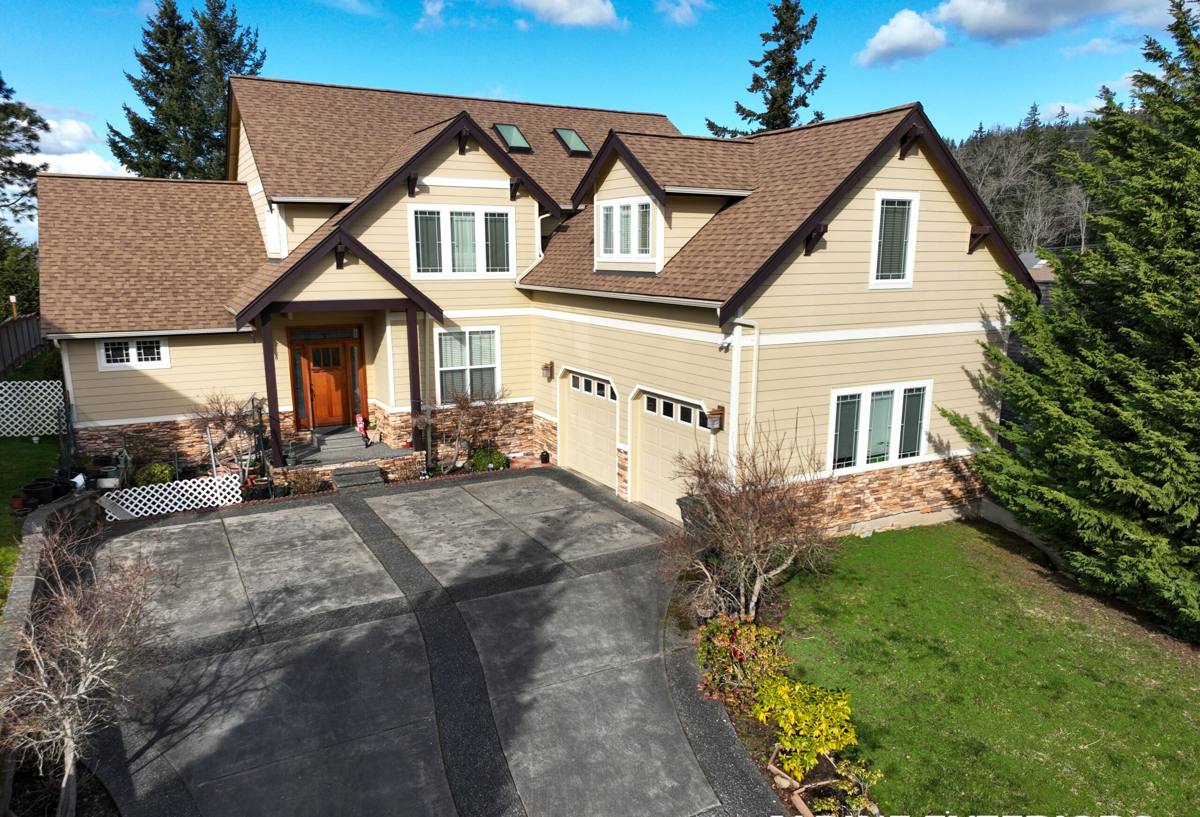
What Local Homes Are Up Against
Salt Air and Corrosion
Homes closer to the water deal with airborne salt that settles on every exterior surface, including the roof. Over time, salt accelerates corrosion on fasteners, flashing, and any metal component that isn't properly coated or isolated from dissimilar metals. This is why the specific coating and fastener system matters more here than it would in a drier, inland climate — cutting corners on hardware is where a lot of premature failures start.
Driving Rain and Wind-Driven Water
Rain here doesn't always fall straight down. When wind pushes rain sideways against a roof plane, water gets forced up under laps, around penetrations, and into any gap that wasn't sealed or flashed with that scenario in mind. A roof that looks fine in a light drizzle can still leak during a real Pacific storm system if the underlayment and flashing details weren't built for wind-driven conditions.
Moss and Prolonged Dampness
The long moss season in this region isn't just cosmetic. Moss holds moisture against roofing materials, and on organic materials like wood shakes or asphalt shingles, that trapped moisture accelerates rot and granule loss. Metal roofing doesn't feed moss growth the way organic materials do, but moss and debris can still collect in valleys and against low-slope transitions if the roof isn't designed to shed water and drain quickly.
Choosing the Right Metal Roofing System
Not all metal roofing is the same, and the right choice depends on the home's roof pitch, budget, and how much visual profile the homeowner wants. Here's how the common options compare for a home in this climate:
| System | Best For | Trade-offs |
|---|---|---|
| Standing seam (concealed fastener) | Long-term weathertightness, steep or complex rooflines | Higher upfront cost; requires experienced installers |
| Exposed fastener panel | Budget-conscious projects, simpler roof shapes, outbuildings | Fasteners need periodic inspection and eventual re-torquing or replacement |
| Metal shingles/shakes | Homeowners who want a traditional look with metal's durability | More seams and detail work per square than standing seam |
| Stone-coated steel | Matching a tile or shake aesthetic while gaining metal's lifespan | Heavier than bare panel systems; check structural compatibility |
For most homes in Aldergrove, we lean toward standing seam or a quality exposed-fastener panel with a marine-grade coating package, specifically because concealed fasteners and factory-applied coatings hold up better against salt exposure and driving rain than field-sealed, exposed hardware.
What a Correct Installation Actually Involves
A metal roof is only as good as what's underneath it and how the details are handled. This is where a lot of the difference between a roof that lasts decades and one that leaks within a few years comes from.
Underlayment
We install a synthetic or self-adhered underlayment rated for the panel type and climate, with extra ice-and-water membrane at eaves, valleys, and any low-slope transitions where wind-driven rain is most likely to force water backward under the panels.
Flashing and Penetrations
Every chimney, vent pipe, skylight curb, and wall intersection is a place where water wants to find a way in. Correct flashing detail — not just caulk — is what keeps these areas dry through years of freeze-thaw cycles and driving rain.
Fastening and Coatings
Fastener material and coating matter as much as the panel itself. Mismatched metals cause galvanic corrosion, and undersized or improperly spaced fasteners are a common cause of panel movement and leaks over time.
Ventilation
Metal roofs perform best over a properly ventilated attic. Without adequate intake and exhaust airflow, condensation can form on the underside of the panels, which undermines the durability advantage metal is supposed to give you in the first place.
Our Process for Aldergrove-Area Projects
- On-site assessment: we look at the existing roof deck, ventilation, flashing points, and roof pitch before recommending a system.
- Straightforward proposal: panel type, coating, underlayment package, and a clear cost breakdown — no vague allowances.
- Tear-off and deck inspection: we check the sheathing for rot or soft spots before anything new goes down, since covering a bad deck just hides the problem.
- Underlayment and flashing installed to spec: built for wind-driven rain, not just a light shower.
- Panel installation: correct fastening, seam work, and trim details specific to the system chosen.
- Final walkthrough: we go over the finished roof with the homeowner and explain what maintenance, if any, it will need going forward.
Maintenance That Actually Matters
One of the honest selling points of metal roofing is how little maintenance it needs compared to asphalt or wood — but "little" isn't "none," especially in a climate with a long moss season and salt exposure.
- Clear debris and organic buildup from valleys and low-slope areas once or twice a year
- Check sealant at penetrations (vents, chimneys, skylights) every few years, since sealant ages faster than the metal itself
- Inspect exposed fasteners periodically if you have a fastener-type panel system, and re-torque or replace as needed
- Keep gutters clear so water isn't backing up under eave flashing during heavy rain
- Rinse off heavier salt or road grime buildup if your home is closer to a busy road or open exposure
- Walk the roofline visually after major wind events to check for lifted trim or displaced flashing
What Affects the Cost
Metal roofing costs more upfront than asphalt shingles, but the gap narrows when you factor in how many shingle re-roofs a metal system can outlast. Broadly, expect a wide range depending on these factors:
| Factor | Why It Moves the Price |
|---|---|
| Panel system (exposed fastener vs. standing seam) | Standing seam requires more labor and specialized tools per square |
| Roof complexity | Steep pitches, multiple valleys, and dormers add cutting, flashing, and labor time |
| Coating and gauge | Heavier gauge steel and marine-grade coatings cost more but last longer in salt air |
| Tear-off vs. overlay | Removing old roofing and inspecting the deck adds cost but avoids covering hidden problems |
| Ventilation upgrades | Adding proper intake/exhaust venting during the re-roof protects the new system's lifespan |
We give straightforward, itemized proposals so homeowners can see exactly where the money goes rather than guessing at a lump-sum number.
Why a Crew That Already Works This Area Matters
Aldergrove and the surrounding communities along the Whatcom County side of the border have their own weather pattern — heavier salt exposure than inland towns, and moss growth that starts earlier and lasts longer than it does further south. A crew that already works this specific area knows which flashing details actually hold up here, which coatings are worth the upcharge, and which shortcuts show up as leaks two winters later. That local familiarity is worth more than a generic install from a crew that mostly works drier or more sheltered regions.
Signs Your Current Roof Needs a Closer Look
- Granule loss or bald patches on an asphalt roof nearing 15-20 years old
- Persistent moss growth that keeps returning after cleaning
- Rust streaking or staining below existing metal flashing or fasteners
- Soft or spongy spots on the roof deck felt from the attic side
- Daylight visible through the roof deck at any point
- Recurring interior stains near chimneys, skylights, or vent penetrations
If your roof is showing any of these signs, it's worth having someone take a real look before the next major storm rolls through — not after.
If you're weighing options for a metal roof in the Aldergrove area, we're happy to walk the roof with you, explain what your home actually needs given its exposure and pitch, and give you a clear, honest estimate. There's no pressure and no obligation — just use the form below to get started.