 Lynden Siding
 Window Replacement Built for Aldergrove's Wet, Salt-Air Climate
Aldergrove sits just north of the Whatcom County line, close enough to the Georgia Strait and Puget Sound corridor that homes here catch marine air moving up through the Fraser Valley along with the driving rain and long, shaded moss season that define this stretch of the Pacific Northwest. Windows take more abuse from that mix than almost any other part of a house. They have moving parts, multiple material transitions, and seals that are asked to hold up against constant wet-dry cycling year after year. A window that would coast along fine in a drier climate can fail early here, and once it does, the damage doesn't stay contained to the glass. It spreads into the framing, the sill, and sometimes the wall cavity behind it.
We're based in Lynden and have worked this corridor long enough to know which elevations of a house take the worst weather, which older window styles tend to fail first, and what a repair actually needs to look like to hold up through another wet season rather than just look fixed for a year.
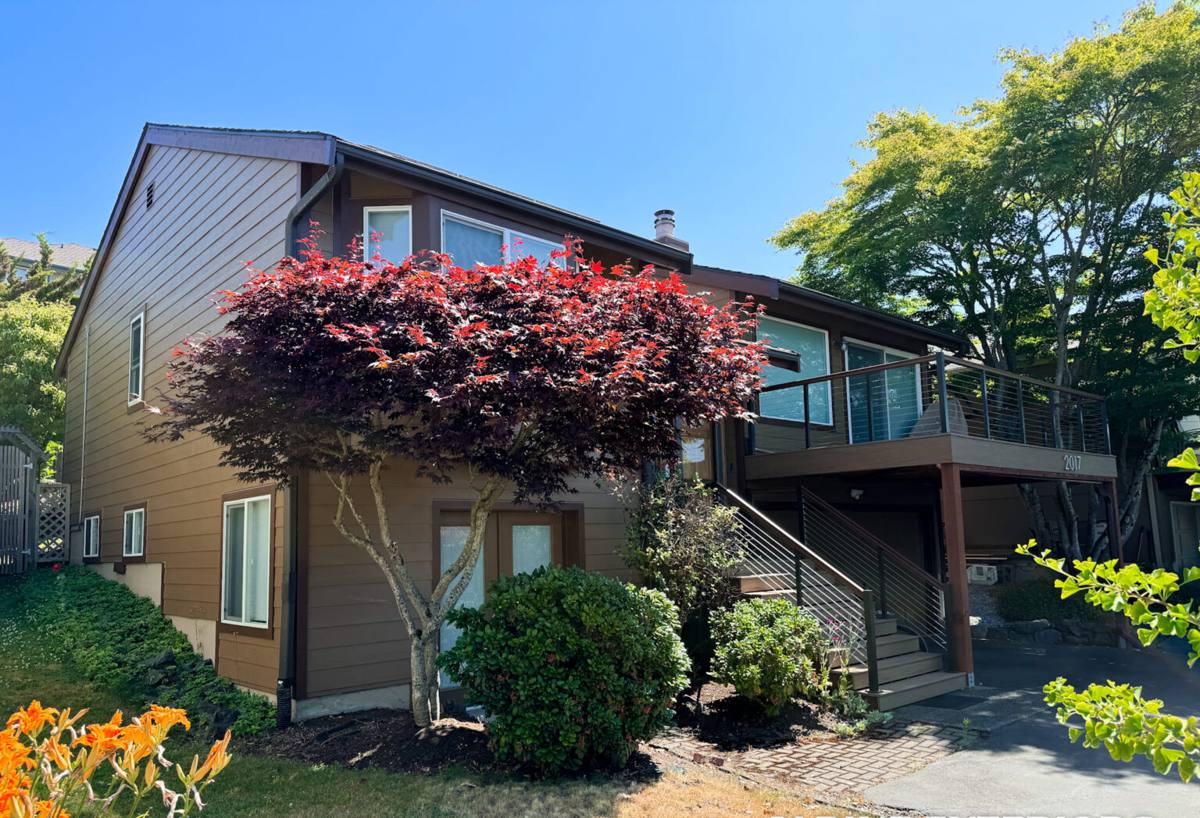
What Years of Marine Air and Rain Do to Older Windows
Corrosion at the Hardware and Frame Seams
Salt-laden air moving inland accelerates corrosion on window hardware and aluminum framing. Locks, hinges, and balance mechanisms that would last decades in a drier inland climate can pit, seize, or stiffen years ahead of schedule. This shows up first as a window that's harder to open, close, or lock properly — a small annoyance that's actually an early warning sign.
Seal Failure and Permanent Fogging
Double-pane windows rely on a sealed gap between panes of glass. Constant humidity swings stress that seal over time, and once it fails, moisture works its way between the panes. No amount of cleaning fixes that fog — it's inside the glass unit, and the only real fix is replacing the window or the sash.
Wood Rot Where Moss Holds Moisture Against the Frame
Moss doesn't just grow on roofs. On shaded, north-facing walls it builds up on sills and frame edges too, and it holds water against wood far longer than the surface would otherwise stay wet. That extended dampness is what feeds rot at corners, sills, and anywhere caulking has started to crack — often out of sight until the wood underneath is already soft.
Signs an Aldergrove Home Needs Window Replacement, Not Just a Repair
Some window problems are worth patching. Others are a sign the unit has reached the end of its useful life and repair would just be delaying the inevitable at extra cost. Watch for:
- Fogging or a permanent haze between the panes that doesn't clean off
- Soft, spongy, or discolored wood at the sill or lower frame corners
- Windows that are difficult to open, close, or lock, or feel swollen in their frame
- Visible daylight or a noticeable draft along the frame edge in windy weather
- Moss or dark streaking building up on the frame or sill every wet season
- Condensation forming on the inside of the glass regularly through fall and winter
- A heating bill that's crept up without any other explanation
If you're seeing two or more of these on the same window, replacement is usually the more honest recommendation than another round of caulk and paint.
What a Correct Window Replacement Job Involves
Accurate Measuring and Product Selection
Every opening gets measured individually rather than assumed to match the others. Older homes settle unevenly, and a frame that's a quarter-inch out of square changes how the new window needs to be shimmed and sealed. We also factor in which direction the opening faces — a window on the weather side of the house needs different attention at installation than one tucked under an eave on a sheltered wall.
Careful Removal Without Damaging Siding or Trim
The old frame comes out cleanly, and this is the point where we can actually see what's been happening behind the window for years. If there's hidden rot in the sheathing or framing around the opening, this is when it gets caught and dealt with — not sealed over and left to keep spreading behind a brand-new window.
Flashing and Water Management
This is the step that matters most in a climate defined by driving rain, and it's also the step that gets rushed on lower-quality jobs. Proper sill pan flashing and flashing tape need to tie into the house's existing water-resistive barrier so that any water that does get past the window is directed back out, not down into the wall. A window can be expensive and well-built and still leak within a few years if this integration is done sloppily.
Insulation, Air Sealing, and Interior Finish
The gap around the new frame gets filled with a proper backer rod and low-expansion foam, not just a bead of caulk. Caulk alone shrinks and cracks; it's not an air seal on its own. Interior trim gets reset cleanly rather than caulked over gaps to hide a rushed fit.
Choosing the Right Window Frame for This Climate
Frame material matters more here than in a drier region, because the frame is what's exposed to salt air and standing moisture season after season. Here's how the common options compare for a home in this area:
| Frame Material | Moisture & Salt-Air Resistance | Maintenance Needed | Typical Cost Range* | Expected Lifespan |
|---|---|---|---|---|
| Vinyl | Strong — won't rot or corrode | Low — occasional cleaning | Lower to mid-range | 20–30+ years |
| Fiberglass | Very strong, dimensionally stable in wet-dry cycling | Low | Mid to upper | 30+ years |
| Aluminum | Prone to corrosion in salt air over time | Moderate — hardware needs attention | Lower to mid-range | 15–25 years, hardware often fails first |
| Wood / Wood-Clad | Attractive but the most exposed to rot risk if maintenance lapses | Highest — regular finish upkeep required | Upper range | Varies widely with maintenance |
*Costs vary by size, glass package, and install complexity — these are broad ranges, not quotes. We'll give you exact numbers for your home during an on-site estimate.
Our standard for this area is vinyl or fiberglass for most homes, simply because they hold up to salt air and repeated wetting without the ongoing maintenance burden that wood or the corrosion risk that bare aluminum carries. We'll still install wood-clad units where the look matters to a homeowner, but we're upfront about what that choice requires in upkeep.
Glass Packages Worth Considering
Whatcom County and the neighboring Fraser Valley don't see the deep-freeze winters that make triple-pane glass a clear necessity, so for most homes here a quality double-pane unit with a Low-E coating and argon gas fill does the job without the added cost and weight of a third pane. Where it earns its keep is on north-facing rooms that stay cold and clammy, or in homes right along the more exposed, wind-driven side of a property. We'll walk through where triple-pane makes sense for your specific windows rather than upselling it across the board.
Our Process, From Estimate to Final Walkthrough
- On-site assessment of every window being considered, including a look at the framing and sill condition, not just the glass
- A written estimate covering product options, glass package, and a realistic timeline
- Scheduling that accounts for weather — driving rain windows aren't ideal for a job with the wall opened up, so we plan around it
- Install day: careful removal, inspection of the opening, flashing and water management, new unit set and shimmed, insulated, and sealed
- Interior and exterior trim finished, hardware tested, and the site cleaned up
- A final walkthrough with the homeowner before we call the job done, plus warranty paperwork on the product and our labor
Serving Homes on Both Sides of the Border
Aldergrove is close enough to Lynden that we regularly work jobs on both sides of the line, and that's shaped how we schedule and run projects. Crew travel time, material deliveries, and appointment windows all get planned with the border crossing built into the plan rather than treated as an afterthought that causes delays mid-project. Homeowners in Aldergrove get the same estimate process, the same install standards, and the same warranty support as anyone on the Lynden side of the county line — we don't treat it as a special or lesser-served area.
Why Hiring a Crew That Already Works Aldergrove Matters
A contractor who's worked this specific area knows which elevations of a typical local home take the worst weather, roughly what era of construction and window style is common in the neighborhood, and which small details — like sill flashing or weep hole placement — tend to get skipped by crews who aren't used to this climate. That familiarity shows up in fewer surprises during the job and a lower chance of a callback a year later for a leak that shouldn't have happened. It also means we're a known, findable local business if you ever need warranty support down the road, rather than a name from an out-of-area quote that's hard to reach once the invoice is paid.
Maintenance That Extends the Life of New Windows
New windows still need a little seasonal attention in this climate to get their full lifespan out of them:
- Rinse salt residue and general grime off exterior frames a few times a year, especially after storms
- Keep weep holes and tracks clear of moss, leaves, and debris so water can actually drain
- Check exterior caulking annually and touch up any cracked or separated sections before the wet season
- Lubricate hardware — locks, hinges, and balances — so they don't stiffen up from corrosion or dried-out grease
- Avoid pointing a pressure washer directly at weep holes or seals; it can force water where it shouldn't go
A few minutes of upkeep twice a year is a lot cheaper than an early replacement.
If your windows are fogging, sticking, drafty, or just showing their age, we're happy to take a look and give you a straightforward, no-pressure estimate — no obligation, and no pushing a product you don't need. Fill out the form below and we'll get in touch to set up a time.