 Lynden Siding
 Asphalt Shingle Roofing for Birch Bay's Coastal Conditions
Birch Bay sits right on the water in Whatcom County, and that shoreline location changes what a roof has to deal with compared to homes further inland. Salt-laden air moves off the bay and settles on every exterior surface, wind-driven rain comes in sideways instead of straight down, and the mild, damp climate here supports moss and algae growth for most of the year rather than just a few soggy months. Asphalt shingle roofing can absolutely hold up to that environment, but only when the material, the installation details, and the ongoing upkeep are all chosen with this specific exposure in mind — not a generic inland spec.
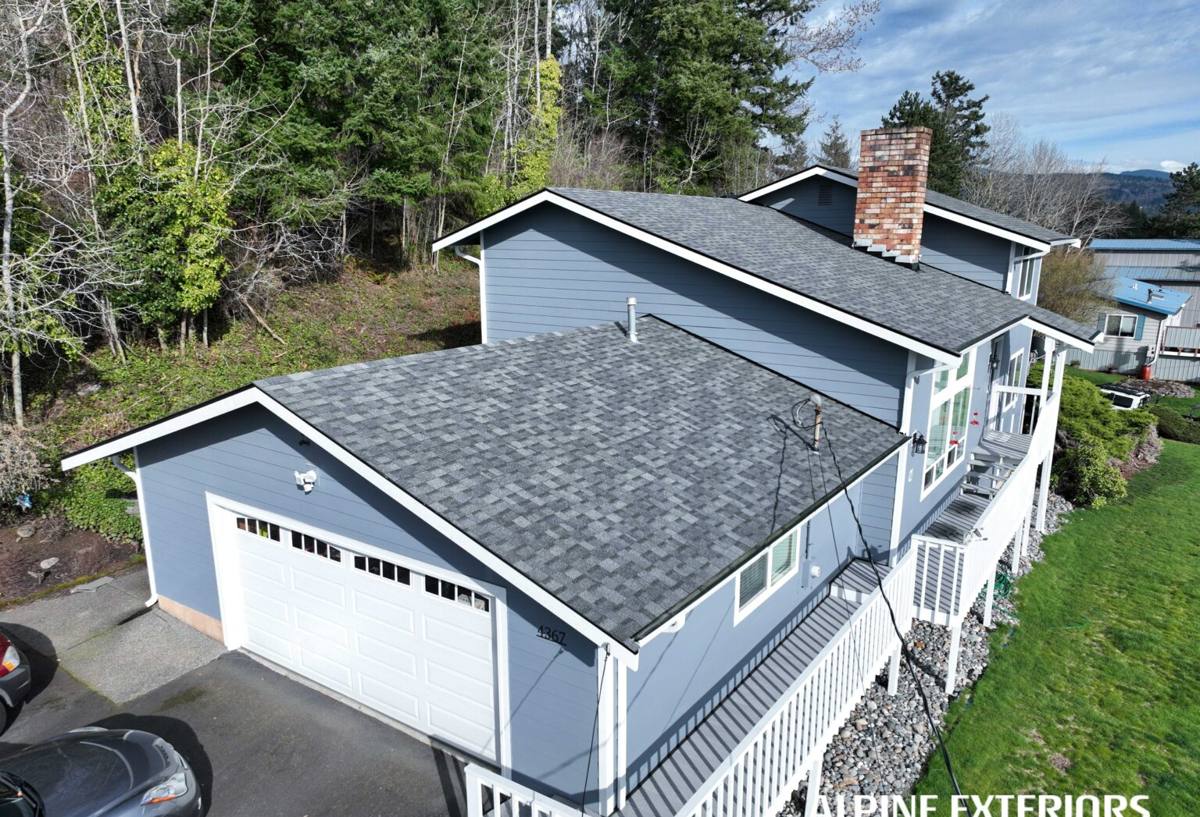
Lynden Siding Contractors installs and repairs asphalt shingle roofs across Whatcom County, and Birch Bay is one of the areas we work in regularly. This page covers what the local climate actually does to an asphalt shingle roof, what a correctly installed roof looks like out here, and how our process runs from first inspection to finished job.
What Birch Bay's Climate Does to an Asphalt Shingle Roof
Salt Air and Corrosion
Being this close to the water means airborne salt is a constant, low-level presence on roofing hardware. Over years, it accelerates corrosion on exposed fasteners, flashing, and any metal component that isn't rated for a marine environment. A roof that looks fine from the ground can still have fasteners or flashing quietly corroding underneath, which is one reason hardware choice matters as much as the shingle brand on a job this close to the shoreline.
Wind-Driven Rain
Rain off the bay rarely falls straight down. Wind pushes it sideways and upward under shingle edges, into valleys, and around any penetration in the roof — vent pipes, chimneys, skylights. That lateral pressure is exactly where a roof with weak flashing details or aging underlayment starts to leak, often well before the shingles themselves show visible wear.
A Long Moss and Algae Season
Mild temperatures and near-constant moisture mean moss and algae don't just show up seasonally here — they can establish and spread across most of the year, especially on shaded, north-facing, or tree-covered roof planes. Left unchecked, moss holds water against the shingle surface and works under tabs and edges, which shortens the life of even a well-installed roof.
Choosing an Asphalt Shingle Product for This Exposure
Not every asphalt shingle product is built the same way, and the differences matter more in a coastal climate than they would somewhere drier. We walk homeowners through the real trade-offs rather than defaulting to whichever product has the best margin.
| Shingle Tier | Typical Wind Rating | Algae Resistance | Realistic Lifespan in Birch Bay |
|---|---|---|---|
| 3-tab (economy) | Lower; more prone to lifting in sustained coastal wind | Usually minimal unless specified | 15-20 years, often less with heavy moss exposure |
| Architectural / laminated | Higher; heavier construction resists wind uplift better | Algae-resistant granule options widely available | 25-30 years with proper ventilation and upkeep |
| Premium / designer laminate | Highest tier offered by most manufacturers | Algae-resistant granules typically standard | 30+ years, heavier upfront cost |
For most Birch Bay homes, an architectural shingle with algae-resistant granules is the practical middle ground — meaningfully more wind and moss resistant than a 3-tab product, without the premium cost of a top-tier designer line. We'll still walk your specific roof's pitch, exposure, and budget before recommending one over another, since a heavily shaded, tree-lined lot and an open, wind-exposed lot near the water don't call for identical answers.
Installation Details That Actually Matter Here
Most asphalt shingle failures in this climate don't start with the shingles themselves — they start with something skipped underneath them that doesn't show up as a problem until a few winters later. On every Birch Bay roof, that means:
- Corrosion-resistant fasteners and flashing rated for sustained salt air exposure, not standard-grade hardware
- Synthetic or heavyweight underlayment suited to prolonged moisture exposure rather than a bare-minimum product
- Ice-and-water shield at eaves, valleys, and other spots where wind-driven water and debris collect
- Properly lapped and sealed step flashing and counterflashing at every chimney, wall transition, and roof penetration
- Balanced intake and exhaust ventilation so moisture escapes the attic instead of condensing against the roof deck
- Shingle nailing pattern and exposure set to the manufacturer's high-wind installation spec, not the standard spec
None of these add much to the overall cost of a roofing job relative to the shingles themselves, but skipping any of them is how a twenty-five-year roof turns into a fifteen-year roof in a climate like this one.
How We Handle an Asphalt Shingle Roofing Project in Birch Bay
Inspection and Estimate
We start by getting on or above the roof, not just looking at it from the driveway. That means checking shingle condition, flashing, ventilation, and signs of moisture at the deck, plus noting how sun, shade, and wind exposure vary across different roof planes. The estimate is built from what we actually find, not a flat per-square guess.
Tear-Off and Deck Inspection
Old roofing comes off down to the deck, and we check the sheathing underneath for soft spots, rot, or delamination before anything new goes down. Covering a compromised deck with new shingles just hides a problem that gets worse behind the roofline — we'd rather find it and address it now than have it surface as a leak in a few years.
Underlayment, Flashing, and Ventilation
This is the stage that determines how the roof actually performs in wind-driven rain and salt air, even though almost none of it is visible once the job is done. Underlayment, ice-and-water shield, and every piece of flashing go in to spec here, and we confirm intake and exhaust ventilation are balanced before shingles go on.
Shingle Installation
Shingles go down following the manufacturer's high-wind nailing pattern, with attention to exposure and alignment at valleys, hips, ridges, and edges — the places most likely to catch wind uplift in a storm coming off the water.
Cleanup and Final Walkthrough
We clear the site of old material and debris, including a magnetic sweep for stray fasteners, and walk the finished roof with the homeowner to cover what was done, what to expect going forward, and any maintenance recommendations specific to the property.
Signs a Birch Bay Roof Needs a Look
- Moss buildup on shaded or north-facing slopes that returns quickly after cleaning
- Granules collecting in gutters or pooling at the base of downspouts
- Curling, cupping, cracking, or missing shingles, especially after a windstorm off the bay
- Rust staining running from fasteners, flashing, or vent pipe boots
- Water staining on interior ceilings near exterior walls, chimneys, or skylights
- Soft spots or noticeable give when the roof deck is walked
- Daylight visible through the roof deck from inside the attic
Any single item on that list is worth a professional look. Caught early, most of these are a straightforward repair. Left through another wet winter off the water, several of them together usually mean a full tear-off is the more honest recommendation.
Repair or Replace? How We Help You Decide
We don't default to recommending a full replacement just because a roof has a problem. The real factors are the roof's age relative to its rated lifespan, how much of the surface is affected, whether the deck underneath has moisture damage, and how many previous repairs the roof has already had. A localized leak on an otherwise sound, newer roof is usually a repair. A roof nearing the end of its expected life with moss-related wear spread across multiple planes, or a deck showing soft spots from long-term moisture, is more honestly addressed with replacement rather than another patch that buys a season or two. We'll explain what we find on your roof specifically and why, rather than steering toward whichever option pays better.
What Affects the Cost of an Asphalt Shingle Roof in Birch Bay
Every roof gets its own number, but a handful of factors consistently move it: total roof area and the number of separate planes, pitch and how easily equipment can access the roof, how much of the decking needs replacing once the old roof comes off, the shingle tier chosen, and how much flashing and penetration work the roof requires around chimneys, skylights, and vent stacks. Coastal exposure can also push the decision toward higher-grade fasteners and flashing, which is a modest cost difference upfront that pays off in fewer callbacks and a longer service life. We walk through these factors specifically during the estimate so the number makes sense before any work starts, rather than handing over a flat quote with no explanation behind it.
Why a Crew That Already Works Birch Bay Matters
A roofing crew that works this shoreline regularly sees how salt air, wind-driven rain, and moss actually behave on real Birch Bay homes over years, not just how a shingle performs on a manufacturer's data sheet. That translates into practical, on-the-job decisions: which roof orientations need extra moss attention because of shade and tree cover, how much ice-and-water shield a given valley actually needs this close to the water, and which flashing and fastener choices are worth the extra time on install day so a homeowner isn't dealing with a corrosion-related callback a few winters later. It also means that if a warranty question or a maintenance issue comes up years down the line, it's a call to a crew that's still working the same stretch of coastline, not one that's moved on.
Beyond the Roof
Roofing is one part of what we handle for Birch Bay homes — we also do siding, window replacement, and deck work, because the same coastal exposure that wears on a roof wears on the rest of the exterior too. If a roofing inspection turns up moisture damage at a wall-to-roof transition, corroded trim, or siding issues nearby, we can address that as part of the same conversation rather than sending you off to find a second contractor for a problem the roof helped cause.
If your Birch Bay home needs a new asphalt shingle roof, a repair, or just an honest inspection before the next wet season, we're glad to take a look. Reach out using the form below for a free, no-pressure estimate.