 Lynden Siding
 Why Nooksack's Climate Is Hard on Asphalt Shingle Roofs
Nooksack sits along the river corridor east of Lynden, in a part of Whatcom County where the weather doesn't do anything extreme, but it doesn't let up either. Salt-laden marine air moves through the valley off the Strait, winter storms bring driving rain that comes in sideways instead of straight down, and heavy tree cover along the river keeps roofs shaded and damp for long stretches of the year. Put those together and you get a moss season that can realistically run from early fall through spring.
None of that makes asphalt shingles a poor choice for a Nooksack home. It's still the most practical, cost-effective roofing material for most houses in this area. What it does mean is that the installation details matter more here than they would in a dry climate — the gap between a shingle roof that lasts its full service life and one that fails early is almost never the shingle itself. It's what's underneath it and how it was put on.
Salt Air and Metal Fatigue
Flashing, drip edge, roofing nails, and vent boots are all metal, and salt-laden air accelerates corrosion on lower-grade materials over time. A pinhole in a piece of flashing or a rusted fastener head doesn't look like much, but it's exactly the kind of small failure that lets water into a roof deck over a few wet seasons.
Driving Rain and Wind-Driven Water
Standard installation assumes rain falls mostly straight down. When storms push rain sideways under shingle laps, at ridge caps, and around penetrations, a roof needs tighter-than-average sealing and lap coverage at those vulnerable points, not just a shingle nailed to code minimums.
Moss, Shade, and Trapped Moisture
Moss doesn't just sit on top of a roof looking bad. As it establishes on shaded, north-facing slopes and valleys, it holds moisture against the shingle surface and lifts tabs slightly as it grows, which is exactly the kind of slow, mechanical damage that's easy to miss until it's already let water underneath.
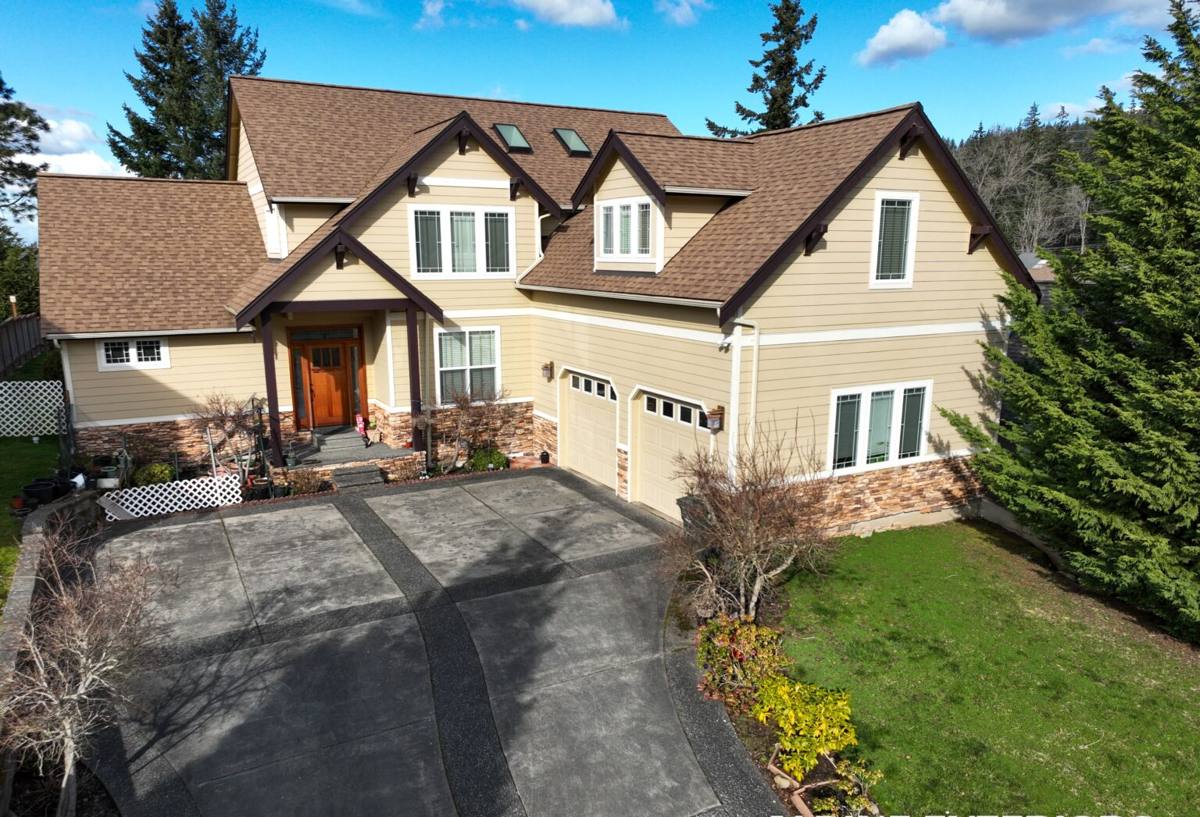
What a Correctly Installed Roof Needs in This Area
A shingle roof is a system, not a single product. In a climate like Nooksack's, every layer of that system needs to be done right, because the margin for a shortcut is smaller here than it is in a drier region.
Underlayment and Ice-and-Water Barrier
We use a full synthetic underlayment rather than felt, because it holds up better to the freeze-thaw cycles and repeated wetting that are normal here. Ice-and-water shield membrane goes at eaves, valleys, and around every penetration — the places where wind-driven rain and ice damming are most likely to force water backward under the shingles.
Flashing at Every Transition
Chimneys, skylights, dormers, and sidewall-to-roof transitions all need step flashing and counterflashing installed correctly, not caulked over as a substitute for proper metal work. Caulk fails; correctly lapped flashing sheds water on its own for decades.
Nailing Pattern and Fastener Quality
Shingles rated for high wind exposure only perform to that rating if they're nailed in the correct pattern, with the correct number of fasteners, driven flush (not overdriven or underdriven). We use corrosion-resistant fasteners throughout, which matters more here than in an inland, drier county.
Choosing the Right Shingle for a Nooksack Home
Most manufacturers offer several tiers of asphalt shingle, and the right one depends on your roof's exposure, budget, and how long you want to go between maintenance. Here's how the common categories compare for a home in this climate:
| Shingle Type | Typical Lifespan | Best For | Moss/Algae Resistance |
|---|---|---|---|
| 3-tab | 15-20 years | Budget-conscious replacements, simple roof lines | Standard granules only, no built-in resistance |
| Architectural/laminate | 25-30 years | Most Nooksack homes; better wind rating and appearance | Often available with algae-resistant granules |
| Algae-resistant (copper/zinc granule) | 25-30 years | Shaded, tree-covered lots, north-facing slopes | Built-in resistance, slows regrowth after cleaning |
| Impact-resistant (Class 4) | 30+ years | Homes wanting stronger hail/debris resistance | Often paired with algae-resistant granules |
For most Nooksack properties with any meaningful tree cover, we recommend at least the algae-resistant option — the upfront cost difference is modest compared to what it saves in cleaning and premature wear over the life of the roof.
Our Process for Asphalt Shingle Roofing in Nooksack
We keep the process straightforward and communicate at each stage, since a roof replacement is disruptive enough without surprises.
- On-site inspection. We walk the roof and attic, check for soft decking, existing moisture damage, ventilation issues, and moss buildup before quoting anything.
- Tear-off. Old shingles, underlayment, and any damaged flashing come off completely — we don't install over existing layers, since that traps problems instead of fixing them.
- Deck inspection and repair. Any soft, rotted, or delaminated sheathing is replaced before anything new goes down.
- Underlayment and ice/water barrier installation. Full synthetic underlayment with membrane at all vulnerable transitions.
- Flashing. New step and counterflashing at chimneys, walls, valleys, and penetrations.
- Shingle installation. Installed to manufacturer spec for nailing pattern and exposure, with attention to ridge and hip detailing.
- Ventilation check. Intake and exhaust venting confirmed or corrected as part of the same job, not treated as an afterthought.
- Cleanup and final walkthrough. Magnetic sweep for nails, debris removal, and a walkthrough so you know exactly what was done.
Moss and Algae: Ongoing Care After Installation
Even a well-installed, algae-resistant roof benefits from periodic upkeep in a climate like this one. Moss that's left to establish for multiple seasons does more damage than moss that's caught and removed early.
- Have the roof checked for moss growth at least once a year, more often on heavily shaded slopes
- Remove moss by brushing or low-pressure methods — never pressure-wash shingles, which strips protective granules
- Keep gutters and valleys clear of needles and leaf debris that hold moisture against the roof surface
- Trim back overhanging branches where practical to reduce shade and debris buildup
- Address small moss patches promptly rather than waiting for a full-roof treatment
Attic Ventilation and Moisture Control
Ventilation is the part of a roofing job homeowners rarely see, but in a wet, humid climate it affects everything from shingle lifespan to indoor moisture and mold risk. A roof needs balanced intake (usually at the soffits) and exhaust (ridge or roof vents) so warm, moist air can escape the attic instead of condensing on the underside of the roof deck. Undersized or blocked ventilation shows up as premature shingle aging from the inside, and in some cases as moisture damage in the attic that has nothing to do with a leak — it's condensation from air that had nowhere to go. We check this on every job, because installing new shingles over a poorly ventilated attic just resets the clock on the same problem.
Signs Your Nooksack Roof May Need Attention
Most roofing problems don't announce themselves with a dramatic leak. They show up as smaller signs first, and catching them early is almost always cheaper than waiting.
- Granules collecting in gutters or at downspout outlets
- Shingles that look cupped, curled, or are missing tabs
- Dark streaking or thick moss growth on north-facing slopes
- Soft spots underfoot when walking the roof, or sagging along the ridge
- Daylight visible through the roof deck from inside the attic
- Water stains on interior ceilings, especially near chimneys or valleys
- Rising heating or cooling costs that may point to attic ventilation problems
What Drives the Cost of a Shingle Roof in This Area
Every roof is different, and we don't quote a job without seeing it, but these are the main factors that move the price up or down for homes in and around Nooksack:
| Factor | Why It Matters |
|---|---|
| Roof size and pitch | Steeper roofs take longer to work safely and use more material for the same footprint |
| Number of penetrations | Chimneys, skylights, and vents each need individual flashing work |
| Deck condition | Rotted or soft sheathing found during tear-off adds material and labor |
| Shingle tier chosen | 3-tab, architectural, and impact-resistant products carry different material costs |
| Tear-off layers | Removing multiple existing layers takes more labor than a single-layer tear-off |
| Access and site conditions | Tree cover, steep lots, and limited staging space affect how a crew can work |
Broadly, most full asphalt shingle roof replacements land somewhere in the low-to-mid five figures for an average single-family home, but the only way to know your number is a walk-through, since deck condition and roof complexity swing that range significantly in either direction.
Why Local Experience in Nooksack Matters
A crew that already works this part of Whatcom County knows what to look for before the tear-off even starts — where moss tends to establish first, which roof orientations take the worst of the wind-driven rain, and how tree cover on river-adjacent lots affects drying time and material choice. That's not something a crew coming from outside the area picks up on the first visit. It also means faster response if something needs attention after the job is done, since we're not driving in from across the county.
If you're weighing a repair against a full replacement, or just want an honest read on what your current roof has left in it, we're glad to take a look. Reach out for a free, no-pressure estimate using the form below — we'll walk the roof, give you a straight answer, and let you decide from there.