 Lynden Siding
 Board & Batten's Long History as a Pacific Northwest Look
Board and batten siding has been part of Pacific Northwest architecture for well over a century, and it's easy to see why it keeps showing up on Bellingham homes. The vertical lines read as clean and modern on newer builds, but the same profile also sits comfortably on a farmhouse, a craftsman bungalow, or a barn-style outbuilding. It's one of the few siding styles that works across that whole range without looking out of place.
What most homeowners don't think about until later is that board and batten isn't just a look — it's a system. The vertical boards, the battens that cover the seams, the fasteners, and the water management behind all of it have to work together correctly, or the same siding that looks great on install day starts causing problems within a few wet seasons. In a climate like Bellingham's, that gap between "looks right" and "is built right" matters more than it does in drier parts of the country.
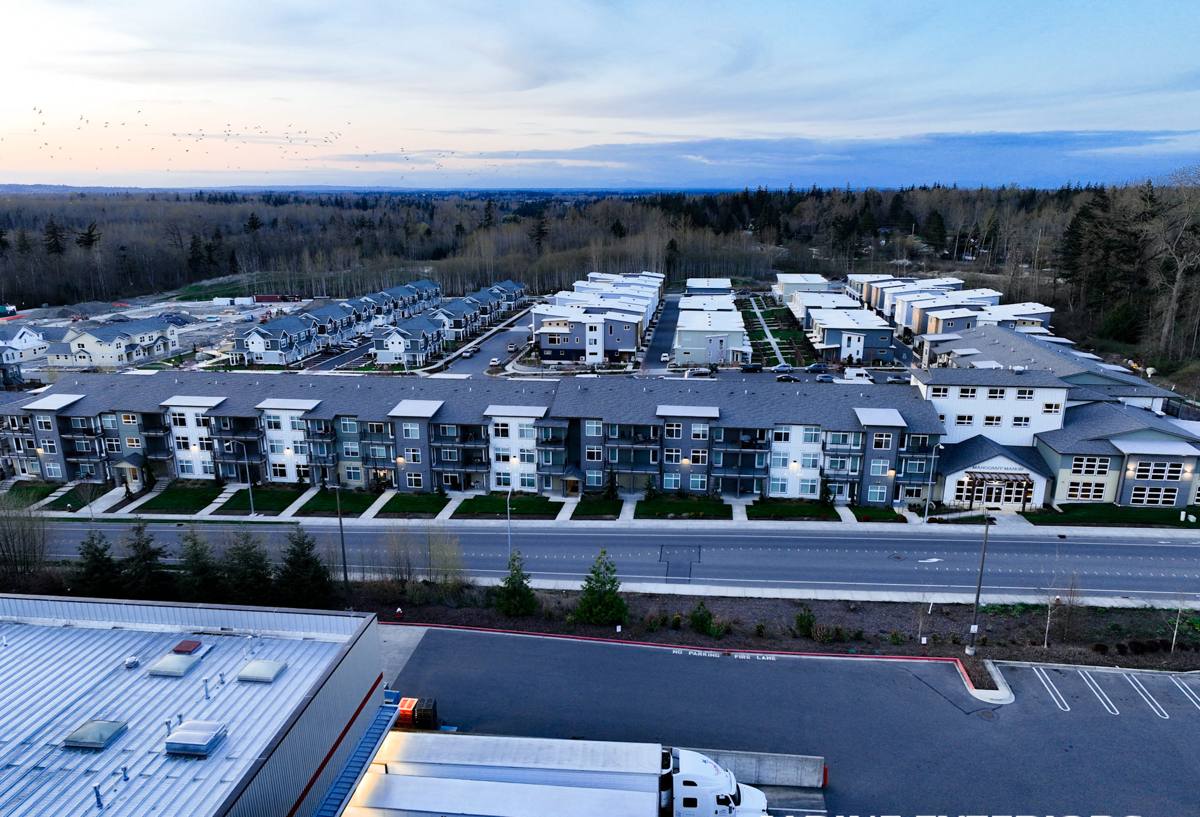
What Bellingham's Climate Actually Does to Vertical Siding
Salt Air Off Bellingham Bay
Homes near Bellingham Bay and the broader Puget Sound shoreline live with a steady low-level exposure to salt-laden air. Salt air accelerates corrosion on anything metal — fasteners, flashing, trim edges — and it's tougher on absorbent, uncoated materials than most homeowners expect. Siding that isn't corrosion-resistant or properly sealed at cut edges tends to show wear along that shoreline-influenced belt years before an identical product would inland.
Driving Rain and Wind-Driven Moisture
Whatcom County doesn't just get rain — it gets rain that comes in sideways during winter storms. Board and batten siding has more vertical seams than lap siding, and every one of those seams is a potential path for wind-driven water if it isn't detailed correctly. This is a style where the quality of the installation matters as much as the quality of the material.
A Moss Season That Doesn't Really End
Between the marine humidity and the tree cover common to this part of Whatcom County, moss and algae growth on north-facing and shaded siding is close to a year-round condition rather than a seasonal one. Materials that hold moisture at the surface give moss something to root into. Materials that shed water and dry quickly don't.
What a Correct Board & Batten Installation Requires
The Panel and Batten System
True board and batten siding is built from wide vertical panels with narrower battens fastened over the seams between them. The battens aren't just decorative — they're the primary defense against water getting into those vertical joints. Reveal width, batten spacing, and panel layout all need to be planned before the first piece goes up, not adjusted on the fly as the crew works around a wall.
Drainage, Flashing, and Fastening
Behind the visible siding, a correct installation includes a drainage gap (a rainscreen) that lets any moisture that does get past the surface drain and dry out instead of sitting against the sheathing. It includes a properly lapped weather-resistive barrier, flashing at every window, door, and roofline intersection, and corrosion-resistant fasteners driven to the manufacturer's exact spacing and depth. Skip any one of these steps and the siding can still look perfect for a season or two — the failures that show up from cutting corners here are usually hidden ones, discovered when trim starts to soften or paint starts to fail from behind.
The James Hardie Board & Batten System We Install
We install James Hardie fiber cement exclusively, and board and batten is one of the styles where that choice shows up clearly. The system pairs Hardie vertical panel siding with Hardie trim boards used as battens, giving you the classic board and batten profile in a non-combustible fiber cement product engineered for wet Pacific Northwest climates rather than a general-purpose material.
Panels and trim are available in Hardie's factory-applied ColorPlus finish, which is baked on and warrantied against fading and chipping — a real advantage on a style with this many exposed edges and seams, since it removes a lot of the field-painting and touch-up work that would otherwise fall on the homeowner. Hardie's HZ5 product line is engineered specifically for wetter, colder climate zones like ours, which is the version we spec for Bellingham-area homes.
How Board & Batten Compares to Other Siding Approaches
Homeowners researching board and batten often see it offered in vinyl, engineered wood, and other fiber cement brands, not just James Hardie. Each has real trade-offs worth understanding before you decide.
| Material | How It Handles Vertical Seams | Salt Air / Moisture Behavior | Long-Term Maintenance |
|---|---|---|---|
| James Hardie fiber cement | Engineered panel-and-batten system with defined reveal and fastening spec | Non-combustible, dimensionally stable, HZ5 line built for wet climates | ColorPlus finish reduces repainting; occasional wash for moss |
| Vinyl board and batten | Snap-together panels, seams can loosen or gap over time | Doesn't rot, but can warp or fade; seams can trap moisture behind panel | Low upkeep but limited repair options if damaged or discolored |
| Engineered wood (e.g. LP-style) | Solid panel look, relies heavily on sealed edges and correct flashing | Wood-based core is moisture-sensitive if edges aren't fully sealed | Requires diligent caulk and paint maintenance to protect the substrate |
| Other fiber cement brands | Similar panel systems, quality varies by manufacturer specs | Generally durable, but warranty and finish quality differ by brand | Depends on finish type — factory-finished vs. field-painted |
We don't install vinyl, engineered wood siding, or other fiber cement brands — this isn't a knock on every homeowner's experience with those products, it's that after weighing installation sensitivity, moisture behavior, and warranty structure against what a Bellingham roofline actually deals with over a Whatcom County winter, James Hardie is the one we're willing to stand behind long-term.
What Our Process Looks Like for a Bellingham Board & Batten Project
We start with an on-site walkthrough of the home, looking specifically at exposure — which walls face the prevailing wind and rain, which sides stay shaded and moss-prone, and where the existing siding or sheathing shows signs of past moisture issues. That assessment shapes the flashing and drainage plan before we ever talk panel layout or color.
From there we plan reveal width and batten spacing to fit the home's proportions, confirm trim details around windows, doors, and corners, and install the drainage plane and flashing package first — the part that never gets seen again once the siding is up, but does most of the actual work. Panels and battens go on to spec, fastener by fastener, with the same HZ5 Hardie system on every wall regardless of whether it's a highly visible front elevation or a shaded rear wall that will spend most of the year damp.
Living With Board & Batten Siding in Whatcom County
A correctly installed Hardie board and batten system is genuinely low-maintenance, but "low-maintenance" isn't "no-maintenance" in a climate like this one. A short annual routine keeps it performing the way it's supposed to:
- Rinse shaded and north-facing walls once or twice a year to keep moss and algae from establishing
- Walk the exterior after major windstorms and check for any loosened trim or battens
- Keep gutters clear so overflow isn't running down siding walls during heavy rain
- Trim back vegetation and tree cover that keeps a wall shaded and damp longer than necessary
- Have caulking at trim and penetration points inspected every few years, since that's the first line of defense at vertical seams
What Affects the Cost of a Board & Batten Project
Board and batten pricing depends on more than square footage. The factors below tend to move the number most on Bellingham-area homes:
| Factor | Why It Matters |
|---|---|
| Batten spacing and reveal width | Narrower spacing means more trim material and more labor per wall |
| Trim complexity | Homes with more windows, dormers, and corner details require more precision cutting and fitting |
| Home height and access | Multi-story walls and steep sites require more scaffolding and staging time |
| Condition of existing sheathing | Hidden moisture damage found during tear-off adds repair scope before new siding goes up |
| Tear-off vs. new construction | Removing and disposing of old siding adds labor that new-build installs don't have |
| Finish selection | Factory-applied ColorPlus finish costs more upfront but reduces future repainting |
Why a Crew That Already Works the Bellingham Area Matters
Board and batten is unforgiving of guesswork. A crew that hasn't spent time on homes exposed to Bellingham Bay's salt air or Whatcom County's driving winter rain is more likely to under-detail the flashing and drainage plan, because those details don't matter nearly as much in a drier climate. A crew that already works this area builds every wall — visible or not — for the conditions it will actually face, not the conditions on a generic spec sheet.
If you're weighing board and batten for a home in the Bellingham area, we're happy to walk the property, talk through what the specific walls and exposures call for, and give you a straight answer on scope and cost. Reach out for a free, no-pressure estimate using the form below.