 Lynden Siding
 Bellingham Roofs Deal With More Than Just Rain
Bellingham sits close enough to the water that homes catch salt-laden air off Bellingham Bay along with the wind-driven rain that rolls in off the Strait of Georgia most of the year. Add in the tree cover common on lots around town and much of Whatcom County, and you get a climate that is genuinely harder on a roof than most manufacturers' warranty language accounts for. Asphalt shingles granulate and grow moss in the shade. Fasteners and flashing corrode faster near the water. Wind gets under anything that was not sealed correctly the first time.
Metal roofing holds up well against all three of those pressures when it is specified and installed correctly for this exact environment. It does not hold up well when it is installed the same way a crew would install it in a dry inland climate. This page covers what a metal roof needs to do in Bellingham specifically, what a correct installation looks like, and how we handle the job from estimate to cleanup.
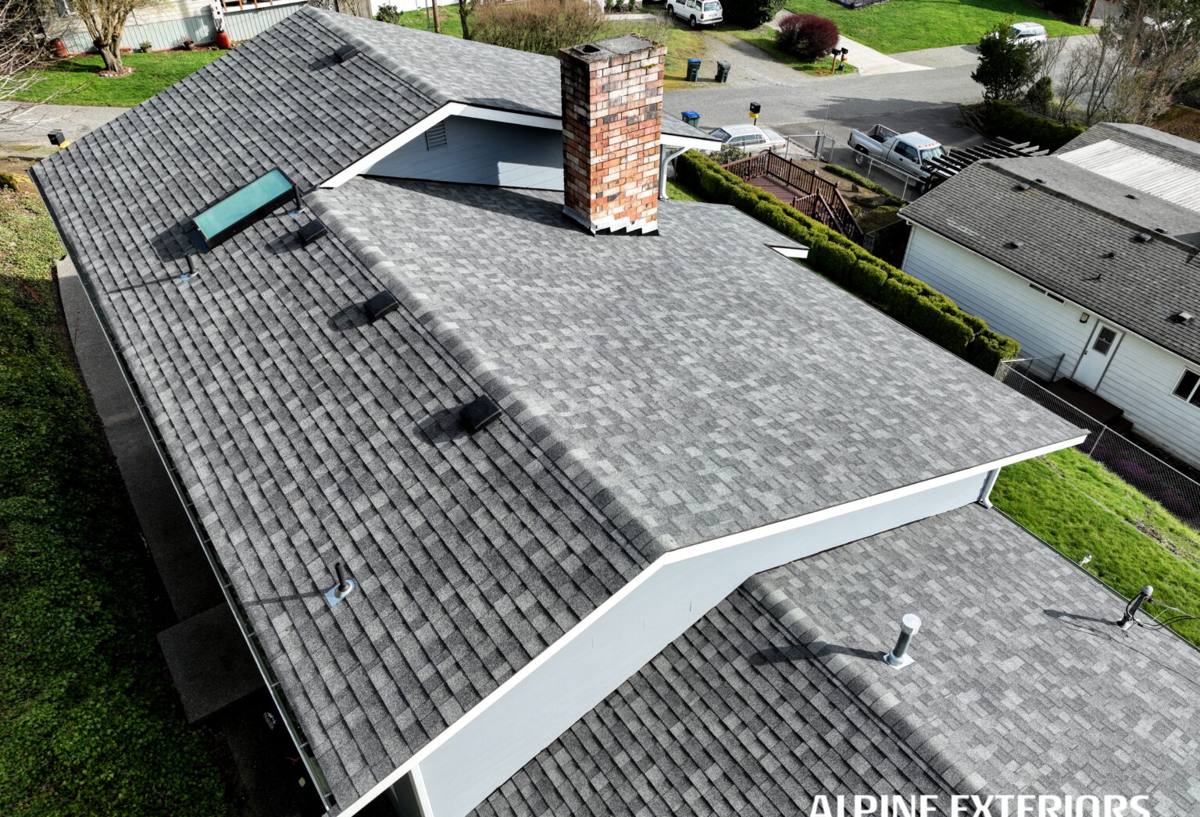
What This Climate Actually Demands From a Roof
Wind and Driving Rain
Storms coming off the Strait do not just drop rain straight down — they push it sideways, up under eaves, and into any gap in the flashing. A roof here needs a real water-shedding system underneath the metal, not just the panels themselves, because wind-driven rain will find any weak point in the underlayment or flashing detailing before it ever tests the panel seams.
Salt Air and Corrosion
Homes closer to Bellingham Bay and the waterfront see more airborne salt than homes further inland toward Lynden. Salt exposure accelerates corrosion on fasteners, cut edges, and any coating that gets scratched during installation. This is a material and detailing question as much as a maintenance one, and it is where a lot of metal roof problems start.
Shade, Moisture, and Moss
Whatcom County's tree cover and long wet season create ideal conditions for moss and algae to establish on a roof and stay there most of the year. Metal sheds this growth far better than asphalt shingles, but the roof still needs to be detailed so that debris and standing moisture do not collect in valleys, behind chimneys, or along low-slope transitions.
Standing Seam vs. Exposed-Fastener Metal Roofing
Most homeowners in this area are choosing between two general categories of metal roofing. Both can perform well in Bellingham's climate, but they behave differently over time and suit different budgets and roof shapes.
| Factor | Standing Seam | Exposed-Fastener (Screw-Down) |
|---|---|---|
| Fastening method | Concealed clips, no exposed screws through the panel face | Screws through the panel face into the deck |
| Long-term maintenance | Very low — no gaskets to inspect | Screw gaskets can wear and need occasional re-tightening or replacement |
| Upfront cost | Higher | Lower |
| Best fit | Primary roofs, homes closer to the water, longer ownership horizon | Shops, additions, budget-driven projects |
| Appearance | Clean, flat panel look with hidden seams | Visible fastener pattern, ribbed panel profile |
Our standard recommendation for a primary home roof here is standing seam, since exposed fasteners are one more point where salt air and driving rain can eventually work their way in. Exposed-fastener panels remain a legitimate option for outbuildings and budget-conscious projects when installed with the right gasketed screws and fastening pattern.
What a Correct Installation Involves
The panels themselves get most of the attention, but the layers underneath them are what actually determine whether a metal roof performs for decades or develops problems within a few years. On every metal roof we install, that means:
- A synthetic underlayment rated for the full roof, not just a code-minimum layer
- Self-adhered ice-and-water membrane at eaves, valleys, and any roof-to-wall transition, since these are the spots wind-driven rain attacks first
- Fastening or clip spacing set to the panel manufacturer's specification for our wind exposure, not a generic pattern
- Flashing custom-formed for the actual roof geometry — chimneys, skylights, and dormers are where most leaks originate on any roof type
- Proper ridge and soffit ventilation so moisture from inside the attic does not condense against the underside of the metal
Skipping any one of these does not usually show up as a problem in year one. It shows up in year five or ten, as a leak that traces back to a detail that was rushed at installation. This is the part of the job that is invisible once the roof is finished, which is exactly why it matters who is doing it.
Metal Roofing and Bellingham's Long Moss Season
Moss needs moisture, shade, and something to hold onto. Asphalt shingle granules give it plenty to grip, and once established, moss holds water against the roof surface and works its way under shingle tabs. Metal panels give moss almost nothing to anchor to, so it is far less likely to establish directly on the panel surface, even through a wet Whatcom County winter.
That does not mean a metal roof is maintenance-free in this climate. Needles, leaves, and moss spores still collect in valleys, against chimney crickets, and in low-slope sections, holding moisture against flashing and fasteners over time — so valleys and transitions still deserve an occasional look, especially on lots with heavy tree cover.
Salt Air: Material and Fastener Choices That Matter
Not all metal roofing materials handle coastal air the same way, and this is a place where cutting corners on spec is easy to hide until the corrosion shows up years later.
Panel Material
Galvalume steel is a solid standard choice for most homes in this area and holds up well with a quality paint finish. Aluminum resists corrosion even better and is worth the upgrade for homes closer to the water or anyone planning to own the home for decades. Bare or lower-grade galvanized steel is more vulnerable to salt exposure over time and is not what we recommend for this climate.
Fasteners and Flashing
Fasteners and flashing should match or be compatible with the panel material — mixing dissimilar metals without accounting for galvanic reaction is a common shortcut that causes premature corrosion right where you can see it, at the screw heads and edge trim. We spec fasteners and flashing metal specifically for salt-air exposure rather than defaulting to whatever is cheapest at the supply house.
Our Process, From Estimate to Cleanup
- On-site inspection of your current roof, deck condition, ventilation, and any problem areas like valleys or chimney flashing
- A written estimate that spells out panel material, gauge, underlayment, and flashing details — not just a total price
- Tear-off and deck inspection, with any soft or damaged sheathing replaced before anything else goes down
- Underlayment and ice-and-water membrane installed at all eaves, valleys, and wall transitions
- Panel installation with fastening or clip spacing set for our wind and rain exposure
- Custom-formed flashing at every penetration and transition
- Final walk-through and site cleanup, including a magnetic sweep for stray fasteners
We stay in communication throughout, and we do not consider a job finished until the flashing details and cleanup are done right, not just the visible panel work.
What Affects the Cost of a Metal Roof in Bellingham
Metal roofing costs more upfront than asphalt shingles, and the final number depends on more than just roof size. The biggest factors we run into on local homes are:
| Cost Factor | Why It Matters Here |
|---|---|
| Panel type and material | Standing seam and aluminum cost more than exposed-fastener steel but need less long-term maintenance |
| Roof complexity | Valleys, dormers, and multiple roof planes mean more custom flashing labor |
| Deck condition | Moisture damage from a prior roof, common under moss and debris buildup, may require sheathing repair |
| Tear-off vs. overlay | We do not recommend installing metal over old shingles on homes in this climate — trapped moisture is a real risk |
| Ventilation upgrades | Older homes often need ridge or soffit vent work added to prevent condensation under the metal |
We would rather walk you through these factors honestly during the estimate than give a number that does not hold up once we are on the roof.
Signs Your Current Roof May Be Ready for Replacement
- Moss or dark streaking that returns within a season or two of cleaning
- Granule buildup in gutters or at downspouts
- Curling, cracked, or missing shingles, especially on slopes facing prevailing wind and rain
- Soft spots or sagging when walked on, which can indicate deck damage underneath
- Rust staining or visible corrosion around existing flashing or fasteners
- Daylight visible through the attic or staining on interior ceilings after storms
- A roof original to the home and past the age where a shingle roof typically performs well in this climate
Any one of these on its own is not necessarily an emergency, but a couple together are usually a sign it is time for a real inspection rather than another round of patching.
Why It Matters That We Already Work in Bellingham
A crew that only occasionally works this close to the water tends to spec roofs the same way they would anywhere else in Whatcom County — and that generic approach is exactly where salt-air corrosion and wind-driven leaks show up a few years later. We know which panel and fastener combinations hold up near Bellingham Bay, which roof details take the worst of the driving rain, and where moss and debris actually cause problems on local roofs rather than just cosmetic buildup — pattern recognition that comes from working roofs in this specific area over time, not a manufacturer's spec sheet.
If you are weighing a metal roof for a home in Bellingham, we are happy to take a look, walk you through what your specific roof needs, and give you a straight answer — even if that answer is that a repair or a different material makes more sense for your situation. Use the form below to request a free, no-pressure estimate.