 Lynden Siding
 Why Birch Bay Siding Takes More Punishment Than Most
Birch Bay sits right on the water, and that changes what a house needs from its exterior. Salt-laden air moves off the bay and settles on every north- and west-facing wall, wind-driven rain finds its way into seams and laps that would stay dry twenty miles inland, and the combination of shade, moisture, and mild winters keeps moss and algae active for most of the year. None of that is unique to any one street or subdivision — it's simply what happens to a home built close to open saltwater in the Pacific Northwest.
Siding that isn't built for this environment shows it fast: chalking finishes, swollen edges on wood-based products, streaking below trim, and a green cast on shaded walls within a couple of seasons. The material matters, but so does how it's installed — flashing, gaps, and fastening decisions that are minor in a dry inland town become the difference between a wall that sheds water and one that traps it here.
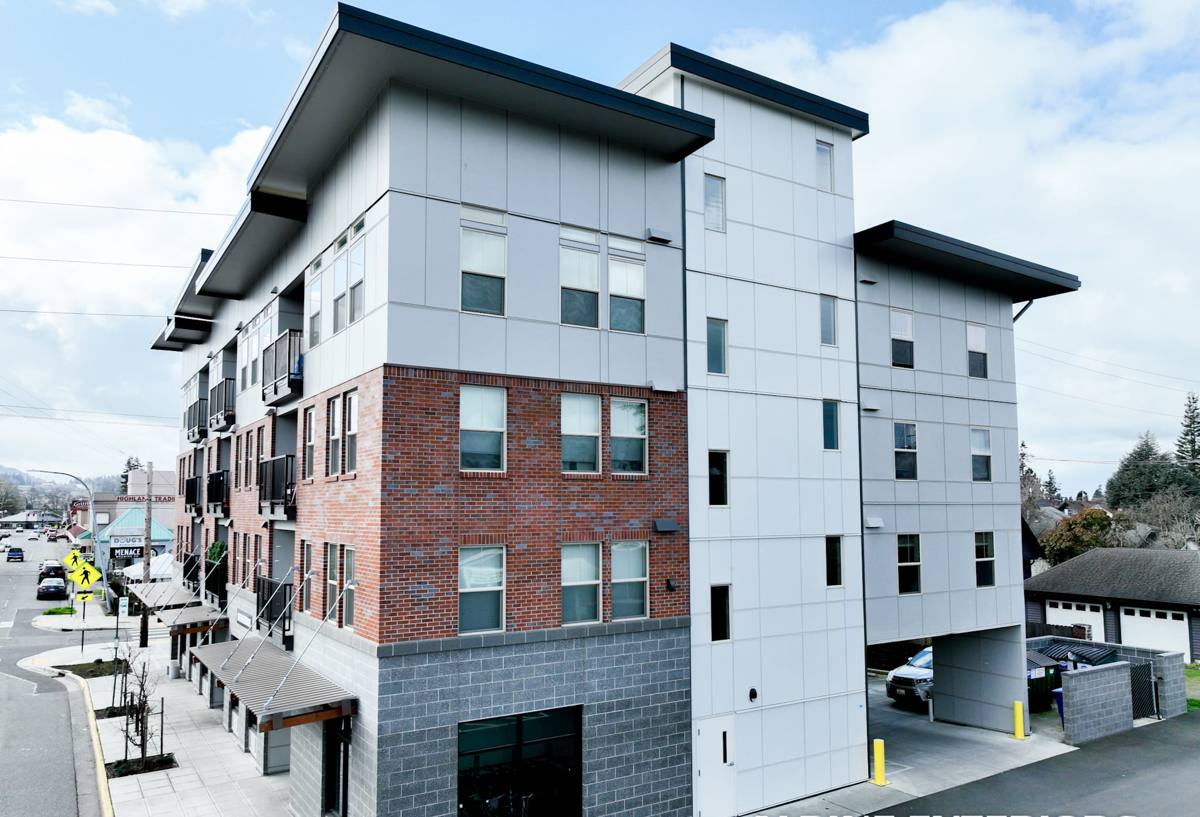
What a Coastal Environment Demands From a Siding System
A siding product facing Birch Bay's conditions needs to do three things well over the long haul:
- Resist moisture absorption at the board itself, not just at the surface finish
- Hold its factory color and texture against sun, salt, and repeated wetting without chalking or fading unevenly
- Stay dimensionally stable through wet winters and drier summers so joints, caulk lines, and paint don't crack from expansion and contraction
This is the reason we install James Hardie fiber cement exclusively and don't offer vinyl, LP SmartSide, Cemplank, Allura, primed spruce, or cedar. Each of those products has a reasonable case in the right setting. In a salt-air, high-rain coastal pocket like Birch Bay, the trade-offs — wood-based panels that absorb moisture at cut edges, vinyl that can warp and fade under sun and salt exposure, budget fiber cement lines without a climate-specific formulation — are trade-offs we're not willing to put on a home we're standing behind.
Why Fiber Cement Specifically
Fiber cement is a blend of cement, sand, and cellulose fibers, engineered to be dimensionally stable and non-combustible. It doesn't rot, it doesn't attract wood-boring insects, and it isn't a food source for the moss and algae that thrive in Birch Bay's shaded, damp microclimates. That last point matters more here than in most parts of Whatcom County — moss doesn't just sit on top of fiber cement the way it can work into wood grain or vinyl seams, which makes routine cleaning far less destructive to the material underneath.
The James Hardie HZ5 Line and Why It's the Right Fit
James Hardie engineers its siding by climate zone, and the Pacific Northwest falls under the HZ5 designation — the line built specifically for regions with sustained moisture exposure, freeze-thaw cycling, and coastal humidity. HZ5 products are formulated with that moisture and climate profile in mind, which is a meaningfully different product than a generic fiber cement board sold nationally without regional engineering.
For a Birch Bay home, that shows up in a few practical ways: the board's resistance to moisture-related swelling at cut edges when properly sealed, its stability against the temperature swings that come with a marine climate, and a factory finish designed to hold color through UV and salt exposure rather than relying on field-applied paint that has to be recoated every few years.
ColorPlus Technology in a Salt-Air Setting
James Hardie's ColorPlus finish is baked on in a controlled factory environment, which gives it more consistent coverage and better fade resistance than a job-site paint job. In a location where salt film builds up on siding between rains, a factory finish that's engineered to resist that exposure holds its look longer and needs less field touch-up than a painted alternative. It's not a substitute for periodic rinsing, but it removes a lot of the maintenance burden that comes with painted wood or lower-grade panels.
What Correct Installation Involves Here
James Hardie siding is only as good as the installation behind it, and coastal exposure raises the stakes on details that are easy to skip. A correct install on a Birch Bay home includes:
- Proper water-resistive barrier and rainscreen or drainage plane behind the siding, so any moisture that does get past the cladding has somewhere to go
- Correct flashing at every window, door, and roofline intersection — the majority of moisture problems on coastal homes start at these transitions, not the field of the wall
- Manufacturer-specified fastener spacing and type, using stainless or hot-dip galvanized fasteners suited to a salt-air environment rather than standard fasteners that corrode faster near the water
- Correct gaps and sealant at butt joints, trim, and penetrations, following James Hardie's published installation instructions rather than generic fiber cement practices
- Board and trim primed and painted on cut edges before installation, since exposed raw edges are the most common point of moisture entry on any fiber cement job
Skipping any one of these doesn't usually cause a visible problem in year one. It shows up in year four or five as staining, soft trim, or a warranty claim that gets denied because the installation didn't meet manufacturer specifications — which is a genuine risk, since James Hardie's transferable warranty is conditioned on proper installation.
Moss, Algae, and Ongoing Maintenance
Even the right material needs some upkeep in this climate. Fiber cement doesn't feed moss or algae the way wood can, but organic growth can still form on the surface, especially on shaded north walls or under overhangs where the siding stays damp longer between dry spells. The maintenance routine we recommend is straightforward:
- A gentle rinse once or twice a year to clear salt residue, pollen, and surface debris before it builds up
- Prompt attention to any moss or algae growth with a soft wash approach — avoiding high-pressure washing, which can force water behind laps and trim
- A periodic check of caulking at trim and penetrations, since sealant is the first thing to age out, well before the siding itself shows wear
- Keeping vegetation and sprinklers from holding moisture directly against the wall, which is one of the most common causes of localized staining we see on coastal homes
Comparing Options for a Coastal Whatcom County Home
| Factor | James Hardie HZ5 Fiber Cement | Vinyl | Wood-Based Panels (LP SmartSide, cedar) |
|---|---|---|---|
| Moisture behavior | Engineered for sustained coastal exposure | Doesn't absorb, but can warp/distort with heat and impact | Absorbs at cut edges and seams; needs consistent sealing |
| Organic growth resistance | Doesn't feed moss/algae; surface growth cleans off | Growth sits on surface, can trap in seams | More susceptible to moss taking hold in grain/texture |
| Finish durability in salt air | Factory ColorPlus finish, engineered fade resistance | Color molded in, but can chalk and fade with UV/salt | Field-applied paint/stain, shorter recoat cycle |
| Fire resistance | Non-combustible | Combustible | Combustible |
| Typical maintenance | Periodic rinse, occasional caulk check | Low, but repairs can be visible/hard to match | Regular repainting/staining, edge sealing |
Our Process for Birch Bay Homes
Every job starts with an on-site walk of the home, looking specifically at sun and shade exposure, wind direction relative to the water, and any existing moisture issues around windows, decks, or roof transitions. From there we put together a written scope covering the specific James Hardie products, trim details, and flashing plan for that house — not a generic estimate. During installation we follow James Hardie's published fastening and clearance specifications to the letter, because that's what keeps the manufacturer's warranty intact and keeps the wall system doing its job for decades, not just years.
We also check drainage details most homeowners never think about: grade slope away from the foundation, gutter performance, and whether soil or mulch is sitting too high against the base of the wall. Siding is one part of a home's water management system, and treating it that way is part of doing the job right in a place like Birch Bay.
What to Ask Before Hiring for a Coastal Siding Job
- Are you installing James Hardie's HZ5 product line, engineered for this climate zone, or a generic fiber cement product?
- What fastener type will be used, and is it rated for salt-air corrosion resistance?
- What's the flashing detail at windows, doors, and rooflines — can you walk me through it before work starts?
- Is a rainscreen or drainage plane included behind the siding?
- Will cut edges be sealed and primed before installation, not after?
- Does your crew regularly work in Birch Bay or similar coastal areas, or is this an unfamiliar environment for them?
A contractor who can answer these clearly, without hedging, is one who understands what this specific stretch of coastline does to a house. That's not a small thing — the same siding product installed correctly in Birch Bay and installed correctly in a drier inland town can still fail differently if the installer doesn't adjust for salt exposure and rain direction.
Why a Local Crew Matters Here
A crew that already works Birch Bay and the surrounding Whatcom County coastline has seen how these homes actually age — which walls take the worst of the salt and wind, where moss shows up first, and which flashing details tend to get missed on homes built to inland standards. That's knowledge that doesn't come from a spec sheet; it comes from being back on these streets for repairs, warranty checks, and second opinions after other contractors' work. It's also why we stay a single-product company: mastering one system well, in one region's conditions, beats installing five products across the board and getting good at none of them for this specific climate.
If you're weighing a siding replacement or repair on a Birch Bay home, we're glad to take a look and talk through what your specific walls need. Reach out for a free, no-pressure estimate using the form below.