 Lynden Siding
 Roof Repair Built for Birch Bay's Coastline
Birch Bay sits right on the water in Whatcom County, and that waterfront position is exactly what makes roof repair here different from a job a few miles inland. Salt-tinged air moves off the bay and works on exposed metal and fasteners year-round. Rain doesn't fall straight down as often as it should — wind off the water pushes it sideways and up under shingle edges, flashing laps, and vent boots that a straight-down rain would never reach. And a long, mild moss season lets growth take hold on shaded and north-facing roof planes for months at a stretch, not just a few weeks in late winter. A repair that doesn't account for all three of those stresses tends to fail again within a season or two.
This page covers roof repair specifically for Birch Bay homes: what the local climate actually does to a roof, how to tell a real repair from a patch, what our process looks like, and why a crew that already works this stretch of coastline handles it differently than one that doesn't.
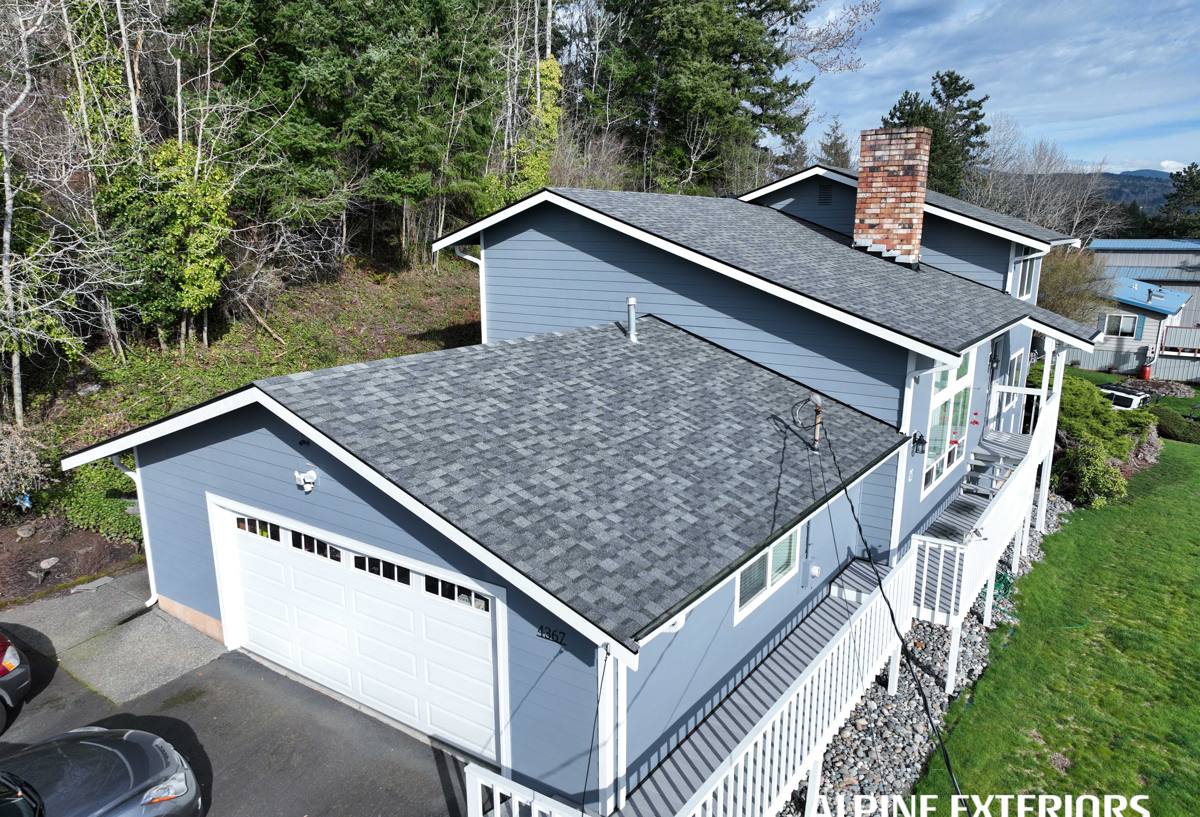
What Birch Bay's Climate Does to a Roof
Salt Air and Corrosion
Homes directly on or near the water take on salt-laden air that accelerates corrosion on unprotected metal far faster than the same roof would corrode a few miles inland. Flashing, fasteners, vent caps, and gutter hardware are usually the first things to show it — rust streaks, pitting, or fasteners that back out as the metal degrades around them. Once flashing corrodes enough to open a gap, water gets a direct path under the roofing material.
Wind-Driven Rain
Waterfront exposure means wind-driven rain is a regular event here, not an occasional storm condition. That matters for repair work specifically because a leak caused by wind-driven rain often shows up somewhere other than where the water actually entered — it can travel along the underlayment or roof deck before dripping through in a visible spot, which is why a proper repair starts with finding the real entry point rather than patching wherever the ceiling stain appears.
A Long Moss Season
Mild, damp conditions for much of the year give moss and algae a long window to establish on any roof plane that stays shaded or slow to dry. Moss isn't just cosmetic — it holds moisture directly against the roofing surface, works under shingle tabs as it spreads, and can lift material enough to create a path for water that wasn't there when the roof was new. Repairs on a moss-affected roof usually need to include removal and treatment, not just a fix to the specific leak.
Repair or Replace? An Honest Read
Most homeowners calling about a leak want to know one thing first: is this a repair, or am I looking at a new roof? We give a straight answer based on what we actually find, not on which answer is more profitable for us. A few things drive that decision:
| Factor | Usually Points to Repair | Usually Points to Replacement |
|---|---|---|
| Roof age | Well within the material's rated lifespan | At or past the end of its rated life |
| Extent of damage | Localized to one area or penetration | Spread across multiple slopes or the whole roof |
| Deck condition | Solid, dry sheathing under the affected area | Soft spots or rot found at the deck |
| Repair history | First or second repair in this location | Repeated patches at the same spot over the years |
| Moss/moisture exposure | Light to moderate, addressable with treatment | Heavy, long-term growth with visible material lifting |
A roof with one bad flashing detail and an otherwise sound deck is almost always a repair. A roof nearing the end of its service life with soft decking and moss damage spread across several planes is more honestly addressed with replacement, even if a patch could technically buy another season. We'll walk the roof, show you what we found, and explain the reasoning either way.
What a Correct Roof Repair Actually Involves
A repair that holds up on a Birch Bay roof takes more than swapping out a few visibly damaged shingles. Our process for a repair typically includes:
- Tracing the leak to its actual entry point, not just the spot where water became visible inside
- Removing and replacing damaged, cracked, or missing roofing material back to sound, dry substrate
- Inspecting and re-sealing or replacing flashing at valleys, chimneys, vent pipes, and roof-to-wall transitions
- Checking underlayment condition around the repair area, since deteriorated underlayment under intact shingles can keep a leak active
- Removing moss and treating the surrounding area if growth contributed to the failure
- Confirming attic or roof deck ventilation isn't trapping moisture that will undermine the repair from underneath
- Matching replacement material as closely as possible so the repair doesn't stand out or create a new weak seam
Skipping any of these to save time on a Birch Bay roof usually means the same leak, or one nearby, reappears within a wet season or two. Flashing and underlayment work don't cost much relative to the visible shingle repair, but they're the part that actually determines whether the fix lasts.
Signs a Birch Bay Roof Needs Repair
Some of these are obvious from the ground; others only show up once you're looking closely or checking the attic. Worth a look if you notice:
- Water staining on interior ceilings or walls, especially near exterior walls, chimneys, or skylights
- Missing, curled, cracked, or lifted shingles, particularly after a windstorm off the water
- Moss buildup on shaded or north-facing slopes that keeps coming back after cleaning
- Granules collecting in gutters or at the base of downspouts, a sign of accelerated shingle wear
- Rust streaking or visible corrosion on flashing, vent caps, or gutter hardware
- Daylight visible through the roof deck from inside the attic
- Soft or spongy spots when the roof is walked, which can indicate deck rot underneath
- Flashing that looks lifted, gapped, or missing sealant around penetrations
Any single item on that list is worth a professional look before the next round of wind-driven rain finds its way in. Caught early, most of these are a straightforward repair. Left through another wet season, several of them compound into deck damage that costs a lot more to fix.
Where Leaks Actually Start Most Often
In our experience, the majority of Birch Bay roof leaks trace back to a small set of locations rather than failed shingle material itself: valleys where two roof planes meet and water concentrates, flashing around chimneys and vent pipes where metal meets roofing material, and roof-to-wall transitions where a poorly lapped detail lets wind-driven rain work its way in sideways. Knowing this up front is part of why we start a repair inspection at these spots rather than only at the visible stain.
How Our Repair Process Works
1. Inspection and Diagnosis
We start with a full look at the affected area and the roof as a whole, not just the spot where the leak became visible. That includes checking the attic where accessible, since interior signs of moisture often tell us more about the real extent of the problem than what's visible from the ground or a ladder.
2. A Clear, Written Estimate
Before any work starts, you get a written scope and price for the specific repair we recommend, along with the reasoning behind it. If the roof's condition points toward replacement being the more honest answer, we'll tell you that instead of running up billable repairs on a roof that's past the point where patching makes financial sense.
3. The Repair Itself
Work follows the checklist above — damaged material removed back to sound substrate, flashing and underlayment addressed as needed, moss treated where relevant, and replacement material matched as closely as possible. Most single-location repairs are completed in a day, though scope and weather can extend that.
4. Final Walkthrough
We walk you through what was done and why, including anything we found that's worth keeping an eye on going forward, even if it didn't need immediate attention this visit.
Why a Crew That Already Works Birch Bay Matters
A contractor who works this stretch of coastline regularly has already seen how salt air, wind-driven rain, and a long moss season interact on real roofs over years, not just how a product is rated on a spec sheet. That translates into practical judgment on a repair call: knowing which flashing details are worth upgrading while a section is already open, recognizing moss patterns that signal a ventilation problem rather than just a cosmetic one, and understanding the difference between a waterfront exposure roof and one a few miles inland that doesn't take the same salt and wind load. It also means fewer surprises and fewer callbacks, because the repair accounts for conditions the roof will actually face, not generic assumptions.
Maintenance That Extends a Repair's Life
A well-done repair still benefits from some basic upkeep, especially in a climate like Birch Bay's. A short list worth keeping in mind between professional inspections:
| Task | Why It Matters Here | Rough Frequency |
|---|---|---|
| Gutter and downspout cleaning | Clogged gutters back water up under eaves and shingle edges | Twice a year, more under trees |
| Moss removal on shaded slopes | Prevents regrowth from undoing repair work | Annually or as needed |
| Visual check after major windstorms | Wind off the water can lift or crack material quickly | After any significant storm |
| Attic moisture check | Catches trapped moisture before it causes deck damage | Annually, ideally before winter |
Beyond the Repair: Siding and the Rest of the Exterior
Roof repair is often where a Birch Bay call starts, but the same salt air and wind-driven rain that wears on a roof works on the rest of the exterior too. Where a repair turns up moisture damage at a wall-to-roof transition, or trim and siding nearby that's already showing wear, we can address it as part of the same visit instead of sending you to track down a second contractor. We install James Hardie fiber cement siding as our standard for this climate, chosen specifically for how it holds up against sustained moisture compared to lower-cost alternatives that need more upkeep on a waterfront property like this.
If you're dealing with a leak, storm damage, or just want an honest read on a Birch Bay roof's condition, we're glad to take a look and give you a clear, no-pressure estimate. Use the form below to schedule a free visit.