 Lynden Siding
 Why Decks in Blaine Wear Out Differently Than Decks Inland
Blaine sits right on the water, and that changes how a deck ages. Between Drayton Harbor and Semiahmoo Bay, homes here get a steady dose of salt-laden air that inland Whatcom County properties simply don't deal with. Add in driving rain off the Strait of Juan de Fuca and a moss season that can stretch from October well into April, and you've got a set of conditions that will find every weak point in a deck's construction within a few years, not a few decades.
We work on decks throughout the Lynden and Blaine area, and the failure patterns we see near the water are consistent: corroded fasteners, ledger boards that have quietly rotted behind the siding, and decking boards that trap moss and moisture in the grain until the wood underneath gives out. None of this is unusual for the location — it's just what salt air and prolonged dampness do to lumber and hardware over time. A deck built without that reality in mind is on borrowed time from day one.
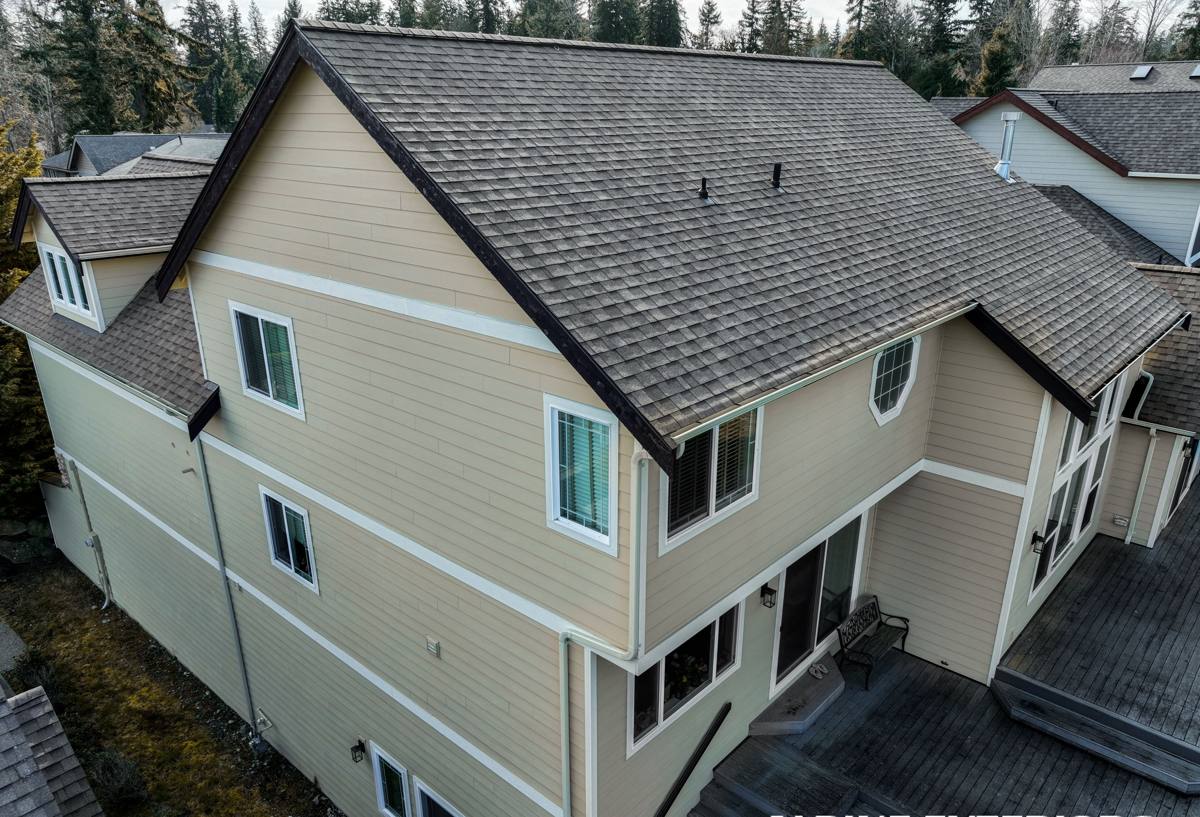
Signs a Blaine Deck Needs Replacement, Not Just Repair
Homeowners often ask us to "fix a few boards" when the underlying structure has already failed. A repair only makes sense when the framing, footings, and ledger connection are still sound. Here's how to tell which situation you're in:
- Boards feel spongy or spring underfoot in multiple spots, not just one isolated area
- Visible gaps, cracking, or splintering along more than a few boards, especially where moss has been sitting
- Rust streaks running down from fasteners or joist hangers
- The deck feels like it moves or sways slightly when several people are standing on it
- Soft or discolored wood where the deck ledger meets the house
- Persistent black-green staining that returns within weeks of cleaning
If you're only seeing one or two of these, a repair may buy you a few more years. If you're seeing three or more, especially the ledger discoloration or structural movement, replacement is almost always the more honest recommendation — and the safer one.
The Ledger Board Problem
The ledger board — where the deck attaches to the house — is the single most common point of hidden failure we find on older decks in this area. Rain that runs down siding, combined with condensation and inadequate flashing, can rot the ledger and the rim joist behind it for years without any visible sign from the deck surface. By the time boards start feeling soft near the house, the damage is often already extensive. This is one of the main reasons we don't recommend patch repairs on decks over 15-20 years old without first opening up and inspecting the ledger connection.
What a Correct Deck Replacement Actually Involves
A deck replacement is more than swapping old boards for new ones. Done right, it's a full evaluation and rebuild of everything underneath the surface you walk on:
- Ledger board and flashing: Removed and replaced with proper self-adhering flashing tape and a drip cap that directs water away from the house sheathing, not into it.
- Footings: Inspected for frost heave, rot, or undersized concrete, and brought up to current code depth and diameter where needed.
- Framing and joists: Sized and spaced to current code for the actual decking material chosen, since composite and PVC products often call for tighter joist spacing than traditional lumber.
- Fasteners and hardware: Stainless steel or heavy hot-dip galvanized hardware throughout — coastal air corrodes standard zinc-coated fasteners far faster than manufacturers' ratings assume.
- Decking surface: Installed with proper gapping for drainage and airflow, which matters more here than almost anywhere else in the county because of how long surfaces stay damp.
- Railings and stairs: Rebuilt to current code, which has tightened in recent years around baluster spacing and guard height.
Choosing the Right Decking Material for This Climate
There's no single "best" decking material — there's a best material for your budget, your maintenance appetite, and your specific exposure to salt air and rain. Here's how the common options actually compare for a coastal Whatcom County property:
| Material | Upfront Cost | Maintenance in Salt Air | Typical Lifespan Here | Best For |
|---|---|---|---|---|
| Pressure-treated lumber | Lowest | Annual cleaning and re-staining/sealing recommended | 10-15 years | Budget-conscious owners willing to keep up maintenance |
| Cedar | Moderate | Regular sealing; grays quickly without upkeep near salt air | 12-18 years | Homeowners who want a natural look and don't mind upkeep |
| Composite decking | Higher | Occasional washing; no staining or sealing needed | 25-30 years | Owners who want low upkeep and consistent appearance |
| PVC/capped polymer | Highest | Minimal; most resistant to moisture and staining | 25-30+ years | Full waterfront exposure, minimal-maintenance priority |
For properties closest to the water in Blaine, we lean toward steering clients away from uncapped wood products unless they genuinely enjoy the upkeep — the combination of salt air and long wet stretches accelerates graying, cupping, and fastener corrosion faster than most people expect. That's a maintenance and moisture-behavior tradeoff, not a knock on wood as a material; plenty of homeowners are happy to reseal every year or two and get a natural look in return. Composite and PVC products cost more up front but hold up with far less intervention, which matters when winter storms make it hard to get outside and do upkeep for weeks at a time.
Framing and Fastener Choices Matter More Here Than Inland
A lot of deck failures near the water aren't decking problems at all — they're hardware problems. Standard electro-galvanized screws and joist hanger nails corrode noticeably faster within a few miles of salt water. We use stainless steel or heavy-duty coated fasteners rated for coastal exposure on every replacement we do in this area, and we spec joist hangers and structural connectors the same way. It costs more than standard hardware, but replacing a deck's structural hardware again in eight years because it rusted through isn't a savings — it's a deferred expense with interest.
Our Deck Replacement Process
We keep the process straightforward and try to minimize surprises once work is underway:
- On-site assessment: We inspect the existing deck, ledger connection, footings, and framing to determine the real scope — not just what's visible from the surface.
- Written estimate: A clear scope of work and pricing before anything is torn out, including material options so you can compare tradeoffs.
- Permitting: Deck replacements of most sizes require a permit in Whatcom County and the City of Blaine. We handle the application and inspections as part of the job.
- Demolition and disposal: Old decking, framing, and hardware removed and hauled off, with an eye toward what the old materials tell us about how the new deck should be built differently.
- Rebuild from the ground up: Footings, framing, ledger and flashing, decking, and railings installed to current code, in that order.
- Final walkthrough: We go over the finished deck together, including basic maintenance guidance specific to whatever material you chose.
Permits and Code Requirements to Know About
Most deck replacements in Blaine and the surrounding Whatcom County area require a building permit, particularly when the deck is attached to the house or elevated more than a couple feet off grade. Permit review typically checks footing depth (frost line requirements matter here), ledger attachment method, joist spacing for the chosen decking material, and guard/railing height and baluster spacing. Skipping the permit process might save a little time up front, but it can create real problems at resale, since unpermitted structural work often has to be opened up and re-inspected before a home sale can close. We pull permits as a standard part of every replacement — it's not an upsell, it's how the job gets done correctly.
Moss, Drainage, and Long-Term Deck Health
Whatcom County's moss season isn't just a cosmetic nuisance — trapped moisture under moss growth is one of the fastest ways to shorten a deck's life, wood or composite alike. Correct board spacing, joist-level airflow, and a slight slope away from the house all matter more here than in drier parts of the state. A few habits go a long way between our visits:
- Sweep debris and moss out of board gaps a few times each fall and winter, not just once in spring
- Keep planters and furniture with solid bottoms up off the deck surface, or use feet that allow airflow underneath
- Rinse salt residue off the surface periodically if the deck faces the water directly
- Check the ledger flashing area annually for any new staining or gaps in caulking
- Clear gutters and downspouts near the deck so runoff isn't draining directly onto or under it
Why Hiring a Crew That Already Works in Blaine Matters
Deck construction that works fine in a drier, inland part of Washington can fail early right on the water. A crew that regularly works Blaine and the surrounding Lynden area already knows to spec coastal-grade fasteners as standard, to pay extra attention to ledger flashing details, and to talk through material tradeoffs honestly rather than defaulting to whatever's cheapest to install. That familiarity with local conditions, combined with knowing how Whatcom County and Blaine permitting actually works in practice, tends to mean fewer surprises and a deck that's still solid well past its first decade.
If your deck is showing its age, or you're just not sure whether repair or replacement makes sense for your situation, we're happy to take a look and walk you through it honestly. There's a form below if you'd like to set up a free, no-pressure estimate.