 Lynden Siding
 Composite Decking Built for Custer's Weather, Not Against It
Custer sits close enough to the water that homes here deal with a different kind of wear than decks built further inland. Salt-laden air off the Strait works into fasteners and framing hardware. Driving rain off Whatcom County storms gets pushed sideways under railings and around post bases. And for a good chunk of the year, moss and algae find every shaded, damp surface they can hold onto. A deck built without those three things in mind will look tired within a few seasons, no matter what material it's made from.
Composite decking earns its keep in this environment when it's specified and installed correctly. That's a different statement than "composite decking is maintenance-free" — it isn't, not entirely, and we won't tell you it is. What it does well is resist the specific failures that wood struggles with here: it doesn't absorb water the way lumber does, it won't split or cup from repeated wet-dry cycles, and it doesn't need annual staining to hold its color. The tradeoff is that surface care — especially moss and algae control — still matters, and installation details matter even more than the board itself.
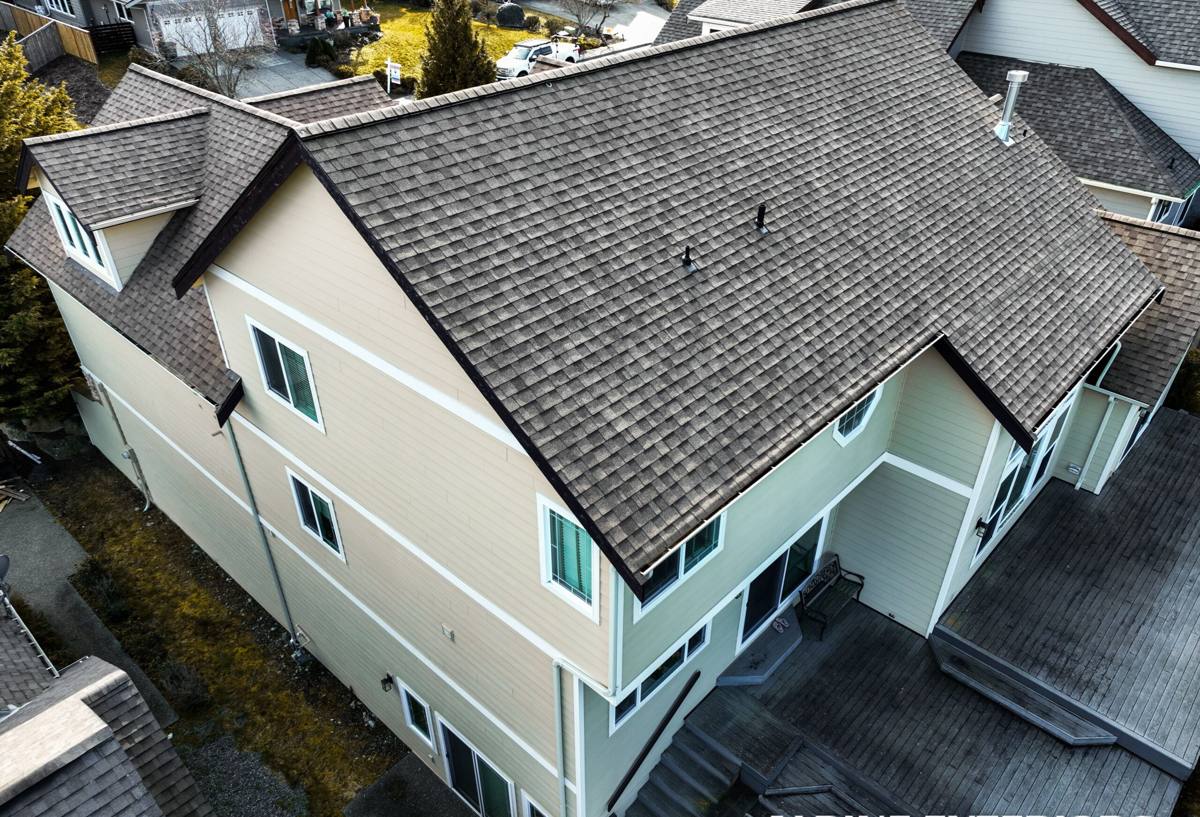
What Custer Homes Actually Need From a Deck
Most of the decks we look at in this area share a few things in common: they're within a mile or two of open water or wetlands, they see a lot of shade from mature trees or the house itself, and they go through long stretches of damp weather without much drying time in between. That combination changes how we think about a build.
Salt Air and Hardware
Fasteners, joist hangers, and post hardware take the first hit from salt exposure. Standard galvanized hardware can start showing surface corrosion faster near the water than it would ten or fifteen miles inland. We spec stainless steel or heavy-duty coated hardware rated for coastal exposure on Custer builds — it costs more up front and it's the difference between hardware that lasts the life of the deck and hardware that needs attention in year six or seven.
Driving Rain and Water Path
Rain in this part of Whatcom County doesn't always fall straight down. Wind-driven rain gets under rail caps, behind fascia boards, and into any gap that isn't flashed or sealed correctly. The deck itself needs a clear path for water to shed — proper board spacing, correct fastener pattern, and flashing where the deck meets the house — so water moves off the structure instead of sitting against it.
Moss, Algae, and Shade
Composite boards resist rot, but they're still a surface, and any damp surface in a shaded Custer yard can grow moss or algae over time. The boards that hold up best have a cap layer designed to resist organic growth, and the deck itself needs enough airflow underneath and around it to help things dry between rain events.
Composite vs. Wood: An Honest Comparison for This Climate
We install both, and the right choice depends on budget, how the deck will be used, and how much upkeep the homeowner actually wants to do. Here's how they compare specifically for a wet, coastal-adjacent property like the ones in and around Custer.
| Factor | Composite Decking | Pressure-Treated Wood |
|---|---|---|
| Moisture resistance | Doesn't absorb water into the board; resists cupping and splitting | Absorbs moisture; prone to cupping, splitting, and checking over time |
| Annual maintenance | Periodic cleaning to control moss/algae; no staining | Regular cleaning plus staining or sealing every 1-2 years |
| Upfront cost | Higher material cost | Lower material cost |
| Long-term cost | Lower — no refinishing cycle | Higher over 15-20 years once refinishing labor is factored in |
| Fastener/hardware sensitivity | Still requires coastal-grade hardware near saltwater exposure | Requires coastal-grade hardware; wood movement can loosen fasteners faster |
| Appearance over time | Consistent color, fades slowly and evenly | Grays and weathers unevenly without upkeep |
Neither option is "wrong." A homeowner who enjoys yearly deck maintenance and wants the lowest upfront cost may be perfectly happy with treated wood. A homeowner who wants to spend their weekends doing something other than sanding and staining, especially given how many gray, damp weekends this area gets, tends to lean composite.
What a Correct Composite Deck Installation Involves
The board is only part of the job. Most composite deck problems we get called to fix — soft spots, staining, boards that have started to bow — trace back to how the substructure and drainage were handled, not a defect in the decking itself.
Framing and Substructure
Joists and beams need to be sized and spaced for the specific composite product being used — composite boards flex differently than wood and many manufacturers require tighter joist spacing than a standard wood deck. Skipping this step is one of the most common shortcuts that leads to a bouncy or sagging deck a few years in.
Ledger and House Connection
Where the deck attaches to the house is the single most important waterproofing detail on the whole project. Flashing has to be installed correctly, in the right order relative to the siding or house wrap, so water sheds away from the structure instead of tracking behind the ledger board and into the wall assembly.
Ventilation Underneath
Composite decks need airflow beneath the boards to help moisture escape after rain. Low-clearance decks or ones built tight against grade trap dampness underneath, which shows up later as staining, mold, or a musty smell around the deck's perimeter.
Hardware Grade
As mentioned above, this isn't optional for a property near the water — it's a build standard.
Our Process for a Custer Composite Deck Project
- On-site assessment. We look at the existing structure (if replacing a deck), the grade, drainage, sun/shade exposure, and how the deck ties into the house.
- Material selection. We walk through composite board options, cap styles, and color choices based on your budget and how the deck will be used.
- Written estimate. Clear scope, materials, and pricing before any work starts — no surprise change orders for things we should have caught up front.
- Framing and structure. Joists, beams, and footings built or verified to spec for the composite product chosen, with coastal-grade hardware throughout.
- Flashing and waterproofing. Ledger connection and any transitions against the house are flashed and sealed correctly before decking goes down.
- Decking installation. Boards installed to manufacturer spacing and fastening specs, with attention to drainage and airflow underneath.
- Final walkthrough. We go over care basics with you — what routine cleaning looks like and what to watch for over the first year.
Caring for a Composite Deck in Whatcom County
Composite decking cuts down on maintenance significantly, but "low-maintenance" isn't "no-maintenance," especially in a climate that stays damp for months at a time. A little routine care goes a long way toward keeping a deck looking good and shedding water the way it should.
- Sweep debris and leaves off the deck regularly, especially in fall — trapped organic matter holds moisture against the boards and feeds moss growth.
- Rinse the deck a few times a year with a garden hose and a soft-bristle brush to knock down early moss and algae before it takes hold.
- Avoid pressure washing at close range or high PSI — it can damage the cap layer on some composite products.
- Keep gutters and downspouts near the deck clear so runoff isn't dumping directly onto or under the structure.
- Check underneath the deck once a year for standing water, debris buildup, or signs of poor drainage.
- Inspect railing posts and ledger flashing annually — these are the spots most likely to show an early problem if water is getting where it shouldn't.
Why It Matters to Hire a Crew That Already Works in Custer
A lot of decking problems we're called to repair weren't caused by bad composite material — they were caused by a build that didn't account for local conditions. A crew that hasn't worked much near the water might not think twice about standard hardware, or might not flash a ledger connection with wind-driven rain in mind. Those are small decisions on a plan set that turn into real problems five or ten years down the road.
We work on homes throughout Lynden and the surrounding Whatcom County communities, including Custer, and we build with the salt air, rain patterns, and moss season in mind because that's what the properties out here actually face. That's not a marketing line — it's the difference between specifying standard hardware and coastal-grade hardware, or between a deck that sheds water cleanly and one that traps it.
Get a Straight Answer on Your Deck Project
Every property is a little different — sun exposure, grade, how close you are to the water, what's already there if you're replacing an old deck. We'd rather walk your specific site than guess over the phone. If you're in Custer and thinking about a composite deck, reach out for a free, no-pressure estimate using the form below. We'll look at what you've got, talk through honest options, and give you a clear scope and price before anything starts.