 Lynden Siding
 Composite Decking Built for Deming's Conditions, Not a Showroom
Deming sits back from the open water along the Nooksack River valley, closer to the foothills than downtown Lynden. That location changes what a deck actually has to survive. Instead of constant salt-laden wind off the water, homes here deal with heavier tree cover, more shade on the deck surface for longer stretches of the day, and rain that sits rather than blows through quickly. Add in Whatcom County's long wet season and you get a specific combination: less direct sun to dry a deck out, more standing moisture, and ideal conditions for moss and algae to take hold on any surface that stays damp.
Composite decking is a good answer to that combination when it's installed correctly. It doesn't rot, it doesn't need yearly staining, and modern capped boards resist the kind of moisture absorption that turns a wood deck soft at the edges after a few Whatcom County winters. But composite is not maintenance-free, and it is not installation-proof. A deck built without attention to drainage, airflow, and substructure moisture control will grow moss and mildew just as readily as a wood deck — sometimes faster, because composite surfaces hold surface film differently than wood grain does.
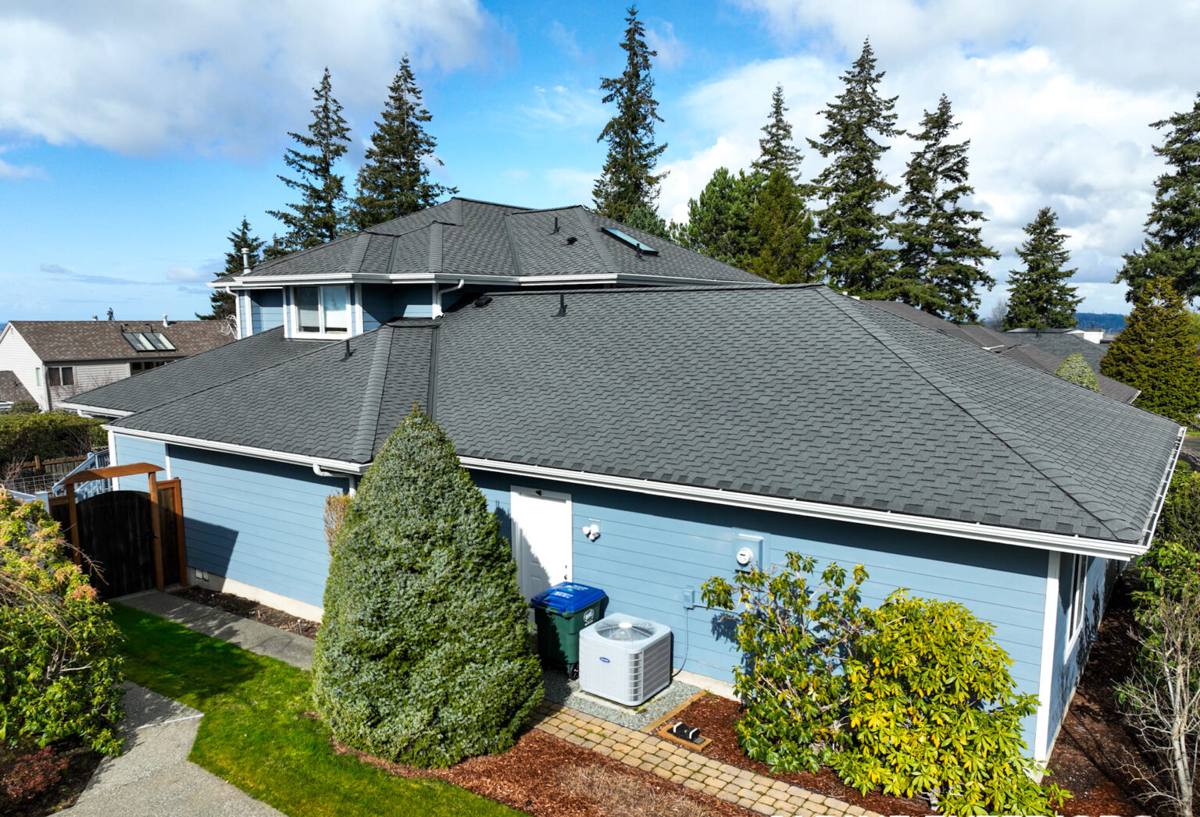
What a Correct Composite Deck Installation Requires in This Climate
The composite boards themselves get most of the attention, but the parts underneath and behind them determine whether the deck actually performs over the next 20-plus years. In a shaded, high-rainfall area like Deming, we pay particular attention to:
- Ledger board flashing — where the deck attaches to the house, proper flashing and a water-resistant barrier keep rain from working its way behind the siding and into the wall framing. This is one of the most common failure points on older decks we're asked to replace.
- Joist tape and hardware — covering the tops of pressure-treated joists with a self-adhering flashing tape before the decking goes down blocks water from pooling on bare wood and accelerating rot from the inside out, where you can't see it.
- Airflow underneath the deck — adequate ground clearance and joist spacing so air can move through the substructure. In shaded yards this matters more, since the ground under the deck dries out slowly.
- Board gapping — correct spacing between composite boards lets water drain through rather than sheet across the surface, which reduces the standing moisture that feeds moss growth.
- Hidden fastener systems — properly installed hidden fasteners avoid the small pooling points that screw heads can create, and keep the board free to expand and contract with temperature and moisture without cracking.
None of this is visible once the deck is finished, which is exactly why it's worth asking a contractor how they handle it before work starts.
Substructure and Soil Considerations Around Deming
Properties in and around Deming often sit on ground that holds moisture longer than in-town Lynden lots, particularly where tree canopy shades the yard for most of the day. That affects footing placement and depth, drainage grading around the base of the deck, and how quickly a post base can dry after a wet stretch. We check local frost depth and drainage conditions on-site rather than assuming a standard footing spec will hold up — undersized or poorly drained footings are a common cause of a deck that develops a slight lean or bounce within a few years.
Moss, Algae, and Shade Management
Moss doesn't damage composite boards the way it can rot exposed wood, but it does make a deck slick, discolored, and unpleasant to use — and left long enough, trapped organic buildup can hold moisture against fasteners and framing longer than it should. In shaded Deming yards, moss and green algae film show up faster than they would on a sun-exposed deck closer to open ground. A few things reduce how often you have to deal with it:
- Choosing a board color and texture that shows less surface film between cleanings (very dark, matte boards can show moss growth more visibly than lighter or streaked tones).
- Keeping nearby branches trimmed back so more light and airflow reach the deck surface where practical.
- Sweeping debris — leaves, needles, seed pods — off the deck regularly, since trapped organic matter is what moss and algae actually feed on.
- An annual or semi-annual wash with a composite-safe cleaner and a soft-bristle brush, not a pressure washer aimed directly at the board surface, which can scar or streak the cap layer.
Composite vs. Wood vs. PVC Decking: How They Hold Up Here
| Factor | Pressure-Treated Wood | Capped Composite | PVC (Cellular Vinyl) |
|---|---|---|---|
| Moisture/rot resistance | Moderate — needs sealing and upkeep | High — engineered to resist rot and moisture absorption | Very high — no wood fiber to absorb water |
| Moss/algae resistance | Lower — porous surface holds moisture | Good, especially with a capped surface | Good — smooth, low-porosity surface |
| Upkeep | Annual staining/sealing | Periodic washing, no sealing | Periodic washing, no sealing |
| Upfront cost | Lowest | Mid-range | Highest |
| Typical lifespan | 10–15 years before major repair | 25–30+ years | 25–30+ years |
| Feel underfoot in wet weather | Can feel slick when wet and worn | Textured surfaces improve wet traction | Textured surfaces improve wet traction |
Most Deming homeowners we talk to land on composite because it splits the difference well: meaningfully lower long-term upkeep than wood, without the top-tier price of full PVC systems. That said, PVC is worth considering for decks in especially shaded, damp spots where even composite would need frequent cleaning — it's simply a matter of budget versus how hands-off you want the deck to be.
Our Installation Process
- On-site assessment — we look at drainage patterns, shade exposure, existing structure (if replacing an old deck), and how the deck ties into the house.
- Design and material selection — board style, color, railing type, and layout, sized to the actual site rather than a standard template.
- Permit handling — we pull the required permits and build to current code, including railing height and baluster spacing where the deck height requires it.
- Demolition (if applicable) — removing old decking and inspecting the framing underneath before covering it back up with new material.
- Framing and flashing — ledger flashing, joist protection, and footings sized for the site's soil and drainage conditions.
- Decking and railing installation — hidden fastener systems, correct board gapping, and railing installed to spec.
- Final walkthrough — we go over care and cleaning specifics for the board product installed, so you know what upkeep actually looks like.
Permits and Code Requirements in Whatcom County
Most new decks and full deck replacements in Whatcom County require a building permit, and inspections typically cover footing depth, ledger attachment, and railing/guard requirements once the deck reaches a certain height above grade. Skipping this step is a common shortcut with older or DIY decks, and it shows up later as a problem during a home sale or insurance claim. We handle the permit process as part of the job rather than leaving it to the homeowner to sort out.
A Simple Maintenance Checklist for Composite Decks in This Area
- Sweep debris off the deck every few weeks during fall and winter, when leaf and needle drop is heaviest.
- Wash the surface with a composite-safe cleaner and soft brush at least once a year — twice if the deck sits in heavy shade.
- Check that gaps between boards are clear of trapped debris so water keeps draining through.
- Inspect railing posts and connections annually for any looseness.
- Keep gutters and downspouts near the deck clear so runoff isn't draining directly onto or under the deck.
- Trim back overhanging branches where you can, to cut down on shade and organic debris.
Why It Matters to Hire a Crew That Already Works in Deming
A contractor who mostly builds decks in drier, more open parts of the county may not think twice about airflow underneath the deck or how much shade a site gets through the year — because it hasn't been a problem on their other jobs. Building decks in and around Lynden and communities like Deming means seeing, year after year, which details actually matter here: where moss shows up first, which framing details hold up through a wet Whatcom County winter, and which drainage details get skipped on decks that end up needing early repair. That local pattern recognition is the difference between a deck that needs real attention every year and one that mostly takes care of itself.
If you're planning a new composite deck or replacing an aging one in Deming, we're glad to take a look and talk through what your specific site needs — no pressure, no upsell, just a straight assessment. Fill out the form below for a free estimate.