 Lynden Siding
 Why Siding Replacement Looks Different in Deming
Deming sits in the stretch of Whatcom County where the valley narrows toward the foothills, and homes here take a different kind of weathering than a house closer to town. You're dealing with the same driving rain and long, gray moss season that hits every property in this part of Washington, plus the added humidity that settles into low-lying, tree-shaded lots near the river. Add in the salt-tinged air that rides inland off the Sound on a west wind, and you get siding that's under near-constant low-grade attack for most of the year. It's rarely one dramatic event that finishes off a siding system out here — it's ten months a year of dampness, shade, and organic growth working into every seam, nail hole, and butt joint until the material underneath starts to fail.
That's the backdrop for any siding replacement conversation in this area. A product or installation detail that would be fine in a drier part of the state can be marginal here, and a marginal detail here can turn into a real problem within a handful of years. Replacing siding on a Deming home isn't just a cosmetic upgrade — it's an opportunity to correct whatever let moisture in the first time and put something in place that's actually built for this climate.
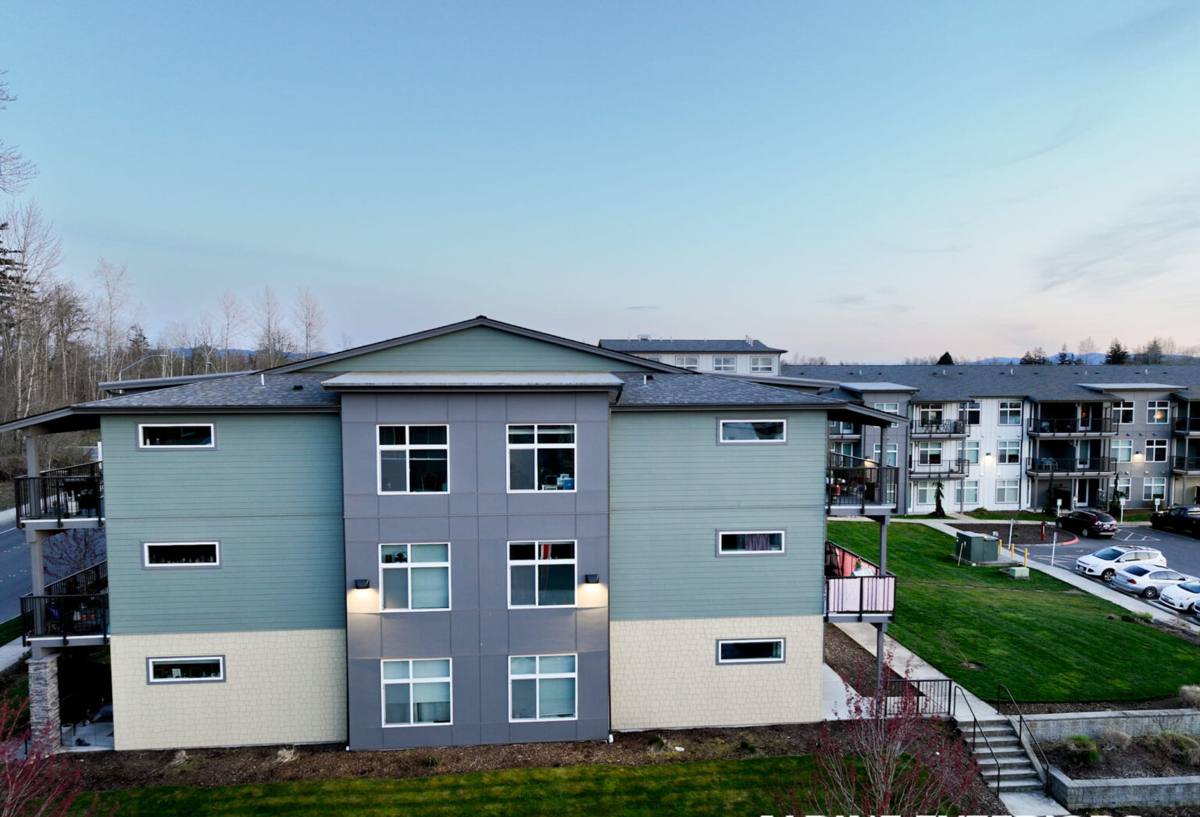
What's Actually Wearing Out Your Siding
Moisture That Doesn't Dry Out Fast
Rain itself isn't usually the problem — siding is designed to shed water. The problem is rain combined with shade, tree cover, and cool temperatures that keep surfaces damp for days at a stretch instead of drying out in an afternoon. Wood-based and wood-adjacent siding products absorb that moisture at cut edges, seams, and fastener penetrations, and once water gets behind the surface it has nowhere fast to go.
Moss, Algae, and Organic Growth
A long moss season means more than green staining. Moss and algae hold moisture directly against the siding surface, and their root structures work into any texture or micro-crack in the material. On products that aren't engineered to resist this, that constant biological contact accelerates surface breakdown well beyond what plain rain exposure would cause.
Salt-Influenced Air
Even well inland, a coastal-influenced climate carries fine salt particulate that settles on exterior surfaces and accelerates corrosion of fasteners, flashing, and trim metal. Over years, that shows up as rust streaking, loosened fastener heads, and premature failure at metal-to-siding transitions — problems that often get blamed on the siding when the real culprit is what's holding it on.
Freeze-Thaw and Seasonal Swelling
Whatcom County doesn't get brutal winters, but it does get repeated cycles of saturation followed by cold snaps. Materials that swell when wet and shrink when they dry go through that cycle over and over, and it's usually the cause of cracking, cupping, or delamination that shows up years before a siding job should need attention.
What a Correct Siding Replacement Actually Involves
Replacing siding is not a surface-level swap. Done right, it's a full exterior envelope job, and skipping steps is exactly how a home ends up needing this work again in ten or twelve years instead of thirty or forty.
- Full tear-off of the old siding, not an install over the existing layer
- Sheathing inspection for soft spots, rot, or water staining once the old material is off
- Repair or replacement of damaged sheathing before anything new goes up
- New weather-resistive barrier (WRB) installed and lapped correctly, not patched around the old one
- Proper flashing at windows, doors, decks, and any roof-to-wall intersections
- Correct fastening per the manufacturer's climate-specific installation instructions
- Sealed and painted cut ends and joints so raw material edges aren't exposed to weather
Every one of those steps matters more in Deming's climate than it would somewhere drier, because any gap in the system gives moisture a place to sit and work. A siding job that looks finished from the curb but skipped the sheathing check or the flashing detail is a problem that's just been covered up, not solved.
Why We Only Install James Hardie Fiber Cement
We don't install LP SmartSide, vinyl, Cemplank, Allura, primed spruce, or cedar. That's a deliberate standard, not a matter of what we happen to stock. Each of those products has legitimate strengths — cedar has real character, vinyl is inexpensive up front, engineered wood products install quickly — but each also carries a real-world trade-off that shows up on homes in this climate: wood-based products need consistent maintenance to keep moisture out of cut edges and seams, vinyl can warp and fade under UV and temperature swings and offers limited protection against impact or fire, and several of these products depend heavily on installer precision to perform anywhere near their rated lifespan.
James Hardie fiber cement is engineered specifically to resist the combination of moisture, biological growth, and temperature cycling that defines a Whatcom County exterior. It's non-combustible, it doesn't support the kind of moisture absorption that drives rot, and its ColorPlus factory finish is baked on under controlled conditions rather than field-applied — which matters a lot in an area where painting conditions are unreliable for months at a time. Hardie's HZ5 product line in particular is engineered for climates with freeze-thaw cycling and sustained moisture exposure, which describes Deming's weather almost exactly.
How Hardie Compares to What We Don't Install
| Factor | James Hardie Fiber Cement | Vinyl / Engineered Wood |
|---|---|---|
| Moisture resistance | Engineered to resist swelling and rot | Vulnerable at seams, cut edges, or exposed substrate |
| Finish durability | Factory-baked ColorPlus finish | Field-painted or molded color, prone to fading/chalking |
| Fire resistance | Non-combustible | Vinyl melts/deforms; wood-based products are combustible |
| Moss/algae resistance | Dense, non-organic surface resists growth | Organic surfaces feed growth; vinyl traps moisture behind panels |
| Warranty structure | Long-term, transferable manufacturer warranty | Varies widely; often prorated or installer-dependent |
Our Siding Replacement Process
- On-site assessment — we walk the exterior, check for rot, moisture damage, and problem areas specific to your home's exposure
- Written estimate — clear scope, product selection, and pricing before any work begins
- Tear-off and inspection — old siding removed, sheathing checked and repaired as needed
- Weather barrier and flashing installation — the part of the job that determines how the house performs for the next 30+ years
- Hardie siding installation — installed to manufacturer spec, with correct fastening and clearances for this climate
- Trim, caulking, and final detailing — sealed joints and clean sight lines
- Final walkthrough — we go over the finished work with you before calling the job done
Signs Your Deming Home May Need Siding Replacement
- Soft or spongy spots when you press on the siding
- Visible cracking, cupping, or warping of individual boards or panels
- Persistent moss or algae staining that returns quickly after cleaning
- Paint that's peeling or bubbling rather than just fading
- Rust streaking near fasteners or metal trim
- Gaps or separation at seams, corners, or window trim
- A musty smell or visible staining on interior walls that share an exterior wall
Any one of these can be a minor fix. Several together, especially on a wall that faces prevailing weather, usually means the siding system has reached the point where patching stops being cost-effective and full replacement becomes the better investment.
Choosing the Right Hardie Line and Color for This Climate
James Hardie offers several product lines and profiles, and picking the right one matters as much as the installation quality. HZ5-rated products are built for regions with more freeze-thaw cycling and moisture exposure, which fits this part of Washington well. Lap siding, board-and-batten, and shingle profiles are all available in the ColorPlus finish system, which means the color is embedded through a factory process rather than relying on field paint to hold up against years of rain and UV. For a Deming property, we also factor in tree cover and shade when discussing color and finish — darker colors on heavily shaded walls can hold moisture and show streaking differently than the same color on a sun-exposed elevation, and that's worth talking through before you commit to a shade.
Cost Factors for a Deming Siding Replacement
| Factor | Why It Affects Cost |
|---|---|
| Home size and elevation count | More square footage and complex rooflines mean more material and labor |
| Existing sheathing condition | Rot or water damage discovered during tear-off requires repair before install |
| Siding profile and trim detail | Board-and-batten and shingle profiles take more labor than plain lap siding |
| Access and site conditions | Tree cover, slope, and staging space affect equipment and labor time |
| Window and door count | Every penetration needs flashing work, which adds time regardless of siding type |
We don't publish blanket price lists because these factors genuinely change the number from one property to the next — that's exactly what the on-site estimate is for.
Why a Crew That Already Works Deming Matters
A contractor who's spent time on homes in this specific area already knows what the moisture and shade patterns typically do to a wall, which elevations tend to hold onto moss longest, and where flashing details get skipped on older builds. That local pattern recognition shortens the assessment, sharpens the estimate, and means fewer surprises once tear-off starts. It also means a crew that isn't guessing at how a product will hold up here — they've already seen how Hardie performs on homes with the same rain, shade, and salt-air exposure yours has.
Maintenance After Replacement
Hardie fiber cement is low-maintenance compared to wood or vinyl, but "low-maintenance" isn't "no-maintenance," especially in a climate with a long moss season. A yearly rinse-down to clear moss and organic buildup before it takes hold, a periodic check of caulking at trim and window edges, and prompt attention to any impact damage will keep a correctly installed system performing for decades. None of that requires repainting on the schedule a wood product would demand, which is one of the practical reasons this material holds up so well here.
If your Deming-area home is showing signs of siding wear, or you just want an honest read on whether repair or full replacement makes sense, we're happy to walk the property with you and put together a clear, no-pressure estimate using the form below.