 Lynden Siding
 Windows Built for the Acme Climate, Not a Catalog Photo
Acme sits in that stretch of Whatcom County where the marine air off the Salish Sea meets the wetter, cooler pockets near the foothills. Homes out here deal with a longer wet season than most window manufacturers assume when they write their installation manuals. Driving rain comes in sideways more often than straight down, humidity stays high for months at a time, and moss and algae get a real head start on anything that holds moisture. Windows that are marketed as "energy efficient" everywhere else in the country don't automatically hold up to that combination. The glass package matters, but so does the frame material, the flashing detail, and how the whole assembly sheds water and manages condensation over a Whatcom County winter.
This page is about one job in one area: replacing or upgrading windows on homes in and around Acme, done by a crew that already works this part of the county and understands what the climate actually does to a window system over time, not just what a brochure says it should do.
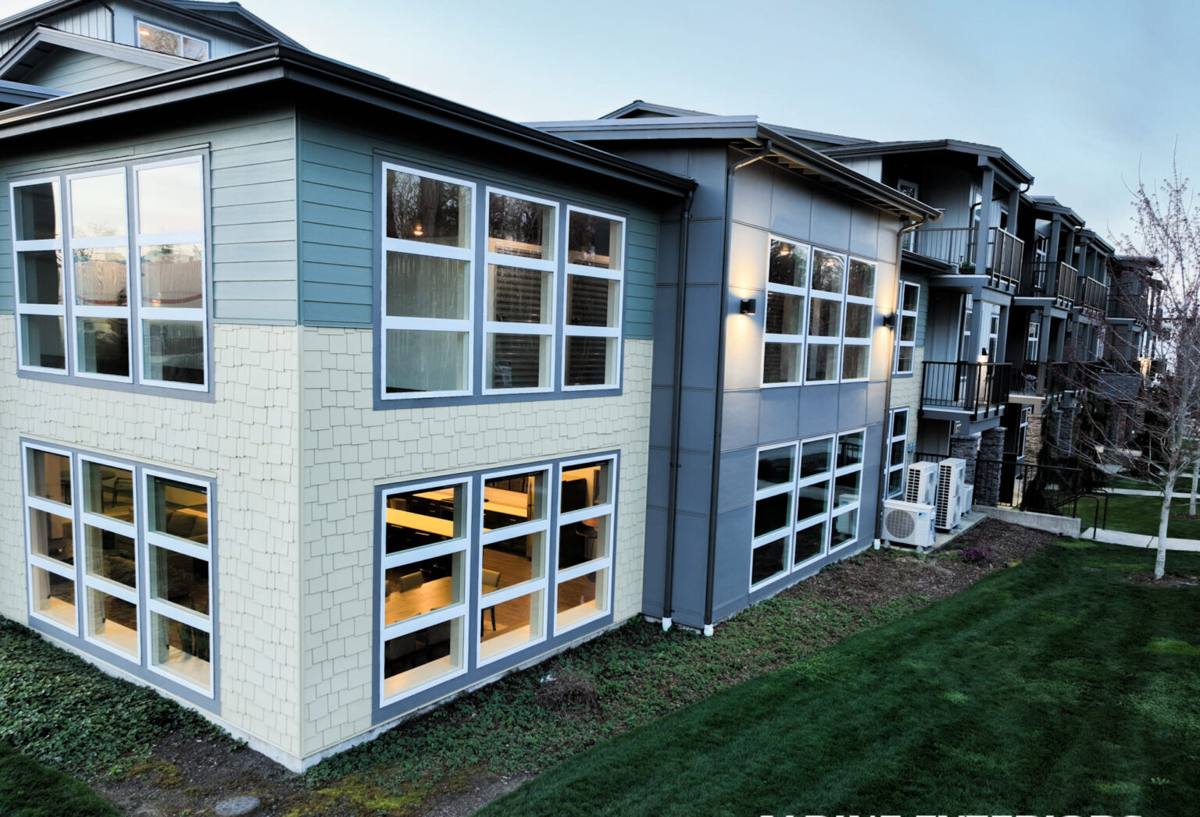
What "Energy-Efficient" Really Means Here
Energy efficiency in a window isn't one number. It's a combination of factors that all have to work together, and in a wet, moderate climate like ours, some matter more than others.
- U-factor — how well the window resists heat transfer. Lower is better, and it matters more here in winter than summer.
- Air infiltration rating — how tight the frame and sash seal against wind-driven air. This is where a lot of older or poorly installed windows fail first.
- Condensation resistance — how well the glass and frame handle interior humidity against cold glass, which is a bigger issue here than in drier climates.
- Solar heat gain coefficient (SHGC) — less critical in our mild, often overcast summers, but still worth getting right for west-facing rooms.
An honest energy-efficient window replacement weighs all four against the direction the window faces, how exposed the wall is to weather, and what the room is used for. A north-facing bedroom window and a west-facing living room slider don't need identical glass packages.
Signs Your Current Windows Are Working Against You
Most homeowners don't replace windows because one broke. They replace them because the house never quite feels right, and the windows turn out to be part of the reason. Common signs we see on Acme-area homes:
- Condensation or fogging between the panes, meaning the seal has failed and the insulating gas is gone
- Cold drafts near the frame even when the window is fully latched
- Soft or discolored wood at the sill or lower corners — a sign water has been getting behind the frame, not just on it
- Difficulty opening or closing, which often points to a frame that's swelling and shrinking with moisture cycles
- Visible moss or dark staining building up on the sill or exterior trim faster than it should
- Noticeably higher heating bills compared to similar-sized homes nearby
Any one of these can be a minor fix. Several together usually mean the window assembly itself — not just the glass — has reached the end of its useful life.
Frame Materials: What Actually Holds Up in This Climate
The frame matters as much as the glass, especially in an area that stays damp for long stretches of the year. Here's how the common options compare for a Whatcom County home:
| Material | Moisture Behavior | Maintenance | Typical Fit for Acme Homes |
|---|---|---|---|
| Vinyl | Doesn't absorb water or rot; won't corrode from salt-laden air | Low — occasional cleaning | Strong all-around choice for most homes; good value |
| Fiberglass | Very stable in wet/dry and hot/cold cycles; minimal expansion or contraction | Low | Good for larger openings or homes with heavy weather exposure |
| Wood | Attractive but vulnerable to moisture if any finish or seal fails | High — needs regular inspection and refinishing | Best where appearance is a priority and upkeep is expected |
| Wood-clad (wood interior, exterior cladding) | Cladding protects the exterior face; interior still needs normal care | Moderate | A middle ground for homes wanting a wood look with less exterior maintenance |
| Aluminum | Durable but conducts heat and cold readily unless thermally broken | Low | Less common for residential energy retrofits here due to thermal performance |
We don't push one material on every job. A vinyl or fiberglass window is usually the practical choice for straightforward energy-efficiency upgrades, while wood or wood-clad comes up more on homes where the owner cares as much about the interior look as the performance numbers. Whatever the material, the trade-off that matters most in our climate is moisture behavior and installation sensitivity — how forgiving the product is if flashing or sealant isn't perfect on day one, and how it ages once it's been through a few wet winters.
Why We're Selective About Certain Products
Some window systems on the market look good on paper but demand near-perfect installation conditions or ongoing maintenance to perform as advertised over the long run — a tall order in a climate where crews are often working around rain windows and homes see near-constant humidity. When we steer a homeowner away from a particular style or material, it's because of that maintenance burden or moisture sensitivity, not because the product is inherently bad. We'd rather recommend what holds up with normal upkeep in Acme's weather than something that only performs under ideal conditions.
What a Correct Installation Actually Involves
The window unit itself is maybe half the job. The other half is everything around it — the parts that determine whether the wall stays dry for the next twenty years.
Removal and Inspection
Old windows come out carefully so we can see the condition of the framing, sill, and any existing flashing underneath. This is often the first real look anyone's had at that area in decades, and it's where hidden water damage from a long-failed seal shows up.
Flashing and Water Management
Every opening gets flashed so that any water that does reach the frame is directed back out, not into the wall cavity. In a climate with driving, wind-pushed rain, the flashing detail at the sill and head is arguably more important than the window brand itself.
Air Sealing and Insulation
The gap between the new frame and the rough opening gets properly insulated and air-sealed — not just filled with whatever's on hand. Gaps here are a common source of drafts and energy loss even with a top-rated window installed.
Trim and Weatherproofing
Exterior trim and caulking are finished to shed water away from seams, with attention to the areas most exposed to prevailing wind and rain on that particular elevation of the house.
Our Process for an Acme Window Project
- On-site walkthrough of each window opening, noting exposure, condition, and any existing moisture damage
- Honest recommendation on frame material and glass package based on that window's direction and use, not a one-size-fits-all package
- Clear, written estimate before any work begins — no surprise add-ons once we're started
- Careful removal with inspection of the framing underneath
- Proper flashing, air sealing, and insulation at every opening
- Finish trim and weatherproofing sized to that wall's actual weather exposure
- Final walkthrough with the homeowner before we consider the job done
What Drives the Cost of a Window Project
Every home is different, so we won't quote a number without seeing the openings, but these are the factors that move the price up or down on a typical Acme-area project:
| Factor | Why It Matters |
|---|---|
| Number and size of openings | More or larger windows mean more material and labor |
| Frame material chosen | Vinyl is generally the most budget-friendly; wood and wood-clad cost more |
| Condition of existing framing | Hidden rot or water damage found during removal adds repair work |
| Glass package | Upgraded coatings or gas fills for high-exposure walls add cost but reduce long-term energy loss |
| Access and site conditions | Second-story or hard-to-reach openings take more time and equipment |
As a rough guide, a single standard window replacement on a typical home usually falls in a broad low-to-mid four-figure range per opening depending on size and material, with whole-house projects scaling from there. We'll give you real numbers after seeing the actual openings — broad ranges online rarely match what's really needed once we look at the framing.
Why It Matters That We Already Work in Acme
A crew that's done window and siding work throughout the Lynden area, including Acme, already knows how the local weather behaves against different house orientations, what kind of moisture issues tend to show up in older homes out this way, and how to schedule around the wetter months so installations aren't rushed or compromised by rain. That local familiarity doesn't replace good workmanship, but it does mean fewer surprises — we're not learning the climate on your house.
It also means we're accountable locally. If something needs a follow-up look after the first real wind-and-rain season tests the new windows, we're not far away.
Living With Moss Season and New Windows
New, properly installed windows dramatically cut down on the moisture and drafts that let moss and algae get a foothold around the frame in the first place. Still, a little seasonal care goes a long way in this climate:
- Rinse pollen, dust, and organic buildup off exterior sills a couple of times a year, especially heading into fall
- Check that weep holes (the small drainage openings on the bottom of the frame) stay clear of debris
- Keep gutters and downspouts clear so runoff isn't sheeting directly across window openings
- Trim back vegetation that keeps a wall shaded and damp longer than the rest of the house
None of this is heavy maintenance — it's the same kind of upkeep any exterior surface needs in Whatcom County. A correctly installed, quality window just needs far less of it than an old, failing one.
If your Acme-area home has drafty, foggy, or hard-to-close windows, we're happy to take a look and give you a straightforward, no-pressure estimate — just fill out the form below.