 Lynden Siding
 Roof Replacement in Everson: Built for Nooksack Valley Weather
Everson sits along the Nooksack River just a few miles east of Lynden, in the farmland and low river-valley terrain that makes up this part of Whatcom County. It's a quieter, more agricultural setting than the towns closer to Bellingham Bay, but the weather that wears on a roof doesn't stop at the city limits. Marine air still pushes up the valley from the Sound, rain still arrives more often sideways than straight down, and the mild, damp stretches between storms give moss and algae months at a time to take hold on any roof plane that doesn't get much sun. A roof built for a drier region, or one that's simply reaching the end of its service life, tends to show it here on a predictable schedule.
Lynden Siding Contractors works roofs, siding, windows, and decks across this part of the county, and Everson is a community we're in regularly — not an occasional stop. Roof replacement is one of the biggest single investments a homeowner makes in a house, and getting it right the first time matters more than almost any other exterior project, because a roof mistake doesn't show up as a cosmetic issue. It shows up as water in the attic, rot in the deck, and damage that spreads long before anyone notices a shingle out of place.
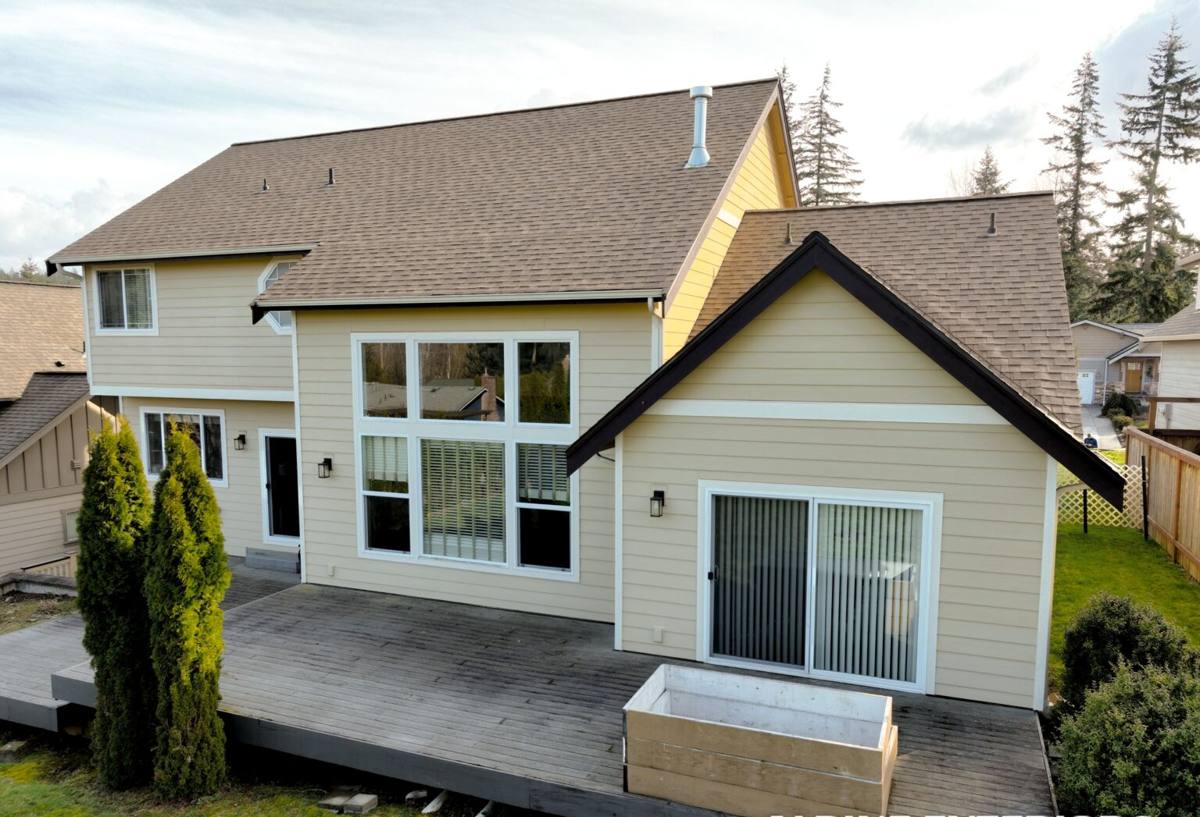
What This Climate Does to an Everson Roof
Driving Rain That Doesn't Fall Straight Down
Storms moving through the Nooksack valley regularly push rain in on a wind, not straight down out of a calm sky. That matters more than it sounds like it should, because a roof detailed only for vertical rainfall — thin flashing, minimal underlayment, tight-but-not-sealed laps — will hold up fine on a dry day and still leak the first time a real wind-driven storm hits it. Valleys, chimney flashing, and vent penetrations are where that kind of rain finds a way in first.
A Long Moss and Algae Season
Shaded slopes, north-facing planes, and roofs near mature trees stay damp longer here than they would in a drier climate, and that damp holds through much of the year rather than just a few winter months. Moss doesn't just look bad — it lifts shingle edges as it grows, traps water directly against the roofing surface, and accelerates the exact kind of granule loss and material breakdown that shortens a roof's working life.
Marine Air That Reaches Further Inland Than You'd Expect
Everson is inland compared to Lynden's coastal neighbors, but salt-tinged marine air still travels up the valley on the prevailing wind, and it doesn't stop cleanly at any particular mile marker. Metal flashing, fasteners, and roof vents that aren't rated for that kind of sustained exposure corrode faster than homeowners expect for a property that isn't right on the water. It's a slower process than the driving rain and moss issues, but it's a real one over the life of a roof.
Temperature Swings and Roofing Material Fatigue
Whatcom County doesn't see brutal winters most years, but the repeated cycle of damp, mild days punctuated by occasional hard frosts still stresses roofing materials over time. A roof surface that stays saturated more often than it fully dries ages differently than the same product would in a drier region, and that's worth factoring into both material choice and installation detail.
Signs an Everson Roof Is Ready for Replacement
- Moss that returns quickly in the same spots even after cleaning
- Granules building up in gutters or at the base of downspouts
- Shingles that are curling, cupping, cracked, or missing after a windstorm
- Water staining on interior ceilings, especially near exterior walls or chimneys
- Visible daylight through the roof deck from inside the attic
- Soft spots or noticeable give when the roof surface is walked on
- Flashing around vents, chimneys, or valleys that looks lifted, rusted, or bare of sealant
- A roof that's already had several patch repairs in the last few years
Any single item on that list is worth a professional look, and most are still a repair at that stage. It's when several of them show up together, or when the roof is already past its expected service life, that full replacement becomes the honest recommendation.
What a Correct Roof Replacement Actually Involves
Full Tear-Off and Deck Inspection
A proper replacement starts with removing the old roofing down to the deck, not layering new material over old. That's the only way to actually see the condition of the sheathing underneath — soft, delaminated, or water-stained decking has to be found and replaced before anything new goes on, because covering rotten sheathing with a beautiful new roof just hides the problem for a few more years.
Underlayment and Ice-and-Water Shield
The underlayment does more of the actual waterproofing work than most homeowners realize — the shingles are the first line of defense, but the underlayment is what keeps a home dry if wind-driven rain gets past them. In a climate with this much sustained moisture, that means a underlayment rated for real exposure, not a bare-minimum product, plus ice-and-water shield at eaves and valleys where water and debris naturally collect.
Flashing at Every Transition
Every valley, chimney, skylight, vent pipe, and roof-to-wall transition is a place where two different materials meet, and that's exactly where leaks start on a poorly built roof. Flashing has to be correctly lapped, fastened, and sealed at each of these points — not caulked over as a shortcut — and given the corrosion risk from marine air moving up the valley, the flashing material itself needs to be rated for it.
Ventilation That Lets Moisture Escape
A roof deck that can't breathe traps moisture underneath the roofing material, which accelerates rot and shortens the life of everything above it. Intake and exhaust ventilation have to be balanced correctly for the specific roof, not just installed as an afterthought, especially on a house in a climate where the air itself carries this much sustained humidity.
Roofing Material Options for an Everson Home
| Material | Moss & Moisture Behavior | Maintenance | Realistic Lifespan Here |
|---|---|---|---|
| Architectural asphalt shingle | Performs well with proper ventilation; moss-resistant granules help on shaded slopes | Periodic moss removal, gutter checks | 20-30 years |
| Standing seam metal | Sheds water and resists moss buildup due to a smooth, non-porous surface | Low; occasional fastener and sealant checks | 40-60 years |
| Composite/synthetic shingle | Resists moisture absorption; behavior varies by product quality | Low to moderate | 30-50 years depending on product |
| Cedar shake | Absorbs moisture readily; needs consistent airflow underneath to dry between rains | Higher; regular treatment and moss control | 20-30 years with consistent upkeep |
There's no single right answer for every Everson roof — it comes down to the roof's pitch, how much shade it gets, and what the homeowner wants to spend upfront versus over time. A steep, sun-exposed roof and a low-slope roof shaded by trees along the river don't call for the same recommendation, and we'll walk through the real trade-offs for your specific roof rather than defaulting to whichever product is easiest to sell.
Our Roof Replacement Process, Start to Finish
- An on-site inspection of the current roof, attic ventilation, and any visible signs of moisture damage
- A written estimate that lays out material options, scope, and a realistic timeline before any work starts
- Site protection for landscaping, gutters, and anything below the work area
- Full tear-off and a deck inspection, with any soft or damaged sheathing replaced before moving forward
- Installation of underlayment, ice-and-water shield, and flashing rated for this climate's moisture and wind exposure
- New roofing installed to manufacturer spec, with attention to ventilation balance
- A final walk-through so you can see the finished work and ask questions before we consider the job done
Repair or Full Replacement? How We Help You Decide
Not every roof problem in Everson calls for a full replacement, and we don't default to recommending one. What matters is the roof's age, how much of the surface is actually affected, whether the deck underneath has moisture damage, and how many repairs the roof has already had. A single storm-damaged section on an otherwise sound, mid-life roof is usually a straightforward repair. A roof nearing the end of its rated life with moss-related wear spread across multiple slopes, or a deck showing soft spots from long-term trapped moisture, is more honestly addressed with a replacement than another round of patchwork that just delays the inevitable. We'll tell you plainly which situation you're actually in and why.
Cost Factors for an Everson Roof Replacement
| Factor | What It Affects | Why It Matters Here |
|---|---|---|
| Tear-off vs. layover | Labor scope and access to the deck | Tear-off is the only way to catch hidden moisture damage common under aging roofs in this climate |
| Deck condition | Repair costs before new roofing goes on | Sustained moisture exposure can rot sheathing that isn't visible until the old roofing comes off |
| Roof pitch and complexity | Labor time, safety equipment, material waste | Steeper or more cut-up rooflines take longer and generate more flashing detail work |
| Material choice | Upfront cost vs. long-term lifespan | Metal and higher-grade shingles cost more initially but hold up longer against moss and moisture |
| Ventilation upgrades | Whether existing intake/exhaust needs correction | Older Everson homes often have ventilation that wasn't sized for how damp this climate stays |
Exact pricing depends on the specific roof, which is why we walk the property in person and give you a real number rather than a generic estimate off a price sheet.
Why a Lynden Crew That Already Works Everson Matters
A crew that's out in this part of Whatcom County on a regular basis understands how driving rain, moss, and marine air actually behave on real Everson roofs over a full year — not just how a shingle performs on a spec sheet. That experience shows up in practical decisions on install day: which roof orientations along the river valley stay damp longest, how much ice-and-water shield a given valley actually needs, and which flashing and fastener choices are worth the extra material cost given how far salt-tinged air travels inland here. It also means a crew that isn't guessing at how this specific stretch of the valley differs from Lynden itself or from the coastal towns closer to the bay — we treat that difference seriously instead of applying one generic approach to every roof we touch.
If your Everson home needs a new roof, a second opinion on a problem another contractor found, or you're just not sure whether you're looking at a repair or a full replacement, we're glad to take a look. Reach out using the form below to schedule a free, no-pressure estimate.