 Lynden Siding
 Why Everson Homes Need a Different Approach to Siding
Everson sits in the Nooksack River valley in Whatcom County, close enough to the marine air moving in off the Sound and Bellingham Bay that homes here deal with a specific combination of punishment: salt-laden air that accelerates corrosion on fasteners and trim, driving rain that comes in sideways during fall and winter storms, and a moss season that can stretch from October well into spring. None of these things individually is unusual for western Washington. Together, applied to a house year after year, they expose the difference between siding that was installed correctly and siding that was just installed.
A siding installation in Everson isn't the same job as the same product installed in a dry inland climate. The material has to be right, and just as important, the installation details — flashing, clearances, fastening, drainage — have to account for how much moisture this ground and this air actually see. Get those details wrong and a home can look fine for a few years while damage builds behind the surface where nobody's looking.
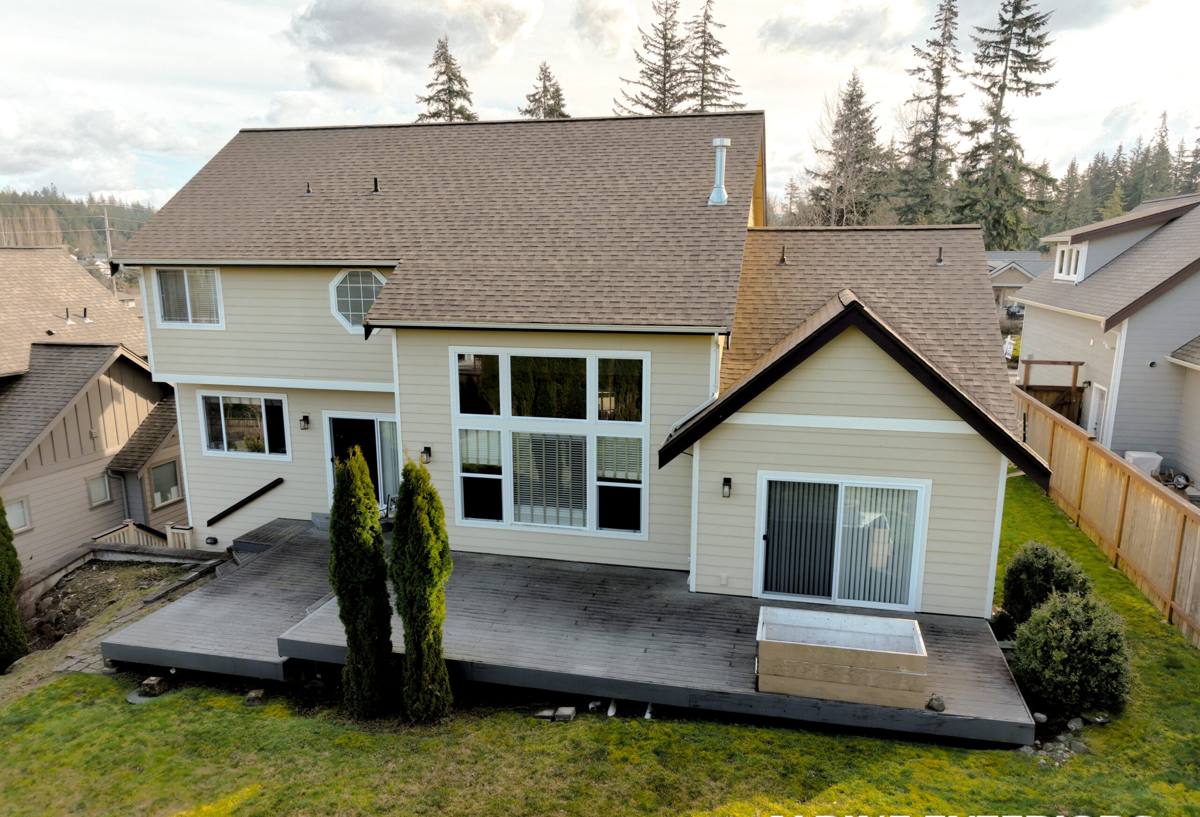
What Salt Air, Rain, and Moss Actually Do to Siding
Salt Air and Corrosion
Airborne salt accelerates the breakdown of untreated or poorly coated metal — nail heads, trim flashing, and fasteners corrode faster than they would further inland. Once a fastener starts to rust, the hole around it enlarges, siding boards loosen, and water finds a new path behind the cladding.
Driving Rain and Wind-Driven Moisture
Whatcom County storms don't just drop rain straight down — wind pushes it sideways into wall assemblies, especially on gable ends and around windows and doors. Siding systems depend on lap coverage, proper flashing, and a drainage plane behind the cladding to manage this. Any gap or shortcut in that system becomes the spot where water gets in.
Moss and Sustained Moisture Contact
A long moss season means siding surfaces, especially on north-facing and shaded walls, stay damp longer between drying cycles. Moss and algae growth on siding isn't just cosmetic — sustained moisture contact at the surface degrades paint film and, on materials that aren't dimensionally stable, can contribute to swelling, cupping, or delamination over time.
Why We Install Only James Hardie Fiber Cement
We made a decision as a company to install James Hardie fiber cement siding exclusively — not vinyl, not LP SmartSide, not cedar or primed spruce, not other fiber cement brands. That's not a marketing position; it's a standard we hold because of what we see in Whatcom County's climate specifically.
Fiber cement is non-combustible and dimensionally stable, meaning it doesn't expand, contract, or absorb moisture the way wood-based products can. James Hardie's HZ5 product line is engineered for climates like ours, with moisture and freeze-thaw performance built into the formulation rather than added after the fact. The factory-applied ColorPlus finish is baked on under controlled conditions, which holds up to UV and moisture exposure far better than field-applied paint, and it comes with its own finish warranty separate from the substrate warranty.
We're not going to tell you every other product is unusable — vinyl and engineered wood siding have real markets and reasonable uses. But we've chosen not to install them, because in a climate with this much sustained moisture exposure, we don't want to warranty a job on a product whose long-term performance depends on things we can't control after we leave the site.
What a Correct Siding Installation Actually Involves
The material is only part of the equation. A siding job done right in Everson's climate depends on a set of installation details that are easy to skip and expensive to fix later:
- A continuous weather-resistive barrier behind the siding, lapped correctly so water sheds outward and down, never into the wall
- Rigid flashing at every window, door, and roof-to-wall intersection — not just caulk, which fails over time
- Correct fastener type and placement, driven to manufacturer spec so boards can move slightly without cracking or popping loose
- Proper clearance between the bottom edge of siding and grade, decks, patios, and roof lines to keep splash-back and standing water off the material
- Caulking and sealant only where the manufacturer specifies it — over-caulking traps moisture instead of letting it drain
- Correct lap and overlap dimensions at every horizontal joint
Any one of these done wrong won't necessarily show up as a visible problem right away. That's exactly the risk — moisture intrusion behind siding often stays hidden until it's caused rot in sheathing or framing, which is a far more expensive repair than the siding itself.
Our Process for an Everson Siding Installation
1. On-Site Assessment
We walk the home, check the condition of the existing siding, sheathing, and trim, and look specifically at problem areas common to this area — north-facing walls, areas near grade, and any spots where past moisture damage or moss buildup suggest the wall assembly has been taking on water.
2. Tear-Off and Sheathing Check
Old siding comes off and we inspect the sheathing underneath before anything new goes on. If there's rot or soft spots from years of moisture exposure, that gets addressed before a single new board is installed — covering up damaged sheathing just locks the problem behind new siding.
3. Weather Barrier and Flashing
We install a continuous drainage plane and flashing at every penetration and transition point. This is the step that determines how the house performs in a wind-driven rain event, not the finish coat.
4. James Hardie Installation to Spec
Boards are installed following James Hardie's fastening, clearance, and lap requirements exactly, since deviating from spec can affect both performance and warranty coverage.
5. Trim, Caulking, and Final Detail
Trim and joints are finished according to manufacturer guidance, with attention to which joints should be sealed and which need to stay open for drainage.
6. Walkthrough
We go over the finished job with the homeowner, including what maintenance to expect and what to watch for going forward.
Signs an Everson Home May Need New Siding
Homeowners often wait until siding looks visibly bad, but the damage underneath usually started earlier. Worth checking for:
- Persistent moss or algae staining that comes back quickly after cleaning
- Soft spots, bubbling, or visible warping, especially near the ground or on shaded walls
- Paint that's peeling or failing faster than expected between paint cycles
- Rust streaking from fastener heads or trim
- Visible gaps at seams, corners, or around windows and doors
- A musty smell or interior wall staining, which can indicate moisture already made it through
Cost Factors for a Siding Installation in This Area
Every home is different, but the factors that most often move the price on an Everson siding job are consistent. This isn't a quote — it's what to expect a contractor to actually account for:
| Factor | Why It Matters Here |
|---|---|
| Extent of sheathing repair needed | Long-term moisture exposure sometimes means hidden rot has to be addressed before new siding goes on |
| Home size and wall complexity | More corners, gables, and penetrations mean more flashing and detail work |
| Siding profile and trim selection | Different HZ5 profiles and trim packages carry different material and labor costs |
| Existing siding removal | Full tear-off versus working with a simpler substrate changes labor time |
| Access and site conditions | Grading, decks, and landscaping near the walls can affect setup and clearance work |
Maintenance After Installation
Correctly installed James Hardie siding is low-maintenance, but "low" isn't "none," especially with our moss season. A simple annual routine keeps it performing as designed:
- Rinse siding annually, focusing on shaded and north-facing walls where moss tends to establish
- Keep gutters clear so overflow doesn't run down the siding face repeatedly
- Trim back landscaping so foliage isn't holding moisture against the wall
- Check caulking at trim joints periodically and have any cracked sealant addressed early
- Watch for and address any fastener rust or trim issues before they spread
Why Local Experience on This Type of Job Matters
A crew that already works in Everson and across Whatcom County has seen how this specific combination of salt air, driving rain, and moss plays out on real homes over years, not just on installation day. That shows up in small decisions — where extra flashing attention goes, which walls get watched more closely during the assessment, how clearances are handled near grade and landscaping that's common in this area. It's the difference between a crew installing a product to a generic spec sheet and a crew installing it for the actual conditions the house will face every winter.
If you're weighing a siding replacement or repair on an Everson home, we're happy to walk the property, look at what's actually going on with your current siding, and talk through what correct installation would involve for your specific house. The estimate is free, with no pressure to move forward — just a straight assessment from a crew that installs one product because we trust it to perform in this climate.