 Lynden Siding
 Window Replacement Built for Everson's Climate
Everson sits in the Nooksack River valley, close enough to Lynden and the rest of Whatcom County that homes here share the same weather pattern year-round: long stretches of driving rain, damp marine air pushing in off the Sound, and a moss season that seems to start earlier every fall. Windows take the brunt of that. They're the one part of a home's exterior that has to seal against water, flex with temperature swings, and still open and close smoothly after a decade of wet Pacific Northwest winters.
A window replacement done for this area needs to account for that reality from the start — not just swap old glass for new glass, but rebuild the opening so water has nowhere to go but back outside.
Why Local Conditions Matter More Than the Window Itself
Homeowners often focus on brand and glass package, and those matter. But in our experience, more window failures around Everson trace back to installation and flashing than to the window unit itself. Salt-laden coastal air corrodes hardware and fasteners faster than it does further inland, driving rain finds any gap in a housewrap lap, and moss and algae growth on north-facing walls holds moisture against trim longer than homeowners realize. A window that's correctly flashed and sealed will outlast one that isn't, even if the second one had a nicer brand name on the sticker.
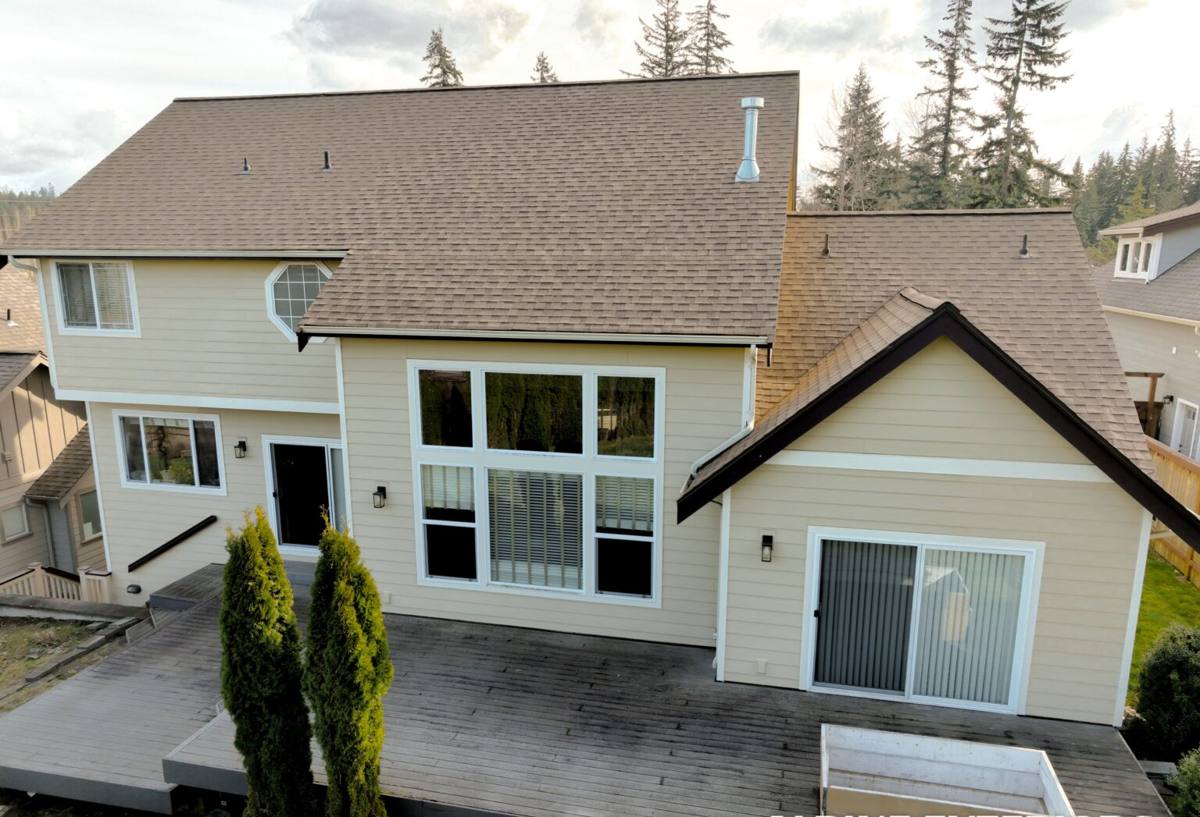
Signs an Everson Home's Windows Need Replacing
Not every drafty window needs full replacement — sometimes it's a failed seal or worn weatherstripping. But there are signs that point to the window itself being past its useful life, especially on homes exposed to our wet, windy stretches:
- Fogging or a permanent haze between panes — the gas seal has failed and can't be repaired
- Soft or discolored wood trim around the frame, a sign water has been getting behind the casing
- Windows that are hard to open, close, or lock, often from swollen frames or sagging hardware
- Visible daylight or a draft you can feel around the sash even when it's latched
- Moss or dark streaking building up on the sill or below the window, suggesting water is running down the wall rather than off the drip edge
- A noticeable jump in heating costs during the coldest, wettest months
If you're seeing more than one of these, it's usually more cost-effective to replace than to keep patching.
What a Correct Window Replacement Actually Involves
Removing an old window and setting a new one in the same hole is the easy part. Getting the water management right is where the job is actually won or lost — and it's the step that gets rushed on lower-bid jobs.
Flashing and Water Management
Every opening needs to be flashed so that any water reaching the wall assembly drains back out, never inward. That means integrating the window with the house's weather-resistive barrier in the correct shingle-lap order — sill pan first, then side flashing, then head flashing lapped over the top — so water always moves down and out rather than pooling at the sill or working behind the siding. On a home taking regular driving rain off the valley, skipping or reversing this order is the single most common cause of hidden rot we find behind older siding.
Insulation and Air Sealing
The gap between the new window frame and the rough opening needs to be filled with a low-expansion foam or backer rod and sealant — not stuffed with fiberglass batting, which does little to stop air movement and can hold moisture against the frame. Proper sealing here is what actually delivers the energy savings homeowners expect from a window upgrade.
Interior and Exterior Finish Work
Once the window is set, plumb, and sealed, trim and caulking need to be finished in a way that sheds water rather than trapping it — particularly on exterior sills, which take the most direct weather exposure of any part of the window assembly.
Choosing the Right Window for a Whatcom County Home
There's no single "best" window — the right choice depends on your home's exposure, your budget, and how much upkeep you want to take on. Here's how the common frame materials compare for a wet, marine-influenced climate like ours:
| Frame Material | Moisture Performance | Maintenance | Typical Trade-Off |
|---|---|---|---|
| Vinyl | Won't rot; resists corrosion well | Low — occasional cleaning | Can't be repainted; some flex in very large sizes |
| Fiberglass | Excellent — very stable in wet/dry cycles | Low | Higher upfront cost than vinyl |
| Wood-clad | Good if the cladding seal holds; vulnerable where it fails | Higher — cladding joints need periodic inspection | Classic look, but more installation-sensitive in wet climates |
| Aluminum | Prone to condensation without a thermal break | Moderate | Best reserved for specific architectural needs, not general use here |
For most Everson homes, we lean toward vinyl or fiberglass for general use because both handle repeated wetting and drying without the ongoing maintenance that wood-clad units demand. That's a maintenance-burden call, not a knock on wood-clad windows — they perform fine when the cladding seal is installed correctly and inspected regularly. We'll walk you through what fits your home and your appetite for upkeep rather than pushing one product line.
What Drives the Cost of a Window Replacement
Every home is different, so we don't quote firm numbers without seeing the job, but the main cost factors are consistent from house to house:
| Factor | Why It Matters |
|---|---|
| Number and size of openings | More windows and larger units mean more material and labor |
| Frame material and glass package | Fiberglass and upgraded low-E or triple-pane glass cost more than base vinyl |
| Condition of the existing opening | Rot repair or reframing adds time beyond a straightforward swap |
| Access and story height | Second-story or hard-to-reach windows take longer and may need staging |
| Trim and finish work | Matching existing interior trim or exterior siding detail adds labor |
Our Window Replacement Process
- On-site assessment — we look at each opening, check for hidden moisture or rot, and measure for accurate ordering.
- Product selection — we go over frame material, glass options, and pricing so you're choosing based on your home, not a sales pitch.
- Removal and inspection — old windows come out carefully so we can check the framing and sheathing underneath before anything new goes in.
- Repair as needed — any soft wood or compromised flashing gets addressed before the new window is set, not covered over.
- Installation — new window set plumb and level, flashed in the correct order, and properly insulated at the gap.
- Finish and cleanup — trim, caulking, and a final check that the window operates smoothly and seals tight.
Why It Matters to Hire a Crew That Already Works in Everson
A crew that regularly works Everson and the surrounding Lynden area already knows what this climate does to a window installation over time — which wall orientations take the worst of the driving rain, where moss buildup tends to concentrate moisture, and how quickly a poorly flashed opening turns into a rot problem. That's knowledge you don't get from a crew that mostly works drier parts of the state and treats every job the same way.
It also matters for something more practical: local crews are easier to reach if a question comes up after the job, and we're not driving in from out of the area to handle a warranty callback. For a project that's supposed to protect your home for the next 20-plus years, that accountability is worth something.
Caring for New Windows Through Whatcom County's Wet Season
A correctly installed window is largely maintenance-free, but a little seasonal attention keeps it that way through our long stretch of wet months:
- Rinse sills and tracks periodically to clear pollen, dust, and the start of moss or algae growth before it takes hold
- Check exterior caulking once a year, typically before the fall rains set in, and touch up any cracked or separated beads
- Keep gutters and downspouts clear so water isn't sheeting down the wall above a window during heavy rain
- Operate locks and hardware through the seasons rather than leaving windows shut all winter — moving parts that sit unused are more likely to bind
None of this is heavy maintenance, but skipping it is how small issues turn into the kind of trim rot and seal failure that shortens a window's life in this climate.
If your windows are drafty, fogged, or just due for an upgrade, we're happy to take a look and give you a straightforward, no-pressure estimate — use the form below to get started.