 Lynden Siding
 Why Ferndale Homes Wear Out Siding Faster Than You'd Expect
Ferndale sits close enough to Bellingham Bay and the Strait of Georgia that salt-laden air is a daily fact of life, not an occasional weather event. Add Whatcom County's long, wet winters and the shaded, north-facing walls that never quite dry out, and you have a climate that is genuinely tough on exterior cladding. Homeowners here don't need a siding product that merely looks good on a spec sheet — they need one that holds up to salt exposure, near-constant moisture, and the moss and algae growth that thrives in this environment for months at a time.
We install James Hardie fiber cement siding exclusively. Not as a marketing angle, but because after years of servicing homes in this corner of Whatcom County, it's the only product system we're willing to stand behind for the specific punishment Ferndale's climate delivers. This page walks through what that means in practice: what the climate actually does to siding, what a correct Hardie installation involves, and how we run the job from estimate to final walk-through.
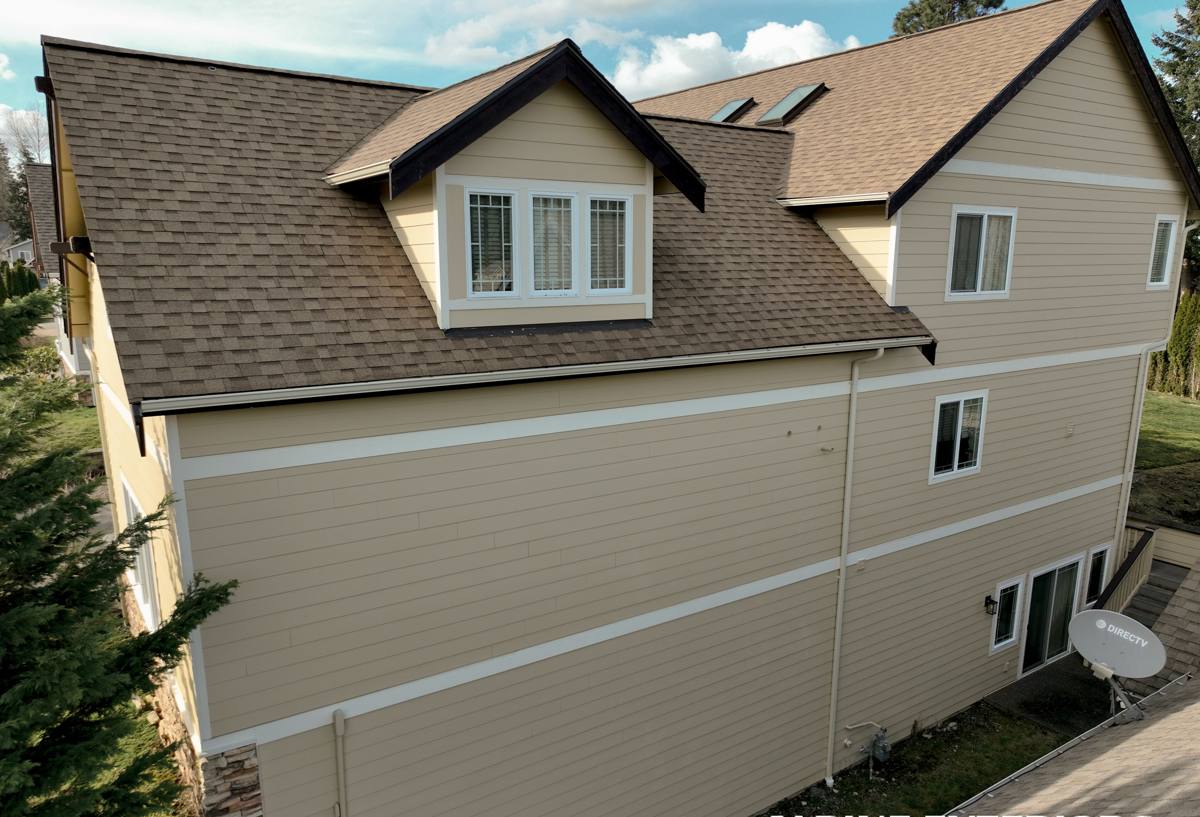
What Salt Air, Driving Rain, and Moss Season Actually Do to a House
Salt Air and Coastal Moisture
Airborne salt is corrosive to fasteners and hardware, and it accelerates the breakdown of finishes that aren't engineered to resist it. On wood-based and composite products, salt-laden moisture works its way into seams and cut edges, feeding rot from the inside out long before a homeowner notices anything wrong on the surface.
Driving Rain and Wind-Driven Wet Walls
Ferndale's weather doesn't just rain straight down — winter storms push rain sideways against exterior walls, especially on west- and south-facing exposures. That means siding joints, butt seams, and penetrations around windows and doors take on water pressure that a fair-weather installation detail simply won't handle. Poor flashing or caulk-dependent seams are where almost every serious siding failure we see actually starts.
Moss and Algae Season
Whatcom County's moss season can run the better part of the year on shaded or north-facing walls. Moss and algae hold moisture against the siding surface, and on products that aren't dimensionally stable or that have a porous painted finish, that constant damp contact accelerates surface breakdown, discoloration, and eventually rot at the substrate.
Why Fiber Cement Handles This Climate Better Than the Alternatives
James Hardie fiber cement is manufactured from cement, sand, and cellulose fibers, which makes it dimensionally stable and non-combustible. It does not absorb water the way wood-based products do, and it does not have the seam and edge vulnerabilities that make engineered wood siding a liability in a wet, salt-exposed climate. That combination is exactly what a Ferndale exterior needs: a material that stays put through moisture cycling and doesn't feed rot at the joints.
Hardie's ColorPlus factory-applied finish is also relevant here. It's baked on under controlled conditions and backed by its own finish warranty, which matters in a climate where a field-applied paint job is fighting damp walls and short drying windows for a big part of the year. A factory finish that's already cured before it reaches your house is one less variable working against you.
Choosing the Right Hardie Product Line for Ferndale
James Hardie makes climate-engineered product lines (HZ5 and HZ10), and product selection should be driven by your specific site conditions — sun exposure, wind exposure, and how close the home sits to the water. Below is a general comparison to frame the conversation; the right pick for your home depends on its exact exposure, which we assess on site.
| Hardie Product | Typical Use Case | Why It Fits |
|---|---|---|
| HardiePlank Lap Siding | Most Ferndale homes, standard walls | Widest color and texture range, proven long-term performance in wet climates |
| HardiePanel Vertical Siding | Accent walls, gables, modern designs | Clean lines, works well combined with lap siding for visual contrast |
| HardieTrim Boards | Corners, window and door surrounds, fascia | Matches the siding's moisture and rot resistance at the most failure-prone transitions |
| HardieSoffit Panels | Eaves and overhangs | Resists the damp, shaded conditions where moss and mildew take hold first |
For homes with heavier wind or salt exposure — closer to open water or on elevated, unshielded lots — we lean toward the HZ10 engineered line and closer fastener spacing. For more typical inland Ferndale lots, HZ5 with standard detailing is usually the right call. We'll tell you plainly which one your home needs and why, rather than upselling a spec you don't require.
What a Correct Installation Actually Involves
Fiber cement siding is only as good as the installation behind it. Hardie's own installation instructions are specific for a reason — get the details wrong and you can void the warranty and create the exact moisture problems the product is designed to prevent. In a climate like Ferndale's, these details matter more than in a drier region.
- Water-resistive barrier and flashing first. Every window, door, and penetration gets properly flashed and integrated with the weather barrier before a single piece of siding goes up. This is the step that actually keeps driving rain out.
- Correct fastener type and placement. Salt air is hard on fasteners — we use corrosion-resistant fasteners placed per Hardie's specification, not wherever is fastest.
- Proper clearances. Siding needs a minimum gap above rooflines, decks, and grade so water can't wick up into the bottom edge — a common shortcut that causes rot within a few years.
- Butt joint and seam treatment. Joints are caulked, flashed, or shiplapped per spec — not left to rely on caulk alone, which fails faster in a climate this wet.
- Factory-cut and painted edges kept intact. Field cuts get sealed to protect the exposed substrate, since a raw cut edge is the fastest path for moisture intrusion.
This is also where we explain why we don't install some of the more common alternatives on the market. Engineered wood products can perform well in drier regions, but they rely on a wood-based substrate and factory treatments that are more sensitive to the kind of sustained wet-wall exposure Ferndale sees for months at a stretch — if a seam or cut edge isn't perfectly sealed and stays that way, moisture finds a way in. Vinyl siding is inexpensive and easy to install, but it isn't rigid, it can warp or crack in wind and temperature swings, and it doesn't offer the fire-resistance or long-term color retention homeowners get from Hardie's factory finish. We made the call years ago to install one system correctly rather than several systems with compromises, and Hardie is the one we trust for this climate.
Our Process, Start to Finish
1. On-Site Assessment
We walk the property, check exposure on every elevation, look at current siding condition, and identify any existing moisture damage or flashing issues that need to be addressed before new siding goes on — not covered up by it.
2. Product and Color Selection
We help you choose the right Hardie product line, texture, and ColorPlus finish for your home's exposure and your aesthetic preference. Existing trim, roofing, and neighborhood context all factor in.
3. Written Estimate
You get a clear, itemized estimate before any work starts — no vague allowances, no surprise change orders for things we should have caught during assessment.
4. Tear-Off and Substrate Check
Old siding comes off and we inspect the sheathing underneath. Any rot or water damage gets addressed and documented before the new weather barrier goes on — this is the step that gets skipped on rushed jobs and causes problems years later.
5. Installation to Spec
Weather barrier, flashing, fasteners, clearances, and joint treatment all done per Hardie's installation requirements, adapted for your home's specific exposure.
6. Final Walk-Through
We walk the finished job with you, cover care and maintenance basics for this climate, and make sure you have your warranty documentation.
Maintenance in a Moss-and-Salt Climate
Hardie siding is low-maintenance relative to wood-based alternatives, but "low-maintenance" doesn't mean "no maintenance" anywhere in Whatcom County. A little seasonal attention goes a long way toward protecting your investment.
- Rinse siding annually, focusing on shaded, north-facing walls where moss and algae take hold first.
- Keep gutters clear so overflow doesn't run down and saturate wall sections repeatedly.
- Trim back vegetation and tree cover that keeps walls damp and shaded longer than necessary.
- Inspect caulking at trim and penetrations every year or two, and have any cracked or missing sealant addressed promptly.
- Address any impact damage quickly — a cracked panel left exposed is the one scenario where moisture can get behind the material.
Cost Factors for a Ferndale Hardie Project
Every home is different, but the factors that move the price are consistent. We'll always give you a specific number for your project rather than a generic estimate, but this table frames the conversation.
| Factor | Impact on Project |
|---|---|
| Home size and number of stories | More surface area and access complexity increase labor time |
| Tear-off and disposal of old siding | Adds labor and disposal cost, varies by what's currently on the house |
| Substrate repair needs | Rot or water damage found during tear-off requires repair before new siding goes on |
| Product line selection | HZ10 and premium textures cost more than standard HZ5 lap siding |
| Trim and accent detail | Additional trim boards, soffit work, and accent panels add material and labor |
| Site exposure and access | Wind exposure and difficult access can affect scaffolding and installation time |
Why Hiring a Crew That Already Works Ferndale Matters
A crew that already knows Whatcom County's exposure patterns isn't guessing at flashing details or fastener specs — they've seen what happens when those details get skipped in this exact climate, on homes with the same salt exposure and rain patterns yours has. That local track record is worth more than a lower bid from an out-of-area crew unfamiliar with how hard this coastline is on exterior work. We stand behind our installations because we've built our whole process around getting the details right the first time, in the conditions Ferndale homes actually face.
If you're weighing a siding replacement or new construction project in Ferndale, we're happy to walk your property, look at your specific exposure, and give you a straight answer on what your home needs — no pressure, no sales script. Reach out below for a free estimate.