 Lynden Siding
 Roof Repair Built for Ferndale's Coastal Climate
Ferndale sits close enough to the water that its roofs live a different life than roofs twenty miles inland. Salt-laden air off the Salish Sea, long stretches of driving rain, and a moss season that can run eight or nine months out of the year all add up to roofing problems that look small on the surface but rarely stay small. A missing shingle or a soft spot in the flashing here doesn't sit dry and wait to be fixed — it sits wet, under moss, in salt air, for months at a time.
We're a Lynden-based crew that works Ferndale regularly, not a company that shows up once and moves on. That matters for roof repair specifically, because so much of doing it right depends on understanding how a roof in this exact area actually fails, not how a roof fails in a textbook or in a drier part of the state.
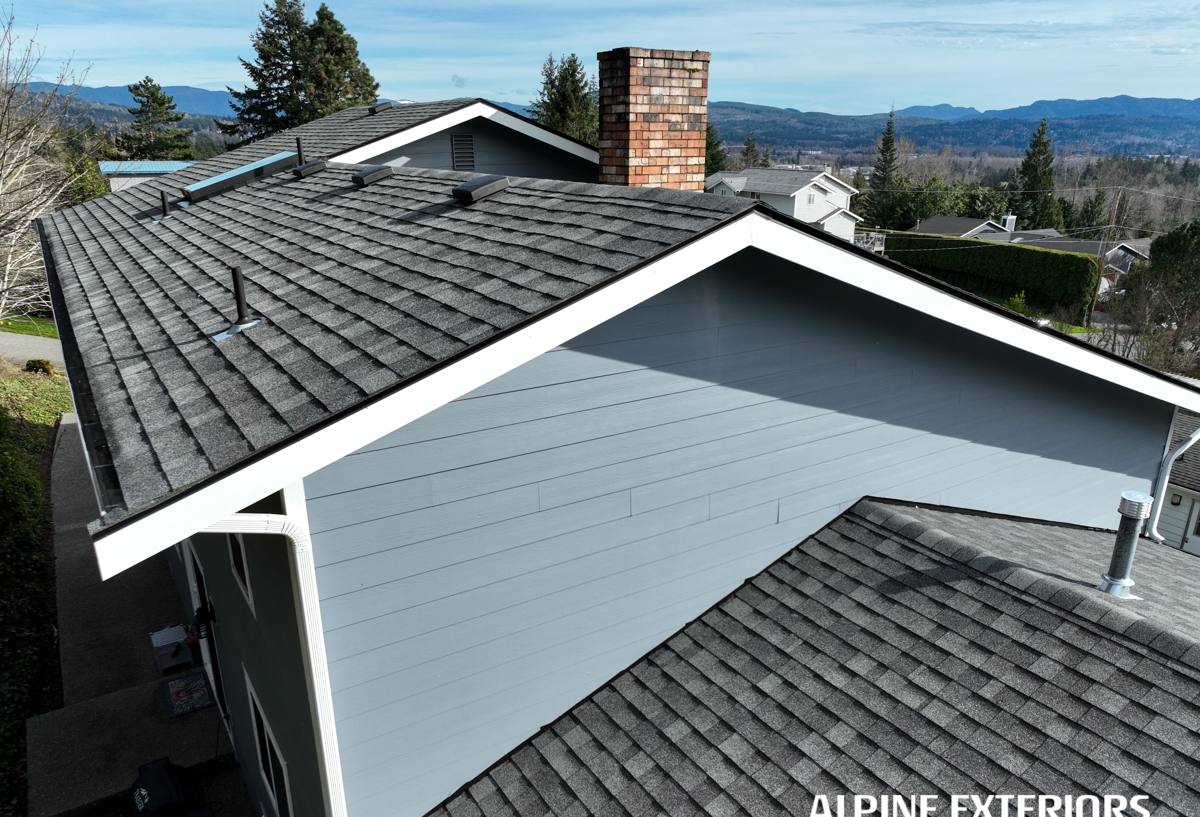
Why Ferndale Roofs Wear Differently Than Roofs Inland
Salt Air and Metal Fatigue
Homes closer to the water deal with airborne salt that accelerates corrosion on exposed metal — flashing, fasteners, gutter hardware, and any exposed nail heads. A fastener that would last two decades inland can start showing rust streaks and backing out years earlier here. Once a fastener loosens or a flashing seam corrodes, water finds its way underneath the roofing material, and that's where a small repair job turns into a rot problem.
Driving Rain and Wind-Driven Water
Whatcom County storms don't always come straight down. Wind-driven rain pushes water sideways and uphill under shingle laps, around chimney flashing, and into valleys that were only ever designed to shed water moving downhill. A roof that would be fine in a calm rain can leak in the same spot during a wind event, which is why some leaks only ever show up during a specific kind of storm.
Moss Season That Never Really Ends
Shade, moisture, and mild temperatures give moss a long growing window here. Moss holds water against the roofing surface far longer than the material was ever meant to stay wet, lifts shingle edges as it grows, and traps debris that clogs valleys and gutters. On north-facing slopes and anywhere tree cover blocks the sun, moss is usually the first thing accelerating an otherwise healthy roof toward repair.
Common Repair Issues We See on Ferndale Roofs
- Moss-lifted shingles along shaded slopes and roof edges, especially north- and east-facing sections
- Flashing failures around chimneys, skylights, and where dormers meet the main roofline
- Valley leaks where two roof planes meet and debris or moss has slowed drainage
- Nail pops and lifted fasteners from corrosion or repeated wet-dry cycling
- Deteriorated pipe boots and vent seals, a common weak point on roofs over ten to fifteen years old
- Gutter and edge damage that lets water back up under the first course of shingles
- Soft decking discovered under damaged shingles, where prolonged moisture has started to affect the plywood beneath
What a Correct Roof Repair Actually Involves
A roof repair done right isn't a patch laid over a symptom — it's a fix that addresses why the leak or damage happened in the first place. That distinction matters more in this climate than in a dry one, because a repair that doesn't account for wind-driven rain or moss regrowth tends to fail again within a season or two.
Finding the Real Source, Not Just the Visible Damage
Water rarely shows up directly below where it enters a roof. It can travel along rafters, decking, or underlayment before appearing as a stain on a ceiling or a soft spot in the attic. A proper repair starts with tracing water back to its actual entry point — often a flashing seam, a cracked pipe boot, or a valley — rather than simply replacing the shingles nearest the stain.
Matching Materials, Not Just Covering the Spot
Shingle color, profile, and even granule wear change over time, so a patch using new material next to weathered material will stand out and, more importantly, may not shed water the same way as the surrounding roof. Good repair work blends into the existing roof plane both visually and functionally.
Rebuilding Flashing Details Properly
Flashing is where most repeat leaks come from, because it's easy to reseal with caulk as a shortcut instead of reflashing correctly. Caulk breaks down; properly lapped and fastened flashing does not. We rebuild flashing details — step flashing, counter-flashing, valley metal — the way they're supposed to be built, not just resealed.
Checking the Decking Underneath
Any time shingles are pulled back for a repair, the decking underneath gets inspected. If there's soft or delaminated plywood from prior moisture exposure, that section gets replaced before new roofing material goes back down. Skipping this step is the single most common reason a "fixed" leak comes back.
Our Roof Repair Process in Ferndale
- Inspection. We get on the roof (not just a ground-level look) to trace the actual leak path, check flashing, valleys, moss coverage, and decking condition.
- Plain-language diagnosis. We explain what's actually wrong, why it's happening, and what a correct repair involves — no upselling to a full replacement unless the roof genuinely warrants it.
- Written estimate. Scope and pricing in writing before any work starts, including whether decking replacement is likely versus possible.
- Repair work. Matching shingles or roofing material, proper flashing rebuild, moss removal and treatment where relevant, and decking replacement if needed.
- Cleanup and walk-through. Job site cleaned up, debris hauled, and a final walk-through so you can see exactly what was done and why.
Repair or Replace? How to Think About It Honestly
Not every roof problem in Ferndale needs a full replacement, and not every leak can be solved with a simple patch. The honest answer depends on the roof's age, how widespread the damage is, and whether the underlying decking is still sound.
| Factor | Leans Toward Repair | Leans Toward Replacement |
|---|---|---|
| Roof age | Under 15 years, or well-maintained older roof | Near or past expected material lifespan |
| Extent of damage | Isolated to one area, flashing, or a few shingles | Widespread across multiple slopes |
| Decking condition | Solid decking under the affected area | Soft or rotted decking in multiple spots |
| Moss history | Recent moss growth, minimal shingle lift | Long-term untreated moss with granule loss |
| Repair history | First or second repair on this roof | Recurring leaks in different spots over time |
We'll tell you straight if a repair is the right call or if you're better off putting that money toward a replacement instead of patching a roof that's already at the end of its service life.
Dealing With Moss the Right Way
Moss removal on an occupied roof has to be done carefully — pressure washing or aggressive scraping can strip granules and shorten the life of otherwise healthy shingles. We remove moss by hand where it's actively lifting material, treat the area to slow regrowth, and clear gutters and valleys of the organic debris that keeps moss coming back. On roofs with chronic shade and moss pressure, zinc or copper strips near the ridge can help slow future growth, and we'll talk through whether that's worth adding during a repair visit.
Roofing Materials: Honest Trade-Offs for This Climate
Most Ferndale homes are roofed in asphalt composition shingles, and for good reason — they perform well here when installed and maintained correctly, and repairs are straightforward because matching material is widely available. Metal roofing sheds moss and moisture better on steep, shaded slopes but comes with a higher upfront repair cost and requires a roofer familiar with its specific flashing details, since a mismatched repair on a metal roof causes problems fast. Cedar shake, while attractive, needs the most consistent upkeep in a wet, mossy climate and is the least forgiving material if maintenance lapses for a few seasons. We'll always tell you what your existing material needs rather than pushing a switch you don't need.
Signs You Likely Need Roof Repair Now
- Visible moss buildup, especially on shaded or north-facing slopes
- Granules collecting in gutters or at downspout outlets
- Water stains on interior ceilings, especially after a windy storm
- Curling, cracked, or missing shingles
- Daylight visible through the attic roof deck
- Rusty streaking near flashing, vents, or fasteners
- Sagging sections along valleys or roof edges
Why a Local Ferndale Crew Matters for This Kind of Work
Roof repair is diagnostic work as much as it's construction work, and diagnosis improves with local familiarity. A crew that regularly works Ferndale and greater Whatcom County already knows which roof orientations take the worst of the wind-driven rain, how aggressive the moss season gets on shaded lots, and what correct flashing and material choices actually hold up here — not in a generic climate zone, but in this one. That local pattern recognition is often the difference between a repair that solves the problem and one that just delays it.
If you're dealing with a leak, moss buildup, or damage you want a straight answer on, we're happy to take a look. Reach out for a free, no-pressure estimate — the form below gets you started.