 Lynden Siding
 Siding Repair in Ferndale: What the Climate Puts Your Siding Through
Ferndale sits close enough to the water that salt-laden marine air is a routine part of the weather, not an occasional event. Combine that with the driving, wind-pushed rain that rolls through Whatcom County for much of the year and a moss season that can stretch from early fall through late spring, and you have three separate stresses working on the same wall system at the same time. Salt air accelerates corrosion on fasteners and metal trim. Driving rain finds every gap in flashing, caulk, and lap joints and pushes water sideways instead of letting it run straight down. Moss and algae hold moisture against the surface long after a normal rain would have dried off, which is exactly the condition wood fibers, adhesives, and paint films break down in.
None of that means siding here is doomed — it means siding here needs to be repaired with those three conditions in mind, not treated the way a repair crew in a dry inland climate would treat the same-looking damage. A crack that would be cosmetic in Arizona can be a moisture entry point in Ferndale. That distinction drives almost everything else on this page.
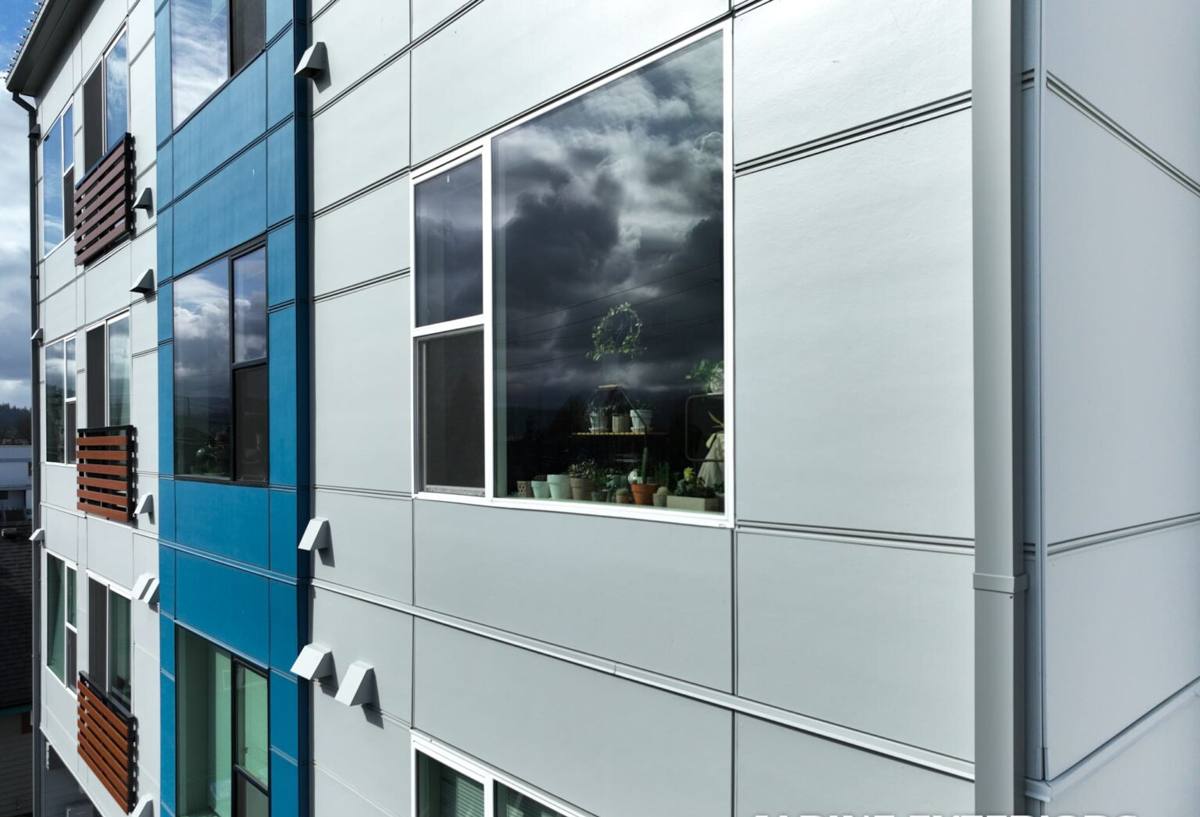
The Repair Calls We See Most Often Near Ferndale
Most of the repair work we're called out for falls into a handful of recurring patterns, and they tend to show up in predictable places on the house.
- Rot at butt joints and corners — where two pieces of siding meet, caulk fails first, and once it does, water gets behind the material instead of running off it.
- Moss and algae staining on north- and shade-facing walls, fence lines, and anywhere overhanging trees keep a surface damp longer than the rest of the house.
- Cracked, warped, or delaminating panels, often on older wood or composite siding that has absorbed moisture cycle after cycle for years.
- Nail pops and loose fastening from expansion and contraction, which widen small gaps into real water paths over a few seasons.
- Failed flashing at windows, doors, and rooflines, which is frequently the actual source of damage that shows up several feet away from the flashing itself.
- Siding rot near grade, where splashback, poor drainage, or siding installed too close to the ground keeps the bottom courses wet far more than the rest of the wall.
A lot of these issues look similar from the driveway — discoloration, a soft spot, a gap — but they have different causes and different fixes. That's the part that separates a lasting repair from one that needs to be redone in two years.
Why a Surface Patch Rarely Fixes the Real Problem
The fastest way to "fix" a stained or cracked section of siding is to caulk it, prime it, and paint over it. In a mild, dry climate that patch might hold for a while. In a climate with sustained wind-driven rain, it usually doesn't, because the visible damage is almost never the whole story. Water that reached the surface of the siding usually got there by traveling behind a flashing detail, through a failed sealant joint, or along a fastener that's no longer sealed tight. If you patch the spot you can see and leave that entry point alone, the moisture keeps moving in behind the new caulk and paint, and the same repair fails again — often taking a little more of the wall sheathing or framing with it each time.
This is the core reason we treat siding repair as a diagnostic job first and a cosmetic job second. The goal isn't to make a wall look repaired. It's to make sure water has nowhere left to go once we're done.
What a Correct Siding Repair Involves
Diagnosing the Moisture Path
Before any material comes off the wall, we trace where water is actually getting in — which is frequently not directly above or at the visible damage. Staining and rot often show up below the actual failure point, since water follows gravity and the path of least resistance down the back side of the cladding before it finds a way out.
Matching Material and Profile
Repairs should match the existing exposure, profile, and fastening pattern of the surrounding siding. A mismatched patch is more than a cosmetic problem — a different profile or thickness can create a new place for water to pool or for wind-driven rain to catch an edge it wouldn't otherwise catch.
Flashing and Water Management
Any repair that touches a window head, door top, roofline, or wall penetration gets flashed correctly as part of the job, not left as-is because "that's not what we were called for." Reinstalling siding over bad flashing just resets the clock on the same failure.
Sealing and Finishing Cut Edges
Cut or drilled edges on fiber cement need to be primed or sealed per the manufacturer's installation requirements before they're closed up. An unsealed cut edge on any cladding material is one of the fastest ways moisture gets pulled into the panel itself, especially in a climate this damp.
Repair or Replace? How We Make That Call
Not every damaged section needs to come off the whole wall, and not every repair is worth doing instead of a broader fix. We walk homeowners through the tradeoffs honestly rather than defaulting to the bigger job.
| Factor | Favors Repair | Favors Replacement |
|---|---|---|
| Extent of damage | Isolated to one or two sections | Spread across multiple walls or elevations |
| Underlying material condition | Rest of the siding is sound | Surrounding material is also aging out or failing |
| Cause of the damage | One-time or localized flashing/caulk failure | Systemic moisture behind the whole wall assembly |
| Age of existing siding | Newer, still within its expected service life | Original siding is decades old and near end of life |
| Cost over time | Repair cost is well below a full re-side | Repeated repairs are starting to add up close to replacement cost |
Plenty of Ferndale homes genuinely just need a targeted, correctly done repair — we're not in the business of upselling a full re-side when a section repair will hold. But we'll also tell you plainly when a repair is a short-term patch on a wall system that's already past the point of reliably holding one.
Our Process for a Ferndale Siding Repair
- Inspection. We look at the visible damage plus the areas above, below, and around it — flashing, caulk lines, fastener condition, and any signs of moisture that hasn't reached the surface yet.
- Diagnosis and honest scope. We tell you what we found, what's causing it, and whether a repair, a partial re-side, or a full replacement is the right call for that section of the house.
- A clear estimate. No vague line items — you'll know what's being repaired, why, and what it involves before anything is removed.
- The repair itself. Damaged material comes out, the water path gets corrected (flashing, house wrap, sealant, or all three), and new material goes in matched to the existing wall.
- Cleanup and a final look. We check the finished work against the surrounding siding for fit, fastening, and paint or finish match before we call the job done.
When Repair Isn't Enough: Why We Rebuild With James Hardie
When a repair call turns into "this section is fine, but the rest of this wall is failing the same way," we're honest about it. We install only James Hardie fiber cement siding, and we don't repair or replace damaged sections with vinyl, LP SmartSide, cedar, or primed spruce, even when that's what's currently on the house. Those products aren't without merit — vinyl is inexpensive, wood has a traditional look, engineered wood siding installs quickly — but in a climate with this much sustained moisture and moss pressure, we've seen the maintenance burden and moisture behavior of those materials become the homeowner's problem years down the road, not ours.
James Hardie fiber cement doesn't absorb water the way wood-based products can, it's non-combustible, and its ColorPlus factory finish is engineered to hold up under exactly this kind of prolonged damp exposure rather than needing repainting every few years. Its HZ5 product line is built for climates like this one. When a repair job in Ferndale turns into a bigger conversation, Hardie is what we recommend putting back on the wall — not because it's the only siding that exists, but because it's the one we're willing to warranty our work over in this climate.
Why It Matters That Your Repair Crew Already Works in Ferndale
A crew that works Whatcom County regularly has already seen how salt air, driving rain, and moss behave on local wall assemblies across dozens of houses, not just the one in front of them. That matters for a repair specifically, because so much of getting it right is correctly diagnosing a moisture path rather than just replacing what's visibly damaged. It also means faster response — a local crew isn't scheduling a Ferndale repair around a job two counties away, and a smaller, well-diagnosed repair called in early is almost always cheaper and less disruptive than the same problem left to spread over another wet season.
A Homeowner's Siding Repair Checklist
If you're not sure whether what you're looking at needs a professional repair, these are the signs worth acting on before the next rainy stretch:
- Soft or spongy spots when you press on the siding, especially near the bottom courses or corners
- Visible cracking, warping, or buckling in one or more panels
- Persistent moss or algae growth that comes back shortly after cleaning
- Peeling or bubbling paint concentrated in one area rather than spread evenly
- Gaps opening up at caulk lines, corners, or where siding meets trim
- Staining below a window, roofline, or wall penetration that wasn't there last season
- Fasteners backing out or visible rust streaking on or below metal trim
If your siding is showing any of the signs above, it's worth having a local crew take a look before the damp season turns a small repair into a bigger one. We're happy to come out, give you a straight read on what's actually going on, and put together a free, no-pressure estimate — use the form below to get started.