 Lynden Siding
 Fiber Cement Siding for Wiser Lake Homes
Wiser Lake sits in the rural country north of Lynden, where acreage properties and homes along the water share the same exposure: open farmland wind on one side, lake moisture on the other, and a Whatcom County climate that doesn't give a wall much of a break between wet spells. Siding out here has to do more than look good for a season or two. It has to hold a factory finish, keep water out of the wall assembly through years of driving rain, and resist the moss and mildew that a shaded, damp property practically invites. We install James Hardie fiber cement siding exclusively for homes in this area, and this page walks through what that actually means for a Wiser Lake property specifically — not siding in general.
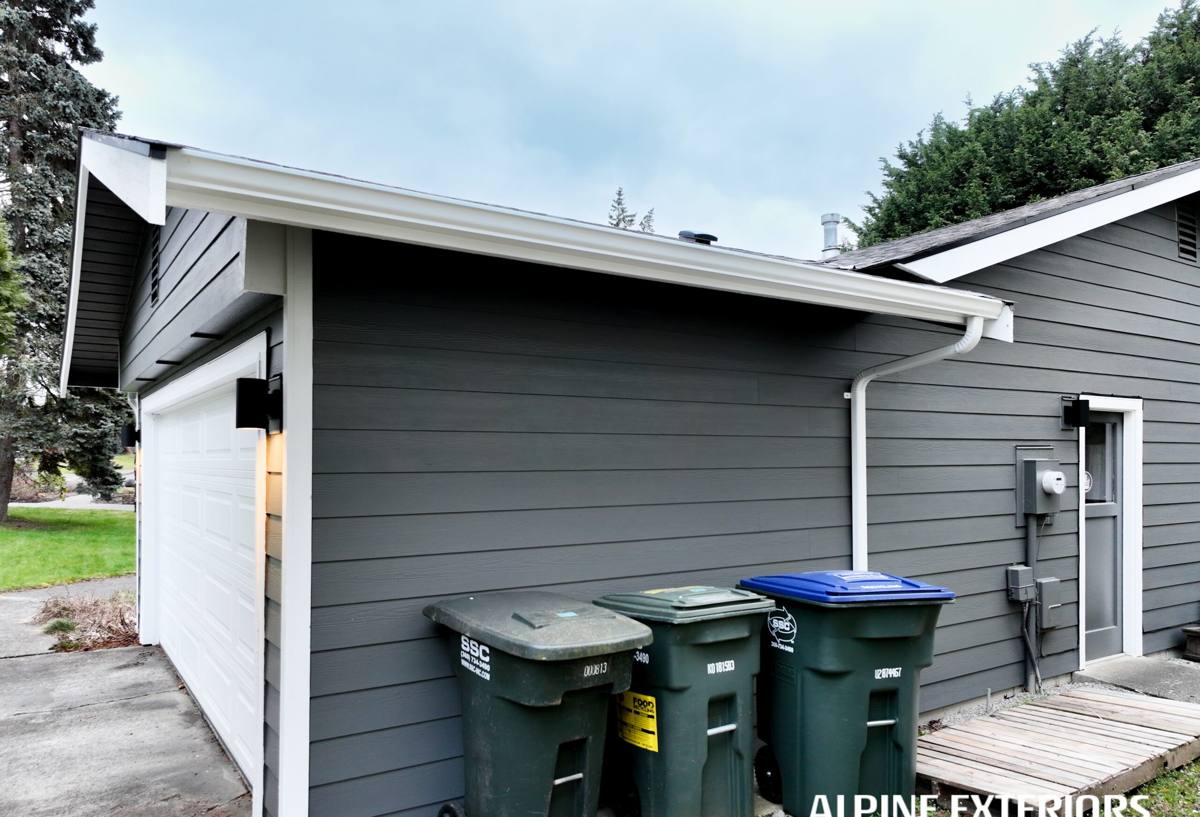
What Wiser Lake's Climate Asks of Your Siding
Salt Air and Corrosion
Whatcom County's proximity to the Salish Sea means salt-laden air reaches well inland, and it doesn't need to be blowing straight off saltwater to do damage. Salt air speeds up the breakdown of field-applied paint finishes, accelerates corrosion at exposed fasteners and flashing, and contributes to the dirt and chalking buildup that dulls a wall's appearance faster than a homeowner expects. A siding material's finish is doing real work here, not just providing color.
Driving, Wind-Blown Rain
Open farmland and lake frontage both mean less windbreak than a home would get tucked into a wooded in-town lot. Storms coming through Whatcom County don't just drop rain straight down on a property like this — wind pushes it sideways into south- and west-facing walls, forcing moisture into seams, joints, and any gap in the water management system behind the siding. That kind of exposure tests flashing details and joint sealing harder than a calmer, more sheltered site would.
A Moss Season That Doesn't Really End
Lake humidity combined with Whatcom County's long wet season keeps shaded and low-lying wall sections damp for extended stretches, especially on north-facing elevations that get less sun to dry them out. That's the exact environment moss and mildew need to establish themselves, and once organic growth takes hold on a porous or moisture-retentive surface, it holds water against the material and accelerates whatever breakdown was already underway. A siding system for a Wiser Lake home needs to shed water and resist that growth, not just tolerate it.
Why We Install Only James Hardie Fiber Cement
We don't offer a menu of siding brands. We install James Hardie fiber cement, and nothing else, because it's the system that has held up to this specific combination of salt air, wind-driven rain, and prolonged dampness better than the alternatives we used to offer.
- Non-combustible core: Fiber cement doesn't feed a fire the way wood-based or wood-derived siding products can, which matters for rural properties surrounded by open land and, in many cases, for insurance underwriting as well.
- Factory-applied ColorPlus finish: The color is baked on under controlled conditions rather than brushed on in the field, and it holds up to salt air, moisture, and UV exposure far longer than site-applied paint.
- Climate-engineered HZ product lines: Hardie builds its HZ5 formulation specifically for regions with heavy moisture exposure and freeze-thaw cycling, which describes western Washington's conditions well.
- Dimensional stability: Fiber cement doesn't swell, cup, or warp the way wood and engineered-wood products can after repeated wetting cycles that never fully resolve in a damp climate.
- A strong, transferable warranty: Hardie backs its products with one of the more substantial warranty structures in the industry, provided the installation follows their published specifications.
We won't install LP SmartSide, vinyl siding, Cemplank, Allura, primed spruce, or cedar. Each of those has a legitimate place in the market, and other contractors install them well. But we made a professional call to stand behind one system completely rather than offer a cheaper option that quietly shifts long-term maintenance risk back onto the homeowner — a trade-off that matters more on an exposed, water-adjacent property than it would somewhere more sheltered.
What a Correct Fiber Cement Installation Actually Involves
Fasteners, Clearances, and Nailing Patterns
Fiber cement only performs the way it's engineered to when the fastener type, spacing, and nailing pattern match Hardie's published specifications for the specific product and climate zone. Clearance from grade, roof lines, and decks also matters more than most homeowners realize — too little clearance traps moisture against the bottom edge of the siding and undermines the whole system regardless of how good the material itself is.
Flashing and Joint Sealing
Every seam, corner, and penetration is a place water can find its way behind the siding if it isn't detailed correctly. On an exposed property like a typical Wiser Lake lot, we pay particular attention to how flashing integrates with window and door openings, how butt joints are sealed, and how water is directed away from the wall assembly rather than just blocked at the surface — because wind-driven rain will eventually find any weak point in that system.
Factory Finish vs. Field-Applied Paint
A factory-applied finish like ColorPlus is cured under controlled conditions and bonds to the material differently than paint applied on-site after installation. That distinction matters in a salt-air, high-moisture climate, where field-applied finishes tend to chalk, fade, and lose adhesion faster. Part of correct installation is protecting that factory finish during handling and cutting so it performs for its full expected lifespan rather than being compromised before the job is even finished.
Comparing Siding Options for a Wiser Lake Property
| Material | Moisture Behavior | Maintenance in This Climate | Typical Longevity Here |
|---|---|---|---|
| James Hardie fiber cement | Dimensionally stable; resists swelling and cupping | Low; factory finish resists salt air and moisture-driven fading | 30+ years with correct installation |
| Vinyl siding | Can trap moisture behind panels at poorly sealed seams | Low upfront, but seams and corners stay vulnerable to wind-driven rain | Variable; shorter on exposed, water-adjacent elevations |
| LP SmartSide / engineered wood | Wood-based core is moisture-sensitive at cut edges and joints | Moderate to high; edge sealing is critical and easy to under-maintain | Depends heavily on installation quality and upkeep |
| Cedar / primed wood | Absorbs and releases moisture readily | High; needs regular refinishing, more often on shaded or exposed walls | Shorter without consistent maintenance |
What Drives Cost on a Wiser Lake Siding Project
Every project is different, but a few factors consistently move the price of a fiber cement job on a property like this one more than homeowners expect:
| Factor | Why It Matters Here |
|---|---|
| Home size and wall complexity | More corners, dormers, and trim detail mean more cutting, fitting, and flashing work |
| Existing siding removal and any wall repair | Moisture-damaged sheathing or framing found underneath old siding has to be addressed before new siding goes on |
| Product line and profile | Lap, panel, and shingle-style profiles carry different material and labor costs |
| Site access and lot conditions | Acreage properties and lakefront lots can involve more setup, staging, and site protection than a standard in-town lot |
| Trim and accessory work | Fascia, soffits, and window and door trim are often replaced or upgraded alongside siding for a consistent, correctly flashed result |
We give homeowners a clear, written scope and price before any work begins, so there's no ambiguity about what's included.
Our Process, Start to Finish
- An on-site assessment of the existing siding and wall condition, paying close attention to how sun, shade, and lake-side exposure vary across different elevations of the home.
- A written scope of work and price, including the specific Hardie product line and profile recommended for the home's exposure.
- Careful removal of existing siding and inspection of the sheathing underneath for any moisture damage that needs to be addressed before new siding goes on.
- Installation to Hardie's published specifications, including correct fasteners, clearances, flashing, and joint sealing at every seam and penetration.
- A final walkthrough so the homeowner understands what was done and what, if anything, needs periodic attention going forward.
Signs Your Current Siding Is Already Behind
- Paint that's chalking, peeling, or fading noticeably faster on one side of the house than another
- Soft spots, cupping, or visible swelling at board edges or butt joints
- Moss or mildew that returns quickly after cleaning, especially on shaded or lake-facing walls
- Caulk that's cracked or pulled away at joints and trim
- Visible gaps or staining near window and door flashing
- Siding sitting closer to grade or a deck surface than it should, with little to no visible clearance
Why a Crew That Already Works Wiser Lake Matters
A siding job on an exposed, water-adjacent property isn't the same job as one on a sheltered in-town lot, even if the square footage looks similar on paper. A crew that already works this specific stretch of Whatcom County knows which elevations of a Wiser Lake home typically take the worst of the wind-driven rain, how much clearance to build in near grade on lakefront lots, and which flashing details actually hold up through a full wet season rather than just looking right on installation day. That familiarity shows up in the small decisions made throughout a project — not in anything a homeowner would think to ask about, but in the difference between a siding system that lasts one hard winter and one that lasts several decades.
If you're weighing your options for a Wiser Lake home, we're glad to walk the exterior with you, point out the specific conditions your walls face, and put together a straightforward, no-pressure estimate for a correctly installed Hardie system. Reach out using the form below to get started.